



Antique Oak Highboy
An antique oak highboy brings vertical storage and timber grain into a room, joining a lower stand with upper drawers.
Antique Oak Highboy
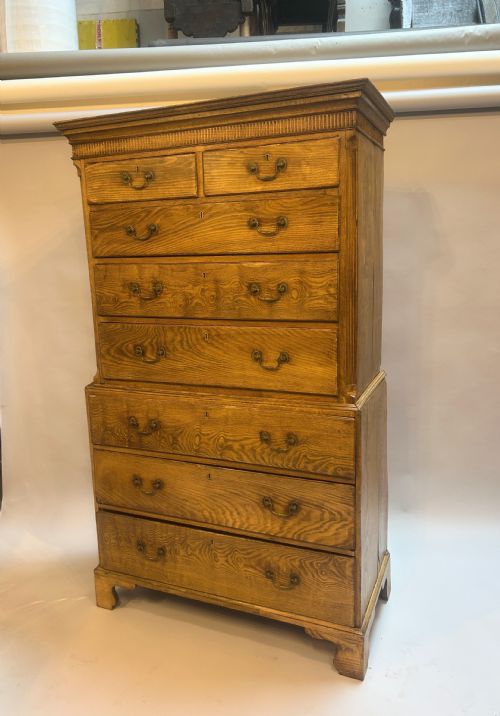
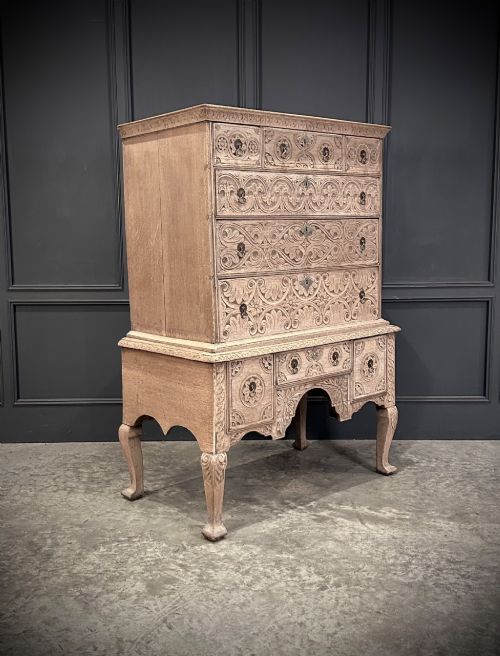
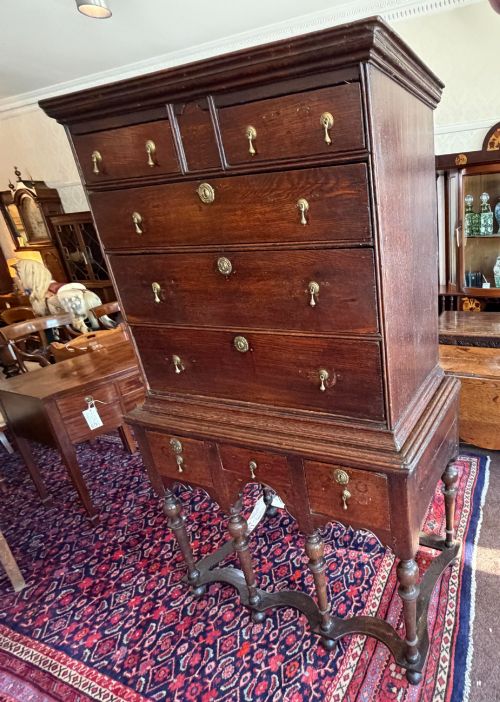
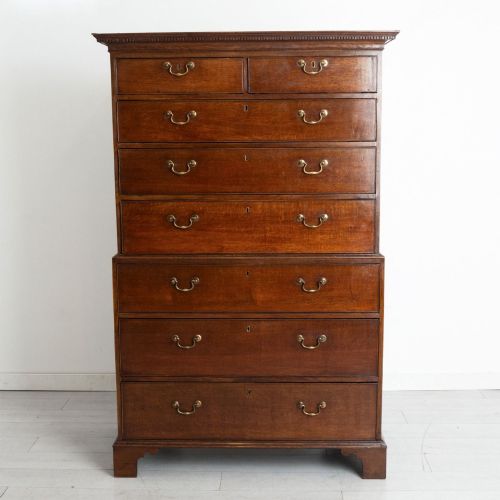
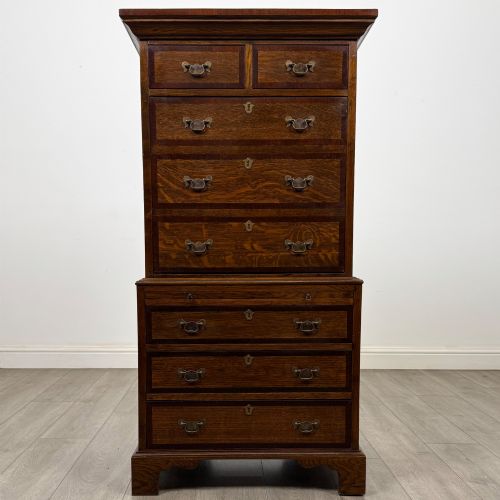
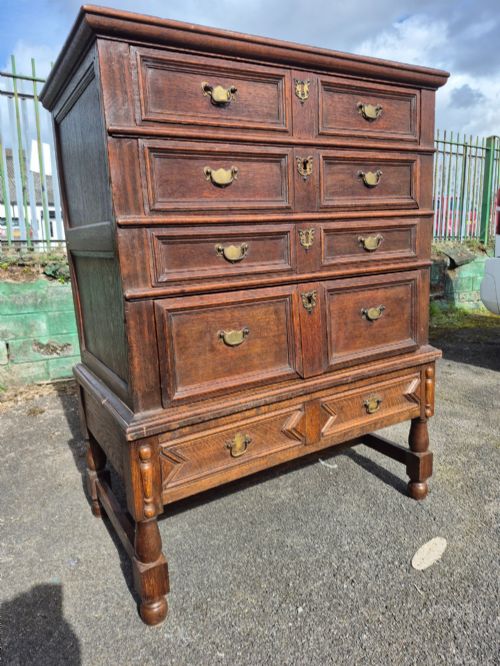
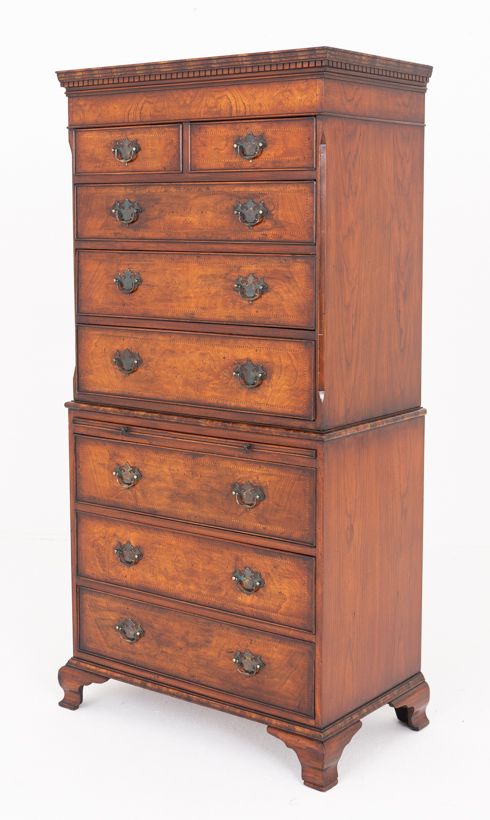
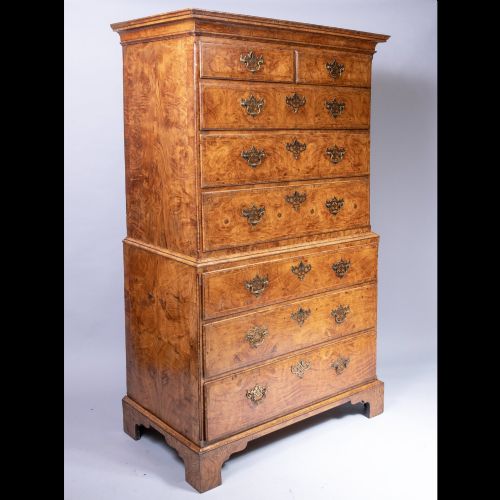
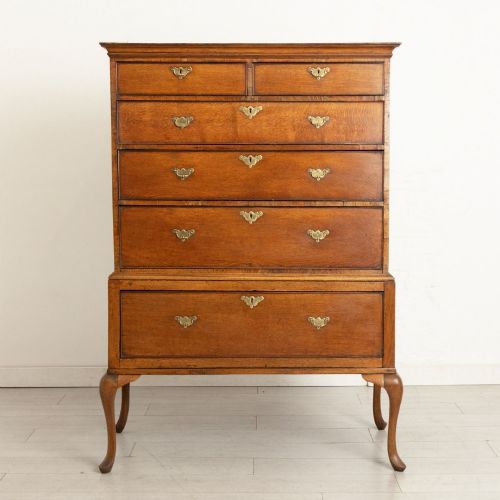
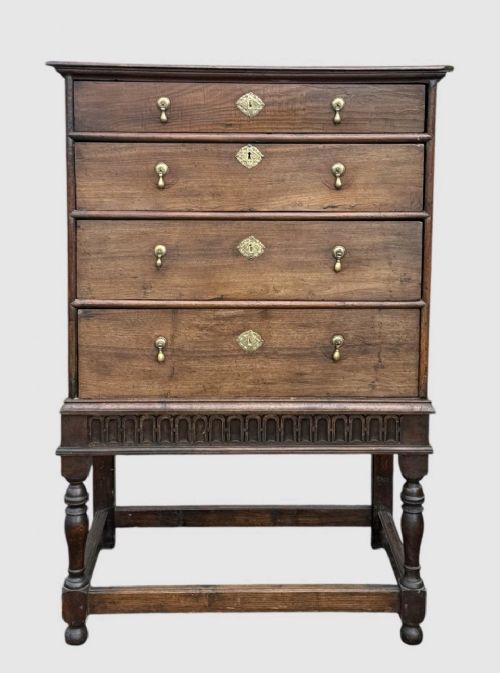
An antique oak highboy combines a chest of drawers sitting upon a separate or integrated stand, offering substantial height without taking up excessive floor space. These pieces span several centuries of cabinetmaking, featuring formats such as tallboys, chest on chests, and chests on stands.
The versions most commonly met on this page date from the seventeenth and eighteenth centuries, shaped by Georgian, Queen Anne, and Jacobean stylistic shifts. Makers constructed these tall storage units primarily in oak, occasionally turning to elm, walnut, and burr elm for contrast.
Buyers encounter regional variations, including Welsh pieces and Irish Chippendale examples, alongside later Edwardian revivals. Each form provides tiered drawer storage arranged vertically to hold linen, clothing, and documents.

What varies in quality
The refinement of the timber selection dictates much of the distinction between pieces, particularly where figured elm or banded oak veneers appear. Cabinetmakers who matched grain patterns across multiple drawer fronts achieved a more cohesive visual harmony.
Proportions between the upper chest and the supporting stand define the structural elegance of the piece. Well-balanced leg turnings and original brass hardware elevate the overall integrity of the cabinet.
Antique Oak Highboy Retail Price Guide 2026
Typical asking prices for oak highboy among the pieces listed under this phrase on Sellingantiques today, from the lower quarter to the upper quarter. They describe what is for sale here now, not the wider market.
One cheerful Georgian cabinet arrives dressed in a distressed mottled blue finish.
The Antique Oak Highboy Glossary
- Chest on stand
- A cabinet comprising an upper set of drawers elevated on a lower frame with legs. This configuration lifts the storage space off the floor.
- Tallboy
- A tall chest of drawers standing one above another, sometimes constructed in two distinct stacked sections. The design maximises vertical capacity in smaller chambers.
- Chest on chest
- Two stacked cabinetry sections where a wider chest supports a slightly narrower upper chest. This form provides substantial drawer storage.
- Bandings
- Thin strips of contrasting wood inlaid around drawer perimeters or panel edges. Cabinetmakers utilised this technique to frame the primary timber surfaces.
- Escutcheon
- A protective plate surrounding a keyhole on a drawer front or cupboard door. These fittings often incorporate brass and complement the drop handles.
Antique Oak Highboy: Frequently Asked Questions
How do I use a highboy today?
These cabinets provide generous vertical storage for folded clothing, linens, or daily accessories in bedrooms and hallways.
Their elevated footprint allows them to fit into narrower wall spaces while offering deep drawer capacity.
What is the difference between a tallboy and a chest on stand?
A tallboy typically consists of stacked drawer sections forming a single tall tower unit from top to bottom.
By contrast, a chest on stand places an upper drawer section upon a distinct lower table frame supported by legs.
How do I date an antique oak highboy?
Examine the construction methods, timber choices, and hardware styles to align the piece with documented periods like the Georgian era or seventeenth century.
Stylistic markers such as cabriole legs, bracket feet, and brass handle designs help narrow down the decade of manufacture.
Are these pieces made entirely of solid oak?
While primary surfaces and frames utilise solid oak, cabinetmakers frequently incorporated secondary timbers for internal drawer linings and back panels.
Some examples also feature decorative veneers of walnut or elm applied over oak carcases.