


Carved Oak Drawers
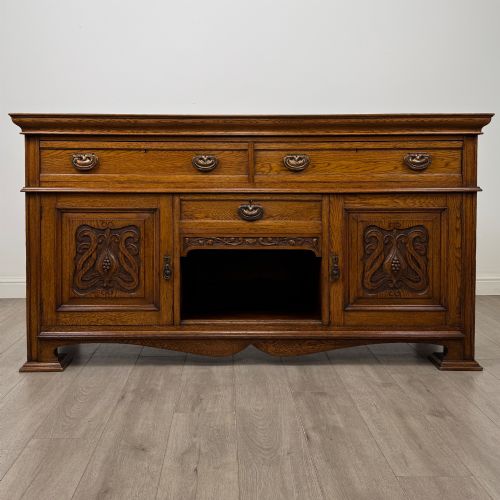
When you search for carved oak drawers, you encounter centuries of solid timber craftsmanship shaped by revivalist styles and regional joinery.
Carved Oak Drawers
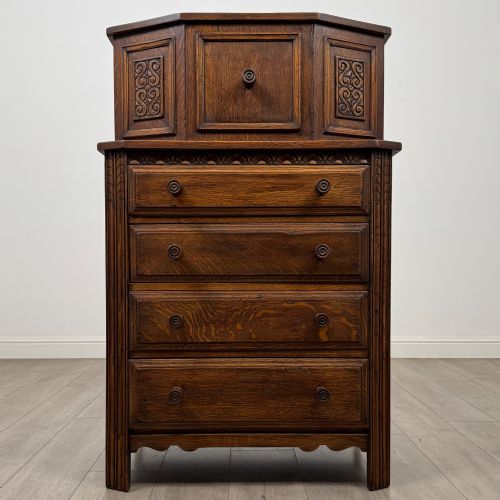
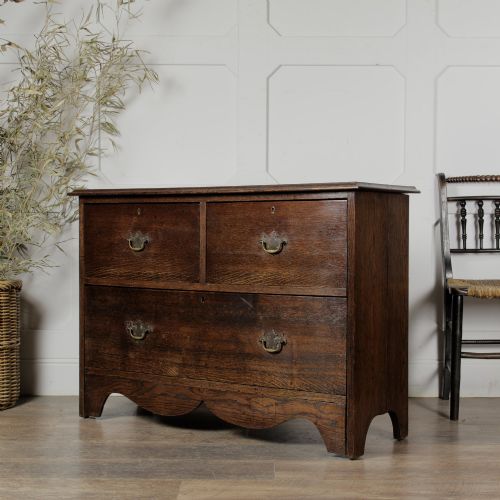
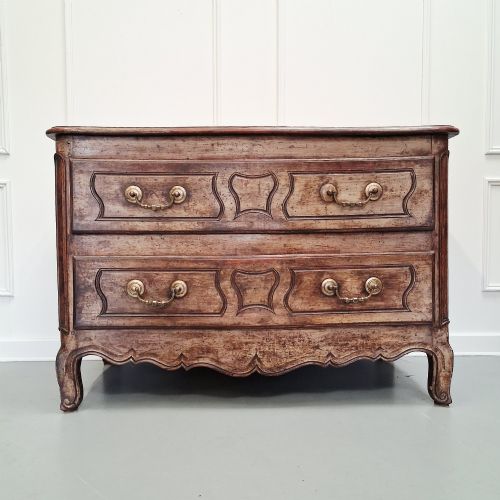
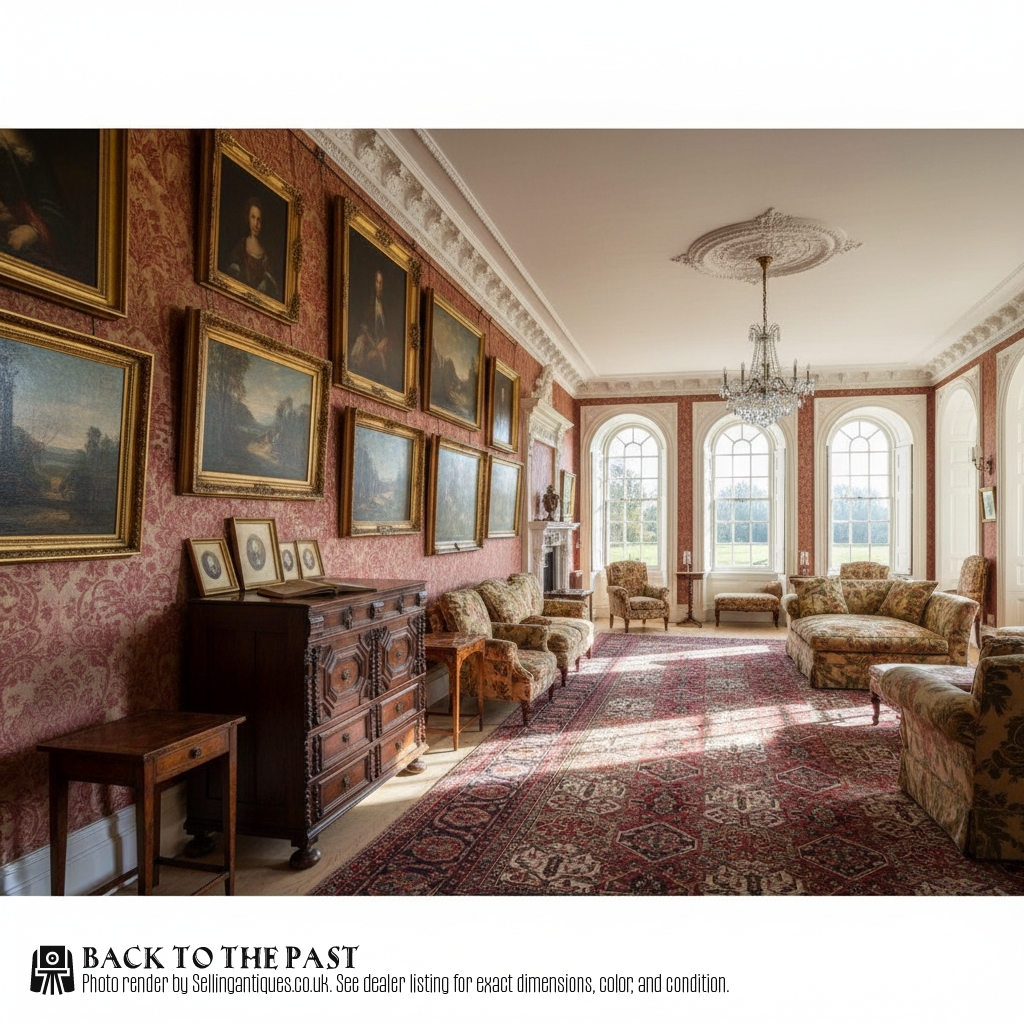
Carved oak drawers span several centuries, reaching from seventeenth-century Charles II and William and Mary pieces through Georgian proportions to Victorian and Edwardian revivals. You are most likely to meet nineteenth-century Victorian interpretations and early twentieth-century Edwardian or Jacobean revival chests, alongside French commodes.
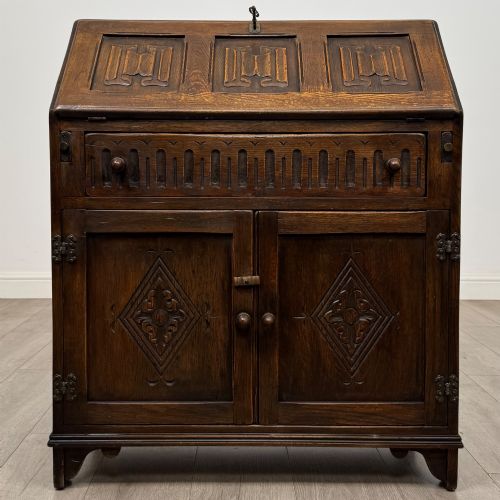
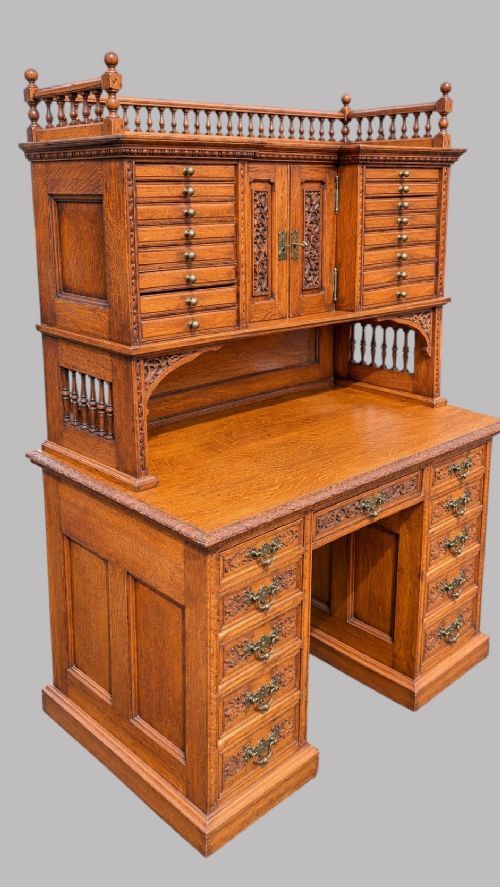
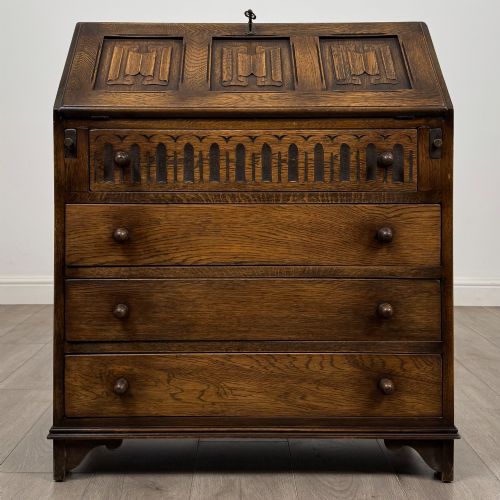
The objects take many forms beyond the standard chest of drawers, appearing as mule chests, lowboys, writing bureaux, side tables, and dresser bases. Each type demonstrates how carvers integrated storage with decorative motifs across domestic interiors.
Materials and construction
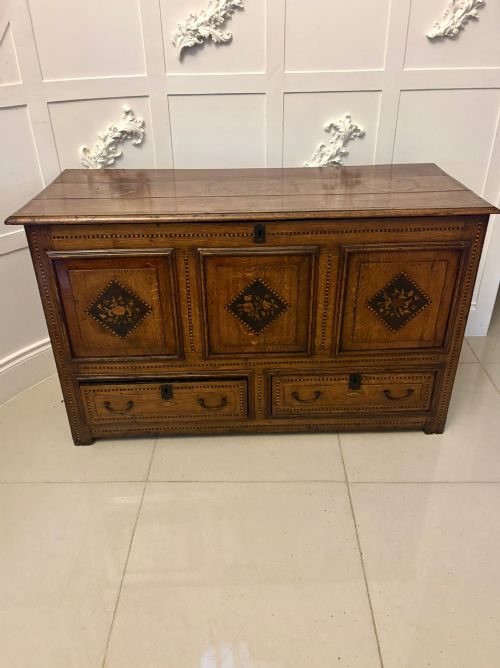
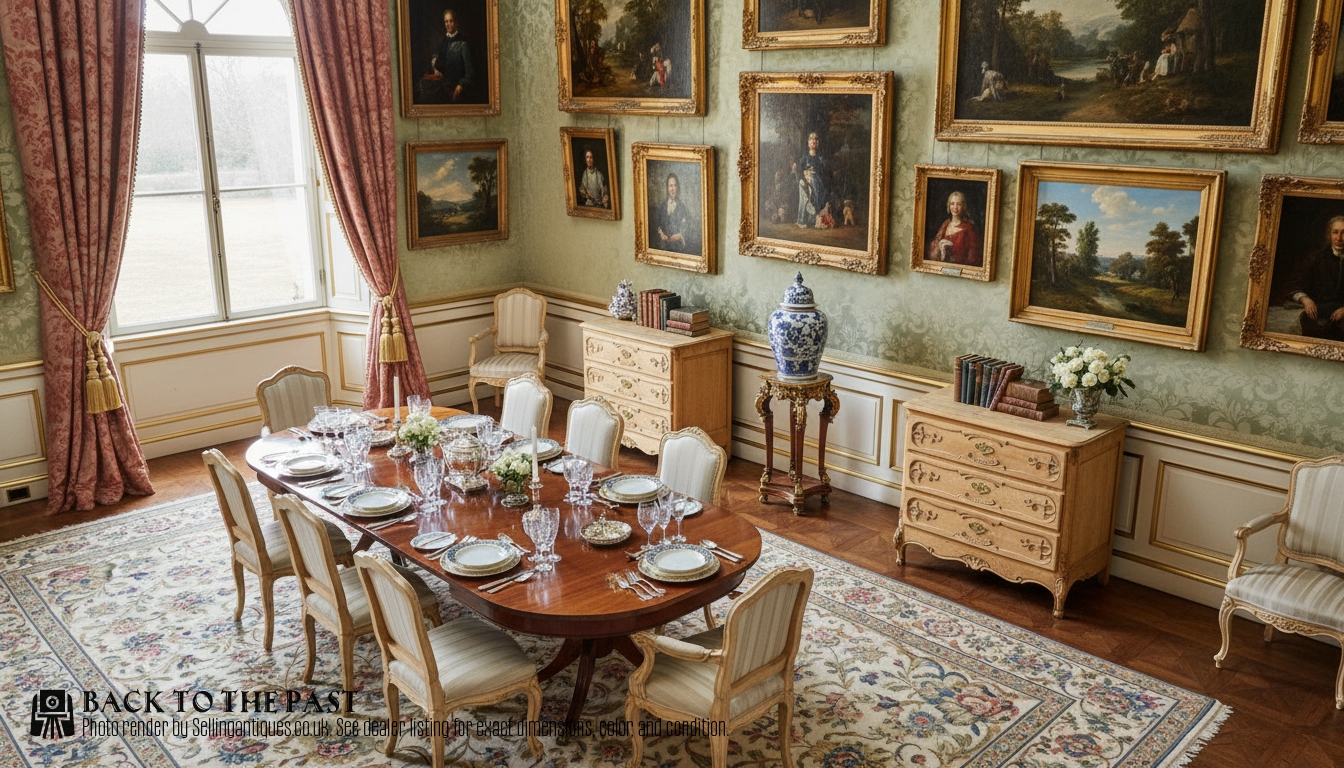
Solid oak provides the primary structural and visual medium, sometimes bleached, golden, or dark-finished, complemented by secondary timbers and occasional marquetry inlay or marble tops. Brass and iron hardware such as original handles secure the drawers and panels.
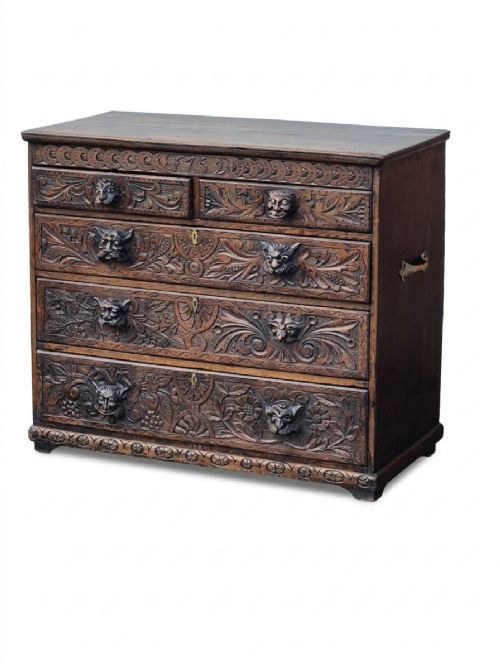
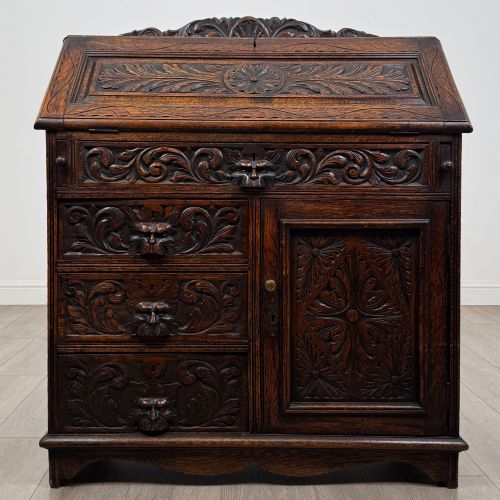
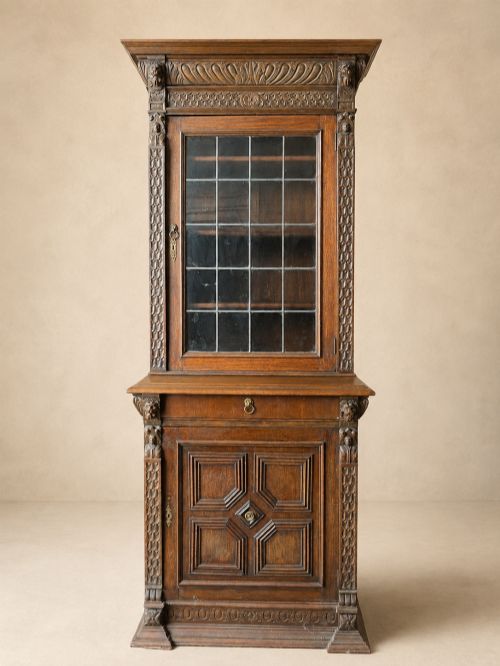
Joinery relies on traditional methods, where panels are hand-carved with foliate, linenfold, or grotesque green man masks. Carving depth and relief work vary from crisp geometric mouldings to deeply undercut figurative panels.
Carved Oak Drawers Retail Price Guide 2026
Typical asking prices for carved oak drawers among the pieces listed under this phrase on Sellingantiques today, from the lower quarter to the upper quarter. They describe what is for sale here now, not the wider market.
Listings demonstrate a broad span of oak furniture, ranging from seventeenth-century Charles II tables to Edwardian linenfold bureaux and heavy Victorian green man chests.
Judging quality
Quality reveals itself in the crispness and depth of the hand carving, where spirited foliate work or defined green man masks separate master carvers from routine mechanical output. Timber selection also dictates value, with tightly figured grain and heavy solid construction commanding greater attention.
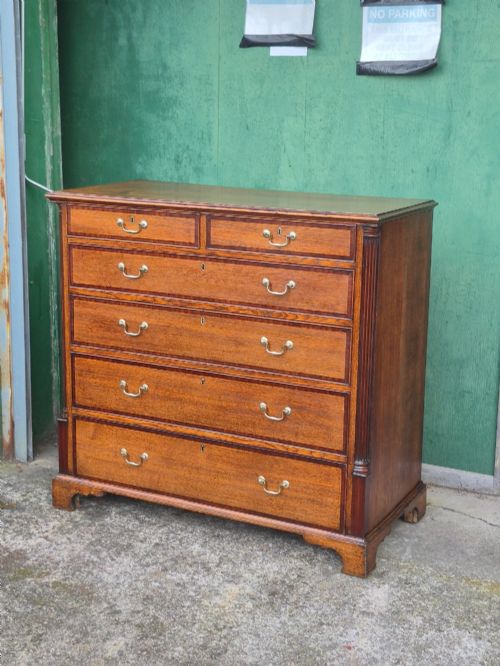
Originality of surface finish, brass hardware, and structural integrity distinguish superior survivals from pieces altered over time. Proportion and balance in the drawer configuration complete the assessment.
The Carved Oak Drawers Glossary
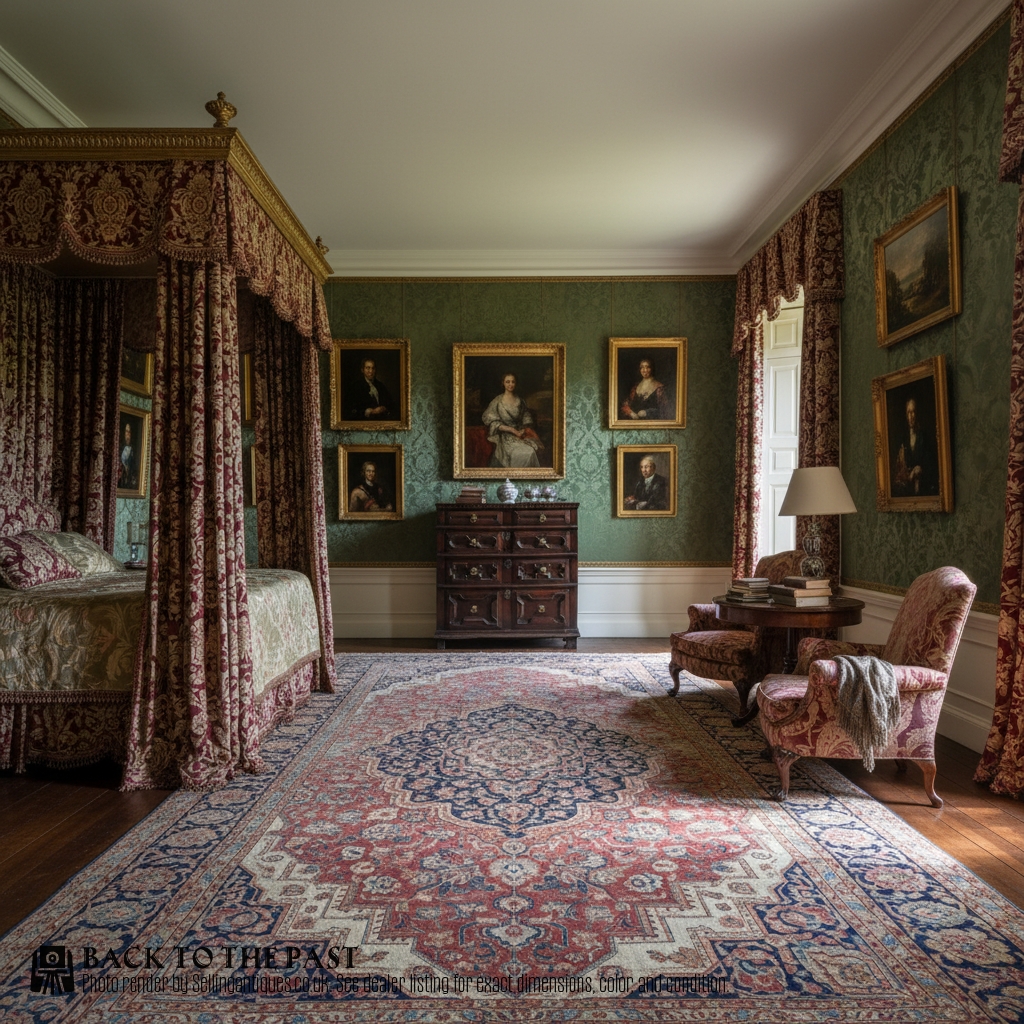
- Green man
- A sculptural face carved from foliage or branches, frequently found on Victorian and seventeenth-century drawer fronts and friezes. This motif symbolises rebirth and spring.
- Linenfold
- A style of wood carving that imitates folded parchment or linen, commonly seen on Edwardian and Tudor revival panels. It creates a subtle texture across flat surfaces.
- Lowboy
- A small seventeenth or eighteenth-century dressing table or side table featuring one or more rows of drawers supported on four legs. These pieces typically display elegant cabriole or turned supports.
- Mule chest
- A traditional storage chest featuring one or two drawers at the base beneath a hinged lid compartment. They bridge the evolution from simple chests to multi-drawer cabinets.
- Wellington chest
- A tall, narrow Victorian chest of drawers secured by a hinged locking side pilaster bar. This clever mechanism fastens all drawers simultaneously.
Carved Oak Drawers: Frequently Asked Questions
How do I date an old oak chest?
Dating relies on examining construction techniques, joinery marks, wood patination, and the specific style of the carving. Seventeenth-century examples display hand-split panels and peg joinery, whereas later revival pieces show nineteenth-century industrial saw marks.
Hardware styles and secondary timbers also provide reliable clues. Original brass drop handles and escutcheons help anchor a piece to specific reigns like Charles II or George III.
What is a green man carving?
A green man carving depicts a human face emerging from or composed of leaves, vines, and foliage. This ancient architectural and furniture motif saw a massive revival during the Victorian era.
Carvers applied these expressive masks to drawer fronts, stiles, and gallery backs. They add a distinct folkloric character to nineteenth-century oak furniture.
Are these drawers suitable for daily use?
Solid oak construction makes these drawers exceptionally sturdy and practical for contemporary living. They offer robust storage capacity for clothing, linens, or paperwork.
Drawer runners and internal framing may require gentle maintenance or traditional waxing to ensure smooth operation. Proper humidity control protects the historic timber from movement.
What distinguishes Jacobean revival from original work?
Original seventeenth-century pieces exhibit period tool marks, hand-carved asymmetry, and timber shrinkage consistent with age. Jacobean revival furniture, produced heavily around the late nineteenth and early twentieth centuries, employs more uniform machinery and standardised joinery.
Revival pieces successfully captured the bold proportions and geometric mouldings of earlier times. They offer the aesthetic of the seventeenth century with the structural reliability of the Edwardian period.