

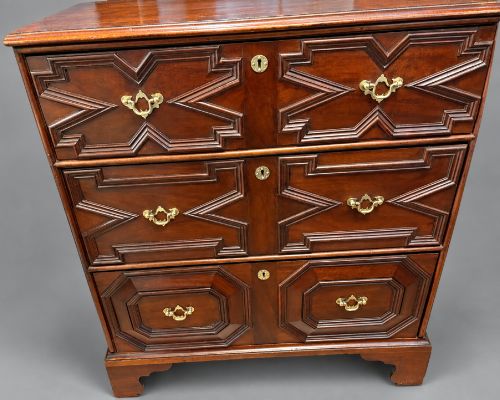
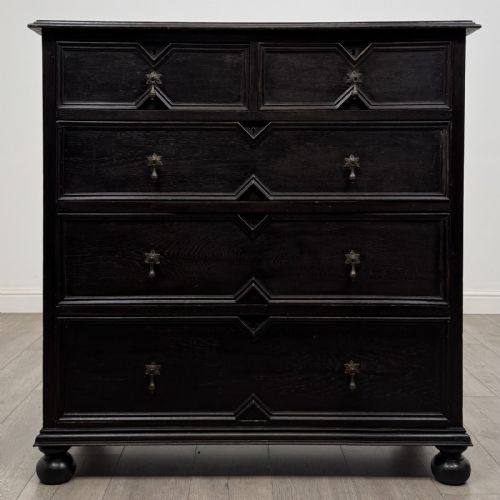
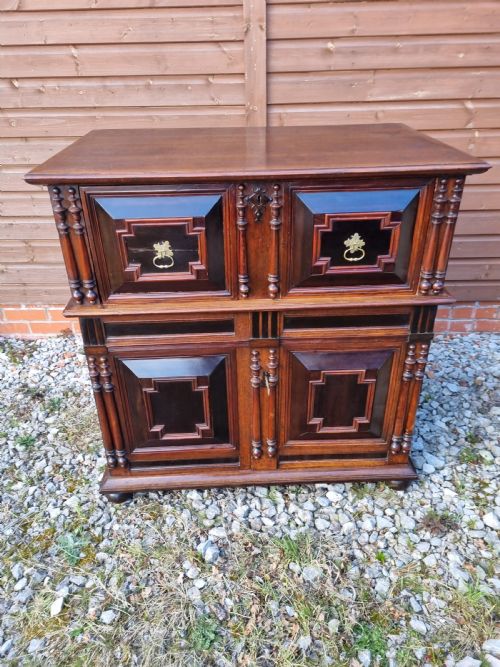
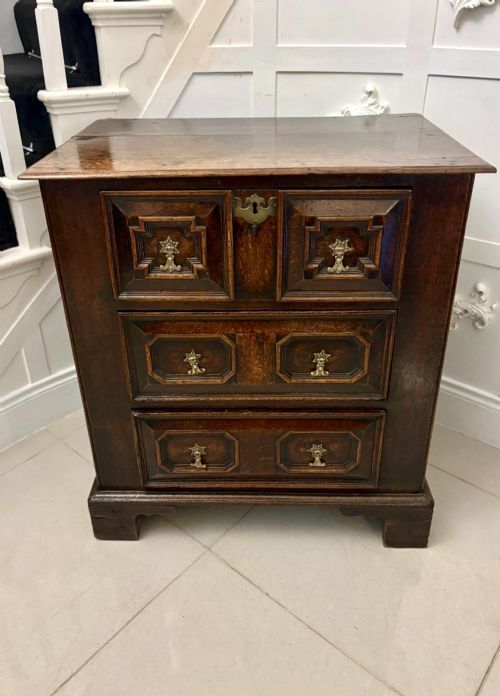
Geometric Moulded Chest
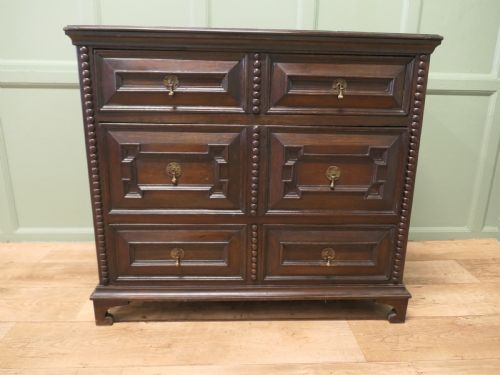
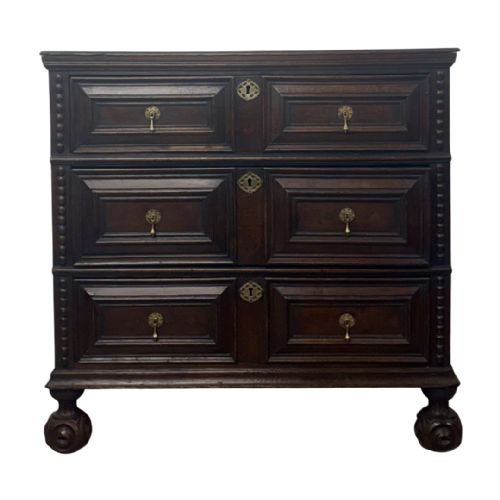
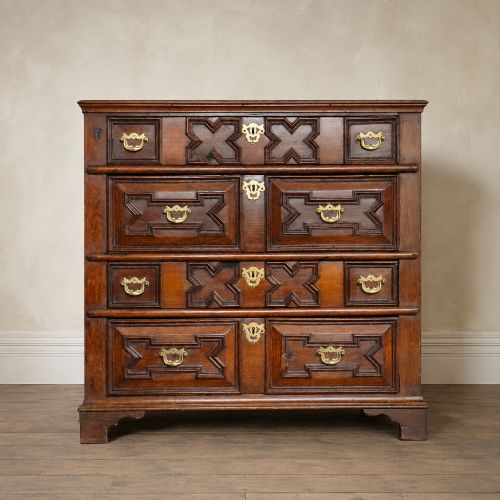
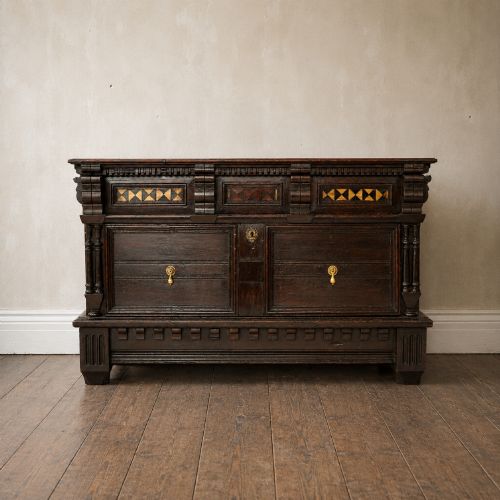
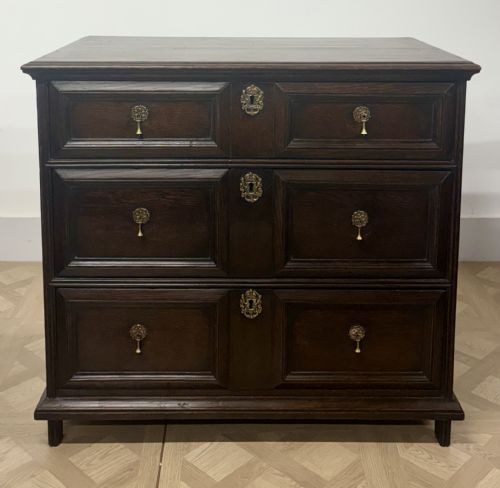
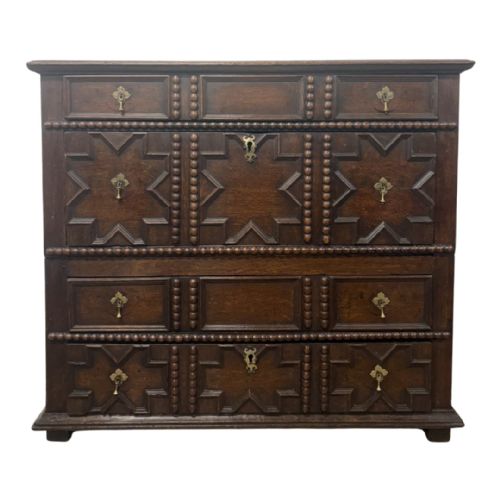
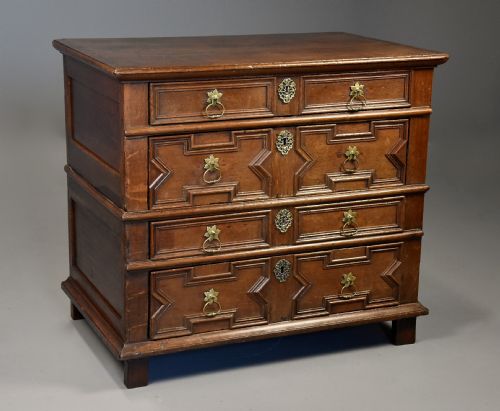
A geometric moulded chest is a sturdy seventeenth-century storage piece defined by projecting wooden panels on the drawer fronts.
Geometric Moulded Chest
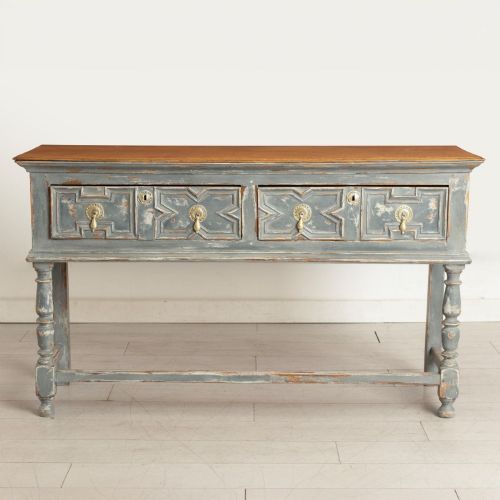
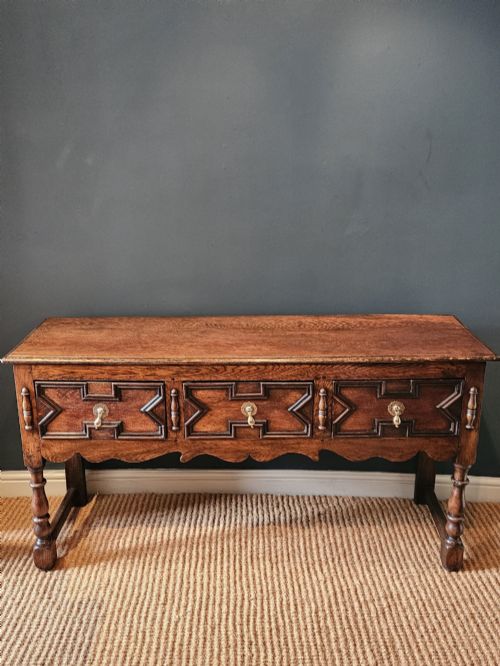
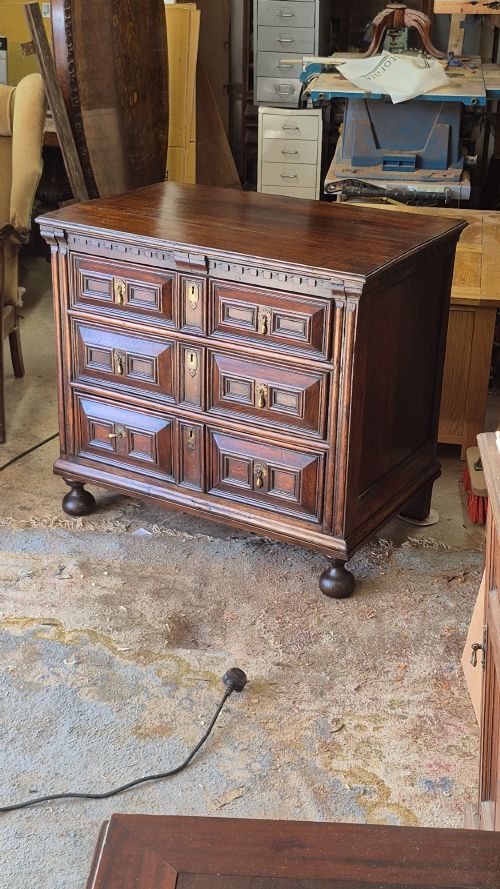
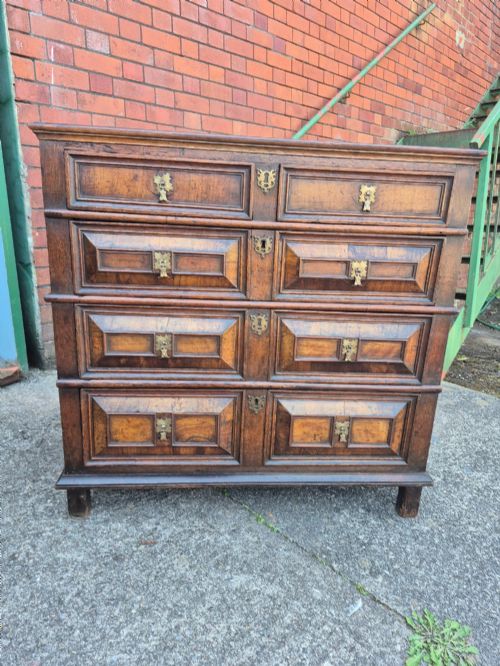
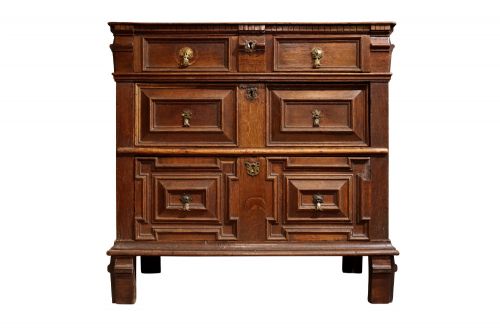
A geometric moulded chest is fundamentally a storage piece built primarily during the seventeenth century and the early eighteenth century. These items typically present as chests of drawers, two-part cabinets, or dresser bases designed for domestic use. The version most commonly met on this page is the oak chest featuring applied mouldings arranged in geometric patterns across the drawer faces.
Makers of the period constructed these forms using local hardwoods, often pairing a primary carcase with decorative drawer fronts. Alongside standard drawer configurations, variations include mule chests and smaller compartments designed for secure domestic storage. The aesthetic aligns closely with Jacobean, Charles II, and William and Mary styles, reflecting the craftsmanship of the late 1600s.
Materials and construction
Joiners relied heavily on oak as the primary structural timber, supplemented by walnut, fruitwood, and occasional oyster veneers. Artisans shaped these woods into distinct panels and applied them directly to the drawer fronts to create raised, three-dimensional geometric designs. Iron and steel locks, alongside brass drop handles and escutcheons, completed the hardware assembly.
The construction frequently involves a two-part carcase joined with traditional pegged mortise and tenon joints. Surface treatments included plain waxed finishes or paint, allowing the natural grain of the oak and walnut to show through over centuries of handling.
Geometric Moulded Chest Retail Price Guide 2026
Typical asking prices for geometric moulded chest among the pieces listed under this phrase on Sellingantiques today, from the lower quarter to the upper quarter. They describe what is for sale here now, not the wider market.
Listings feature oak, walnut, and fruitwood spanning the seventeenth century through to the 1920s revival period.
Quality and distinction
The distinction between standard examples and superior pieces rests largely on the complexity of the mouldings and the integrity of the timber. Refined execution shows precise mitres in the geometric wooden blocks and the use of denser secondary woods like walnut or fruitwood. Original surface patination and untouched brass or iron hardware elevate the standing of a piece.
Structural alterations, such as later cup-boards added beneath or replaced drawer runners, separate untouched period survivals from heavily restored items. The crispness of the carved or applied geometric patterns and the retention of original locks further define the upper tier of the range.
The Geometric Moulded Chest Glossary
- Geometric moulding
- Applied wooden strips arranged in repeating geometric shapes such as rectangles, octagons, or intersecting lines on drawer fronts. This technique defined much of the decorative cabinetry in the late seventeenth century.
- Oyster veneering
- The practice of slicing small branches cross-wise to produce circular or oval veneers with swirling grain patterns. It was commonly applied to cabinet surfaces during the William and Mary period.
- Dresser base
- A low wooden sideboard or table fitted with drawers beneath the top surface. These pieces often shared the geometric moulding styles found on contemporary chests.
- Two-part chest
- A cabinet constructed in two separate stacking sections to facilitate transport and placement in seventeenth-century homes. The upper section usually sits upon a matching lower chest or stand.
- Escutcheon
- A protective plate surrounding the keyhole of a drawer or cabinet door. They are frequently cast from brass and serve both a functional and decorative purpose.
Geometric Moulded Chest: Frequently Asked Questions
What is a geometric moulded chest?
A geometric moulded chest is a seventeenth-century wooden storage unit featuring raised wooden pieces glued and pinned to the drawer fronts in repeating patterns.
These patterns create a distinct architectural depth on the facade, separating them from flat-fronted furniture of later eras.
How old are most of these chests?
The majority of these chests date from the seventeenth century, specifically the reign of Charles II and the William and Mary period.
Some later revival pieces appear from around nineteen hundred, reproducing the earlier styles using aged timber.
What woods were used to make them?
Oak is the predominant timber found in these constructions, serving as the sturdy base for carcases and drawer linings.
Cabinetmakers also incorporated walnut, fruitwood, and decorative veneers to add colour contrast and visual texture to the geometric designs.
How do two-part chests function?
Two-part chests are built as two separate stacking cabinets rather than a single tall carcase.
This design originated to ease movement through narrow staircases and doorways in seventeenth-century dwellings.