
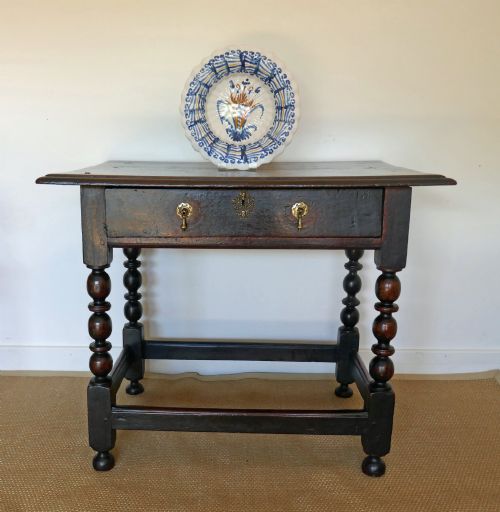
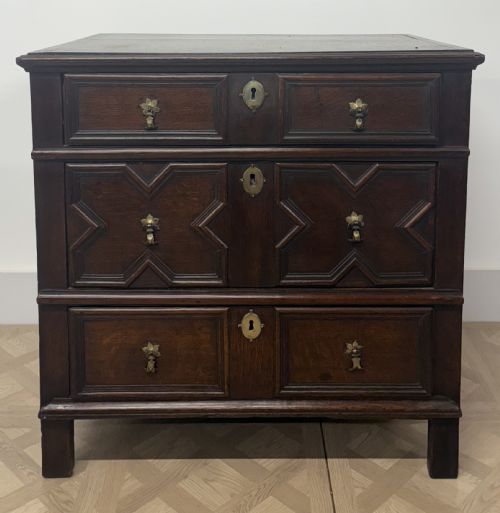
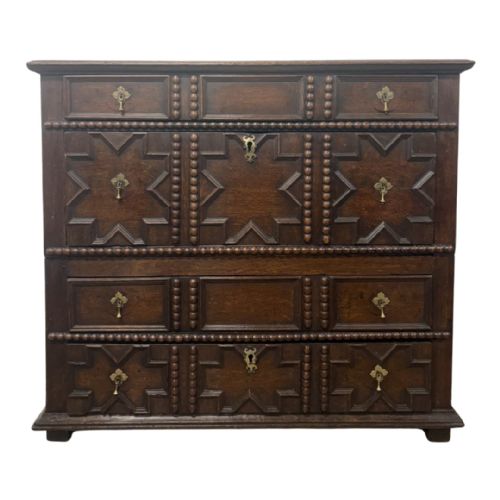
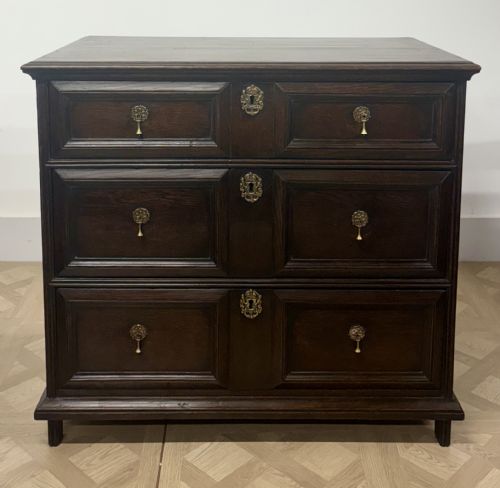

Charles II Oak Furniture
Charles ii oak furniture brings the heavy, honest substance of the seventeenth century directly into a modern room.
What these pieces are
Charles ii oak furniture consists primarily of sturdy chests of drawers and cupboards originating in the seventeenth century. These domestic items formed the backbone of storage in early homes, built to last generations rather than decades.
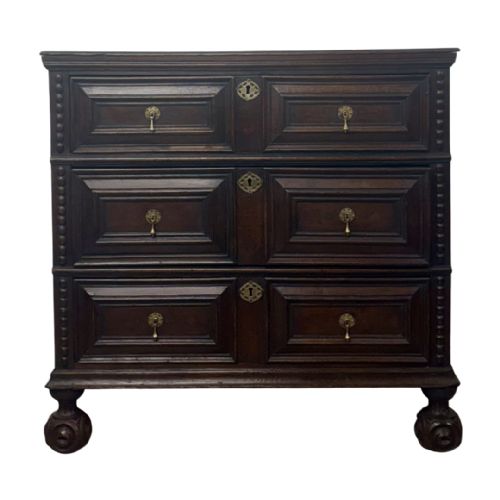
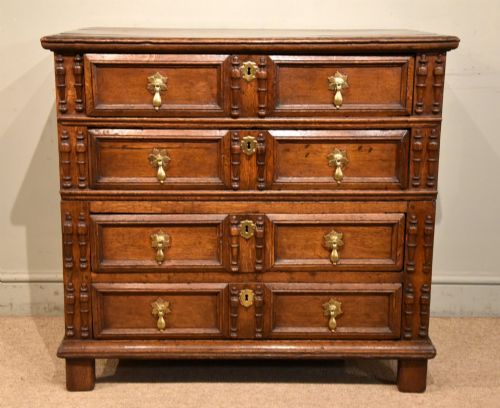
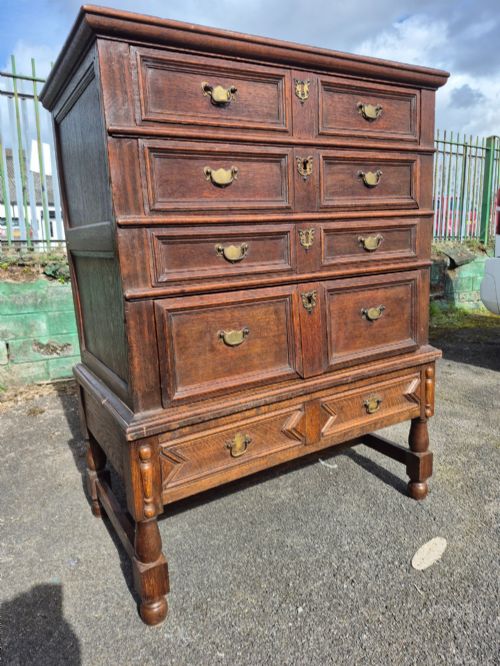
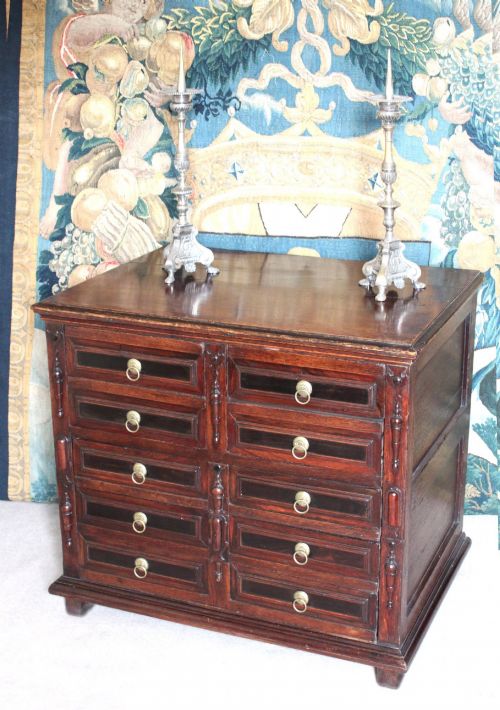
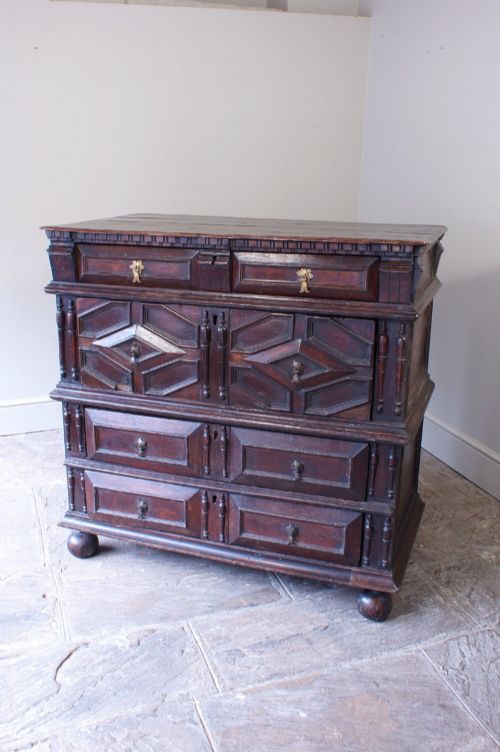
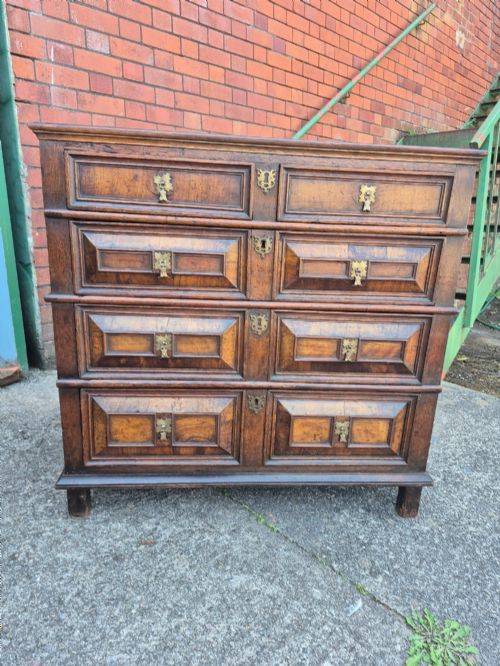
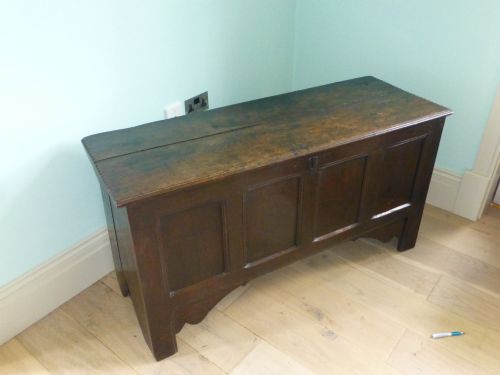
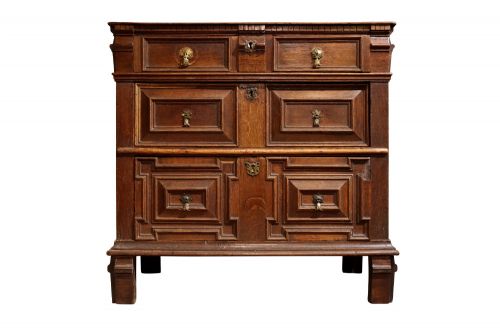
The chests of drawers and cupboards on this page date squarely to the 17th century, representing the robust cabinet-making traditions of the period. Buyers most frequently encounter geometric or moulded front chests of drawers alongside solid oak cupboards.
Every piece carries the distinct stylistic markers of the Charles ii era, combining utilitarian purpose with decorative timber work. The surviving forms reflect a domestic world that prized heavy timber and practical compartment storage above all else.
How they were made
Cabinet-makers relied heavily upon solid oak as the primary structural and visible material for these chests and cupboards. Timber was selected for its density and strength, forming thick panels and frames that required immense physical labour to shape.
Metalwork played a functional supporting role, incorporating iron and brass fittings for hinges, locks, and handles. These secondary metals provided essential mechanical reinforcement to heavy wooden doors and drawers.
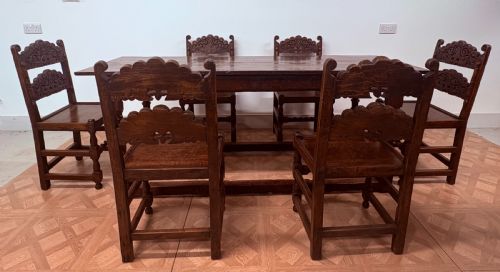
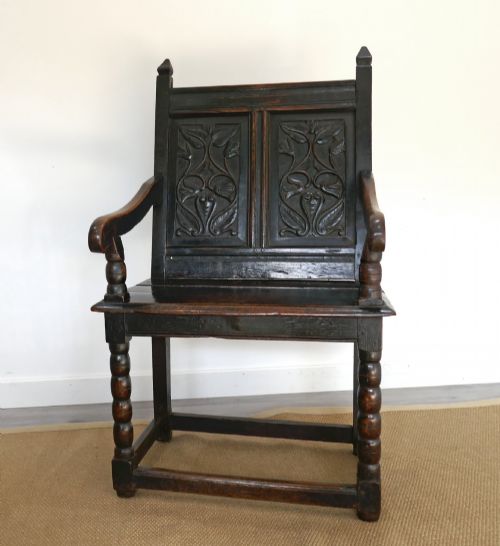
Surface articulation relied on physical manipulation of the timber itself, producing carved, moulded, and geometric fronts. Joiners utilised hand tools to create relief patterns directly on the oak rather than applying separate veneers.
Retail Price Guide 2026
Typical UK retail prices for charles ii oak furniture, calculated from the Sellingantiques database of over a million retail prices indexed since 2003. This retail price guide relies exclusively on Sellingantiques data; no external sources or auction records are used, so the figures do not describe the wider market.
Every item listed on this page dates to the 17th century and uses solid oak as the primary structural material.
What varies in quality
Quality diverges significantly in the ambition of the surface decoration, separating plain utility pieces from those with elaborate geometric or carved detailing. Cabinets featuring complex moulded fronts or deliberate carved flourishes represent a higher tier of domestic commissioning.
The integrity of the original timber construction dictates the overall standing of an individual chest or cupboard. Pieces that retain their primary brass and iron elements without extensive modern timber replacement hold a distinct advantage.
The Charles II Oak Furniture Glossary
- Oak
- A hard, durable timber native to Britain, prized by seventeenth-century joiners for structural framing and panelling. Its pronounced grain defines the visual character of the period.
- Moulded front
- A cabinet face featuring shaped projections and recesses planed directly into the timber or applied in geometric patterns. This technique adds depth and shadow to otherwise flat drawer fronts.
- Geometric chest of drawers
- A storage chest decorated with raised geometric panels arranged in repeating symmetrical patterns across the facade. It represents a signature decorative approach of the later seventeenth century.
- Cupboard
- An enclosed piece of furniture designed with doors for storing domestic goods and provisions. Seventeenth-century examples rely on heavy frame-and-panel construction.
Frequently Asked Questions
What defines charles ii oak furniture?
These pieces originate from the seventeenth century and are constructed almost entirely from solid oak. They emphasise practical storage through heavy chests of drawers and cupboards.
Decoration on these items typically includes carved elements, geometric panelling, and moulded drawer fronts. Their scale and weight reflect the domestic architecture of the period.
How were these chests used?
Chests of drawers served as the primary bedroom and parlour storage for garments, linens, and personal valuables. Their compartmentalised drawers kept textiles organised and protected.
Cupboards fulfilled a similar domestic storage role for household provisions, tableware, or dry goods. Both forms were essential fixtures in seventeenth-century domestic interiors.
Where do iron and brass appear?
Brass and iron are utilised primarily for functional hardware such as hinges, key escutcheons, and drawer pulls. These metals provided necessary mechanical strength to heavy moving parts.
Because original hardware endured heavy daily use, surviving period brass and iron components contribute significantly to the historical integrity of a piece.
How do geometric chests differ?
Geometric chests feature decorative fronts composed of small applied wooden mouldings arranged in precise, repeating patterns. This style creates texture and shadow across the face of the drawers.
Standard moulded chests rely instead on shaped timber framing directly on the drawer edges. Both styles belong firmly to the seventeenth-century manufacturing tradition.