



Seventeenth Century Oak Commode
A seventeenth century oak commode brings robust timber and geometric fronts into a room, offering sturdy storage rooted in early cabinetmaking.
Seventeenth Century Oak Commode
When searching for a seventeenth century oak commode, buyers encounter sturdy chests of drawers and close stools hailing predominantly from the seventeenth century, with occasional eighteenth-century examples appearing.
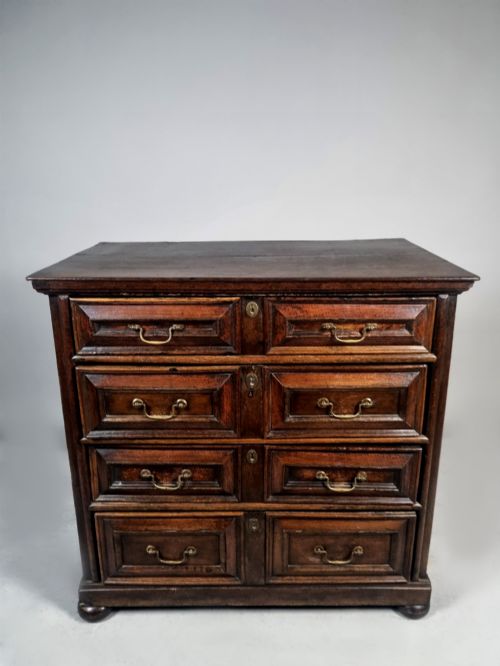
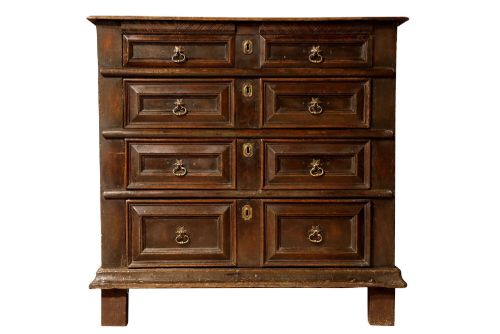
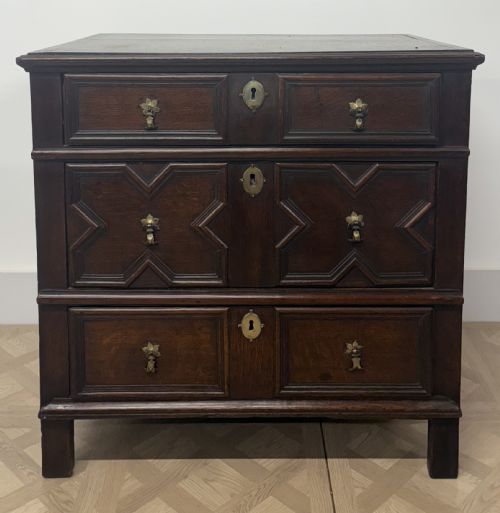
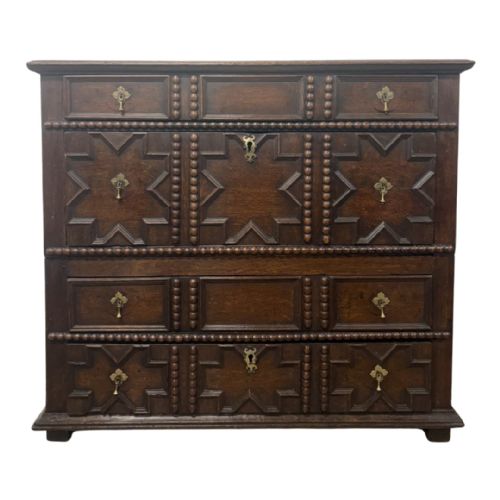
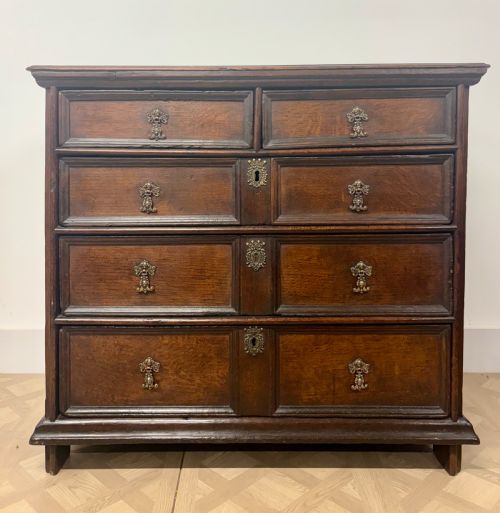
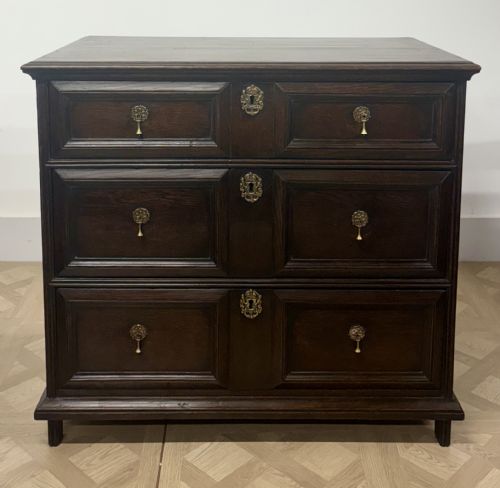
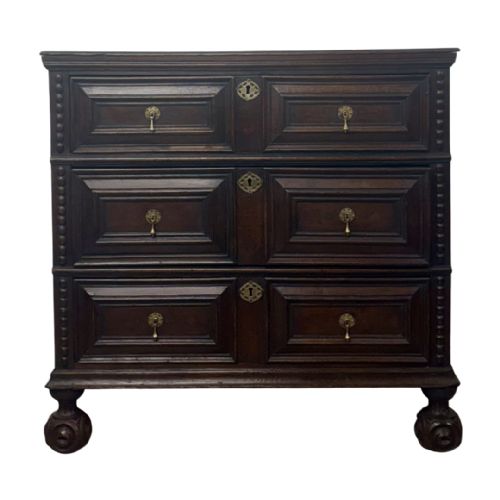
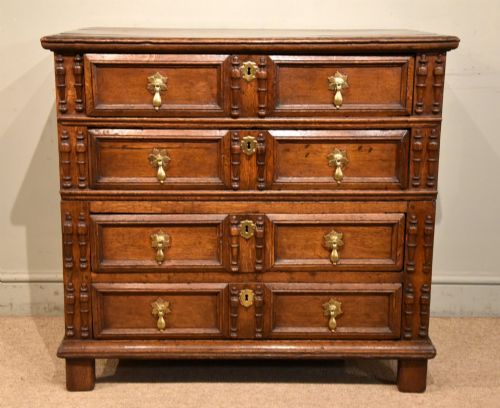
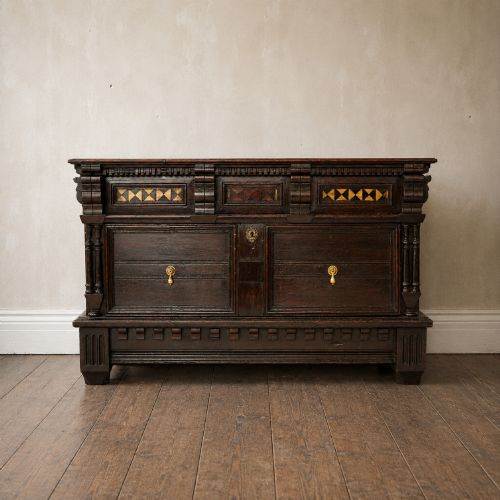
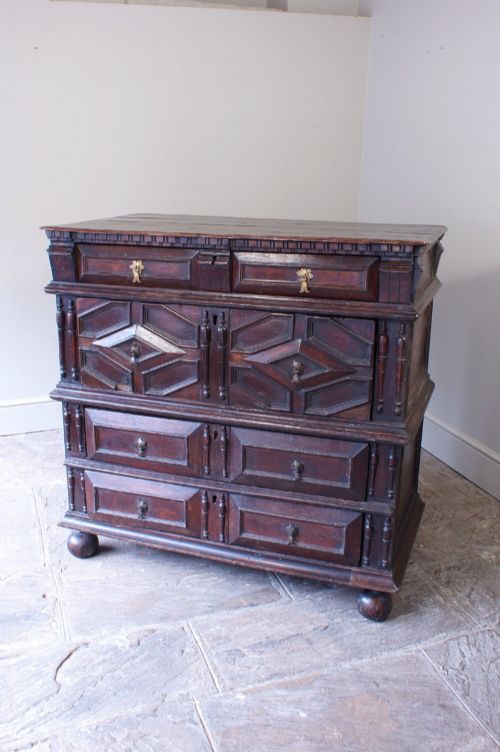
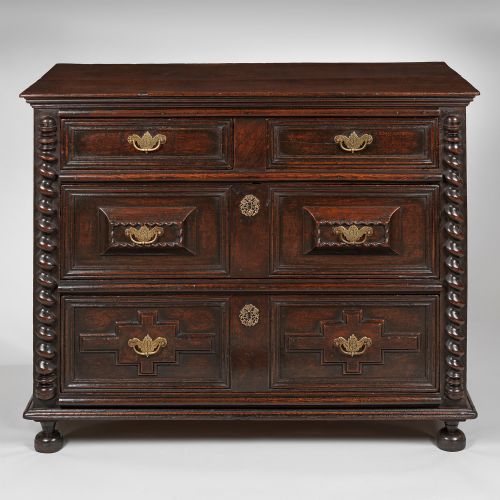
The prevalent form on this page is the oak chest of drawers, often constructed in two parts and detailed with geometric mouldings or applied panels.
Originating largely from British workshops under Jacobean, Charles II, and William and Mary styles, these pieces embody early domestic storage.
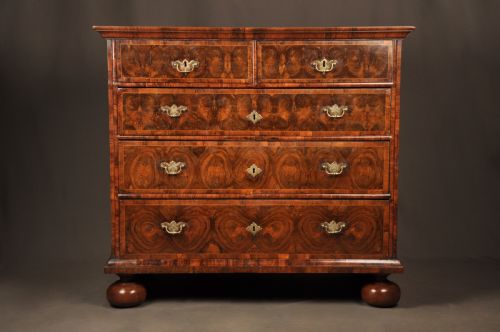
Alternative variants include octagonal commode stools and chests featuring oyster veneer in olive or walnut.
Materials and Construction
Joiners built these pieces primarily from solid oak, sometimes combining it with walnut or olive woods for decorative contrast.
Cabinetmakers utilised wood inlay and intricate geometric mouldings on drawer fronts, frequently mounting them with brass and iron hardware.
Veneering techniques such as oyster cutting showcased circular grain patterns sliced from smaller branch wood.
Some seventeenth-century stools double as hidden commodes, proving our ancestors appreciated clever multi-tasking furniture just as much as we do.
Quality Distinctions
The refinement of the geometric mouldings and the crispness of any carved detailing separate standard items from more ambitious pieces.
The integrity of the timber, including the retention of original brasses and untouched surface patination, dictates the standing of an example.
Later alterations, such as added cupboards or replaced structural elements, shift an item's authenticity and long-term interest.
The Seventeenth Century Oak Commode Glossary
- Commode stool
- A seated piece of furniture enclosing a chamber pot, sometimes formed as an octagonal box. These functional items served domestic sanitation needs.
- Geometric moulding
- Raised wooden strips applied in repeating rectilinear or octagonal patterns to drawer fronts. This technique created visual depth on otherwise plain timber surfaces.
- Oyster veneer
- Circular slices of branch wood arranged to resemble oyster shells. It created decorative surfaces on seventeenth-century cabinet furniture.
- Two-part chest
- A piece constructed as two separate stacked boxes resting one upon the other. This design facilitated transport in smaller domestic spaces.
- Close stool
- A padded seat enclosing a commode mechanism. It represents an early form of private indoor sanitary equipment.
Seventeenth Century Oak Commode: Frequently Asked Questions
What is a seventeenth century oak commode?
A seventeenth century oak commode typically refers to sturdy timber chests of drawers or close stools from the 1600s.
These pieces feature solid oak construction, often embellished with geometric mouldings and brass hardware.
How were these chests used?
They functioned primarily for storing garments, textiles, and household valuables in period chambers.
Stool variants served specific sanitary functions, enclosing chamber pots within enclosed wooden seating.
How do I date a piece?
Dating relies on identifying construction traits like two-part stacking frames, hand-cut joinery, and applied geometric mouldings typical of Charles II and William and Mary periods.
Hardware styles and secondary timbers such as walnut or olive provide further chronological clues.
Where should I place it?
These robust items suit hallways, living rooms, or bedrooms where their timber patination adds historical character.
Keep them away from direct heat sources and strong sunlight to protect the aged oak surfaces.