
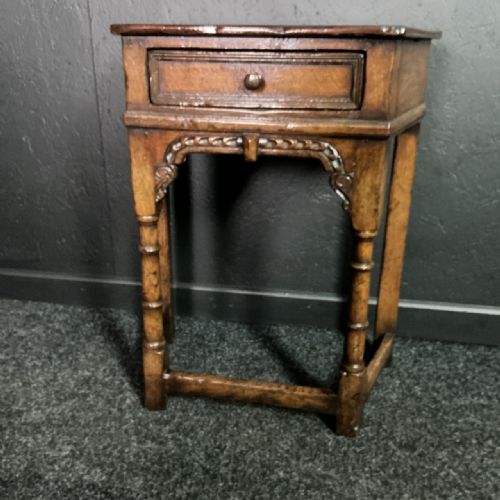
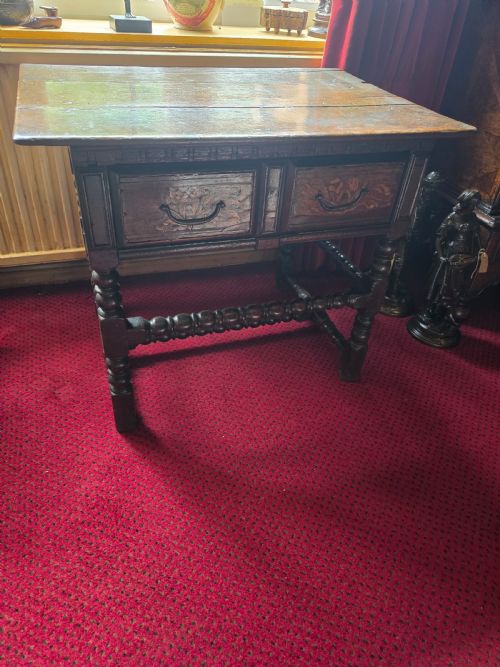

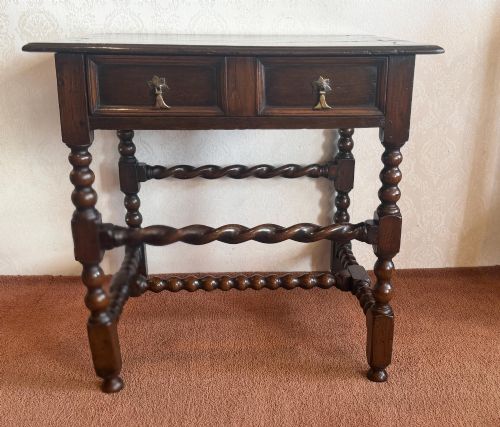
Seventeenth Century Oak Drawers
Seventeenth century oak drawers offer heavy timber construction and rich grain, grounding a room with centuries of functional history.
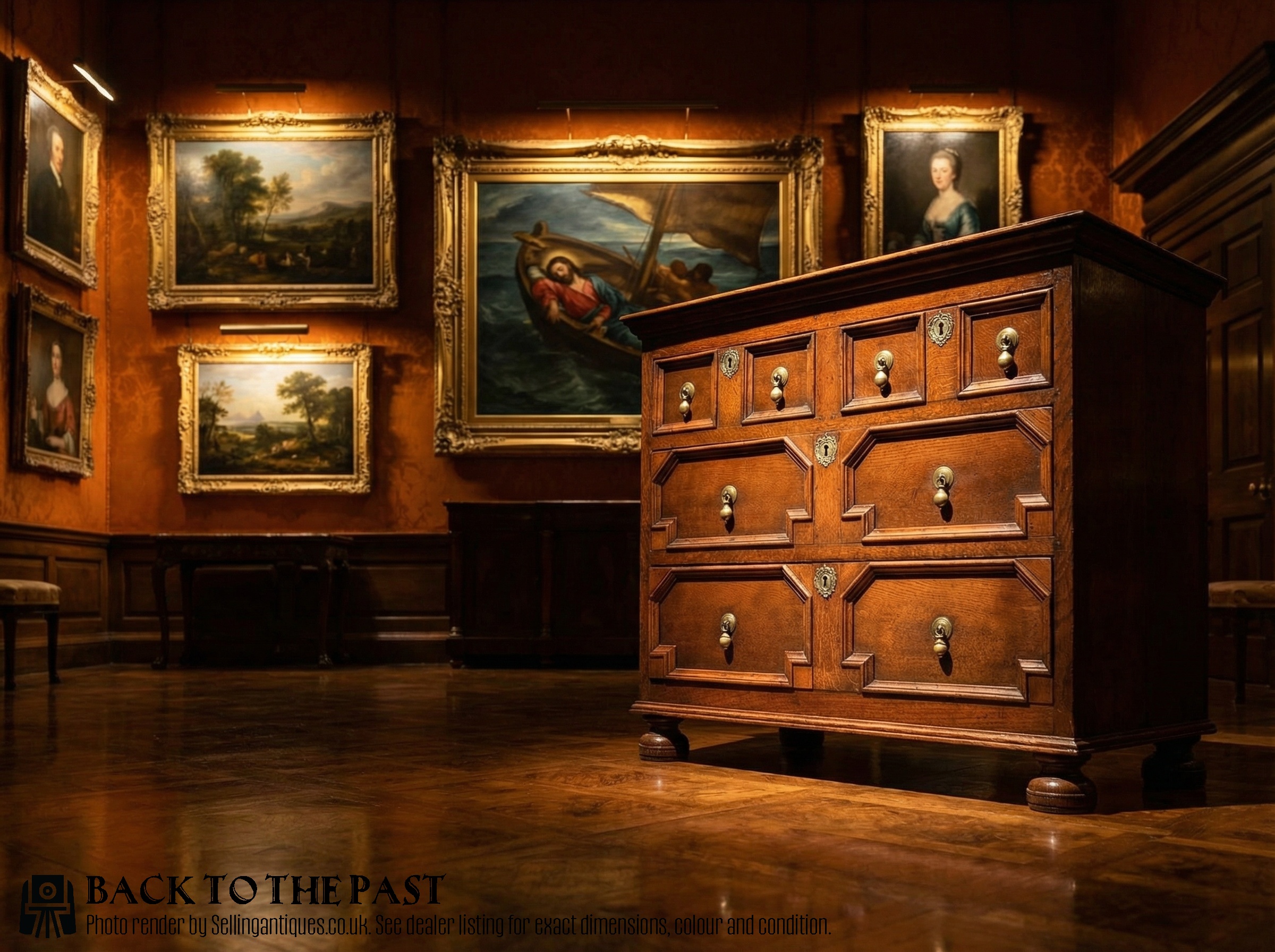
Seventeenth Century Oak Drawers
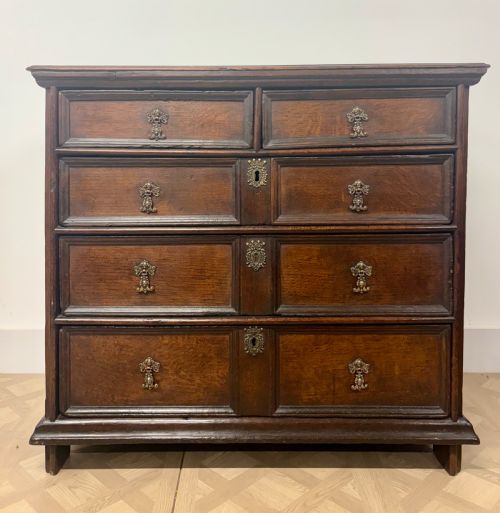
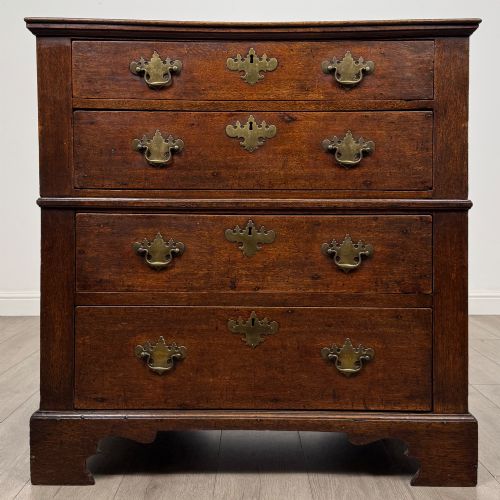
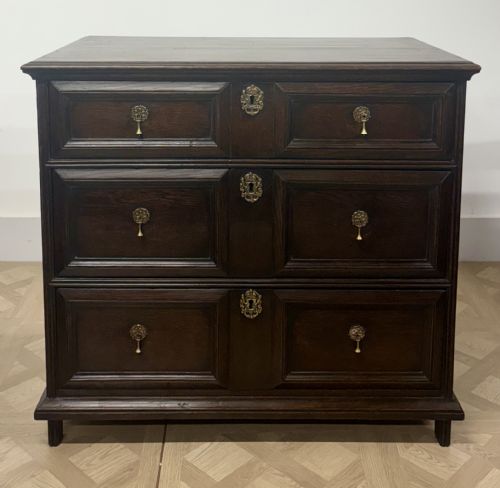
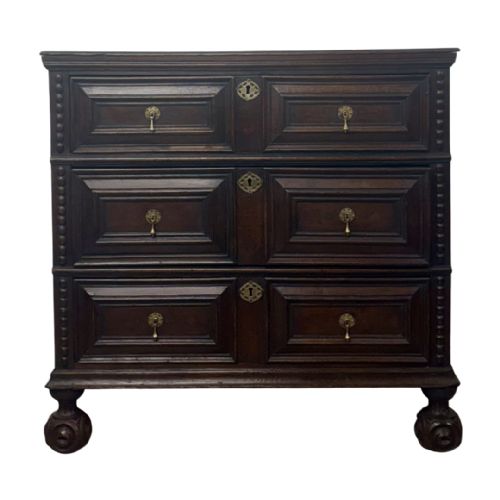
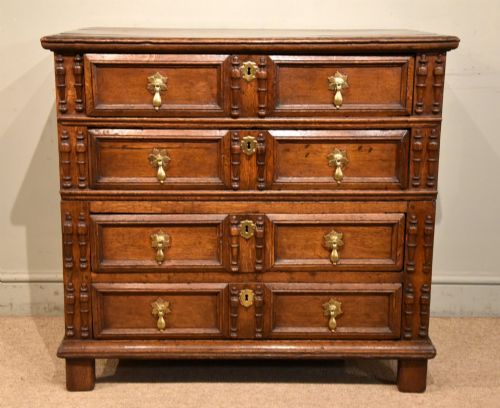
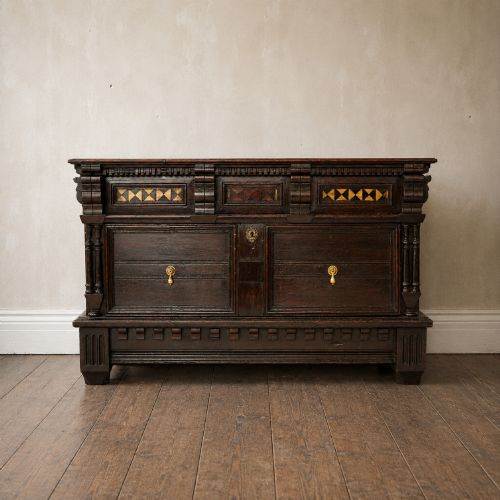
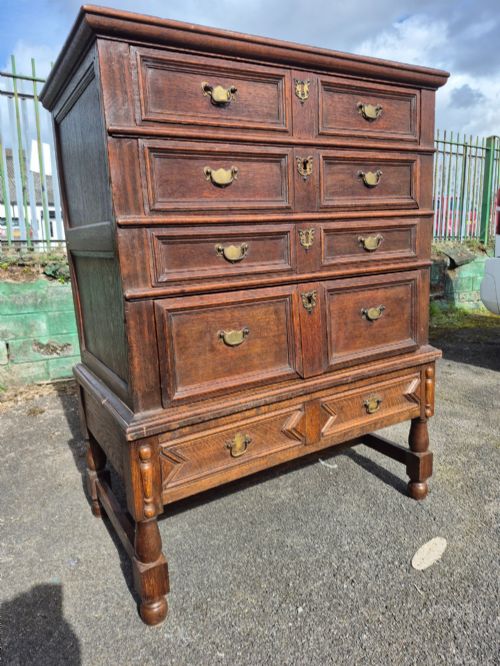
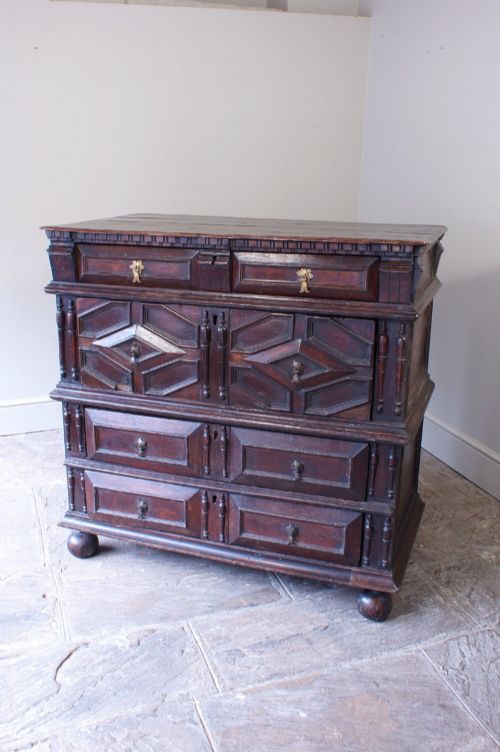
Seventeenth century oak drawers comprise sturdy chests of drawers, side tables, dresser bases, and chests on stands rooted in the 17th century, along with later revivals. Buyers looking for seventeenth century oak drawers most frequently encounter Charles II or Jacobean examples featuring panelled sides and multiple horizontal rows of drawers.
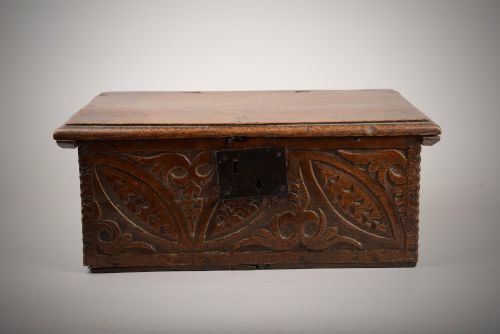
These forms emerge from an era of transition in domestic storage, moving from simple boxes and coffers to multi-drawer case furniture. Alongside standard chests, the selection includes low servers, sideboards, and table boxes equipped with internal drawers.
Origins span English workshops of the period, occasionally incorporating walnut, olive, or painted finishes alongside the primary timber. While many pieces date directly to the seventeen hundreds, some examples reflect later 1920s revival periods.
Materials and Construction
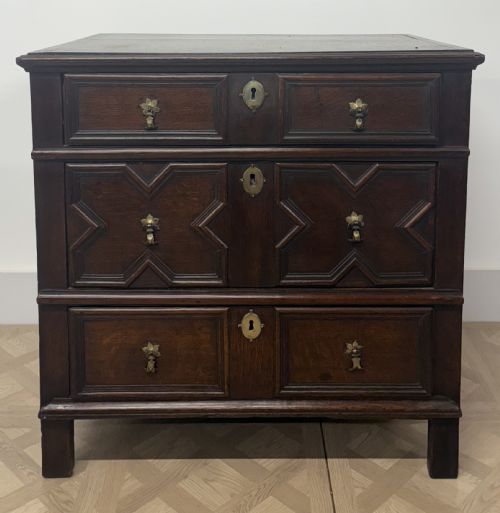
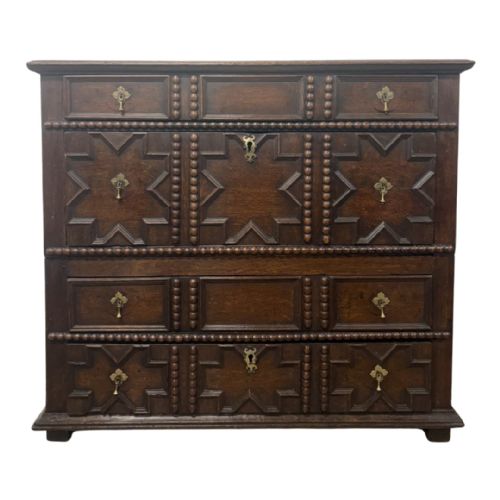
Makers relied primarily on solid oak, shaped with hand tools and held together with pegged mortise and tenon joints. Carcase construction often involved boarded or panelled backs, whilst drawer fronts utilised applied geometric mouldings to create depth and shadow.
Surface ornamentation frequently included wood inlay, olive oyster veneer, and walnut accents set into the primary oak framework. Iron and brass drop handles, hinges, and escutcheons secured the drawers and doors, mounted on original or replacement backplates.
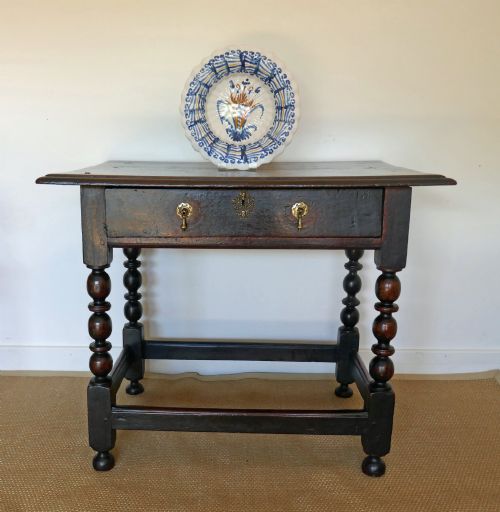
Turned elements such as bobbin turning and barley twist legs appeared on tables and stands supporting the drawer sections. Surfaces received simple wax or oil finishes that developed a faded patina over prolonged use.
Listings feature oak, walnut, olive, and iron, spanning the 17th century alongside 1920s revivals.
Evaluating Quality
The degree of surface preservation and originality of timber dictate the standing of a piece. Examples retaining their initial brass hardware, untouched drawer linings, and early boarded backs command greater attention than those rebuilt with replacement elements.
The crispness of hand-cut geometric mouldings and the complexity of oyster veneering reveal the skill of the original joiner. Subtle variations in the colour and depth of the timber grain distinguish standard utilitarian items from finer decorative pieces.
The Seventeenth Century Oak Drawers Glossary
- Geometric moulding
- Applied strips of wood arranged in repeating rectilinear or octagonal patterns on drawer fronts. This technique defined much of the decorative work during the Charles II period.
- Oyster veneer
- Thin cross-sections sliced from small branches or roots, laid down in circular patterns to resemble oyster shells. It created striking decorative surfaces on late seventeenth-century case furniture.
- Barley twist
- A cylindrical wooden component turned in a spiral helix shape. This form appeared frequently on the legs of side tables and stands from the period.
- Dresser base
- A low wooden sideboard fitted with drawers, used for serving food and storing household utensils. Many surviving examples date from the late seventeenth century.
- Chest on stand
- A case of drawers elevated on a separate framed base with legs. This configuration lifted storage higher off damp floors.
Seventeenth Century Oak Drawers: Frequently Asked Questions
How do I clean seventeenth century oak drawers?
Dust the surfaces gently with a dry, soft cloth to remove everyday particles without disturbing the finish.
Apply a microcrystalline wax sparingly once or twice a year to nourish the dry timber and maintain the patina.
Are these drawers suitable for daily use?
Solid oak construction provides robust durability, but historical drawer runners require gentle handling.
Line the interior bases with acid-free tissue to protect the aged wood from modern items.
How do I spot a later revival piece?
Examine the timber shrinkage, tool marks, and construction methods used inside the drawer carcase.
Revival pieces from the twentieth century often display machine-cut elements and uniform patination unlike seventeenth-century work.
What is an oyster veneer chest?
Oyster veneering involves slicing small branches diagonally to produce round or oval patterns resembling oyster shells.
These delicate wooden discs were arranged across the drawer fronts of fine late seventeenth-century furniture.