

17th Century Oak Commode
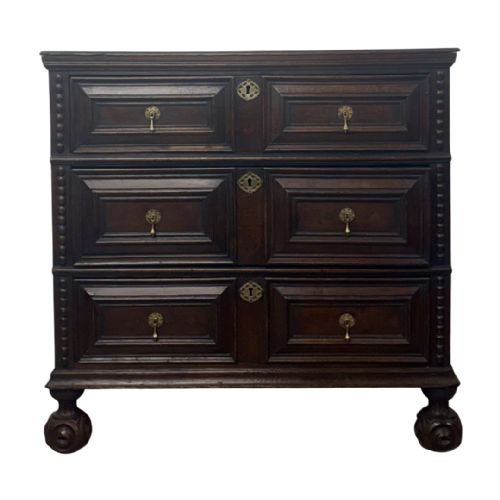
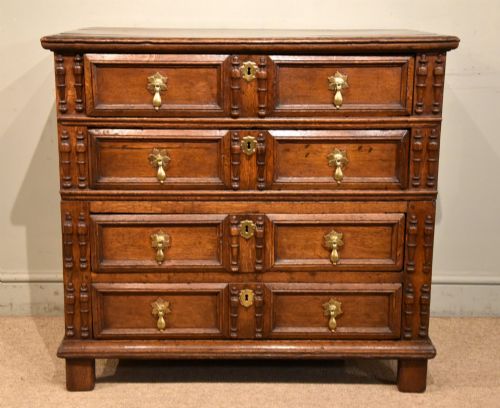
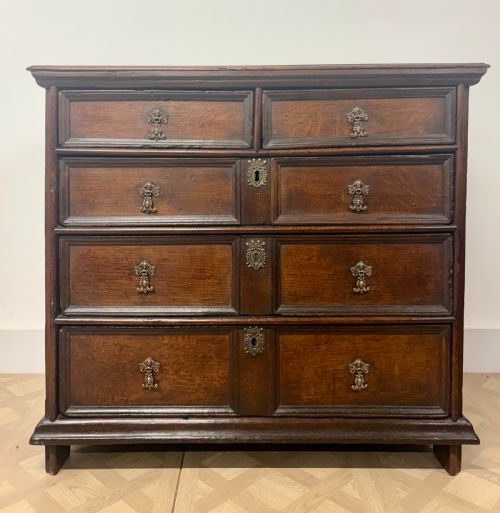
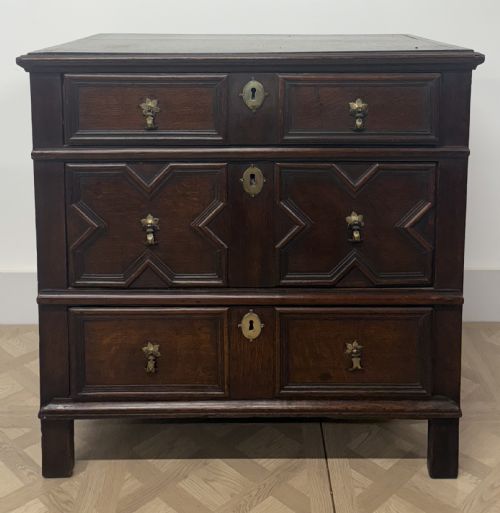
A 17th century oak commode brings heavy timber, geometric mouldings and rich drawer fronts into a room.
17th Century Oak Commode
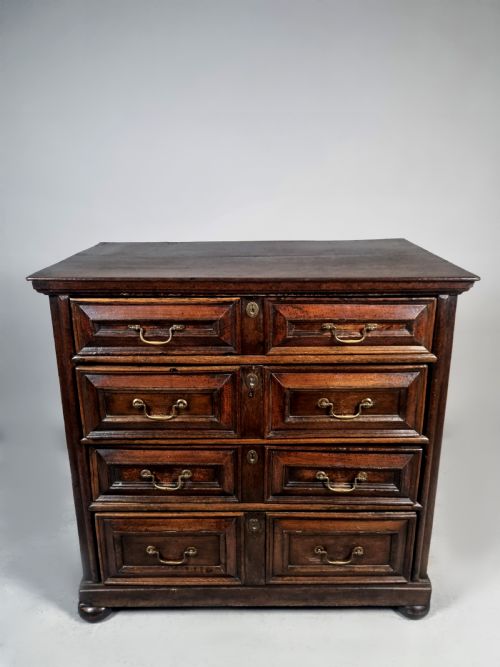
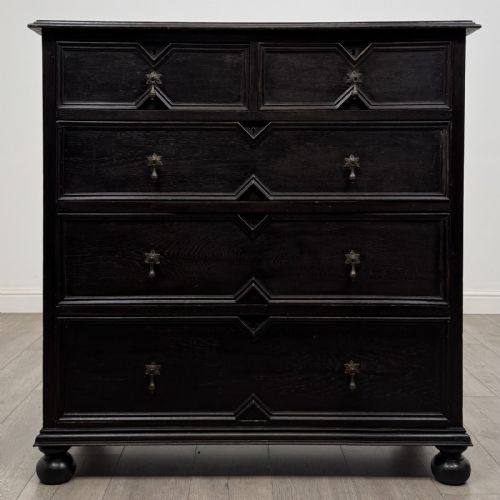
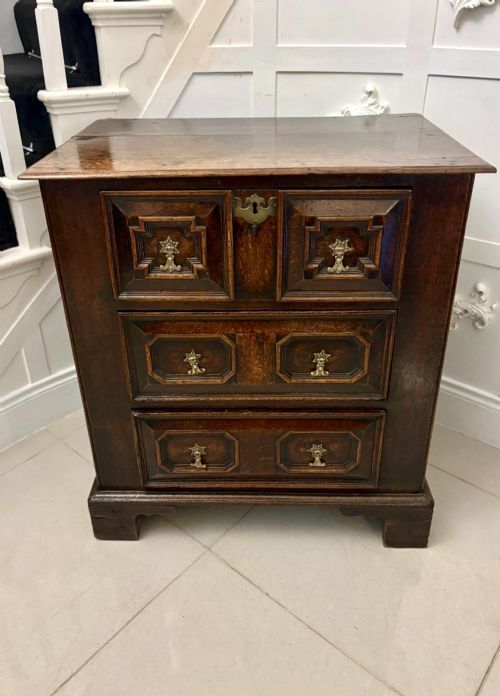
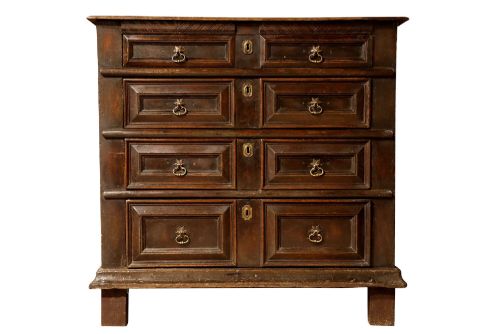
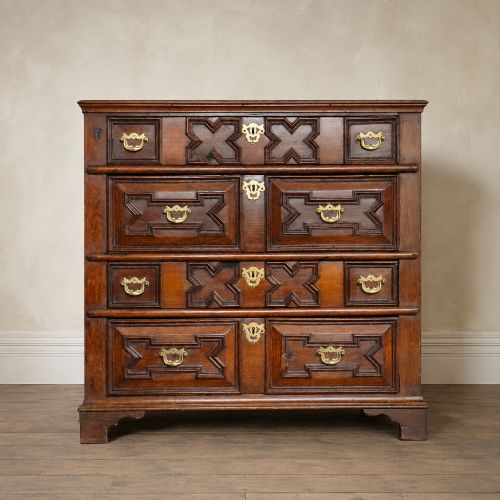
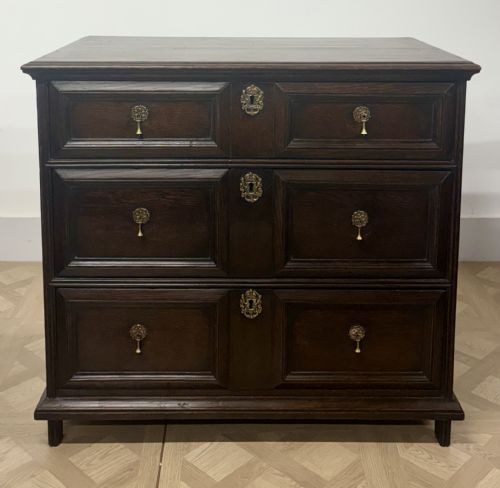
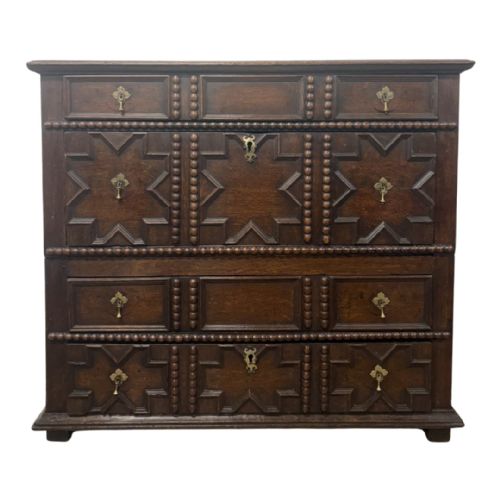
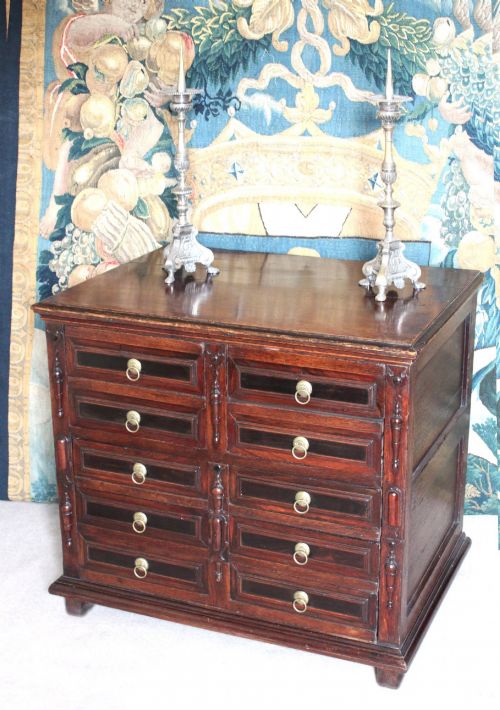
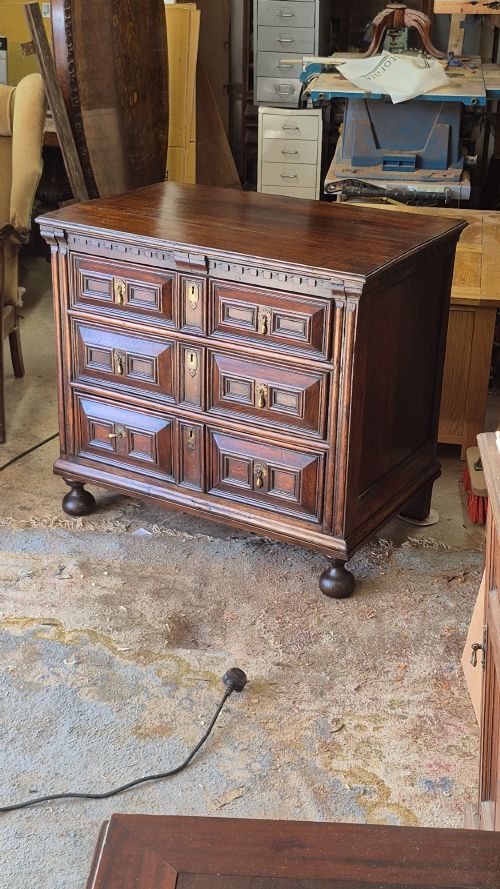
A 17th century oak commode encompasses sturdy chests of drawers and box stools from the 17th and early 18th centuries. The selection centres predominantly on solid oak chests of drawers bearing geometric mouldings and panelled drawer fronts.
Makers and craftsmen of the period produced two-part chests and low storage forms associated with Jacobean, Charles II, Restoration and William and Mary styles. Alongside standard chests, the listings include box stools and close stools designed for practical domestic use.
Materials and construction
Carpenters relied heavily on solid oak for structural rigidity, combining it with walnut, fruitwood and olive to create decorative surfaces. Panels and frames were joined using traditional methods suited to heavy native timber.
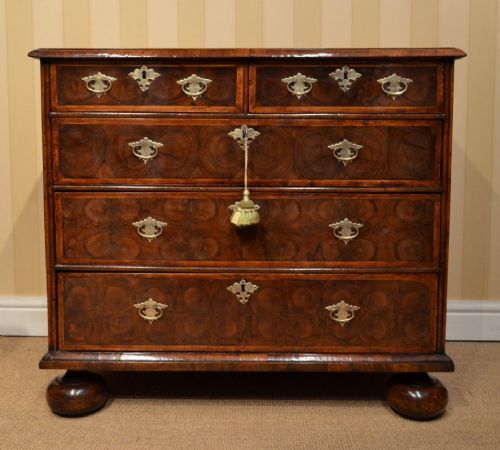
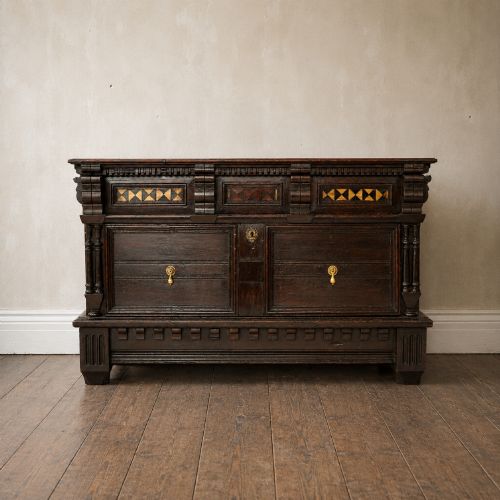
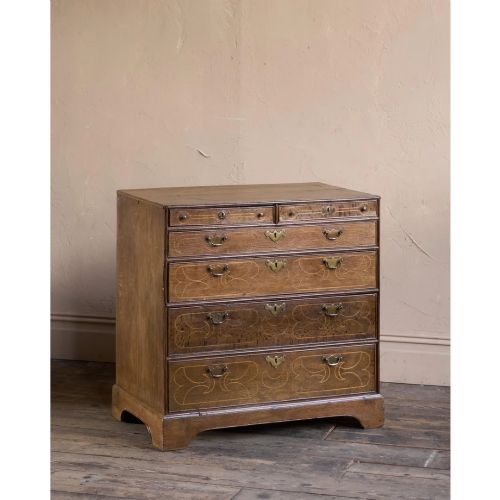
Craftsmen applied intricate geometric mouldings to drawer fronts, alongside elaborate oyster veneers and wood inlay work. Brass handles and iron fastenings completed the hardware of these early pieces.
17th Century Oak Commode Retail Price Guide 2026
Typical asking prices for 17th century oak commode among the pieces listed under this phrase on Sellingantiques today, from the lower quarter to the upper quarter. They describe what is for sale here now, not the wider market.
Listings feature oak, walnut, olive, fruitwood, brass and iron across 17th century and 18th century periods.
Distinguishing quality
The degree of sophistication in the geometric mouldings and the precision of the oyster veneering mark the distinction between standard storage pieces and finer examples. Pieces retaining original brasses and untouched decorative wood inlay command greater attention from collectors.
The integration of secondary timbers, such as walnut or fruitwood combined with oak, alongside the complexity of two-part carcases, separates simpler utilitarian forms from more ambitious workshop productions.
The 17th Century Oak Commode Glossary
- Oyster veneer
- Slices cut transversely from small branches or roots to create circular or oval patterns resembling oyster shells. This technique gained popularity during the late 17th century.
- Geometric moulding
- Raised wooden strips applied to drawer fronts in repeating angular patterns. These designs define the aesthetic of Charles II period case furniture.
- Close stool
- A box stool enclosing a chamber pot, often built with a hinged seat. Such items served domestic hygiene needs in seventeenth-century interiors.
- Two-part chest
- A chest of drawers constructed in upper and lower sections to ease transportation. This form frequently appears in Charles II oak examples.
- William and Mary
- A style spanning the late 17th and early 18th centuries characterised by refined marquetry, walnut usage and Dutch influences. It followed the Carolean and Restoration periods.
17th Century Oak Commode: Frequently Asked Questions
What is a close stool?
A close stool is an enclosed box stool designed to conceal a chamber pot beneath a lidded seat.
These functional items formed standard bedroom furniture before indoor plumbing became common.
How do I identify a Charles II chest?
Charles II chests typically display heavy oak construction, distinct geometric mouldings on the drawer fronts, and sometimes two-part carcases.
Stylistic markers also include sturdy bracket feet or plain stile extensions and period brass drop handles.
Are these pieces made entirely of oak?
While oak forms the primary structural timber, many examples incorporate secondary woods such as walnut, olive or fruitwood for decorative veneers and inlays.
Iron and brass hardware also appear on drawer fronts and hinges.