


Restoration Era Oak Furniture
Restoration era oak furniture brings seventeenth-century craftsmanship into your home through solid timber and geometric mouldings.
Restoration Era Oak Furniture
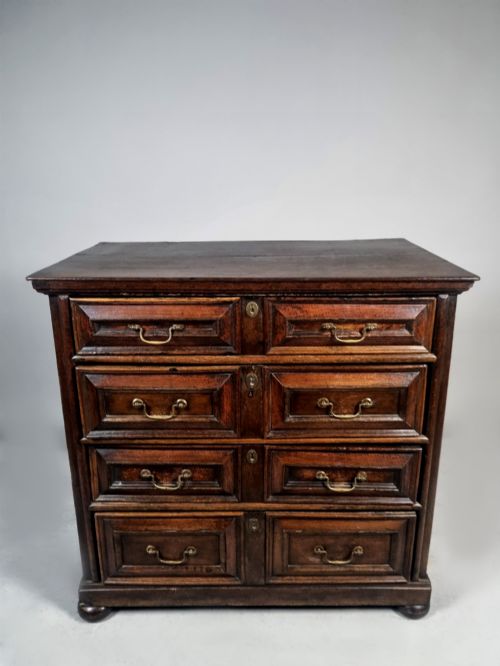
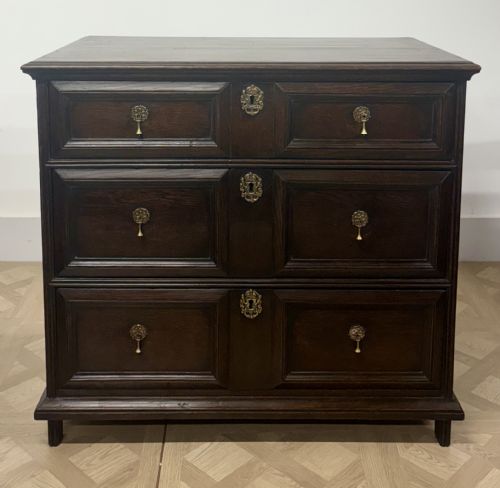
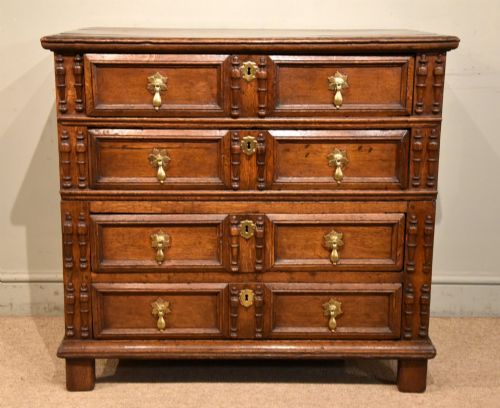
When you search for restoration era oak furniture, you encounter seventeenth-century pieces spanning the Charles II, Carolean, and William and Mary styles. The selection centres primarily on chests of drawers, alongside dining tables and cupboards.
You meet sturdy two-part chests, gateleg tables, and court cupboards originating from the seventeenth century and around the year seventeen hundred. These forms reflect the domestic interior of the period with practical storage and dining solutions.
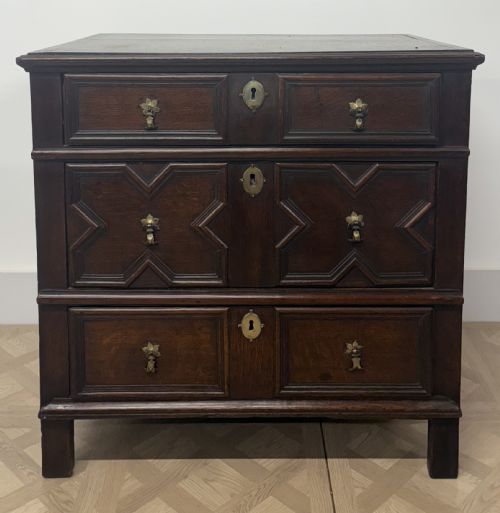
The prevailing aesthetic combines sturdy timber construction with decorative surface treatments like geometric mouldings and inlay. Most examples maintain the architectural proportions typical of seventeenth-century joinery.
How they were made
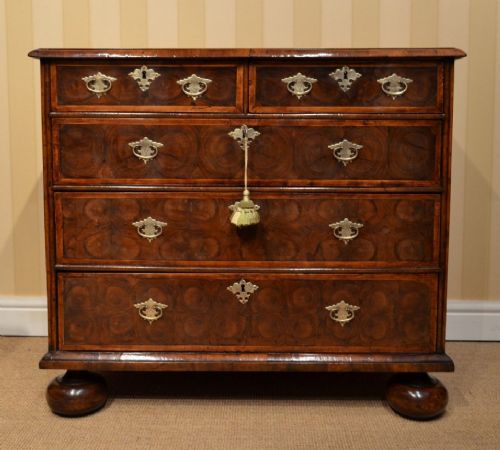
Carpenters built these items predominantly using solid oak, often combining it with walnut, fruitwood, and oyster veneer for decorative contrast. Timber selection dictated both the structural integrity and the visual richness of the surface.
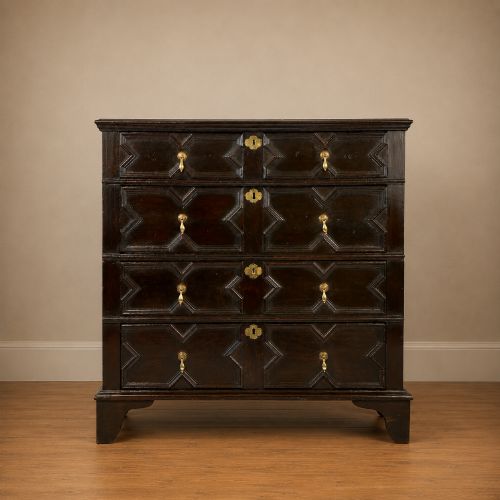
Workshops applied brass hardware such as drop handles and escutcheons to secure drawers and doors. Geometric mouldings were painstakingly cut and applied to drawer fronts to create depth and texture.
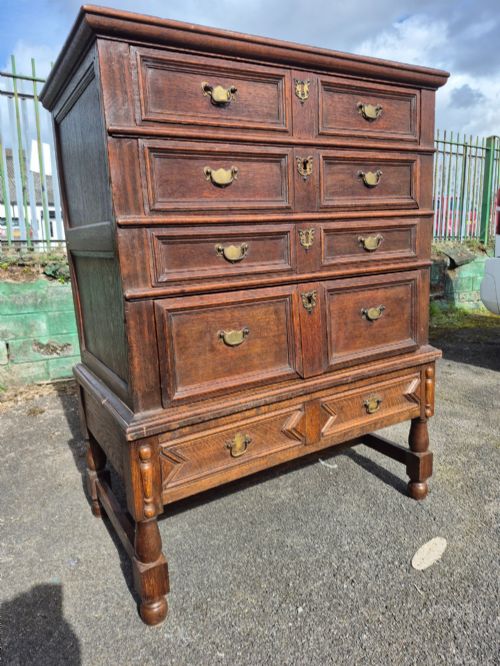
Two-part chests and cupboards utilised frame and panel construction to accommodate the natural movement of timber over time. Gateleg tables relied on sturdy turning and hinged flaps to balance utility with support.
Restoration Era Oak Furniture Retail Price Guide 2026
Typical asking prices for restoration era oak furniture among the pieces listed under this phrase on Sellingantiques today, from the lower quarter to the upper quarter. They describe what is for sale here now, not the wider market.
Listings feature seventeenth-century periods including Charles II, William and Mary, and Jacobean styles.
What varies in quality
The grade of timber and the complexity of surface decoration distinguish different tiers of joinery. Pieces featuring intricate oyster veneering in walnut and fruitwood demonstrate a higher level of specialist cabinet work than plain board construction.
The precision of applied geometric mouldings and the retention of original brass fittings influence the integrity of a piece. Coherence between the structural oak carcass and the secondary decorative woods marks the distinction between standard utilitarian items and finer works.
The Restoration Era Oak Furniture Glossary
- Oyster veneer
- Cross-sections of small branches or roots laid in decorative patterns. This technique creates a distinctive rippled grain effect across drawer fronts.
- Geometric moulding
- Raised wooden strips applied in repeating patterns to flat surfaces. Craftsmen used these to add architectural depth during the seventeenth century.
- Gateleg table
- A dining table featuring hinged flaps supported by swing-out legs. This design allowed tables to fold down compactly when not in use.
- Court cupboard
- A traditional enclosed storage piece for utensils and food. These items often feature carved detailing and tiered compartments typical of seventeenth-century interiors.
- Two-part chest
- A chest of drawers constructed in upper and lower sections for easier transport. This form became prevalent during the Charles II period.
Restoration Era Oak Furniture: Frequently Asked Questions
What defines restoration era furniture?
This furniture originates from the seventeenth century, particularly under the reign of Charles II and the William and Mary period. It encompasses heavy timber construction, geometric mouldings, and decorative veneers.
The style marks a transition from austere Jacobean designs towards more ornate and finished interior furnishings.
How were these chests used?
Chests of drawers served as primary storage for textiles, linens, and personal valuables in seventeenth-century homes. Two-part designs made moving heavy storage units more manageable.
They stood in bedchambers and parlours, combining practical utility with visible displays of household wealth.
Where should I place a gateleg table?
Gateleg tables suit dining spaces or living areas where flexible surface area is an advantage. Their drop leaves allow them to sit compactly against a wall.
Keep them away from direct heat sources to protect the seventeenth-century timber and joinery.
What woods were used alongside oak?
Cabinet makers supplemented oak with walnut, fruitwood, and delicate oyster veneers for decorative contrast. These secondary woods created varied tones and textures on drawer fronts.
Brass handles and escutcheons completed the hardware scheme on these multi-wood surfaces.