

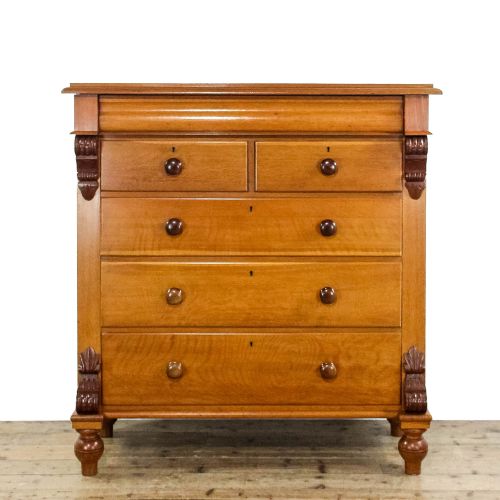
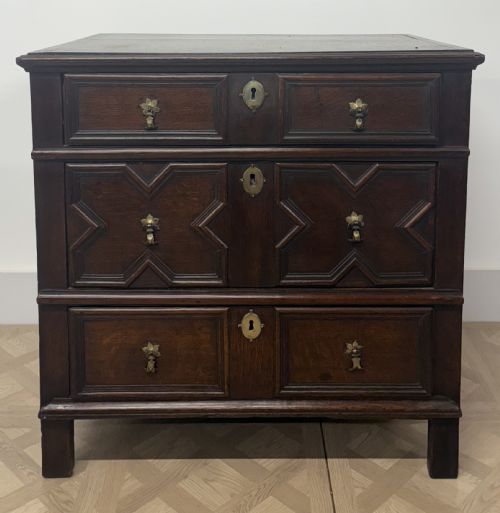
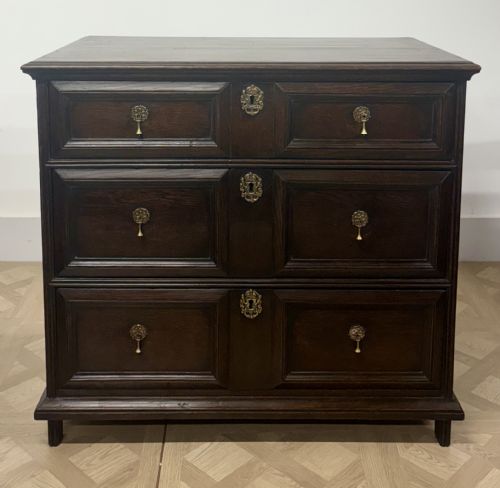
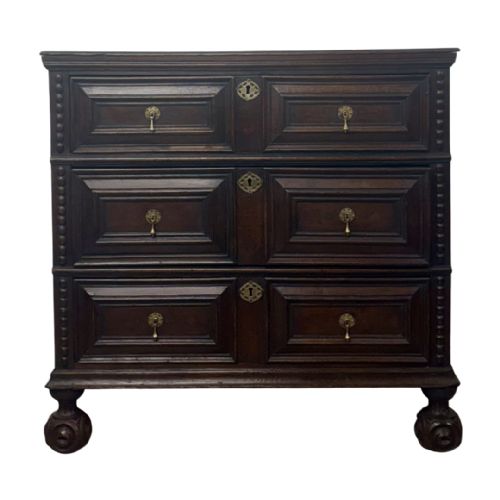
Carved Oak Bedroom Chest
A carved oak bedroom chest brings centuries of honest grain and sturdy timber straight into a modern interior.
Carved Oak Bedroom Chest
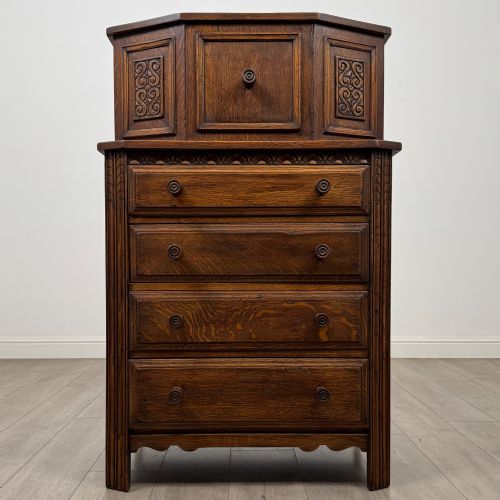
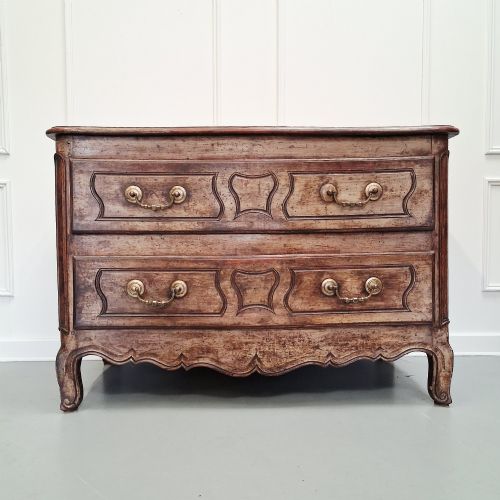
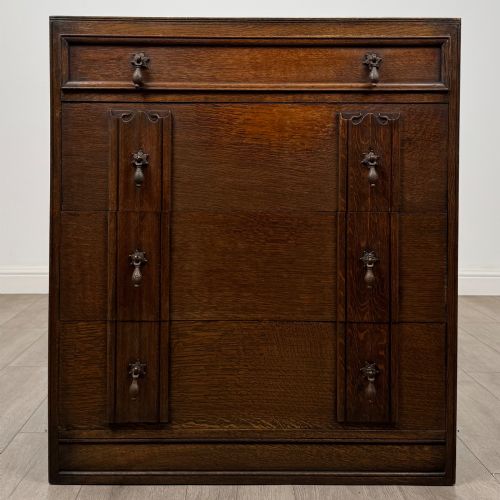
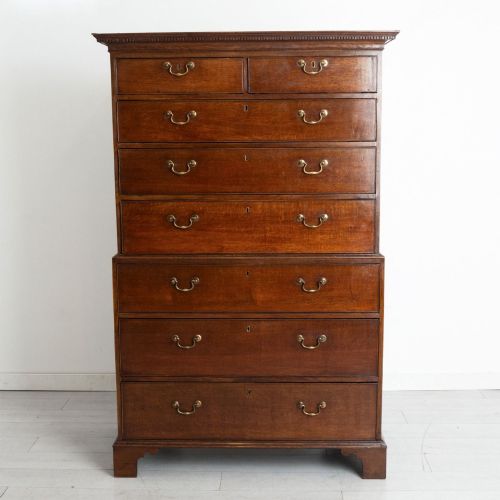
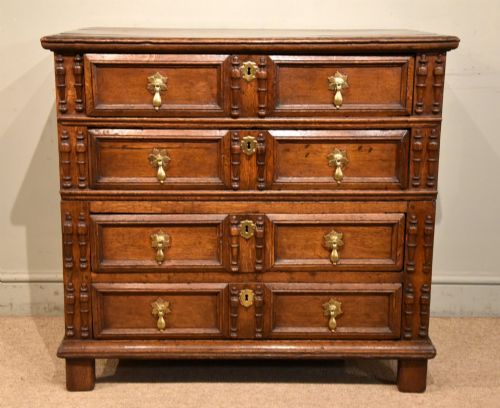
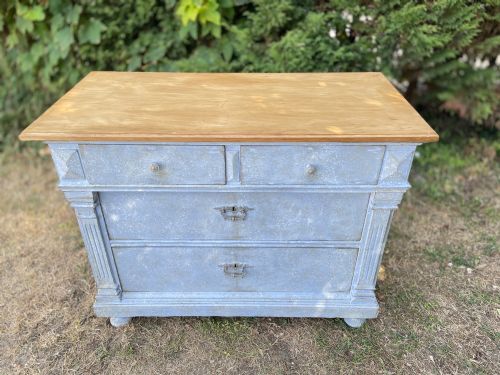
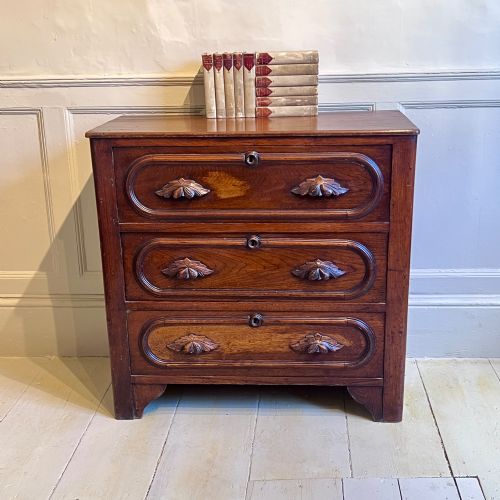
A carved oak bedroom chest is a practical storage piece built from sturdy timber, spanning periods from the seventeenth century through to the Edwardian era. These pieces arrive in forms ranging from low bedside cabinets and tall chests on chest to linen presses and dressing tables.
The versions most frequently met on this page date from the seventeenth and eighteenth centuries alongside later Edwardian and twentieth-century interpretations. Makers drew on Jacobean, Georgian, Victorian, and Arts and Crafts styles to shape the wood.
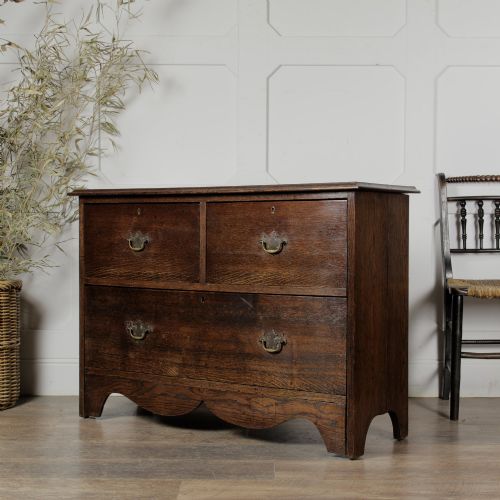
Origin points stretch across English country workshops to French provincial makers, utilising oak supplemented by brass, iron, and occasional marble tops. The primary function remains the containment of clothes and linens within deep, solid drawers.
How they were made
Joiners built these items using solid oak boards, frequently employing panel-and-frame construction to accommodate the natural movement of the timber as seasons changed. Hand-cut dovetails joined the drawer boxes together while pegged mortise and tenon joints secured the main frames.
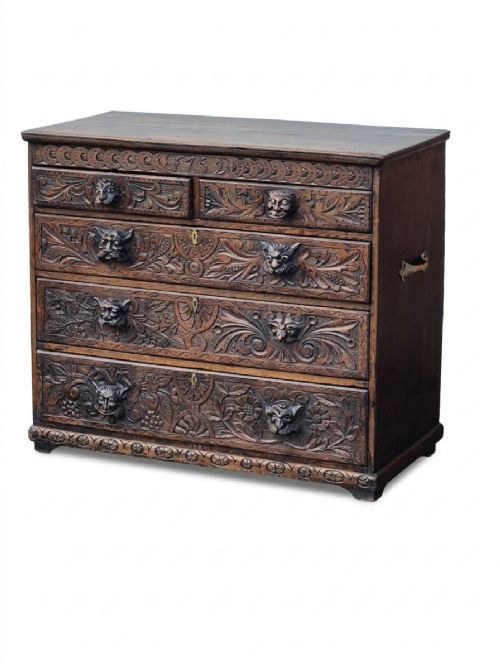
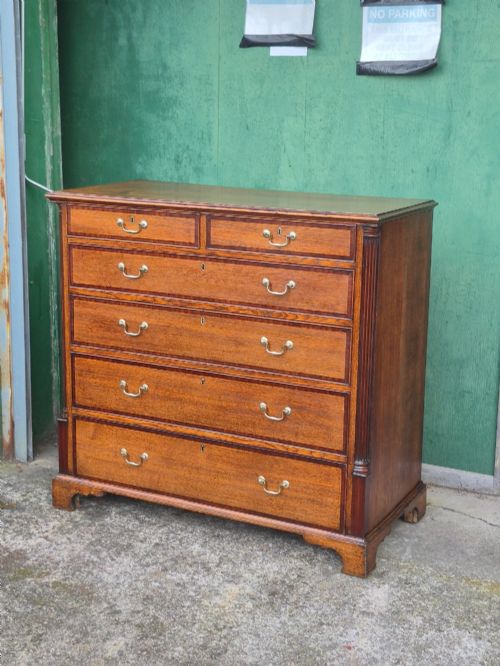
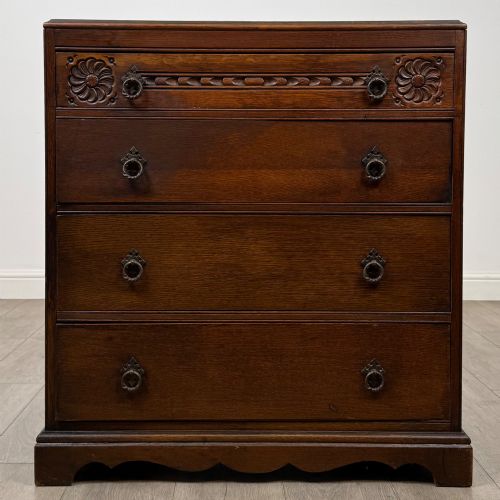
Carving was executed by hand using gouges and chisels to produce geometric mouldings, linenfold patterns, or exuberant grotesque masks. Smiths forged the accompanying brass drop handles, key escutcheons, and iron hinges, fixing them directly to the drawer fronts.
Keep watch for occasional Green Man carvings glaring out from nineteenth-century drawer fronts.
What varies in quality
The standard of a carved oak bedroom chest rests upon the crispness of the hand-carved detail and the thickness of the original timber boards. Early seventeenth-century examples rely on deeply chiselled geometric panels and untouched patination, whereas lesser pieces show mechanical carving or later timber replacements.
Integrity of construction dictates overall worth, seen in untouched backboards, original brass hardware, and smoothly running drawer sides that glide without binding. Surface finishing also plays a part, distinguishing pieces with genuine wax build-up from those stripped down to raw, dry wood.
Heals·Shapland and Petter
The Carved Oak Bedroom Chest Glossary
- Commode
- A low French chest of drawers, often featuring decorative mounts or veneered surfaces.
- Linenfold
- A carved wooden panel resembling folded cloth, popular in early oak furniture design.
- Chest on chest
- A tall storage unit formed of one smaller chest stacked directly upon a wider base chest.
- Geometric moulding
- Raised wooden bars applied in rectilinear patterns to drawer fronts during the seventeenth century.
- Escutcheon
- A protective metal plate surrounding a keyhole, usually fashioned from brass.
Carved Oak Bedroom Chest: Frequently Asked Questions
How do I date a carved oak chest?
Dating relies on construction methods, timber selection, and decorative motifs present on the frame. Seventeenth-century pieces typically display hand-pegged joinery and deep geometric carvings, while later Edwardian versions utilise lighter framing.
Hardware styles also offer clues. Original brass drop handles and cast backplates point securely to specific periods like the late seventeenth or early eighteenth centuries.
Are these chests suitable for modern bedrooms?
Solid timber storage pieces provide robust utility alongside deep historical character that flat-pack furniture cannot match. Their sturdy drawers easily accommodate contemporary clothing and linens.
Care involves keeping the wood away from direct heat sources and feeding the grain with traditional beeswax to maintain the finish.
How should I care for antique oak?
Maintaining antique oak requires a stable room temperature and consistent humidity to prevent the timber from splitting. Dusting with a soft cloth keeps abrasive particles away from the surface.
Applying a clear beeswax polish twice a year nourishes the grain and preserves the historic colour of the wood.