
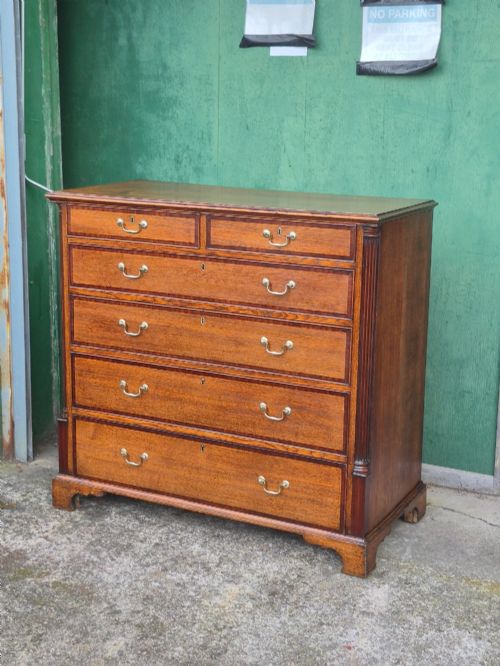
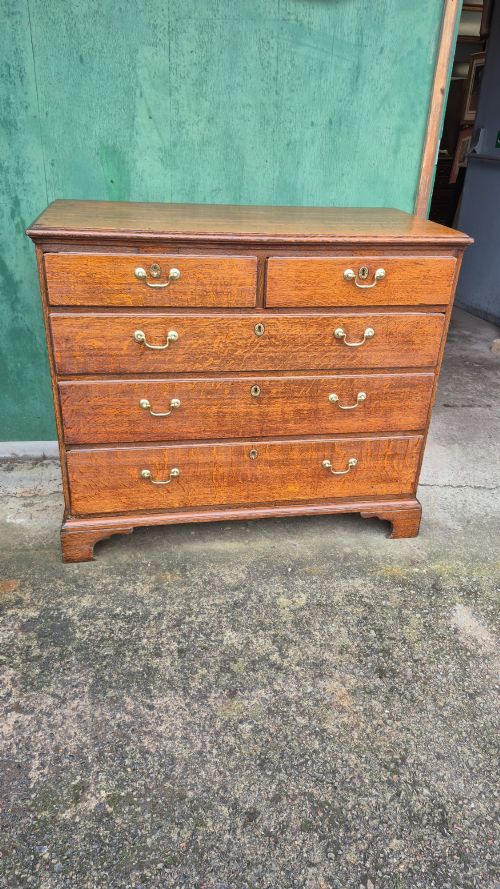
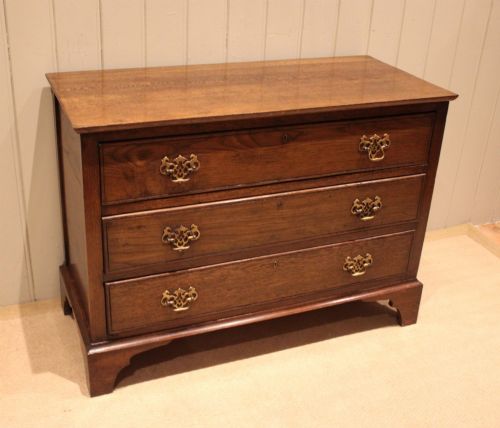

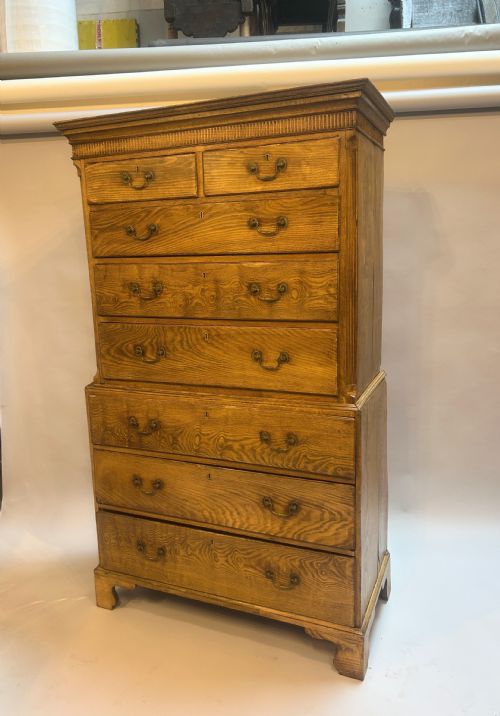
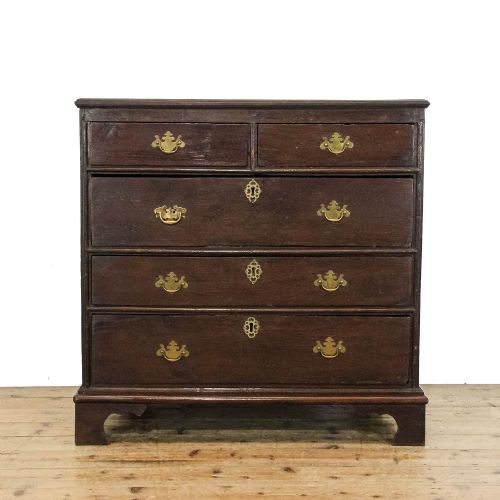
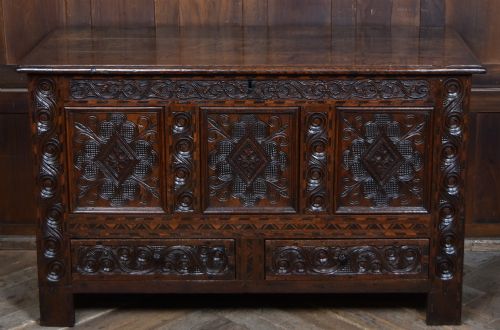
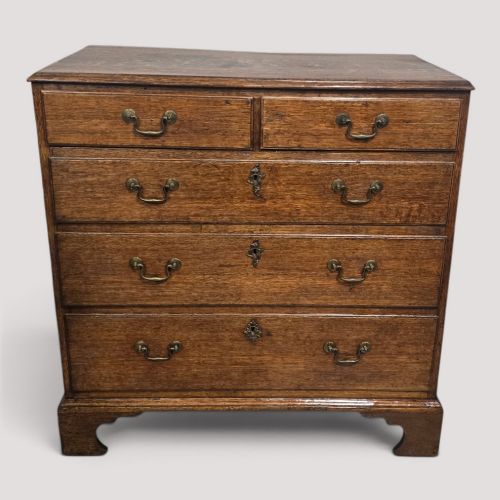
Georgian Oak Chest of Drawers
A georgian oak chest of drawers brings sturdy timber warmth and generations of domestic storage into a room.
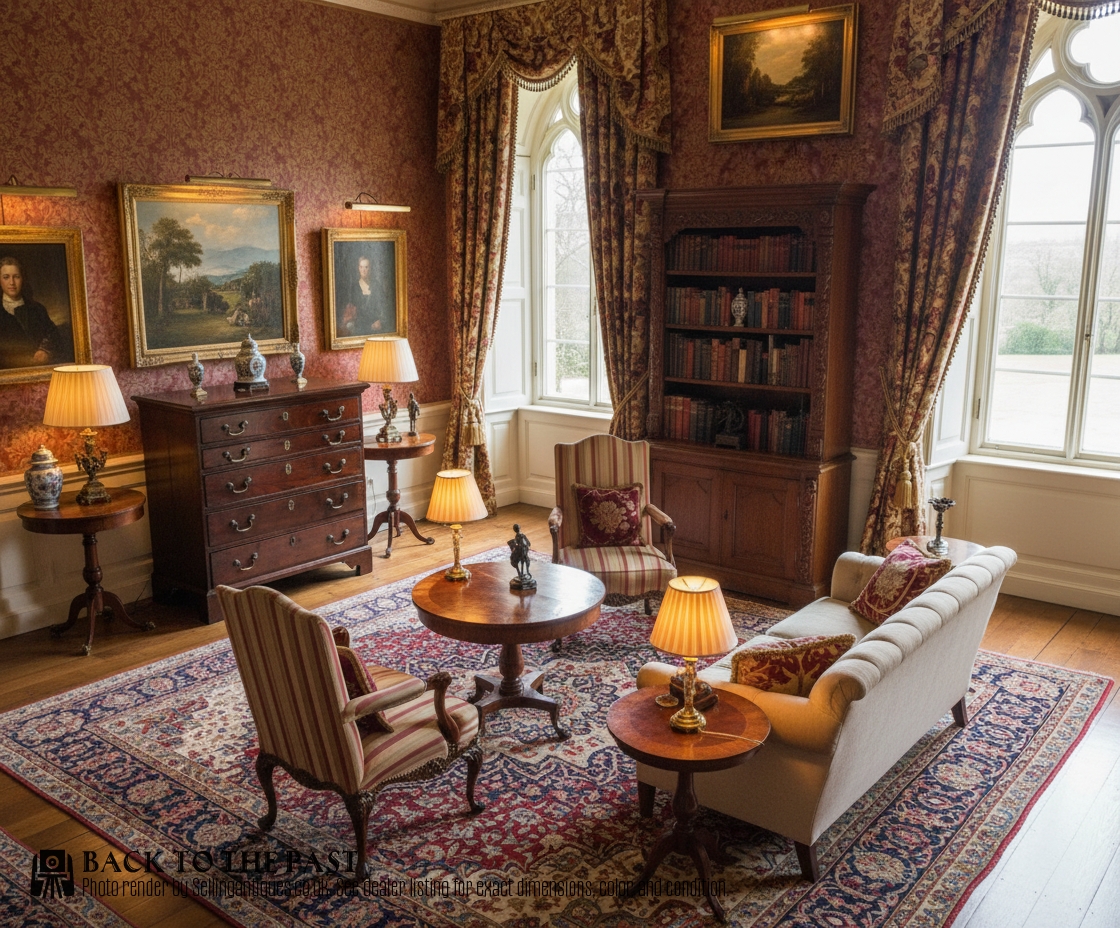
Georgian Oak Chest of Drawers
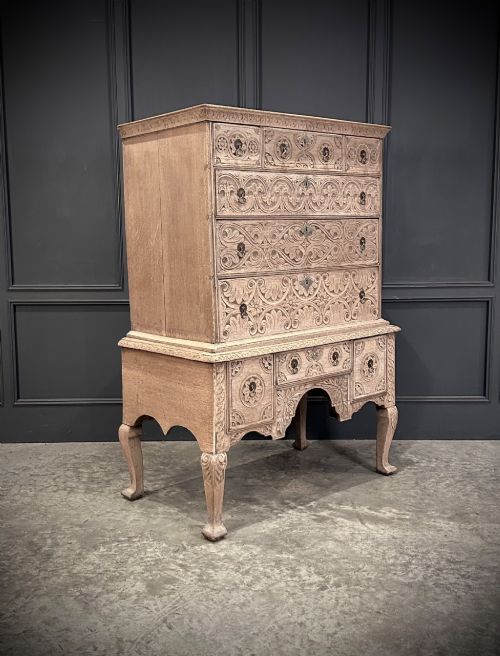
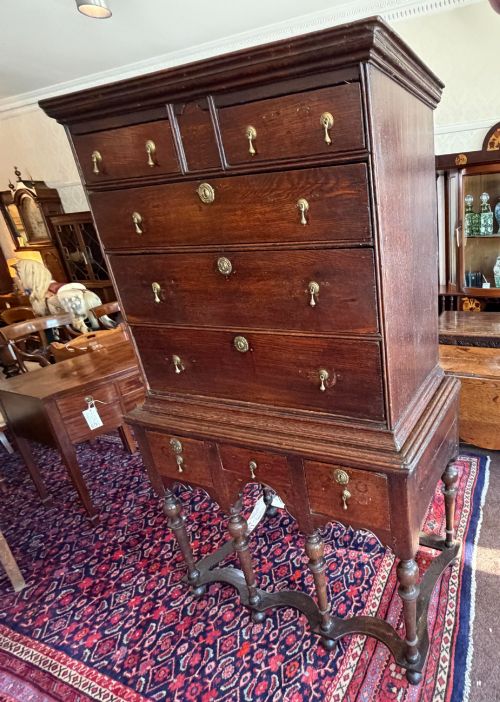
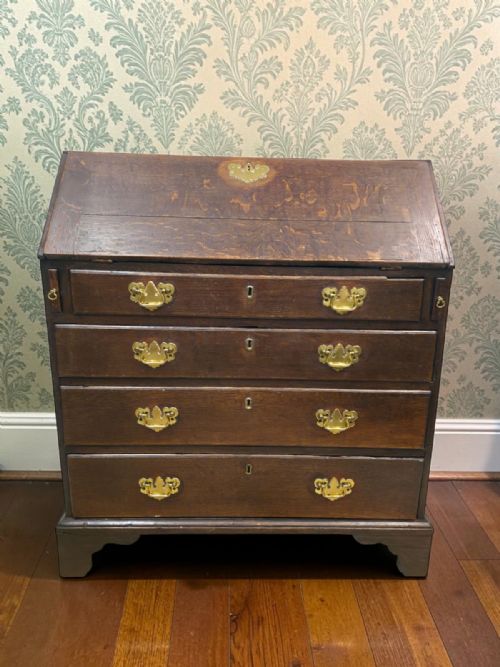
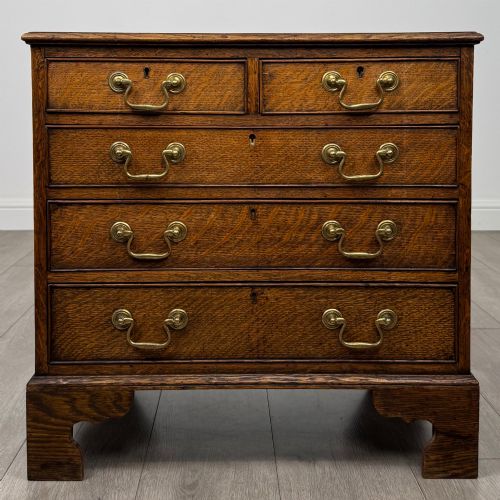
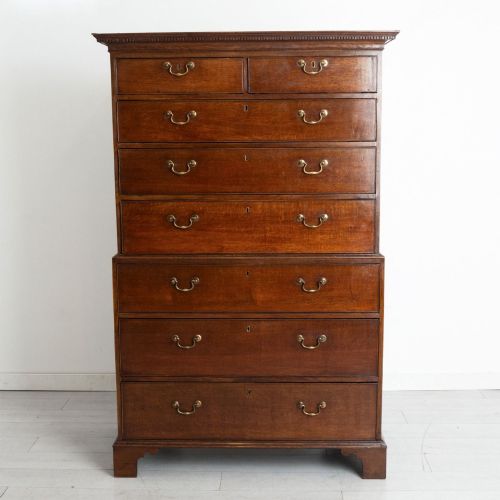
A georgian oak chest of drawers forms the backbone of traditional home storage, evolving from simple planked boxes into sophisticated multi-drawer case furniture during the eighteenth century. These pieces range from modest low proportions intended for bedrooms to grander tallboys and chests on stands designed to maximise vertical space.
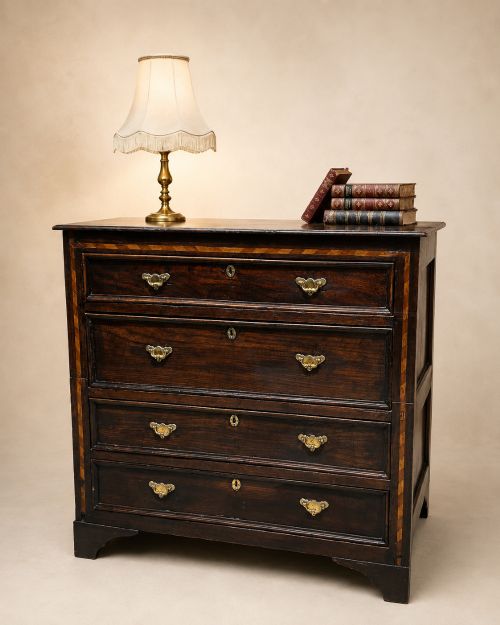
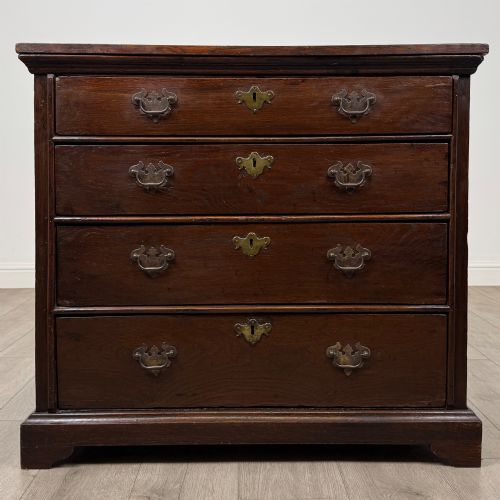
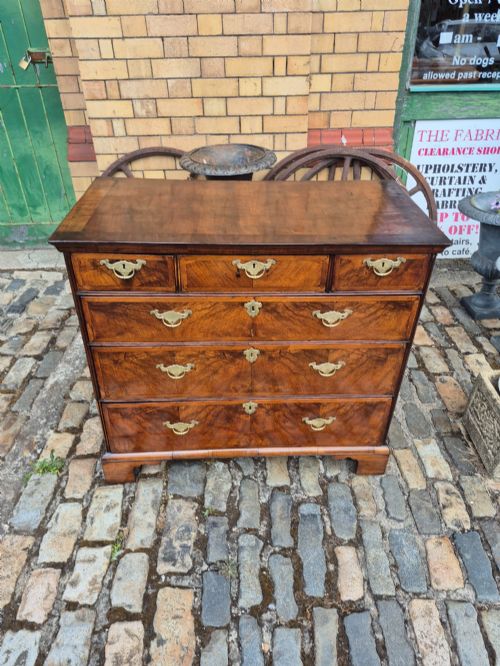
Most examples encountered here date from the georgian period, often displaying the warm golden tones of native timber alongside later nineteenth-century interpretations. Formats vary from straightforward straight-front designs to more elaborate mule chests and crossbanded variations incorporating mahogany details.
Makers constructed these storage items for daily utility, meaning many retain honest patination and practical working drawer configurations. Regional pieces, particularly from Wales, frequently feature distinctive internal layouts and secondary woods like fruitwood or elm.
How they were made
Craftsmen built these carcases primarily from solid oak, supplemented by secondary timbers such as deal or pine for drawer linings and carcase backs. Timber selection prioritized straight-grained boards that resisted warping during seasonal humidity changes.
Joinery relied heavily on hand-cut dovetails for drawer construction and pegged mortise-and-tenon joints for the main frames. Surface enrichment occasionally involved fruitwood inlay, mahogany crossbanding, or geometric mouldings applied to drawer fronts.
Hardware typically consisted of brass handles, including batwing plates and swan neck designs, secured through original bored holes. Finish was built up through repeated applications of wax, developing a rich sheen over decades of handling.
What varies in quality
Quality rests significantly in the retention of original surfaces, unblemished patination, and minimal timber replacement across the primary elevations. Pieces retaining their early brass hardware and undisturbed drawer linings command greater attention.
Proportion and scale dictate desirability, with smaller country examples and well-balanced tallboys representing finer cabinet-making standards of the era. The crispness of hand-cut dovetailing and the precision of applied crossbanding reveal the maker's underlying skill.
The Georgian Oak Chest of Drawers Glossary
- Crossbanding
- A decorative border technique where thin strips of veneer, often mahogany, are applied across the grain to frame drawer fronts.
- Mule chest
- A storage form combining a chest of drawers in the lower section with a blanket coffer above.
- Tallboy
- A tall chest of drawers made in two stacked sections, maximising vertical storage capacity.
- Patina
- The deep surface sheen and colour acquired by oak over centuries of exposure and polishing.
- Dovetail
- An interlocking joint used in drawer construction, prized for structural strength.
Georgian Oak Chest of Drawers: Frequently Asked Questions
How do I date a georgian oak chest of drawers?
Dating relies on examining construction methods, timber choices, and hardware styles. Hand-cut dovetails and drawer lining materials provide reliable clues to the manufacturing decade.
Changes in handle design and foot configuration further help narrow down the period from early to late eighteenth century.
Are these chests suitable for daily use?
These pieces were originally built for heavy domestic storage, making them robust enough for contemporary bedroom or living space use. The drawers slide on traditional wooden runners that benefit from occasional waxing.
Internal depths vary by period, so measuring specific storage requirements beforehand is advisable.
What is the difference between a mule chest and a standard chest?
A standard chest consists entirely of stacked horizontal drawers from top to bottom. A mule chest incorporates a hinged lid compartment above one or more functional drawers at the base.
Why do some oak chests have mahogany details?
Cabinet-makers frequently combined native oak with imported mahogany crossbanding as exotic timbers became more available toward the middle of the eighteenth century. This contrast highlighted the drawer outlines and updated older furniture fashions.