
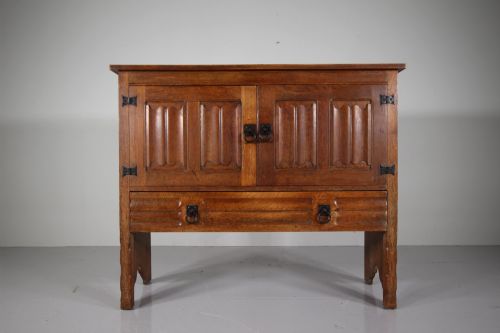
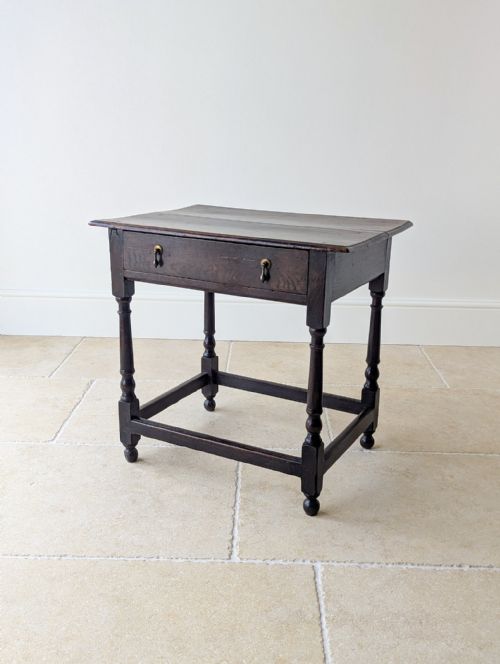
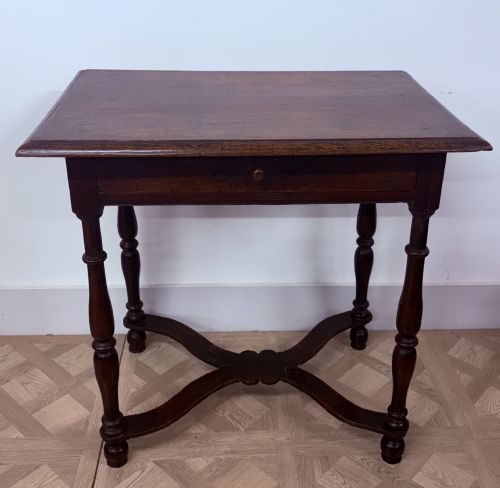
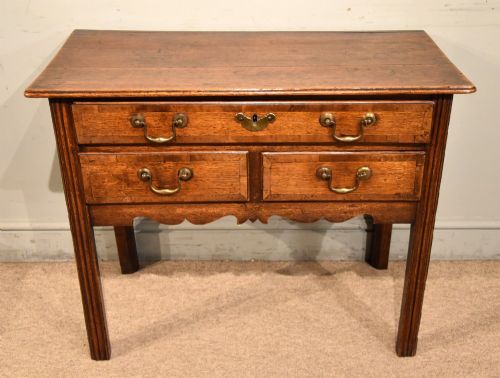
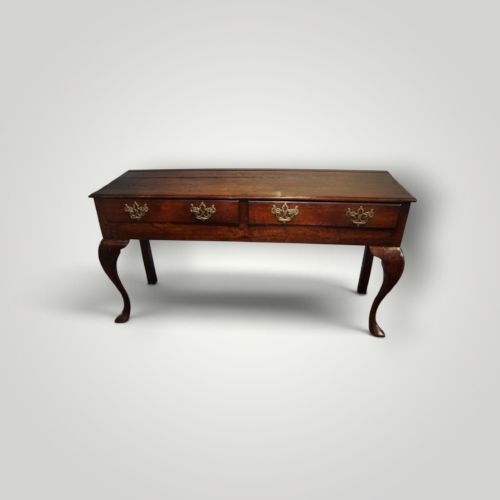
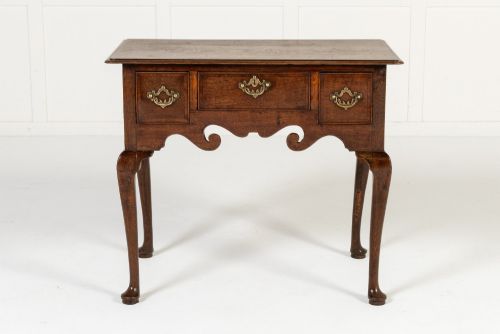
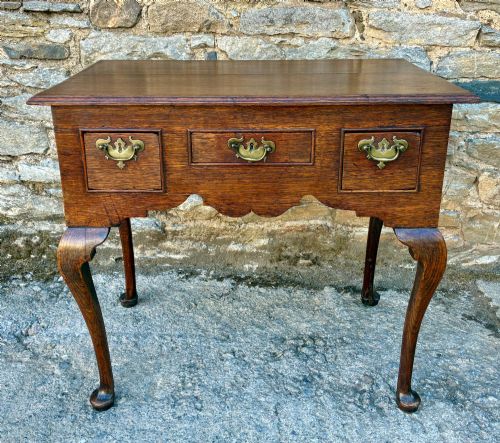
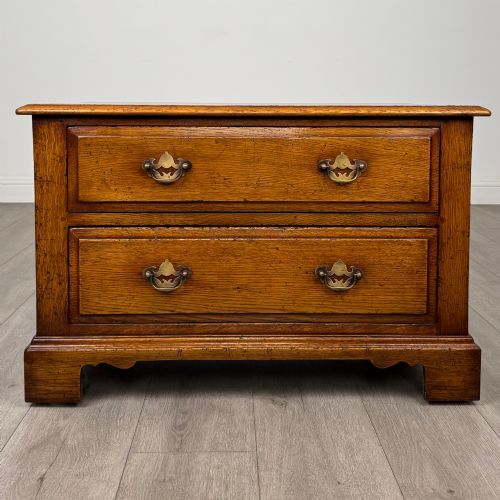
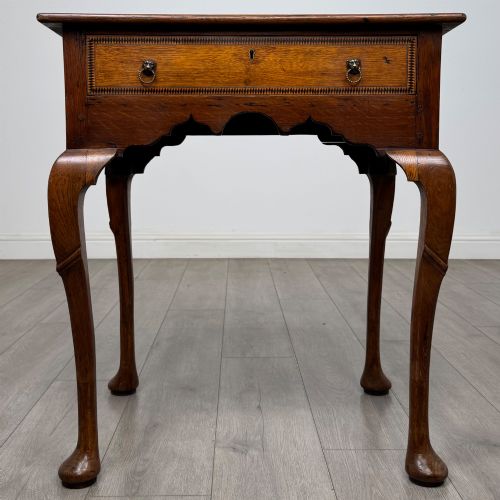
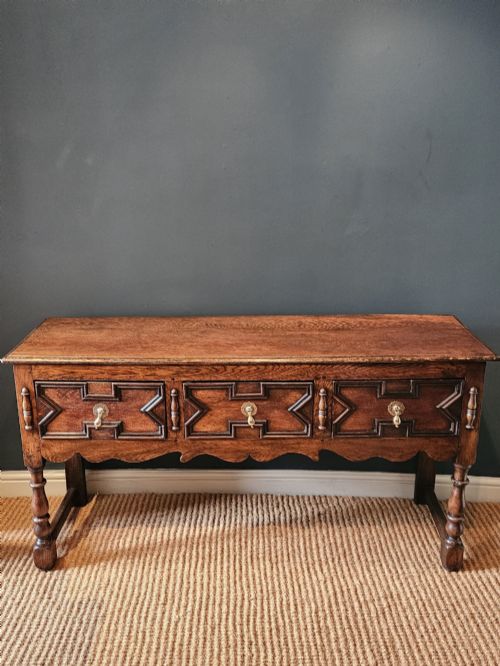
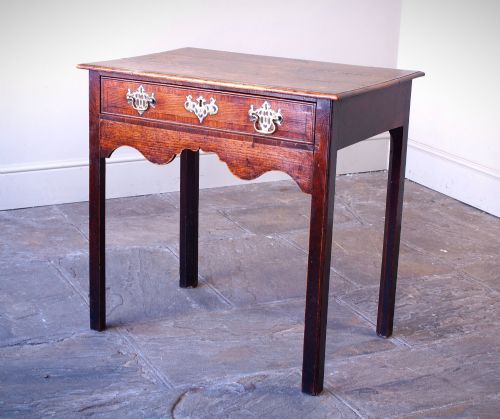
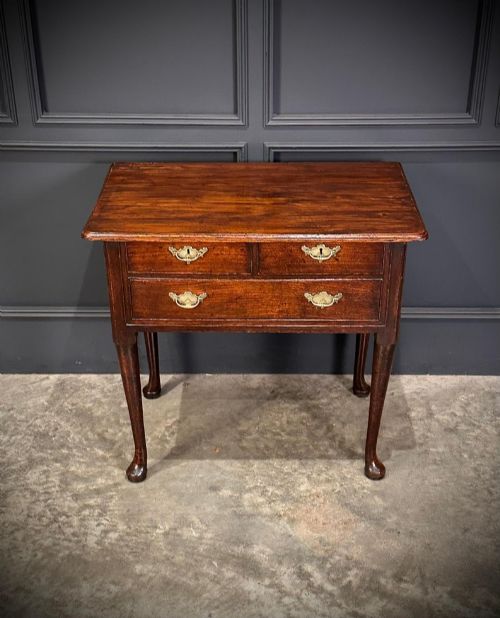
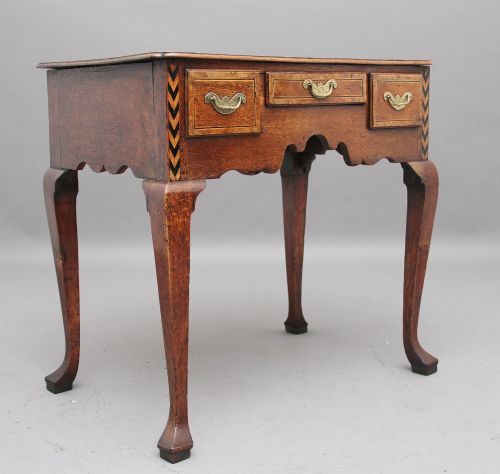
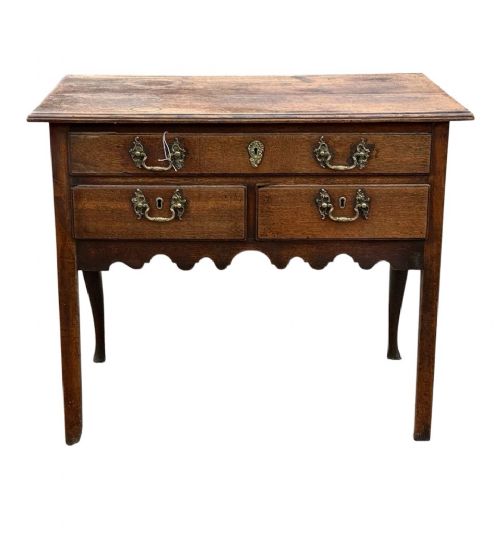

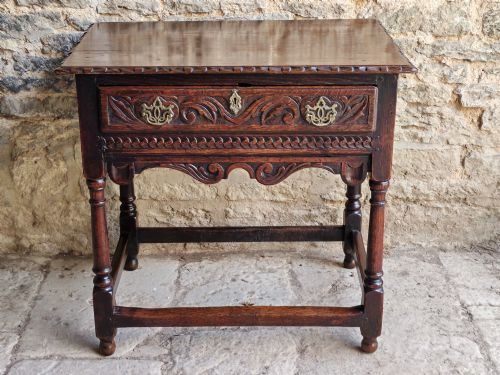
Carved Oak Lowboy
These carved oak lowboy examples offer compact utility and period presence, bringing seventeenth, eighteenth and nineteenth-century craftsmanship directly to smaller rooms.
What they are
When you search for a carved oak lowboy, you are looking at low side tables, writing tables and dresser bases designed with drawers and turned or straight supports. These versatile items served centuries of domestic interiors as practical surfaces for writing, grooming or serving.
On this page, you are most likely to meet pieces spanning the Georgian, eighteenth century, nineteenth century and seventeenth century periods. The forms include dedicated lowboys, side tables and compact dresser bases constructed to modest proportions.
Origins represented across these listings include Welsh country workshops alongside standard regional British cabinetmaking traditions. Each survivor demonstrates the enduring appeal of native timber furniture configured for daily household use.
How they were made
The primary material across all examples is solid oak, complemented by brass handles, escutcheons and iron fixings where appropriate for the period. Timber selection prioritised durable domestic wood capable of withstanding generations of hard daily service.
Construction techniques involve traditional joinery methods, incorporating geometric mouldings, carved enrichment and multi-drawer arrangements built into the framework. Surfaces display the natural grain and patination developed through centuries of exposure and maintenance.
Retail Price Guide 2026
Typical UK retail prices for carved oak lowboy, calculated from the Sellingantiques database of over a million retail prices indexed since 2003. This retail price guide relies exclusively on Sellingantiques data; no external sources or auction records are used, so the figures do not describe the wider market.
Listings feature four distinct periods: Georgian, eighteenth century, nineteenth century and seventeenth century.
What varies in quality
The distinction between standard examples and the finest items rests in the crispness of the carved detail and the integrity of the original construction. Superior pieces retain their early surface patination and uncompromised structural proportions.
Subtle variations in drawer configuration, such as geometric mouldings and the quality of associated brassware, separate utilitarian country pieces from more ambitious cabinet work.
The Carved Oak Lowboy Glossary
- Lowboy
- A small table with drawers, typically used as a dressing table or side table during the seventeenth and eighteenth centuries. These pieces sit on relatively short legs and provide compact storage.
- Dresser base
- The lower section of a kitchen or dining room dresser, often featuring multiple drawers and used independently as a sideboard or low serving table.
- Geometric moulding
- Decorative raised woodwork applied in repeating patterns, frequently seen on drawer fronts from the seventeenth and early eighteenth centuries.
- Joined oak
- Furniture constructed using traditional mortise and tenon joints secured with wooden pegs rather than modern fasteners.
Frequently Asked Questions
What is a carved oak lowboy used for?
These pieces functioned historically as dressing tables, writing desks or small side tables in domestic chambers and parlours. Their compact footprint allowed them to fit into tighter spaces while providing useful drawer storage.
Today, they serve well as hallway tables, bedside surfaces or compact writing desks in modern interiors, offering both surface area and discreet storage.
How do I date a carved oak lowboy?
Dating relies on examining the construction methods, handle hardware, timber characteristics and decorative motifs such as geometric mouldings or carved panels. Earlier pieces from the seventeenth century often show heavier joined construction.
Later examples from the Georgian and nineteenth-century periods incorporate refined proportions and different drawer linings, reflecting the shifting styles of their respective eras.
Are lowboys and side tables the same thing?
A lowboy is specifically a low table featuring one or more rows of drawers, whereas a side table is a broader category that may lack drawers entirely. Many lowboys function effectively as side tables due to their similar height and footprint.
In period terminology, pieces with multiple drawers intended for domestic chambers were frequently designated as low boys or writing tables.
What timber was used to build these tables?
Oak serves as the primary material for all pieces found in these listings, chosen for its strength, availability and durability in British cabinetmaking. Secondary woods might appear in drawer linings or internal framing.
Metal components such as brass handles and iron fittings complement the timber construction and help indicate the period of manufacture.