




Period Oak Lowboy
A period oak lowboy brings compact utility and centuries of character to a room, offering small drawers and slender legs shaped by Georgian and earlier hands.
Period Oak Lowboy
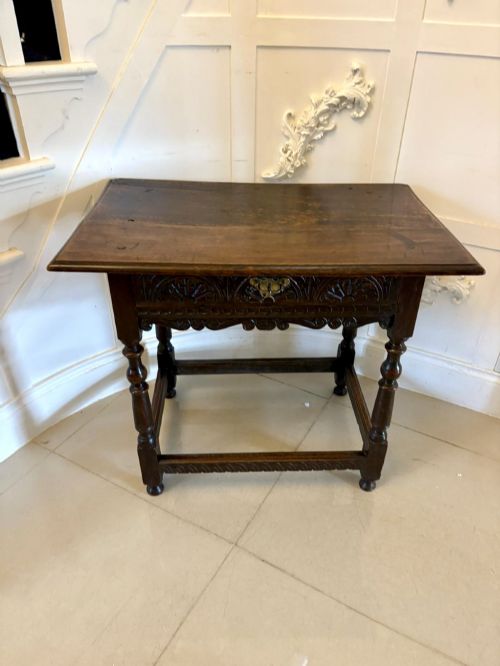
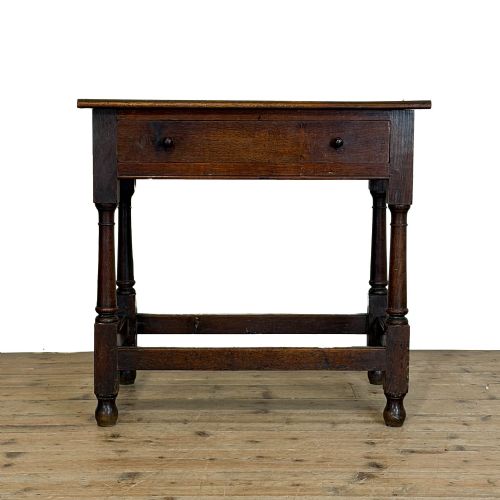
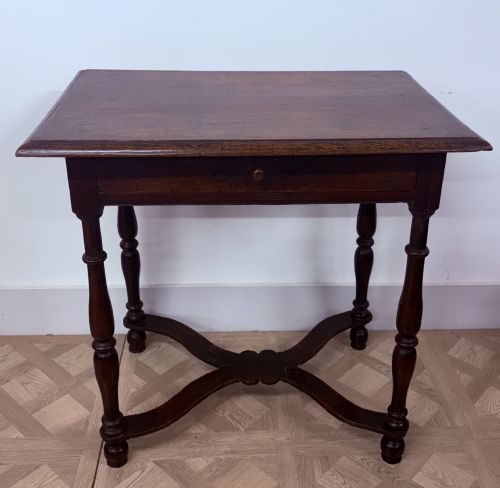
When you search for a period oak lowboy, you find small functional tables with drawers, often described interchangeably as side tables or dressing tables. These low-standing tables span the seventeenth and eighteenth centuries, originating from periods including William and Mary, Queen Anne, and Georgian eras.
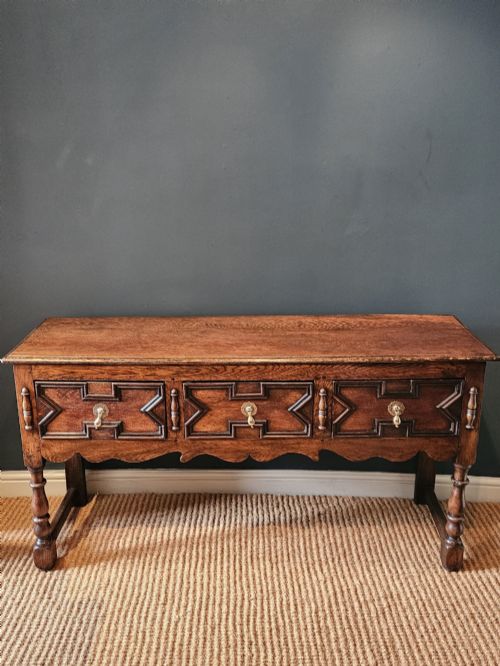
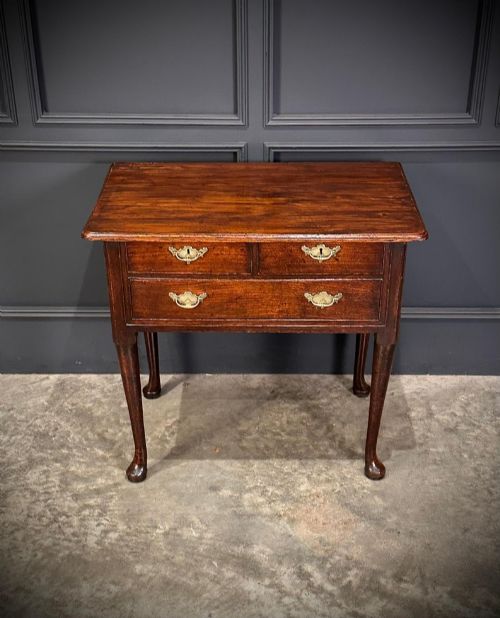
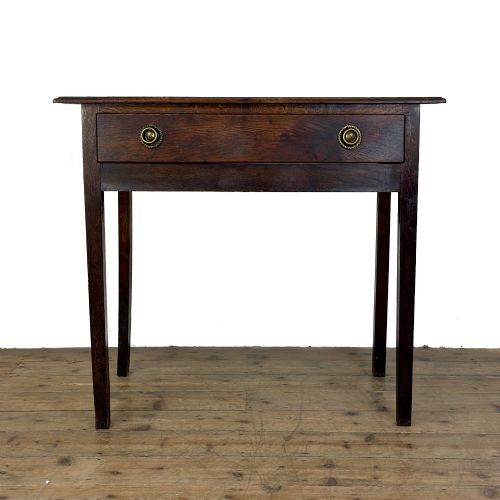
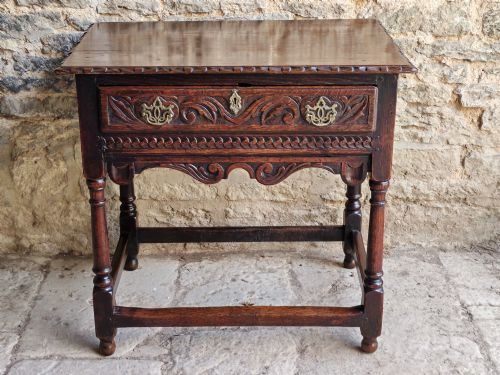
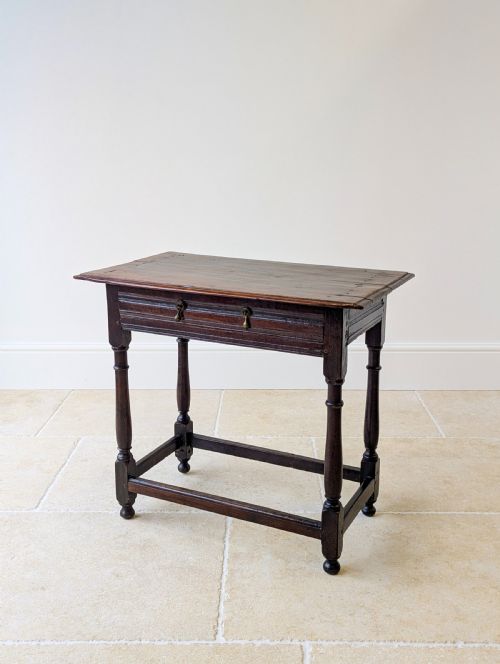
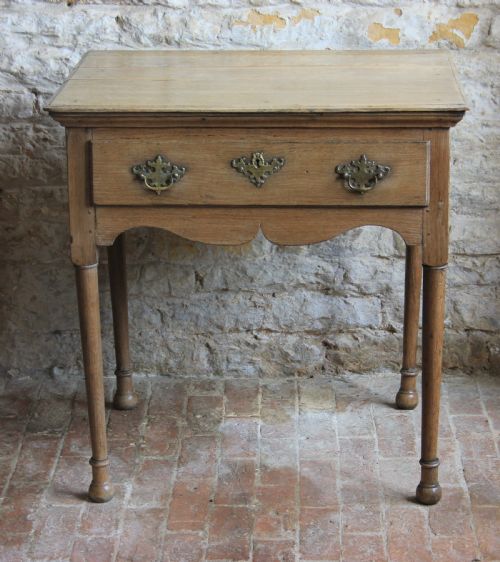
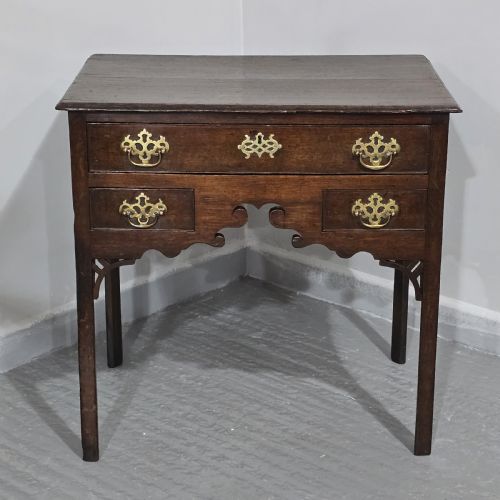
The pieces appearing on this page range from plain country examples to refined urban designs featuring turned legs or cabriole supports. Formats include single-drawer variations, three-drawer layouts, and occasional adaptations in fruitwood or red walnut alongside the primary oak.
Most items reflect domestic English and Welsh craftsmanship from the seventeen-hundreds or earlier. Their low proportions suited them for personal grooming, writing, or serving auxiliary table space in period interiors.
What varies in quality
Proportion and timber selection set individual examples apart, with finer grain patterns and desirable secondary woods indicating superior workshops. The delicacy of leg turning or the shaping of cabriole profiles distinguishes standard utility pieces from more ambitious commissions.
The integrity of original brass hardware and the retention of early surface patination heavily influence the standing of each piece. Later alterations to timbers or drawer linings separate untouched survivals from heavily restored examples.
Listings feature oak alongside fruitwood and red walnut, spanning seventeenth-century origins through George III.
The Period Oak Lowboy Glossary
- Lowboy
- A small kneehole-free table with one or more drawers, standing on relatively short legs. These tables served various domestic functions including dressing and writing.
- Cabriole leg
- A furniture leg that curves out and then in, resembling an animal's leg in motion. This form gained prominence during the Queen Anne and Georgian periods.
- Dresser base
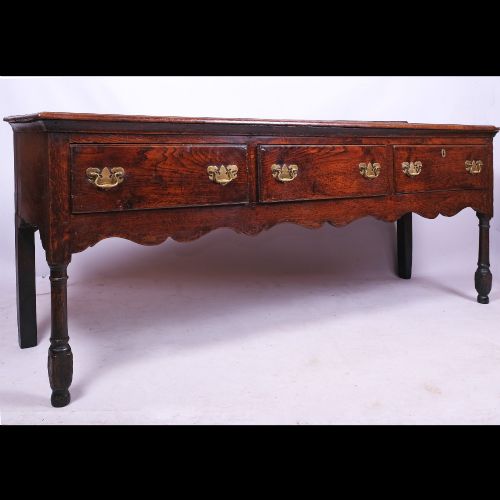
- The lower section of a kitchen or dining dresser equipped with drawers and cupboards. These heavy-duty pieces share construction traits with large side tables.
- Geometric moulding
- Raised wooden mouldings arranged in geometric patterns on drawer fronts. This decorative technique often appears on late seventeenth-century case furniture.
- Patina
- The surface sheen and colour developed by timber over years of handling, polishing, and ageing. Collectors value untouched patination as a sign of authenticity.
Period Oak Lowboy: Frequently Asked Questions
What room works best for a lowboy?
A period oak lowboy functions well in hallways, bedrooms, or living spaces as a compact surface with storage. Its shallow depth allows it to sit against walls without obstructing walkways.
In modern interiors, these tables hold lamps or small objects while adding historical texture to an empty corner.
How do I identify a William and Mary lowboy?
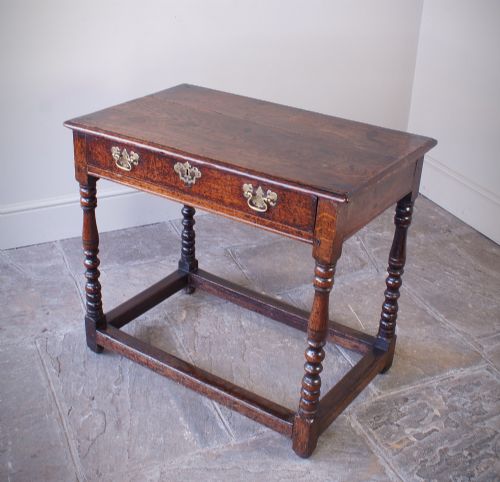
William and Mary examples often feature inverted cup or trumpet-shaped turned legs connected by flat stretchers. The framing frequently displays geometric mouldings on the drawer fronts.
These seventeenth-century pieces usually exhibit heavier proportions and darker timber patination compared to later Georgian iterations.
Did lowboys serve as dressing tables?
Many eighteenth-century lowboys doubled as dressing tables where owners placed mirrors for grooming. The single or multiple drawers kept personal items close at hand.
Their height suited seated use before the widespread manufacture of dedicated vanity furniture.
What is the difference between a side table and a lowboy?
While the terms overlap frequently in historical records, a lowboy specifically denotes a small table featuring one or more drawers at table height. General side tables may lack drawers entirely or stand taller.
Both categories utilise similar oak framing and leg styles across matching periods.