
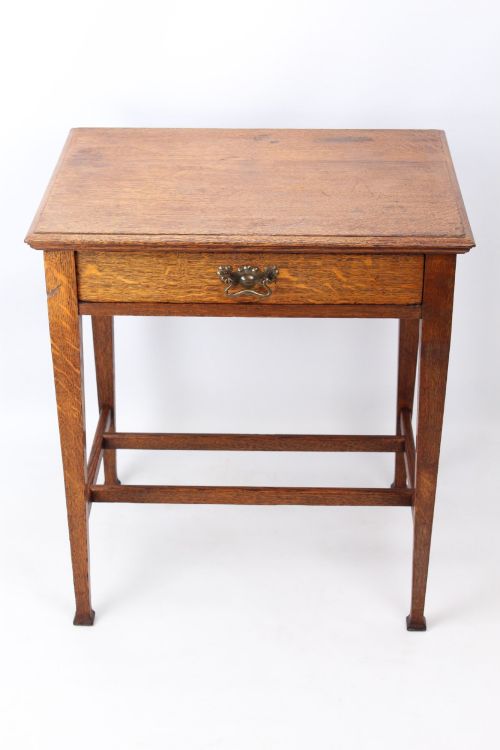
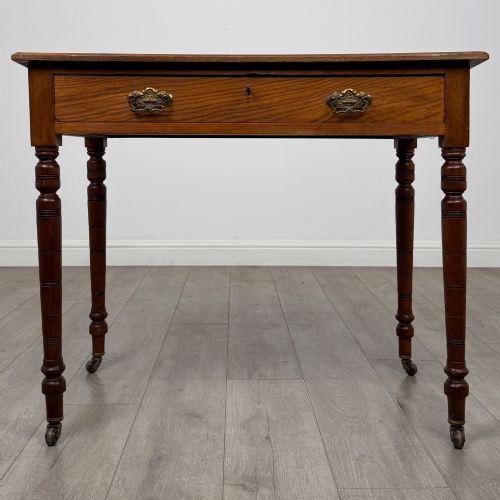
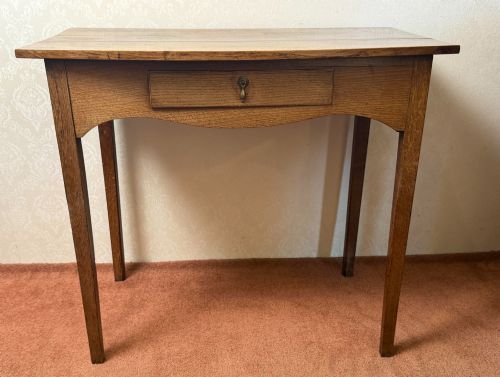
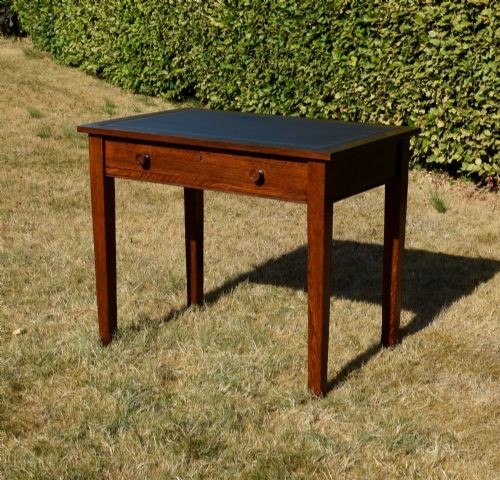
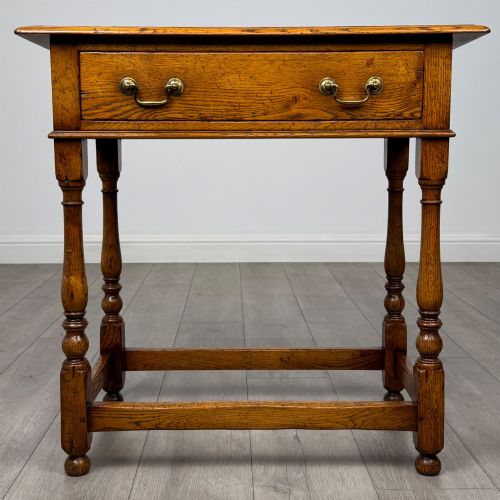
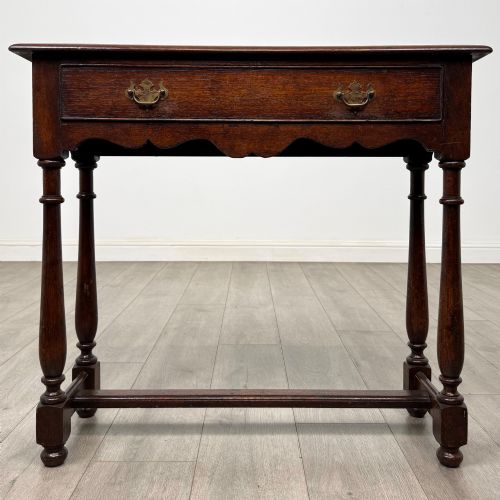
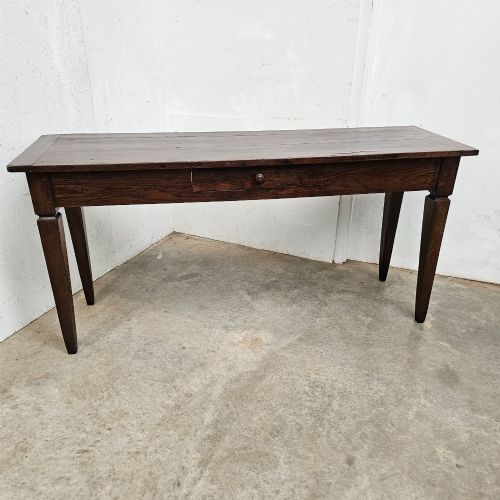
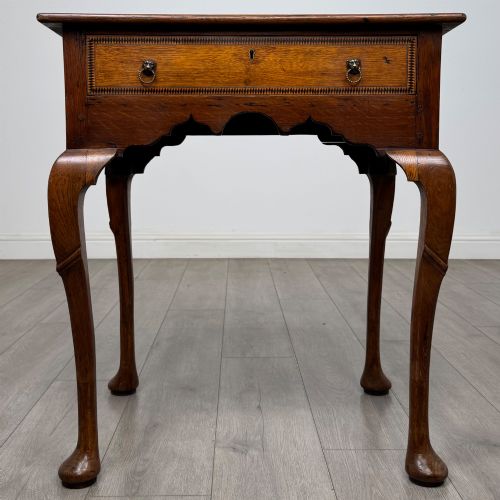
Oak Single Drawer Table
An oak single drawer table offers honest utility and tactile warmth, bringing centuries of adaptable surface space and storage into a room.
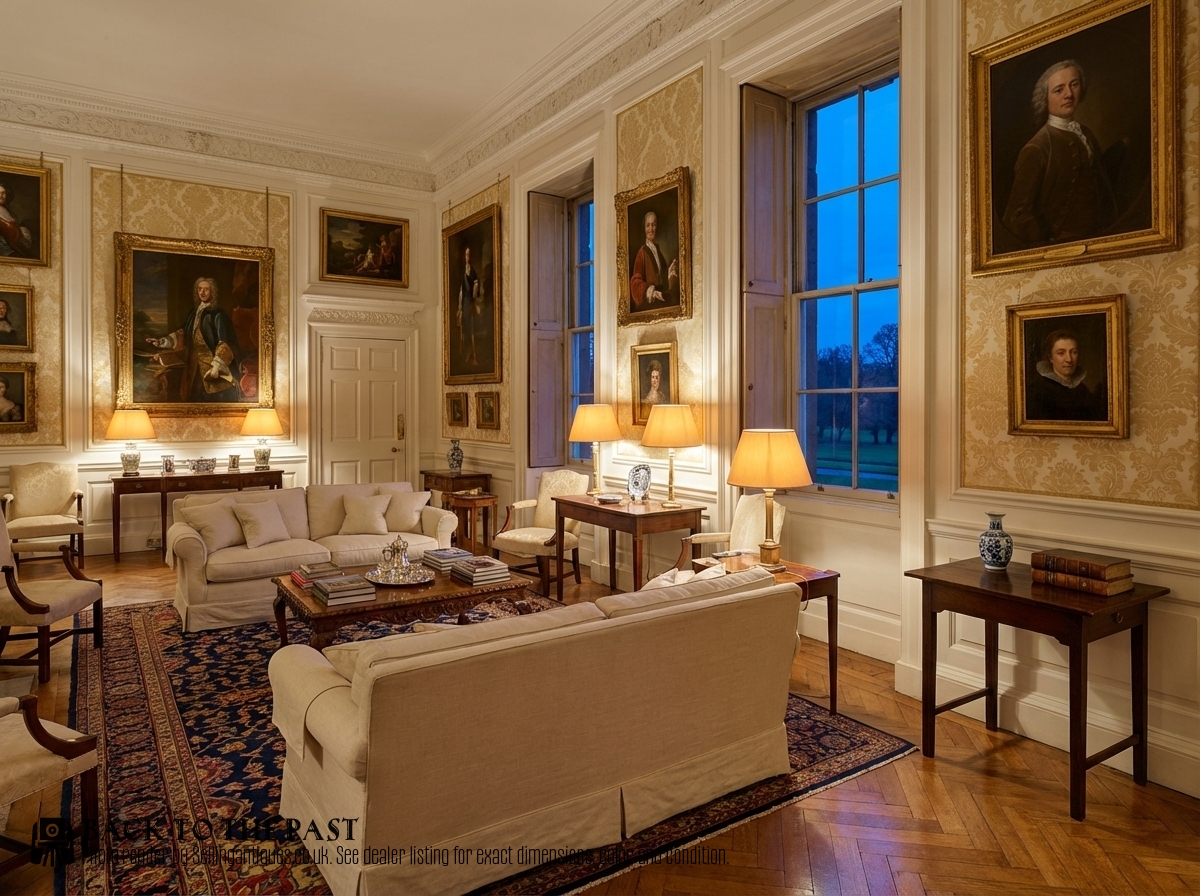
Oak Single Drawer Table
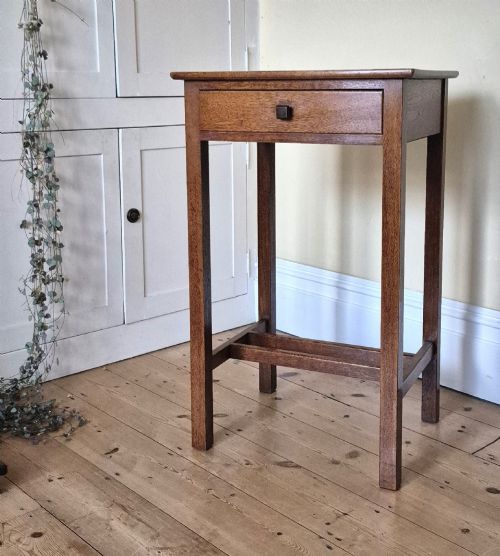
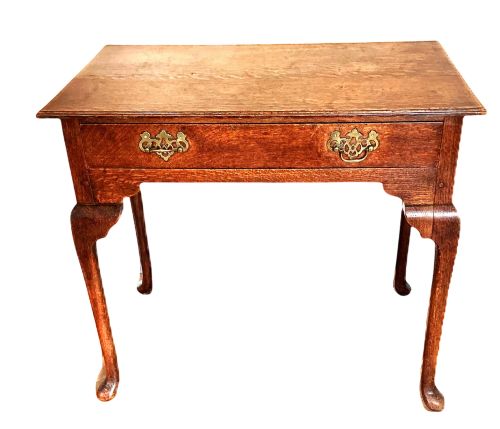
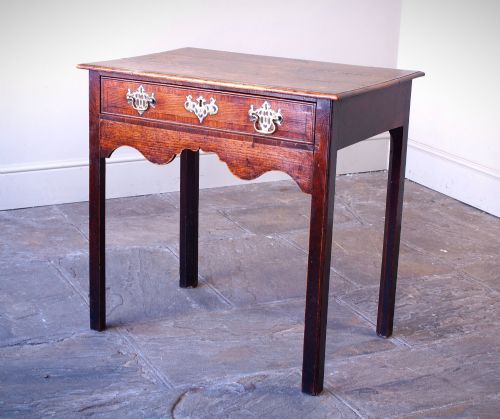
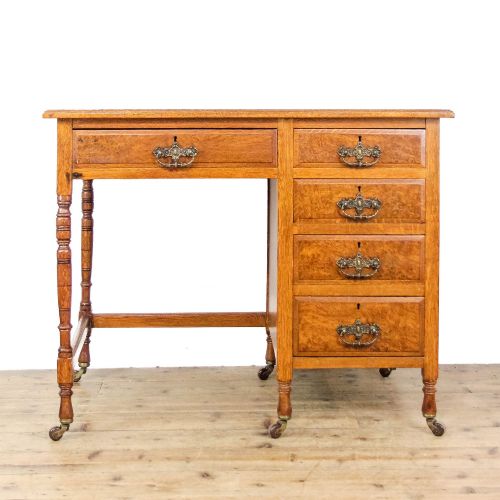
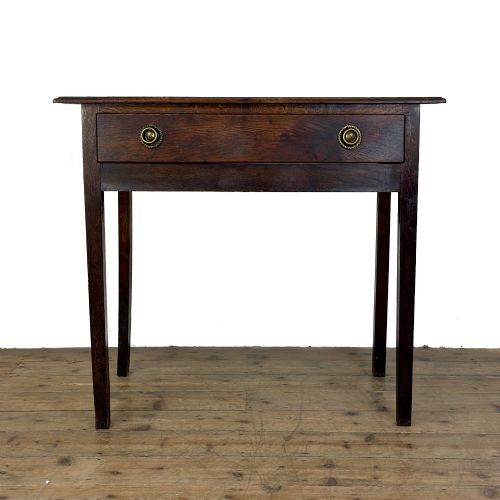
An oak single drawer table is a utilitarian form spanning side tables, lowboys, writing desks, and lamp tables found across domestic interiors. These pieces appear most frequently in 18th-century Georgian formats and robust 17th-century country designs, serving as compact storage and display surfaces.
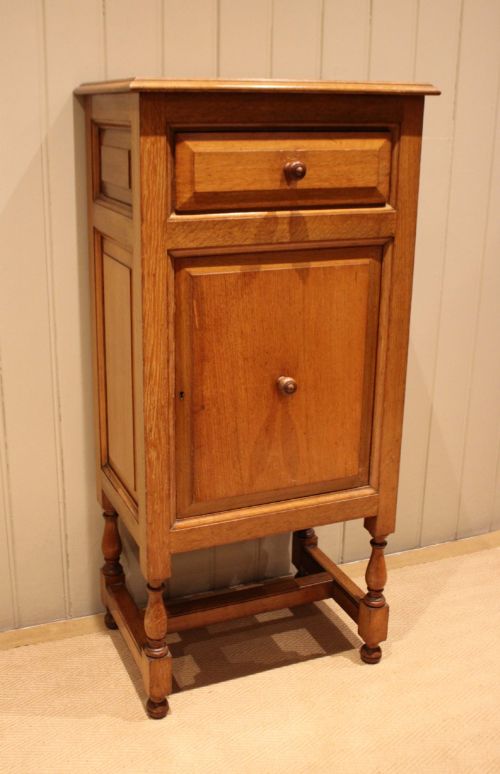
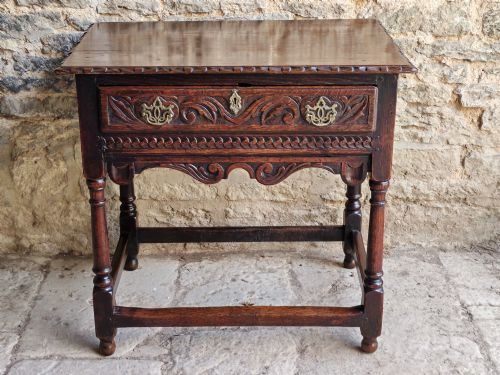
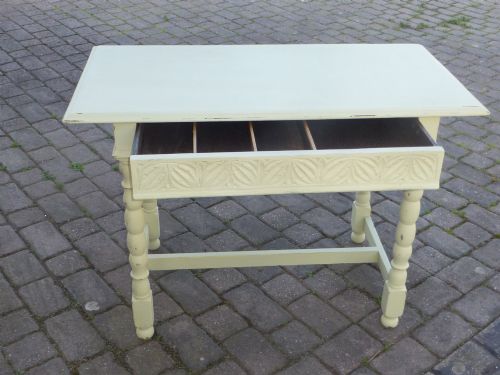
Makers and workshops constructed these tables for practical use in halls, parlours, and bedchambers, incorporating a single frieze drawer to hold small papers, utensils, or household goods. The surviving examples range from plain country pieces with bobbin legs to refined urban designs with mahogany crossbanding and original brass hardware.
How they were made
Joiners built these tables primarily from solid oak, sometimes utilising walnut or mahogany for secondary surfaces and drawer linings, alongside iron and brass for structural fastenings and handles. Panels and tabletops were joined using traditional framing techniques, while drawer construction frequently relied on hand-cut dovetails.
Surface treatments vary from polished golden oak and dark historic wax patination to occasional painted finishes or traces of regional craftsmanship. Structural supports include turned baluster legs, bobbin turnings, and straightforward square legs connected by stretchers on earlier examples.
Oak Single Drawer Table Retail Price Guide 2026
Typical asking prices for oak single drawer table among the pieces listed under this phrase on Sellingantiques today, from the lower quarter to the upper quarter. They describe what is for sale here now, not the wider market.
Materials paired with oak across these tables include brass, iron, walnut, mahogany, and painted finishes.
What varies in quality
The degree of refinement in timber selection and carving separates standard utility pieces from exceptional examples. Tables displaying untouched patination, original brass drop handles, and finely detailed turned legs command greater interest than those altered by later replacements or heavy restoration.
Construction integrity, such as the snug fit of the single frieze drawer and the survival of secondary woods like oak drawer linings, indicates the original standard of the workshop. Regional variations in proportion and the crispness of edge mouldings also distinguish master cabinet work from simpler vernacular output.
Hubert Simpson of Kendal·Holland and Sons
The Oak Single Drawer Table Glossary
- Lowboy
- A small oak table with one or more drawers, typically used as a dressing table or side table in the 17th and 18th centuries. They stand on relatively tall legs relative to their shallow body.
- Frieze drawer
- A single drawer fitted directly beneath the main tabletop within the structural frame. These drawers slide on wooden runners integrated into the table's apron.
- Bobbin leg
- A structural support turned on a lathe to resemble a series of rounded spheres or bobbins stacked vertically. This decorative turning appears frequently on 17th-century and Arts and Crafts revival pieces.
- Gateleg table
- A drop-leaf table featuring hinged legs that swing outward to support the folding flaps. Certain variations incorporate a single functional drawer within the fixed central frame.
- Patina
- The deep, lustrous surface sheen developed on timber over decades of handling, polishing, and exposure to light. Untouched patination remains a primary indicator of age and authenticity.
Oak Single Drawer Table: Frequently Asked Questions
Where did people use these tables?
These tables served multiple functions across domestic spaces, acting as hall surfaces for keys and correspondence, bedside stands, or writing desks in parlours and studies.
Their modest footprint allowed them to tuck easily into corners, hallways, and against walls where larger furniture could not fit.
How do I spot an 18th-century piece?
Examine the construction methods visible inside the drawer and beneath the top, looking for hand-sawn timber boards and irregular hand-cut dovetails rather than uniform machine production.
Surface wear, pegged joints, and the mellow tone of the oak develop organically over centuries of use rather than through artificial distress.
Can I use an oak table daily?
These pieces were built for heavy domestic use from durable hardwoods like oak, making them well-suited for everyday tasks such as holding lamps, books, or writing materials.
Protecting the surface from excessive moisture and heat preserves the historic wax and polish while allowing the table to function normally in a modern home.
What is a lowboy?
A lowboy is a compact table featuring a single row of drawers beneath the top, standing on relatively tall legs that give the piece an elegant, balanced proportion.
Originally utilised as dressing tables or refined side tables in wealthy homes, they function well today as decorative hallway or living room accents.