

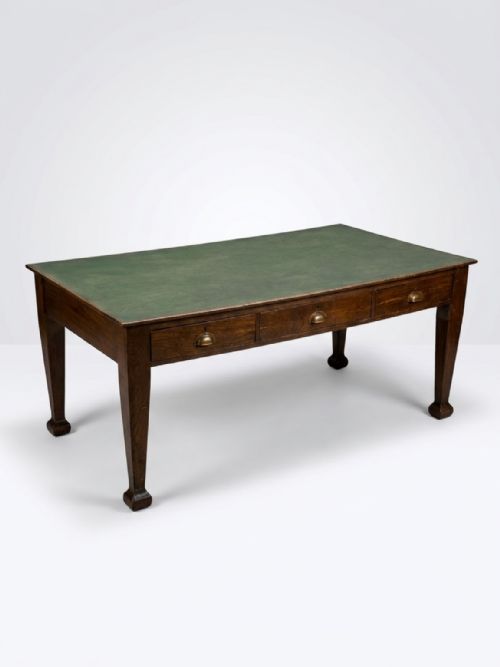
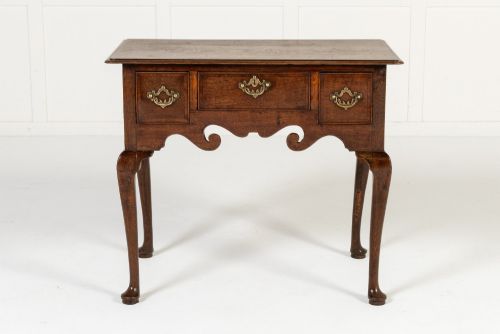
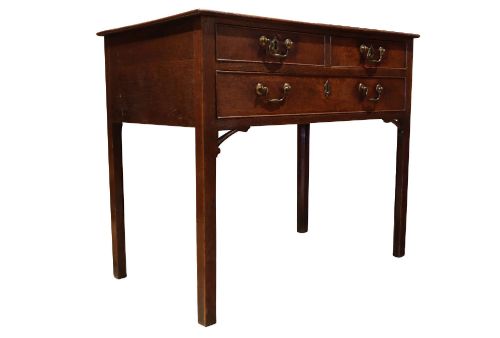
Dark Oak Writing Table
A dark oak writing table brings heavy timber grain and enduring utility into a room, spanning centuries of British design from lowboys to desks.
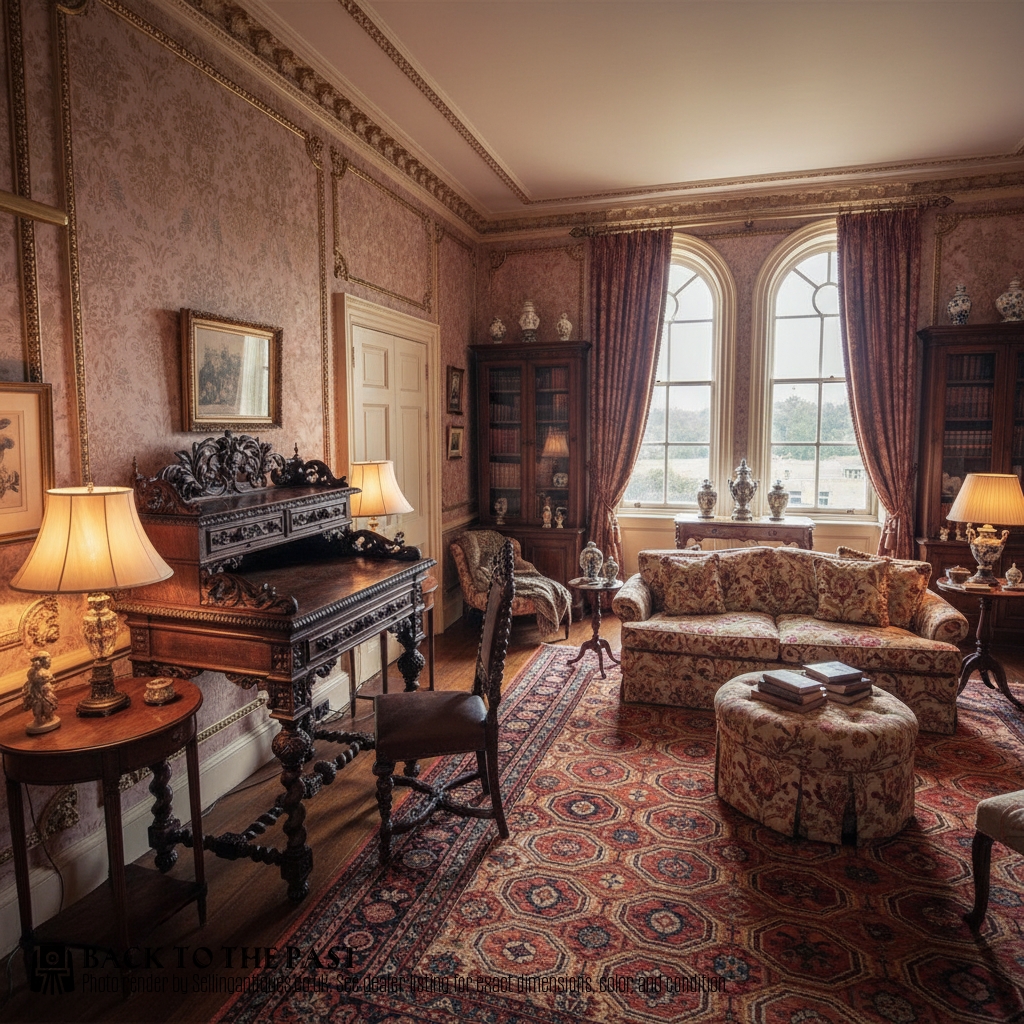
Dark Oak Writing Table
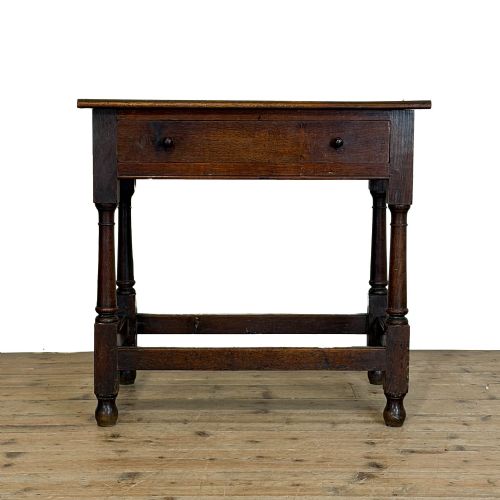
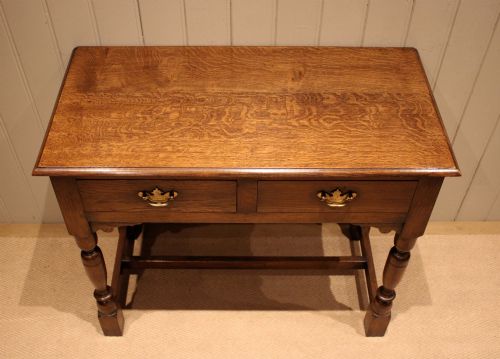
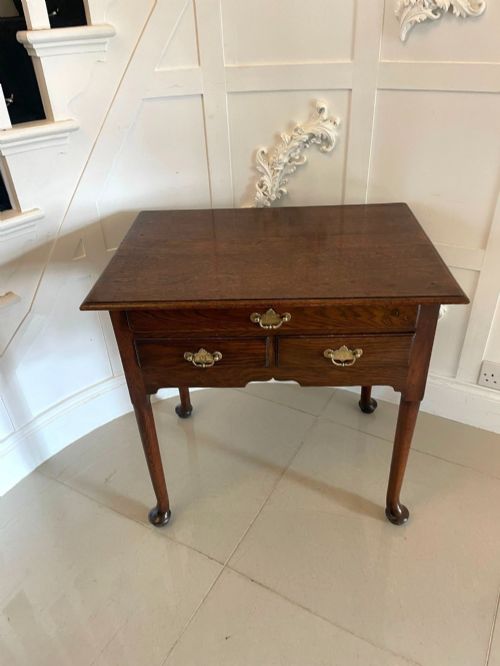
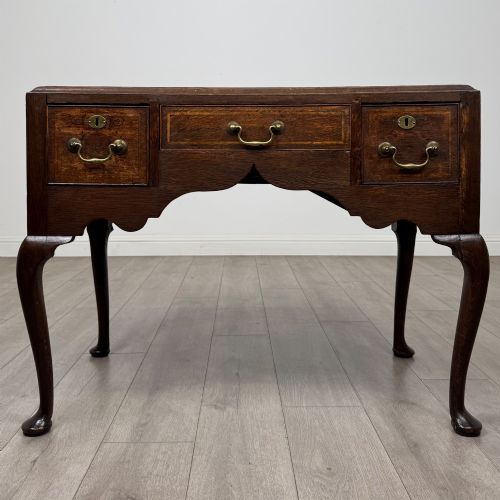
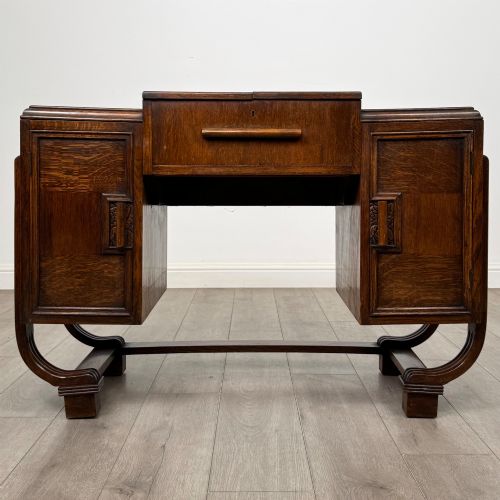
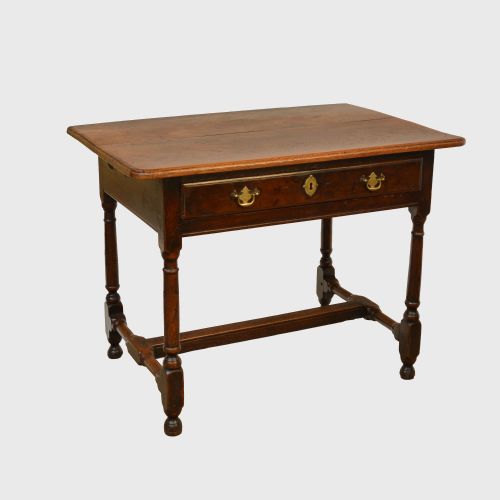
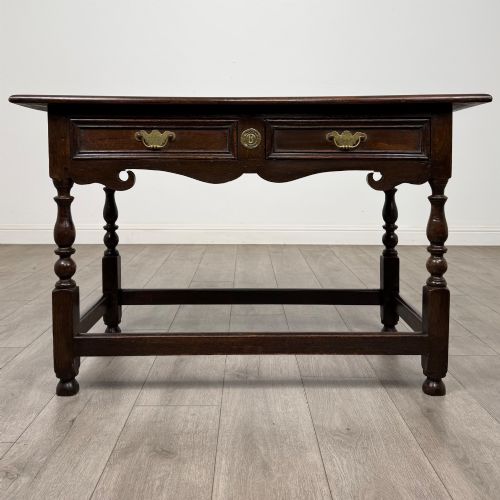
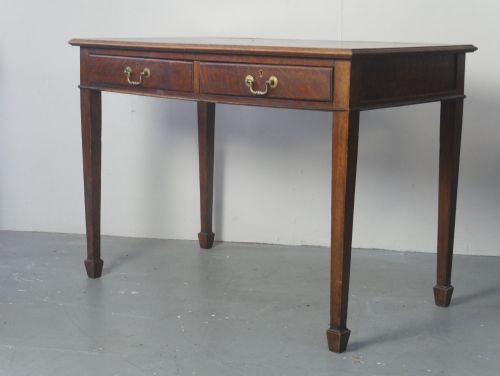
A dark oak writing table encompasses forms such as lowboys, side tables, bureaux, and partner desks made from hardwood timber. These pieces span the seventeenth, eighteenth, nineteenth, and twentieth centuries, reflecting changing domestic habits.
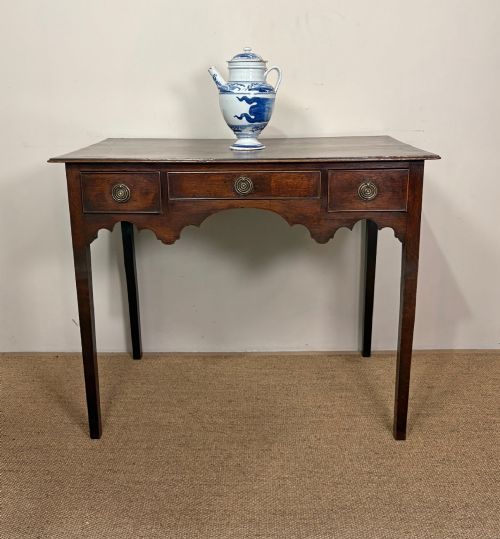
The version most commonly encountered on this page is the Georgian lowboy or the Victorian carved desk, often fitted with drawers. Makers also produced side tables and writing desks during the Edwardian period and the Art Deco era.
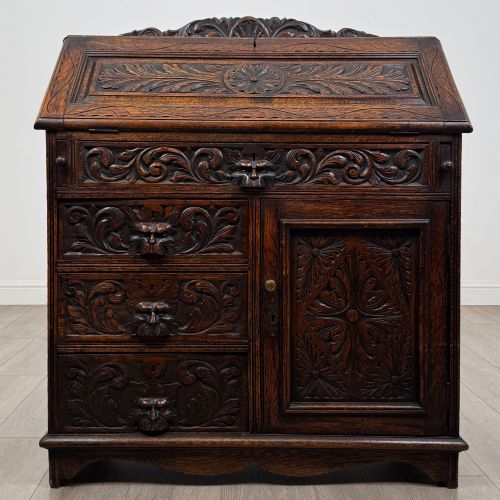
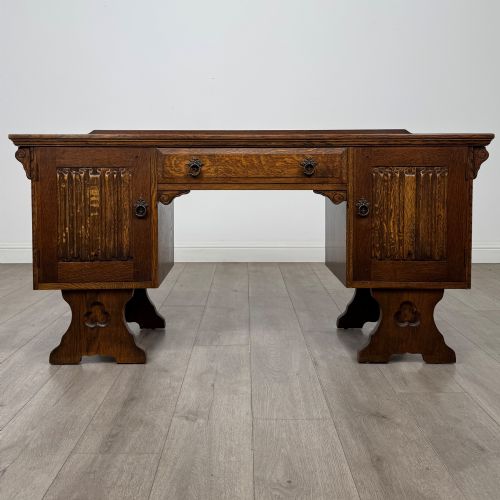
Structural variations range from simple side tables with single drawers to elaborate architectural desks displaying linenfold carving or green man motifs. Surfaces appear plain or lined with leather for writing purposes.
Materials and construction methods
Cabinet makers utilised solid oak as the primary timber, occasionally supplementing it with yew, elm, or mahogany for secondary parts or contrasting details. Metal fixtures such as brass handles and iron fittings secure drawers and drop fronts.
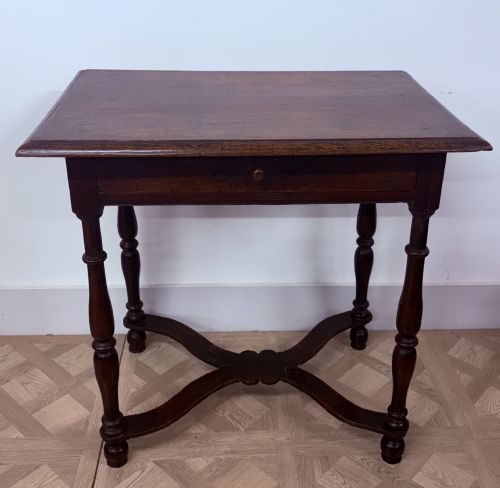
Joinery methods include hand-cut dovetails for drawers and pegged mortise and tenon joints for frames. Surfaces receive hand-carved ornamentation in Jacobean, Gothic Revival, or Arts and Crafts styles, alongside bobbin turning and barley twist legs.
Dark Oak Writing Table Retail Price Guide 2026
Typical asking prices for dark oak writing table among the pieces listed under this phrase on Sellingantiques today, from the lower quarter to the upper quarter. They describe what is for sale here now, not the wider market.
Listings feature solid oak alongside brass, iron, leather, yew, elm, and mahogany across eight distinct historical styles.
Distinguishing quality in dark oak furniture
The refinement of timber selection and carving depth determine the upper tier of these pieces. Dense oak with prominent medullary rays and crisp, hand-chiselled linenfold or Green Man details indicate superior craftsmanship compared to mechanical factory output.
Original hardware, integrated leather writing surfaces, and intact internal drawer arrangements elevate a piece above altered or heavily restored examples. Proportion and structural integrity remain central to establishing the merit of an antique desk.
The Dark Oak Writing Table Glossary
- Lowboy
- A small table with drawers, typically raised on four legs, originating in the late seventeenth century and functioning as a dressing or writing surface.
- Bureau
- A desk featuring a slanted lid that folds down to reveal a writing surface and small interior compartments.
- Linenfold
- A style of carved wooden panelling resembling folded vertical linen fabric, popular in revival periods.
- Green Man
- A sculptural architectural ornament depicting a human face surrounded by or sprouting from foliage.
- Barley Twist
- A turning technique resembling a spiral rope, frequently used on table legs during the seventeenth century.
Dark Oak Writing Table: Frequently Asked Questions
How do I date a dark oak writing table?
Examine the construction methods, secondary timbers, and hardware style to determine age. Hand-cut joints and original brass pulls point toward earlier centuries.
Stylistic markers such as barley twist legs or linenfold carving align with seventeenth-century origins or later revival periods.
What is the difference between a lowboy and a side table?
A lowboy is specifically a low table equipped with one or more tiers of drawers, originally intended for personal grooming or writing. Standard side tables may lack drawers entirely.
Lowboys generally feature more refined joinery and decorative skirts beneath the drawer framing.
Where should I place an antique oak desk?
Position these pieces away from direct heat sources and strong sunlight to prevent the solid timber from splitting or warping. A study or living room offers a stable climate.
Ensure the writing height matches modern seating if daily use is intended.
How do I care for a leather-topped desk?
Clean the leather surface gently with a slightly damp cloth and avoid harsh chemical cleaners that strip natural oils. Conditioning wax preserves suppleness.
Keep sharp objects away from the writing surface to prevent punctures in the hide.