

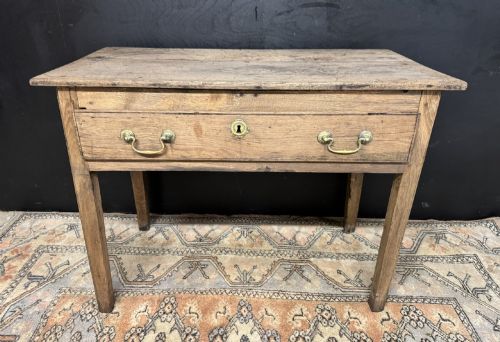
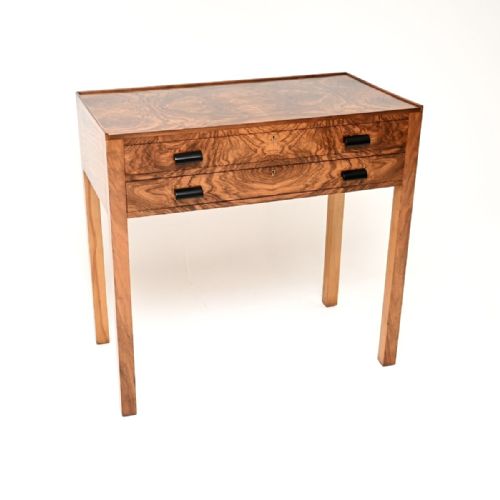
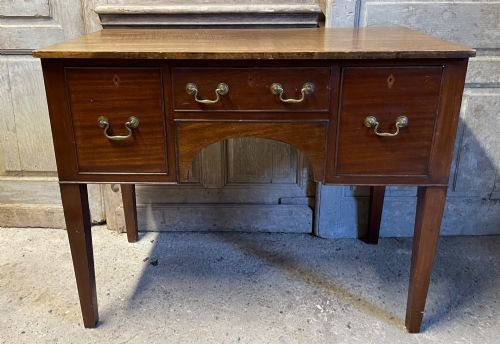
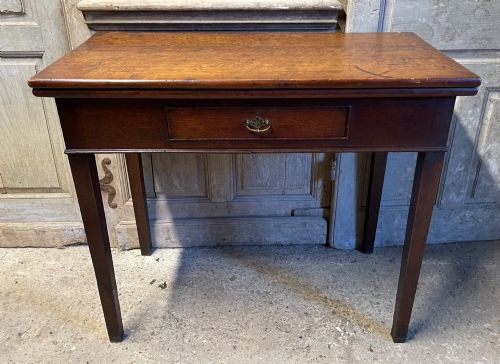

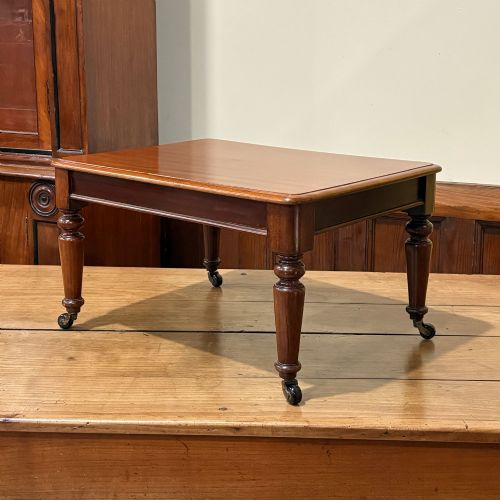
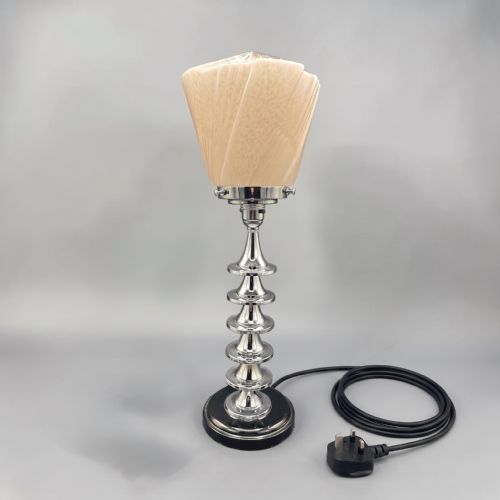
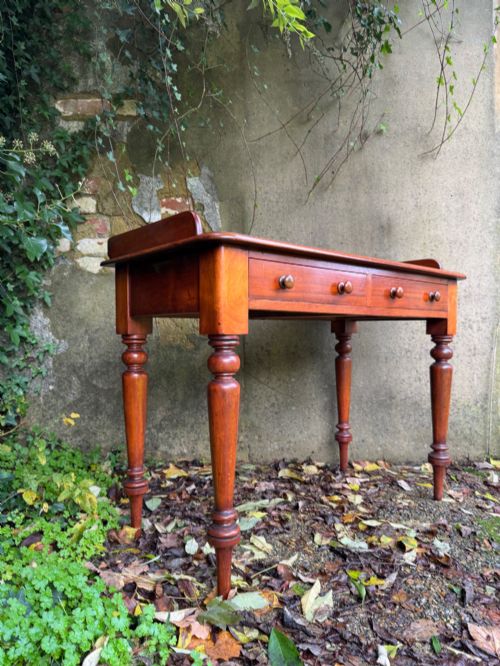
Antique Side Desk
An antique side desk brings compact utility and traditional craftsmanship to a room, offering surface space and subtle storage without dominating the floor plan.
Antique Side Desk
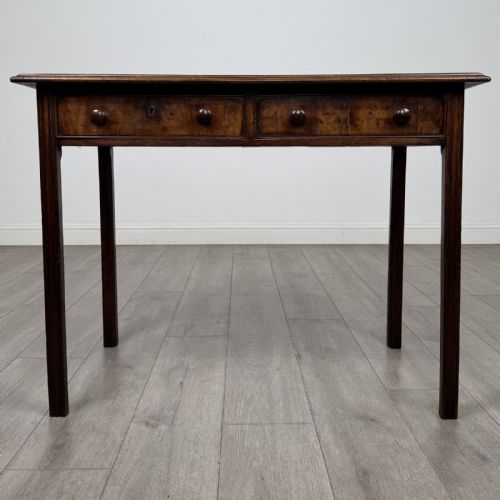
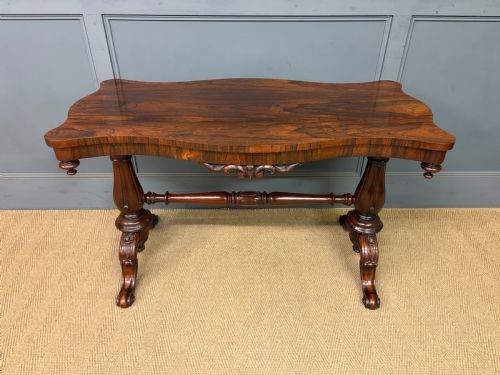
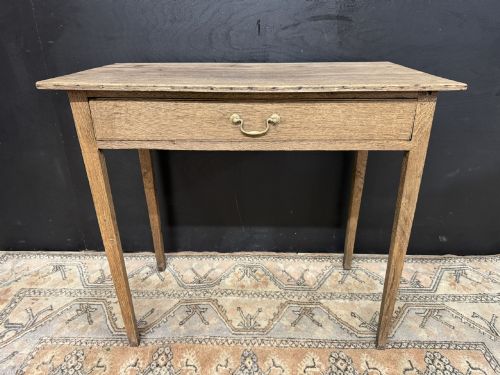
When searching for an antique side desk, buyers encounter a versatile category bridging writing tables, lowboys, console tables, and compact side pieces fitted with drawers. These items originate across the 18th, 19th, and early 20th centuries, spanning periods from the Georgian and Regency eras through the Victorian and Edwardian decades.
The primary forms on this page include freestanding writing tables, small dressing desks, and low tables designed to stand against a wall or beside a chair. They often feature single or twin drawer friezes, slender legs, and finished backs suited for placement in the centre of a room.
Makers and regional workshops throughout Britain and continental Europe produced these items for domestic studies, bedrooms, and parlours. The surviving examples demonstrate how functional furniture evolved to meet shifting domestic requirements for correspondence and display.
Materials and construction methods
Cabinetmakers relied heavily on native hardwoods such as oak, mahogany, and walnut, frequently selecting figured veneers like burr walnut, satinwood, and rosewood for primary display surfaces. Secondary timbers like pine and beech provided sturdy internal framing and drawer linings.
Joinery techniques included precise dovetailing for drawer construction and mortise and tenon joints for frames. Decorative treatments ranged from intricate marquetry and parquetry inlay to brass mounts, ormolu, and leather insert writing surfaces.
Antique Side Desk Retail Price Guide 2026
Typical asking prices for side desk among the pieces listed under this phrase on Sellingantiques today, from the lower quarter to the upper quarter. They describe what is for sale here now, not the wider market.
Several items combine twin roles as both dressing tables and writing desks, proving our ancestors multitasked just as much as we do.
Factors determining quality
Quality rests upon the selection of timber and the precision of the cabinetmaker's hand. Superior examples display carefully matched grain patterns, tight dovetails, and original hardware.
Proportion and structural integrity distinguish finer pieces from standard utilitarian items. The presence of secondary details, such as finely carved mouldings, inlaid banding, or fully finished backs, indicates higher workshop standards.
Waugh & Son·JAS Shoolbred·Mappin & Webb·Charles Tozer·Bell Barn Furniture·Gill & Reigate
The Antique Side Desk Glossary
- Frieze
- The horizontal band running directly beneath the tabletop, frequently housing one or more small drawers in side desks and writing tables.
- Lowboy
- A small, low dressing or writing table, typically featuring one or more rows of drawers supported on slender cabriole or straight legs.
- Marquetry
- Decorative veneer work formed by fitting together small pieces of different coloured wood, ivory, or shell to create pictorial or geometric patterns.
- Parquetry
- A geometric mosaic of wood pieces used for floors and furniture surfaces, creating repeating triangular or square patterns.
- Satinwood
- A durable, hard timber with a natural golden yellow lustre, frequently utilised for fine 18th and 19th-century veneer and inlay work.
- Ormolu
- Gilded bronze furniture mounts and decorative accents cast in relief, popular in French and revival styles.
Antique Side Desk: Frequently Asked Questions
Where should I place a side desk?
These compact pieces fit well against a hallway wall, beside an armchair, or floating in a study with a finished back.
Their modest proportions allow them to function as writing surfaces, lamp tables, or display stands without crowding smaller rooms.
How do I distinguish a Georgian desk from a Victorian one?
Georgian pieces generally emphasise restrained classical proportions, solid mahogany or oak construction, and subtle brass hardware.
Victorian and revival examples often incorporate darker finishes, heavier turnings, elaborate marquetry, or applied mouldings reflecting historical revivals.
Did these desks originally include leather tops?
Many writing tables and library side desks were manufactured with inset panels of coloured leather or tooled hide to provide a smooth writing surface.
Depending on the age and use of the piece, these leather inserts may be original period replacements or later restorations.
How can I tell if a drawer is handmade?
Inspect the drawer joints to find hand-cut dovetails, which feature irregular spacing and slight variations characteristic of pre-machine craftsmanship.
Handmade drawers also typically use solid secondary timbers for the sides and bottom rather than modern plywood or synthetic boards.