
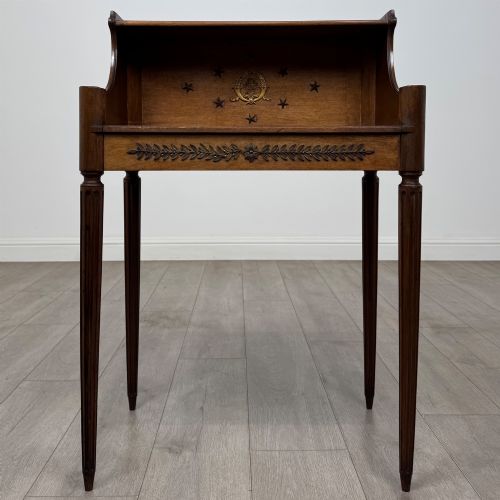
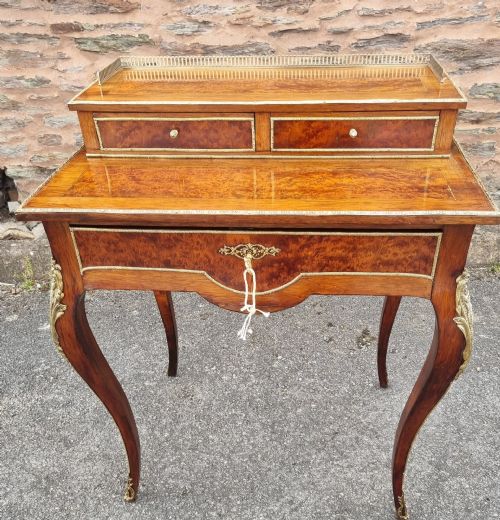
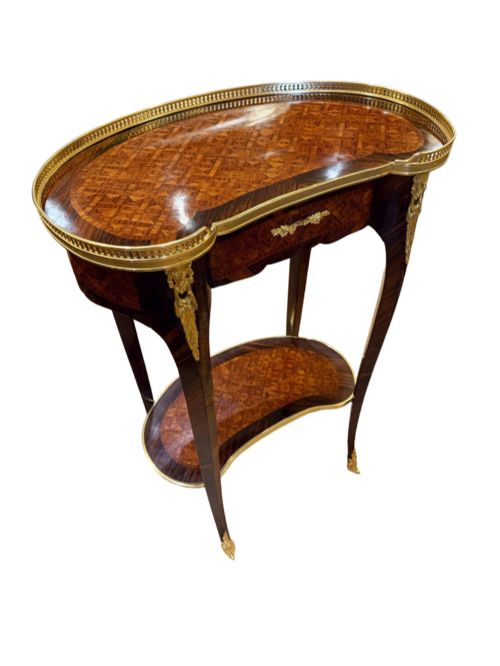

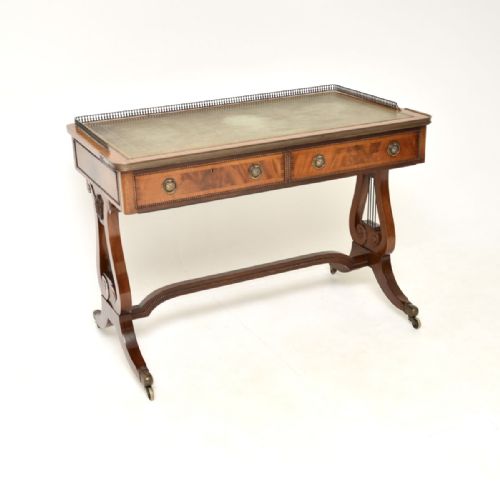

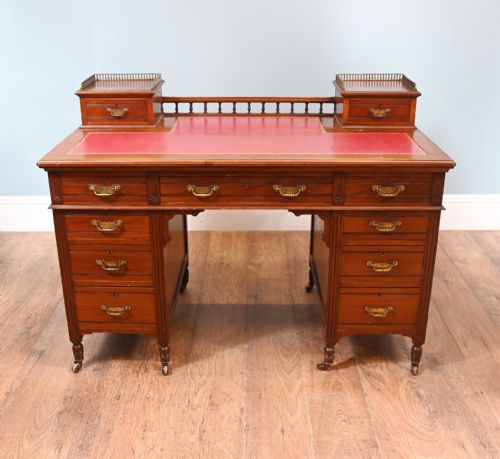

Brass Gallery Writing Table
A brass gallery writing table brings together fine timbers and a protective railing, offering a practical surface for correspondence.
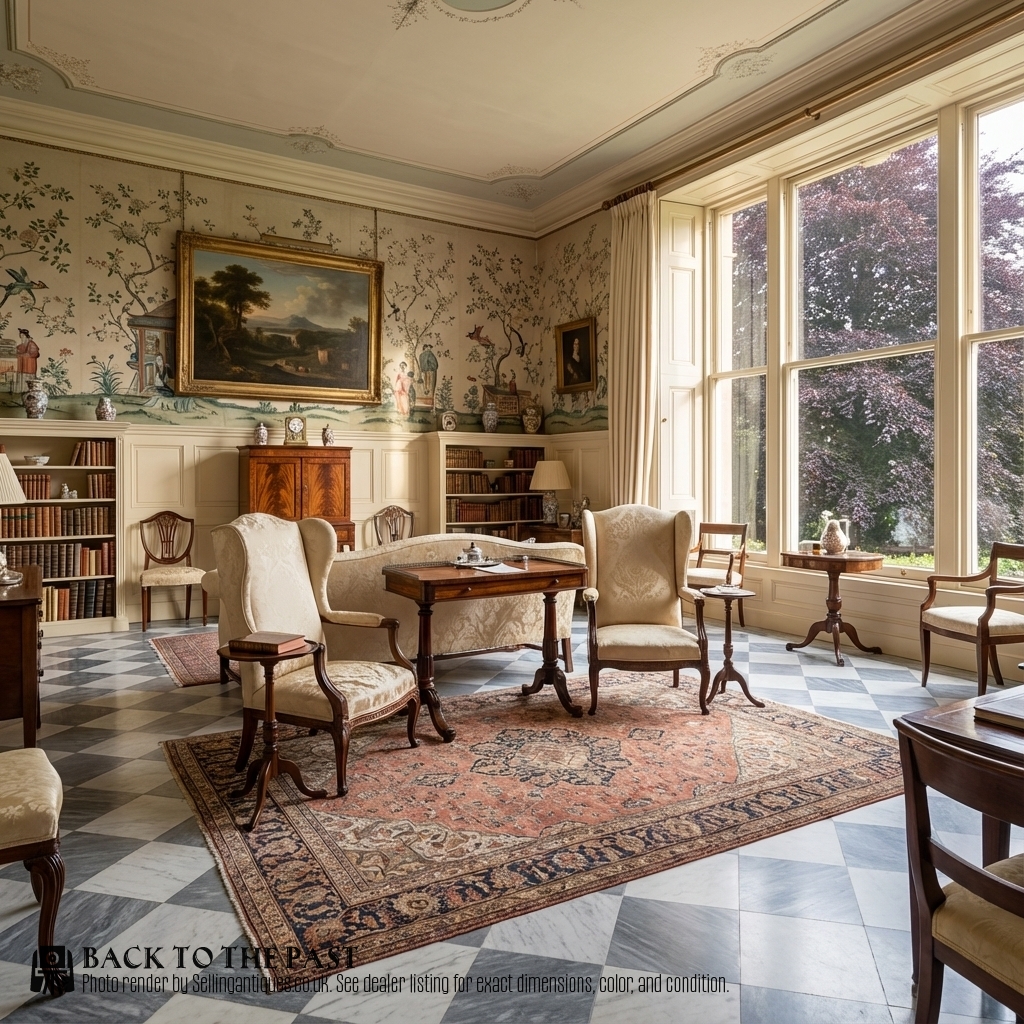
Brass Gallery Writing Table
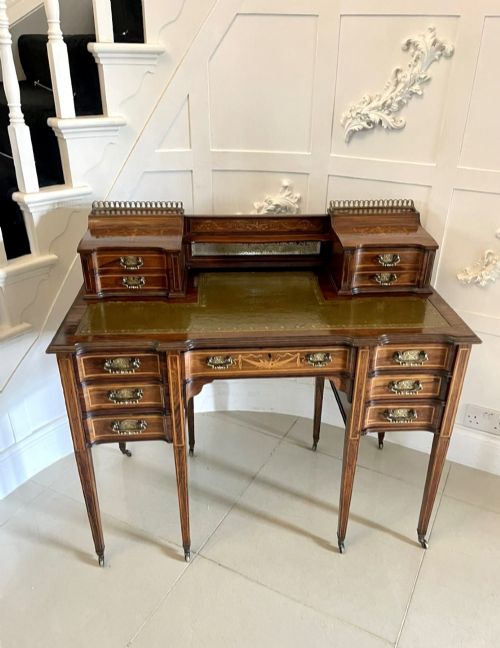
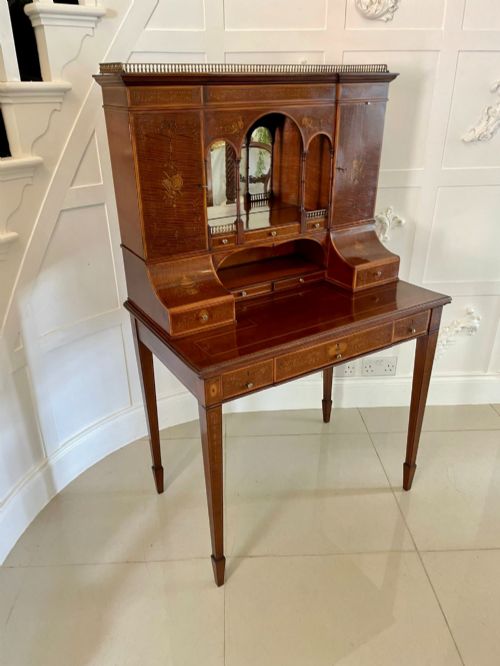
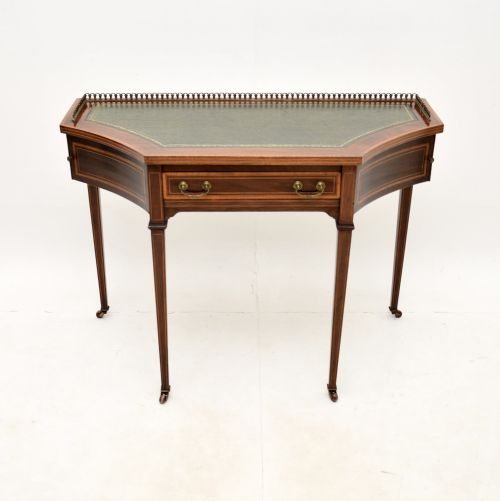
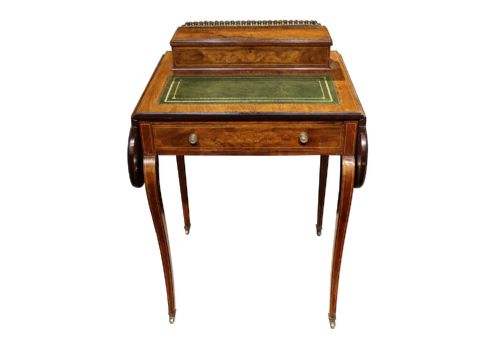
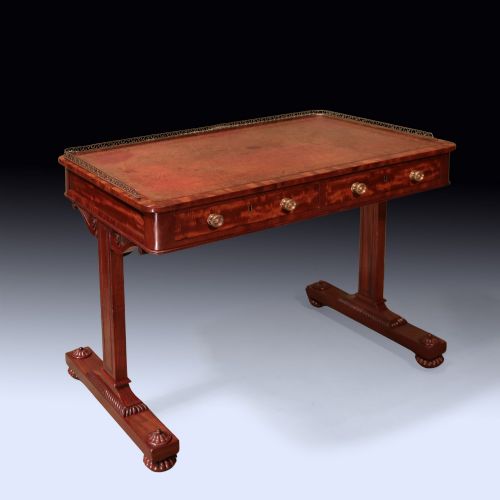
A brass gallery writing table is a desk or writing table distinguished by a raised metal rail enclosing part or all of the top surface. You are most likely to encounter Edwardian and Victorian examples on this page, alongside pieces from the nineteenth century and the Regency period.
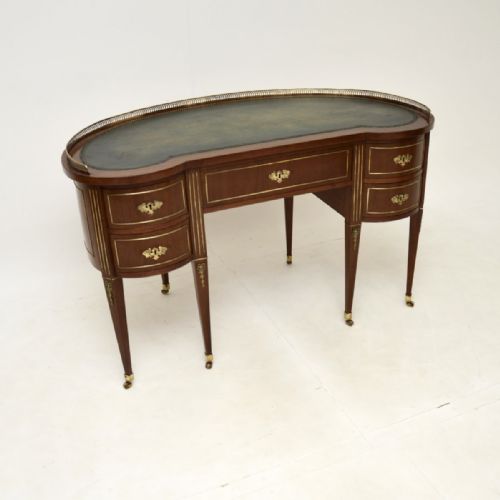
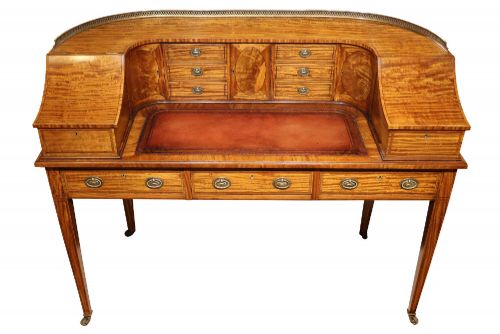
The form appears in various configurations, including freestanding desks, kidney-shaped tables, and elaborate Carlton House desks. These pieces served domestic and estate use, providing a dedicated workspace within a drawing room, library, or study.
Origins span British workshops of the Victorian and Edwardian eras, with occasional continental pieces executed in mahogany, walnut, or rosewood. The inclusion of a brass gallery protects books and papers from sliding off while adding a metallic accent to the wooden frame.
Materials and construction
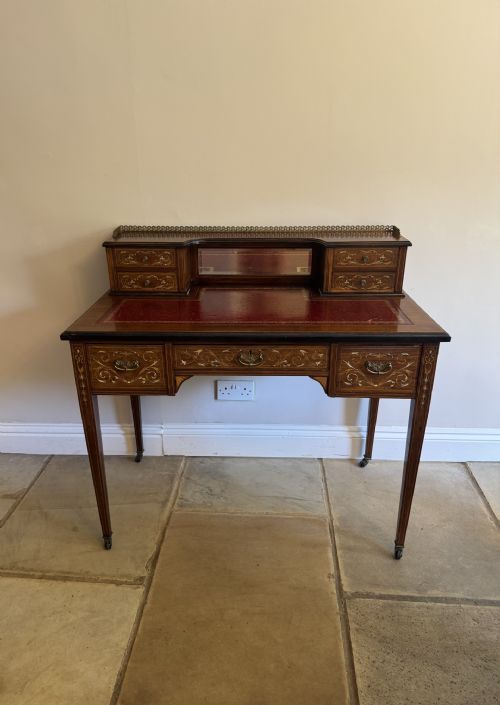
Makers utilised primary timbers such as mahogany, rosewood, walnut, and satinwood, frequently employing crossbanding and intricate marquetry or parquetry inlay. Surfaces often incorporate leather writing inserts surrounded by timber borders.
Brass formed the galleries, handles, and occasional mounts, fastened securely to the wood structure. Drawers typically feature dovetailed construction with secondary timbers such as oak lining the interiors.
Brass Gallery Writing Table Retail Price Guide 2026
Typical asking prices for brass gallery writing table among the pieces listed under this phrase on Sellingantiques today, from the lower quarter to the upper quarter. They describe what is for sale here now, not the wider market.
Listings feature mahogany, rosewood, walnut, and satinwood, alongside specialised forms like the Carlton House desk and the Bonheur du Jour.
Distinctions in quality
Quality rests upon the selection of timber figures and the precision of the inlay work, where dense grain and crisp botanical motifs elevate a piece. The integration of the brass gallery, whether pierced or baluster-turned, reflects the overall attention to detail.
Interior fittings reveal standard execution through the neatness of drawer linings and the retention of original hardware. Structural integrity and refined proportions distinguish works by notable cabinet makers from standard commercial production.
Maple & Co.·Edwards and Roberts·Gillow & Co·Gillows of Lancaster
The Brass Gallery Writing Table Glossary
- Brass gallery
- A low metal railing fitted to the top of a desk or table. It prevents inkstands and papers from falling.
- Carlton House desk
- A form of writing desk with a curved superstructure of small drawers and compartments enclosing the rear and sides of the writing surface. This layout provides extensive pigeonholes for stationery.
- Marquetry
- Decorative veneer applied to furniture in patterns using different coloured woods, metals, or shells. It creates pictorial or geometric designs across the desktop.
- Crossbanding
- A border of veneer laid around the main timber surface with the grain running at right angles. This technique frames the primary panel.
- Kidney-shaped
- Describing a curved, bean-like outline designed to fit comfortably against the user. It appears frequently in nineteenth-century writing tables.
- Ormolu
- Gilt bronze mounts applied to furniture for decorative effect. The technique produces a bright gold-coloured metallic finish.
Brass Gallery Writing Table: Frequently Asked Questions
What is a brass gallery?
A brass gallery is a decorative and functional metal rail fixed around the upper edges of a desk or table. It serves to keep writing equipment and documents securely on the surface.
These galleries range from simple wire designs to pierced brass plates or turned balusters. They are characteristic of better-quality nineteenth and early twentieth-century library and writing furniture.
How do I date a writing table?
Dating relies on identifying the prevailing style, timber choices, and construction methods visible in the drawers and framing. Victorian and Edwardian pieces often combine mahogany or rosewood with distinct inlay patterns.
Secondary woods inside the drawers and the style of the brass hardware provide further clues to the period of manufacture. Comparing the proportions and revival styles helps narrow the decade.
Where were these desks used?
These tables were designed for polite correspondence and estate management in the principal rooms of large houses. They stood in libraries, drawing rooms, and private studies.
Freestanding versions allowed placement in the centre of a room rather than pushed against a wall. Their finished backs and refined timbers suited spaces where guests would see them from all angles.