
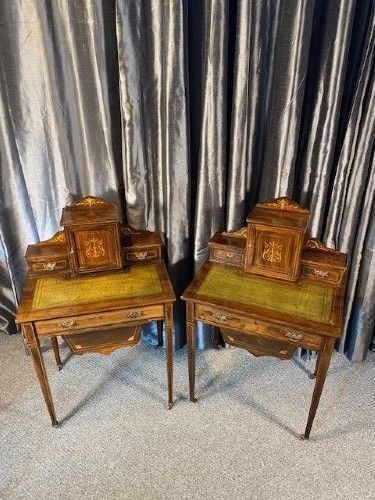
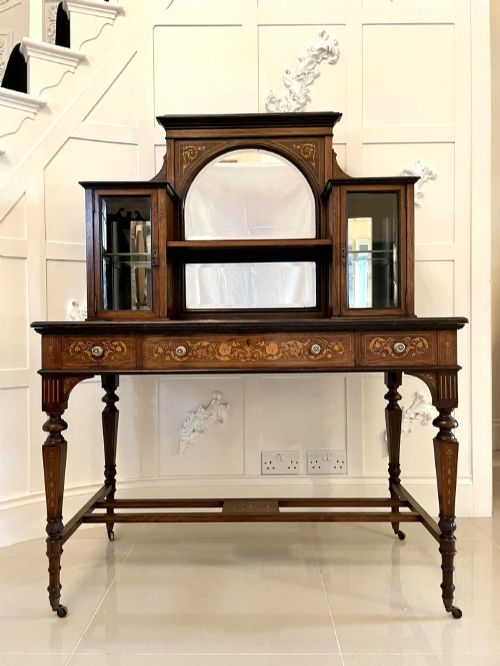
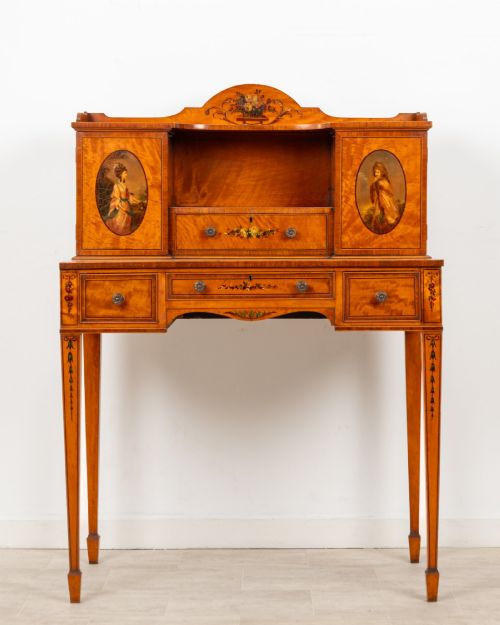

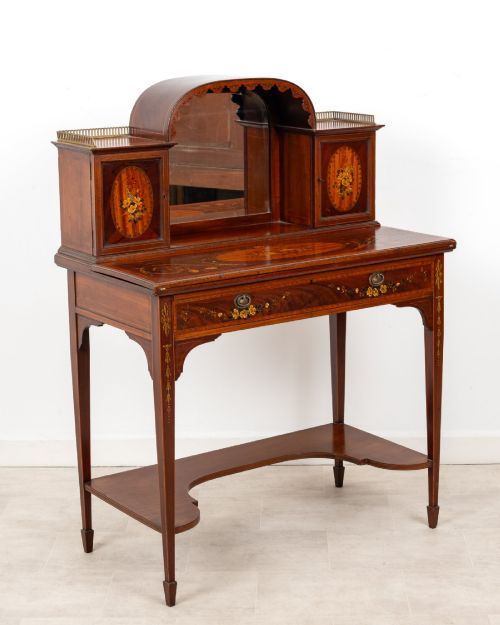
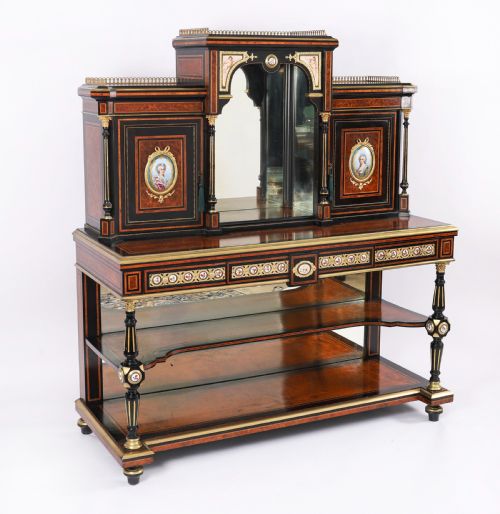

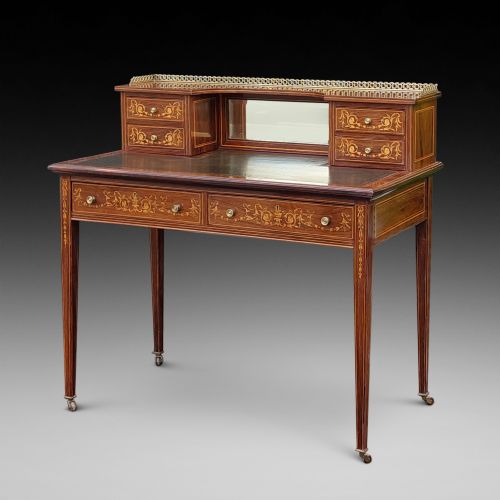
Edwardian Bonheur Du Jour
An Edwardian bonheur du jour brings refined ladies' writing spaces into the home, combining a compact writing surface with an elegant upper cabinet for correspondence.
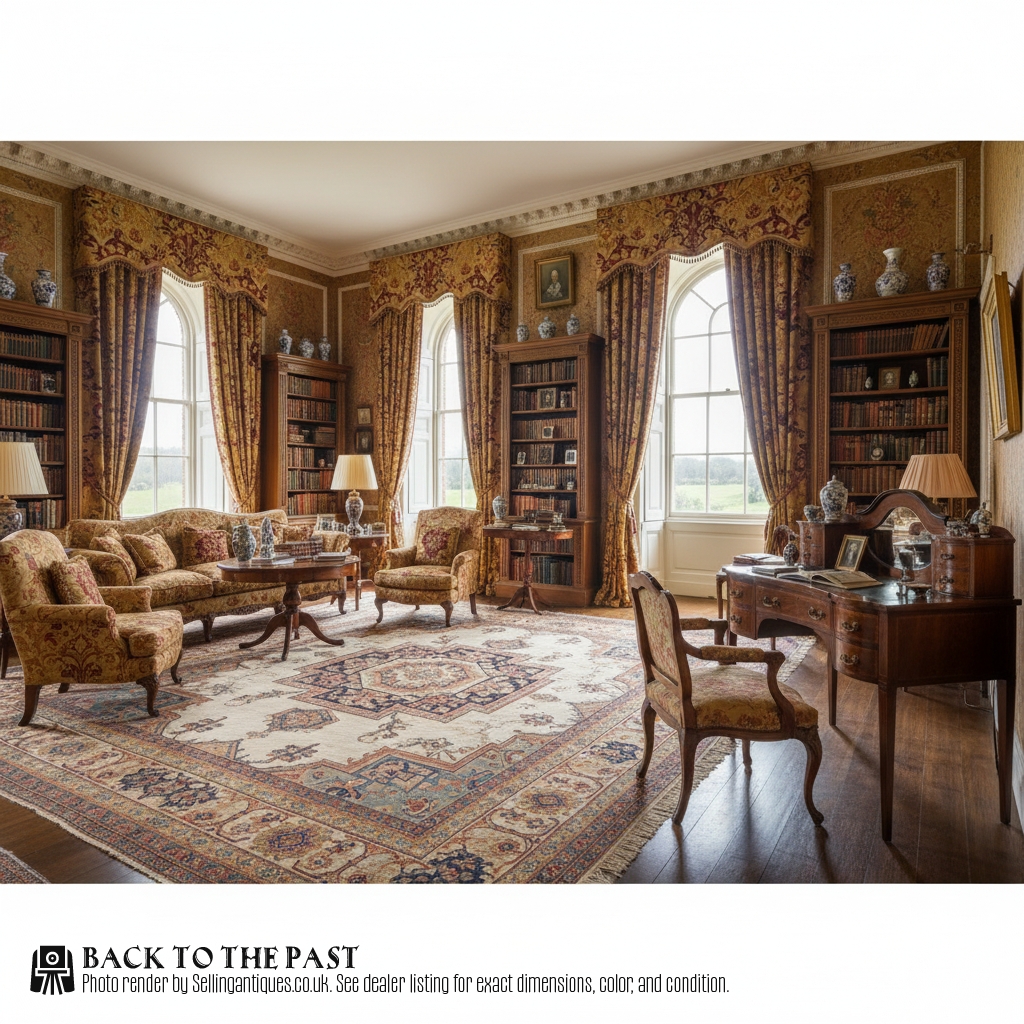
Edwardian Bonheur Du Jour
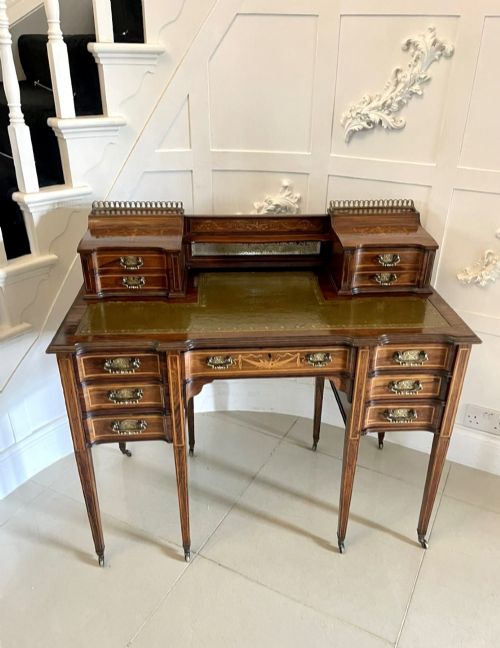
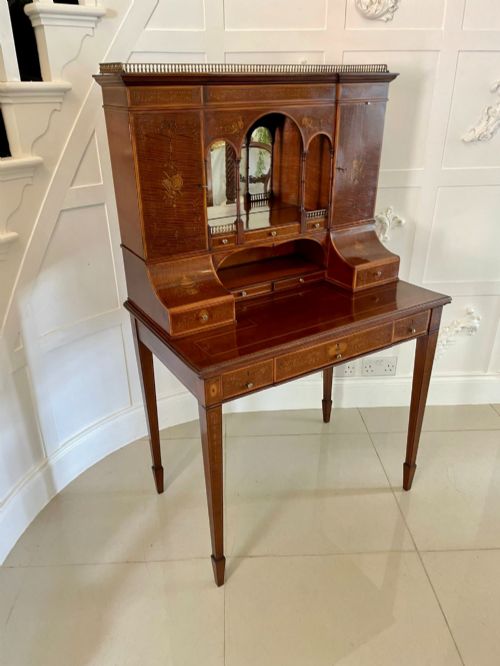
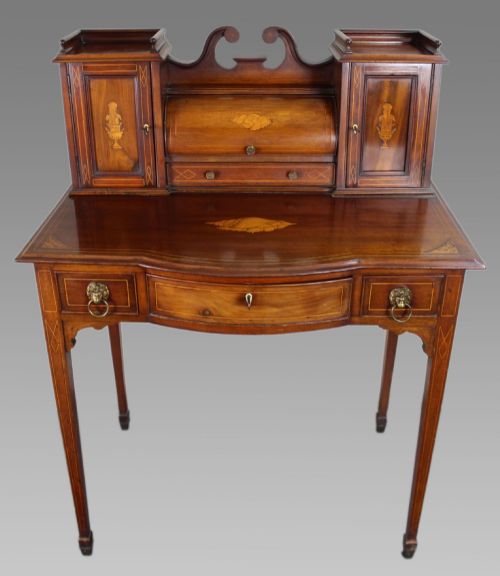
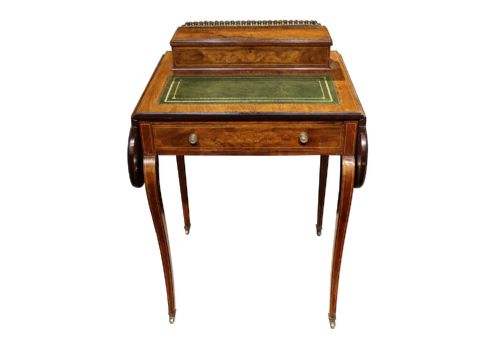
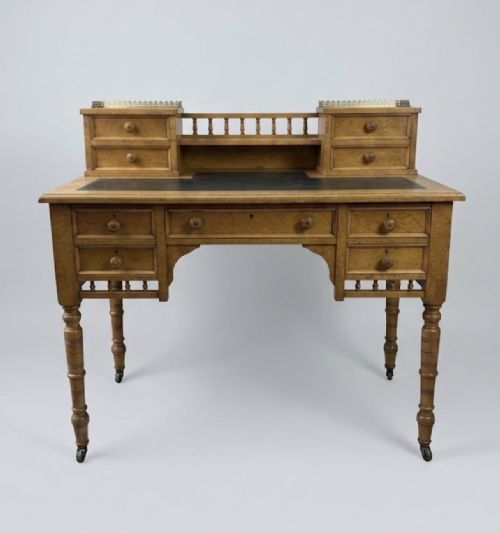
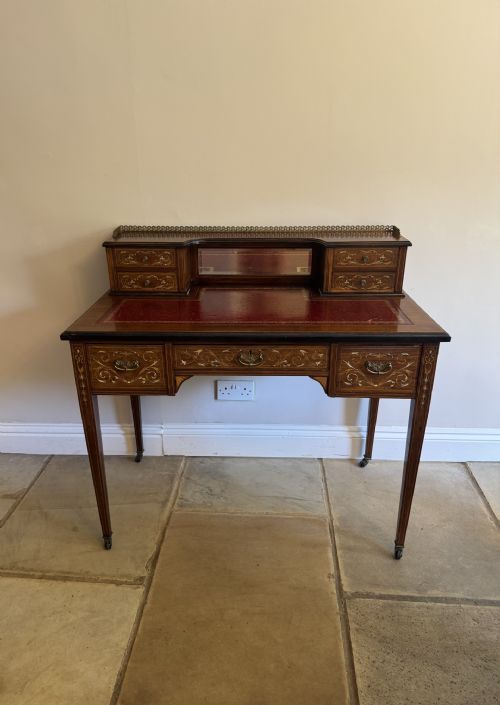
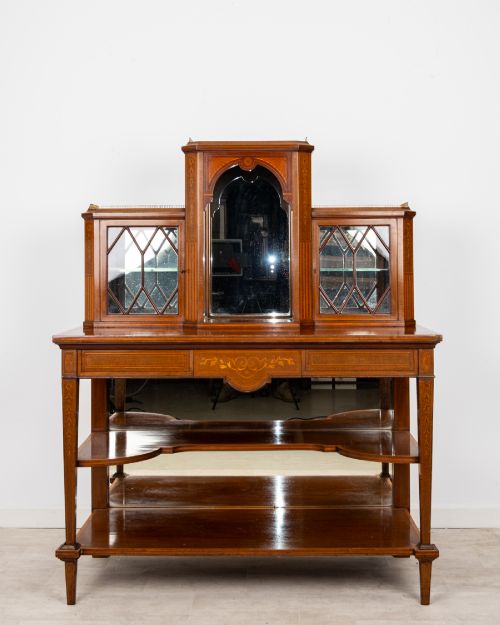
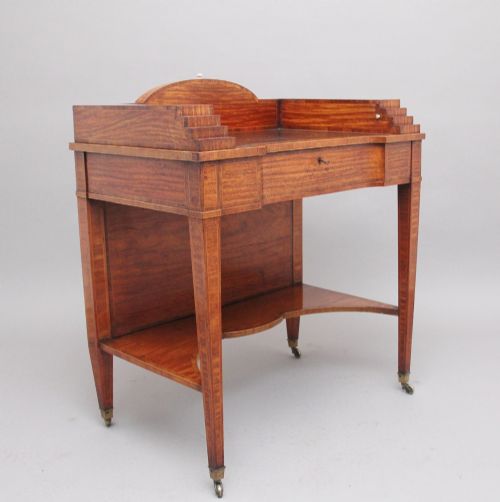
The edwardian bonheur du jour is a small, light writing desk featuring a tiered superstructure with compartments, drawers, or cupboards above the main writing surface.
Most examples found on this page date from the Edwardian period and late Victorian era, with construction spanning mahogany, satinwood, and rosewood.
These pieces served as intimate writing stations for ladies to manage social correspondence, diary keeping, and private letters in the parlour or bedroom.
Materials and Craftsmanship
Cabinet makers utilised dense hardwoods such as mahogany and rosewood as carcase foundations, often applying contrasting satinwood inlay and marquetry enrichment.
Surfaces frequently display hand-painted floral decoration and delicate stringing, while interior compartments incorporate fine cockbeaded drawers and leather-lined writing flaps.
Edwardian Bonheur Du Jour Retail Price Guide 2026
Typical asking prices for edwardian bonheur du jour among the pieces listed under this phrase on Sellingantiques today, from the lower quarter to the upper quarter. They describe what is for sale here now, not the wider market.
Many a Victorian lady kept her deepest secrets tucked inside the tiny lockable central drawer of her bonheur du jour superstructure.
Factors That Separate the Best
Quality rests upon the crispness of the cabinet work, the complexity of the marquetry, and the selection of figured timber veneers for drawer fronts and tabletops.
Finer pieces exhibit fully fitted writing interiors with lockable compartments, original brass hardware, and secondary framing timbers of uncompromised substance.

Maple and Co·Edwards and Roberts
The Edwardian Bonheur Du Jour Glossary
- Bonheur du jour
- A small lady's writing desk with an elevated superstructure containing small drawers and pigeonholes. The French term translates to day's happiness.
- Superstructure
- The raised cabinet arrangement fixed to the top rear of the desk surface. It provides partitioned storage for stationery and letters.
- Marquetry
- Decorative patterns formed by the insertion of different coloured wood veneers into a prepared ground. It appears frequently on tabletops and drawer fronts.
- Sheraton Revival
- A late nineteenth and early twentieth century design movement drawing inspiration from the neoclassical furniture of George Sheraton. It relies on slender proportions and classical inlay motifs.
- Stringing
- Thin lines of contrasting timber inlaid into shallow grooves around drawer edges and tabletops to create a neat border.
Edwardian Bonheur Du Jour: Frequently Asked Questions
What is a bonheur du jour?
A bonheur du jour is a small, elegant ladies' writing desk featuring a raised superstructure of drawers and pigeonholes on top of the main writing table.
Developed in France during the eighteenth century, the form enjoyed a major revival during the Victorian and Edwardian periods in Britain.
How were these desks used?
These desks were designed for the morning room or bedroom, where ladies wrote correspondence, kept journals, and managed household accounts.
The upper compartments held notepaper, envelopes, and ink, while the pull-out or sloping writing surface provided space for the pen.
How do I spot Sheraton Revival style?
Sheraton Revival pieces display slender tapered legs, delicate satinwood inlay, and neoclassical motifs like bellflowers, urns, and swags.
This style emerged in late Victorian and Edwardian cabinet making to revive the lighter geometric lines of eighteenth-century neoclassical design.
Where should I place one?
Because many examples are finished on all sides as freestanding pieces, they work well placed away from walls in a drawing room or study.
Their compact scale also suits placement in bedroom alcoves or entrance halls where larger desks would overwhelm the floor space.