
Georgian Revival Desk
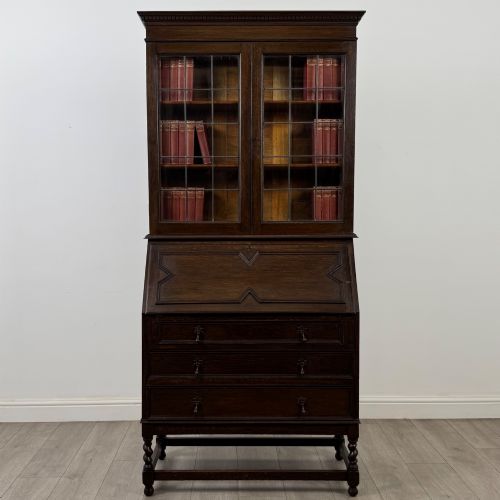
A georgian revival desk channels eighteenth-century proportion for twentieth-century studies, pairing rich mahogany and walnut with leather writing surfaces.
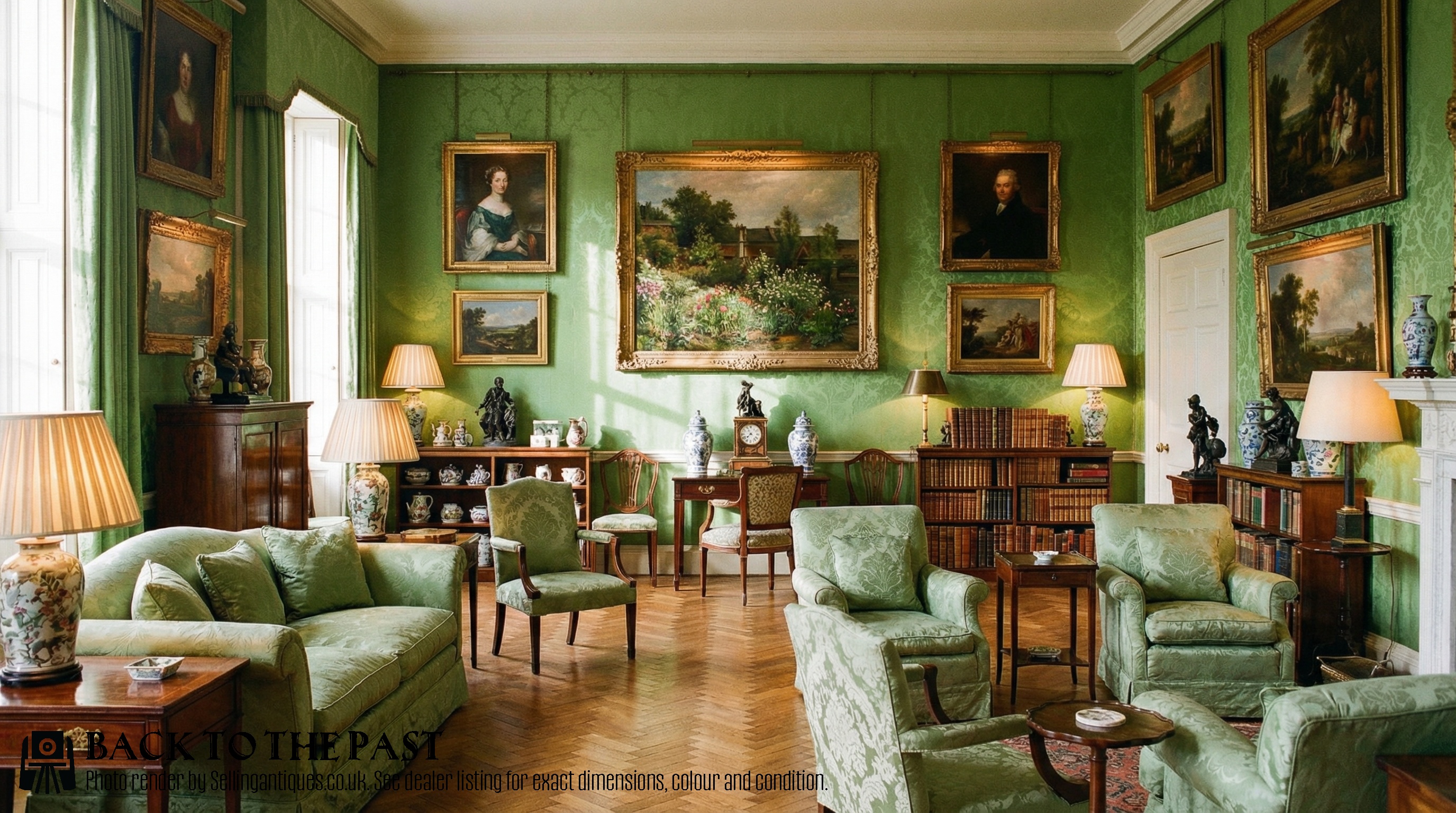
What a georgian revival desk is
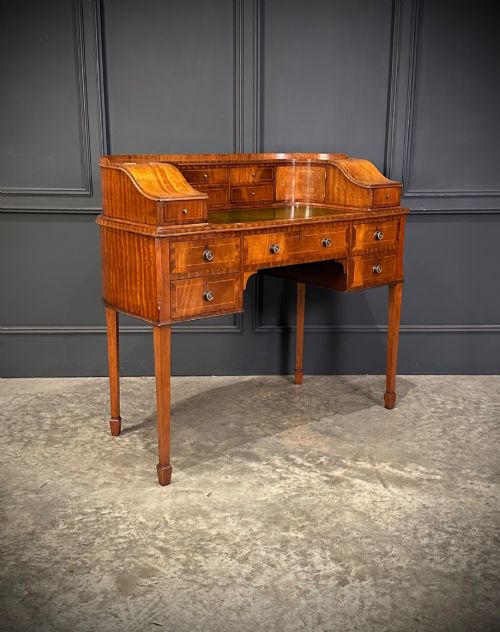
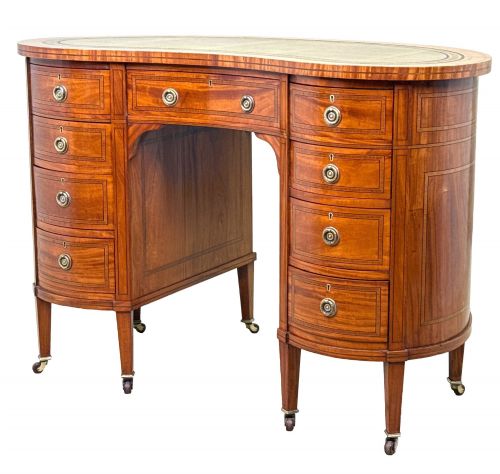
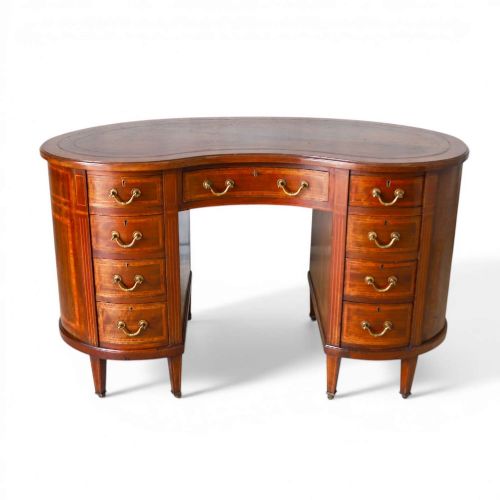
When you search for a georgian revival desk, you encounter pieces spanning the Victorian era through the early twentieth century, including the nineteen-twenties. These take forms such as writing tables, partners desks, pedestal desks, kneehole desks, drum tables, and small bureau desks.
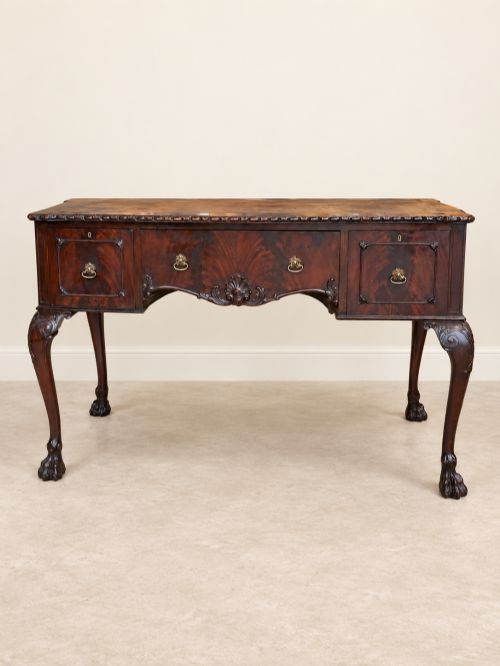
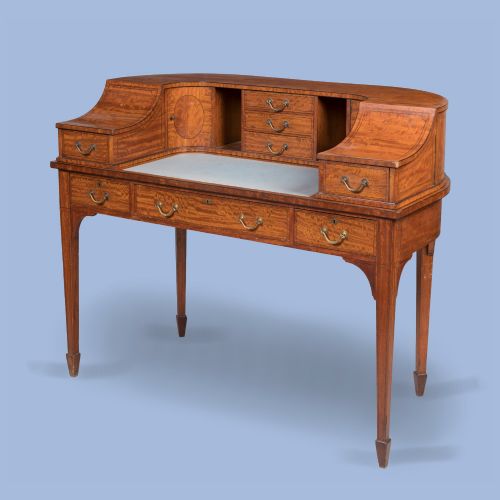
The version you are most likely to meet on this page is constructed from mahogany, often featuring a leather top and drawing on Chippendale or Queen Anne revival styles. You will also find walnut and burr walnut examples, alongside satinwood variants.
Makers such as Maples of London and Waring and Gillows produced these interpretations, alongside pieces associated with the Edwardian period. The selection ranges from compact kneehole formats to large partners desks designed for double-sided use.
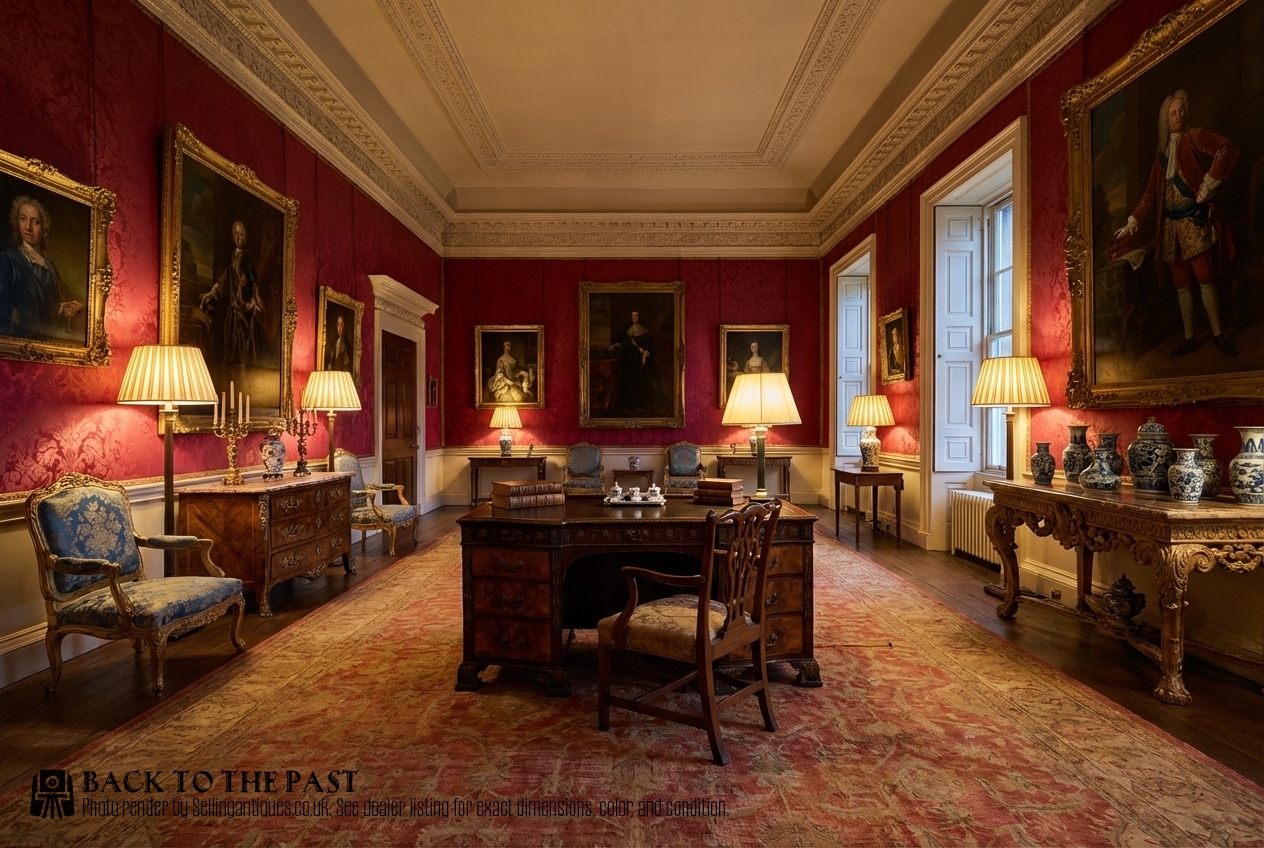
How they were made
Cabinetmakers utilised solid timbers and veneers, selecting figured mahogany, walnut, burr walnut, and satinwood to cover structural carcases. Surfaces frequently incorporate inset leather writing panels framed by timber borders.
Drawer construction involved traditional dovetailing methods, complemented by brass handles, escutcheons, and occasionally inlaid details. The aesthetic relies on revivalism, echoing eighteenth-century forms through nineteenth and twentieth-century carpentry.
Retail Price Guide 2026
Typical UK retail prices for georgian revival desk, calculated from the Sellingantiques database of over a million retail prices indexed since 2003. This retail price guide relies exclusively on Sellingantiques data; no external sources or auction records are used, so the figures do not describe the wider market.
Listings feature mahogany, walnut, burr walnut, and satinwood across writing tables, pedestal desks, and drum tables.
What varies in quality
The distinction between tiers rests upon timber selection and the depth of the cabinetmaking. Finely figured mahogany and burr walnut veneers, paired with crisp brass hardware and well-executed secondary timbers, separate standard production from superior pieces.
Proportion and structural balance also dictate the standing of a desk. Those retaining harmonious dimensions, intact leather surfaces, and balanced drawer arrangements command greater regard than simpler utilitarian variants.

Maples of London·Waring and Gillows
The Georgian Revival Desk Glossary
- Partners desk
- A large double-sided desk designed for two people to work opposite one another, featuring drawers and cupboards on both faces.
- Kneehole desk
- A compact pedestal desk with a central recessed space for the legs, flanked by banks of drawers.
- Drum table
- A circular library table with a rotating or stationary top surrounded by frieze drawers, supported on a central pillar and tripod base.
- Bonheur du jour
- A light lady's writing desk featuring a small superstructure of drawers and pigeonholes above the main writing surface.
- Frieze
- The central horizontal band of timber directly beneath the top surface of a desk, often containing integrated drawers.
Frequently Asked Questions
What is a partners desk?
A partners desk is a large writing table built with drawers and cupboards on both sides, allowing two people to sit opposite each other.
These pieces were traditionally used in libraries, studies, and administrative offices where working space needed to be shared.
Which woods were used?
Makers relied primarily on mahogany, walnut, burr walnut, and satinwood for these desks, often applying figured veneers over sturdy carcases.
Secondary woods supported the internal drawer linings, while brass hardware and leather inserts completed the construction.
How do I date a desk?
Dating relies on combining the construction style, timber characteristics, and any associated maker marks or labels found within the drawers.
Revival pieces often blend eighteenth-century aesthetics with Victorian or early twentieth-century manufacturing techniques.
Where did these desks go?
These desks served in grand domestic libraries, solicitors offices, and private studies as functional writing furniture.
Today they occupy similar professional and residential settings, functioning as primary workstations or statement centrepieces.