
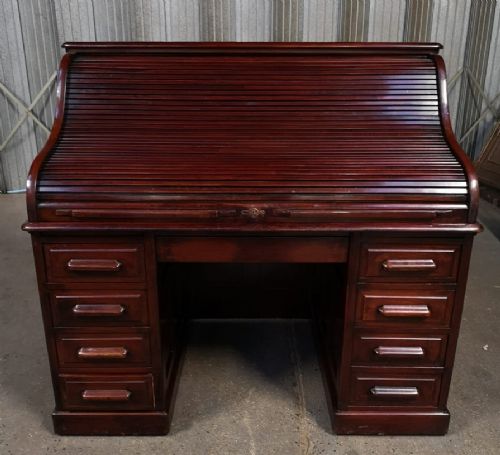
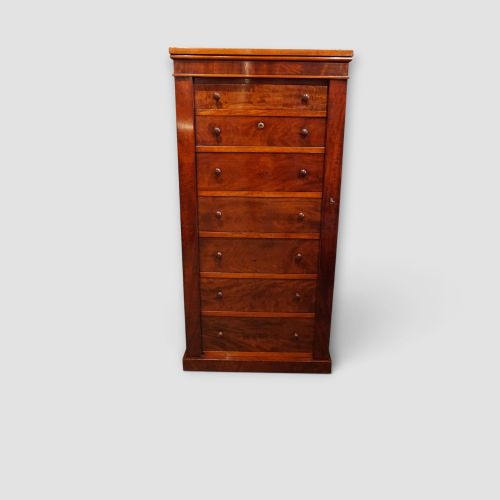
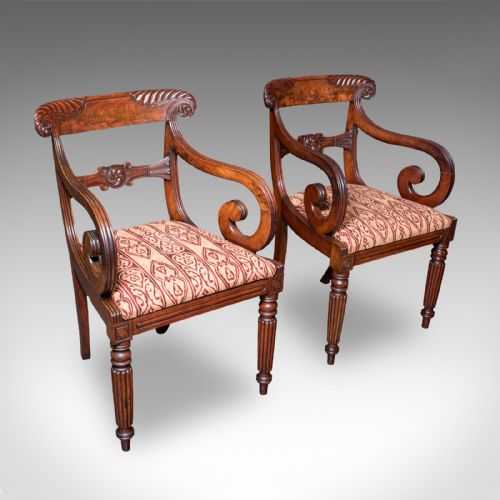
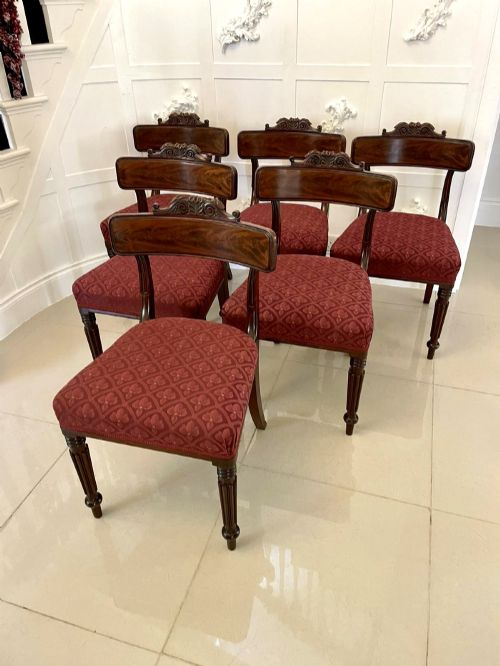
Red Mahogany Desk
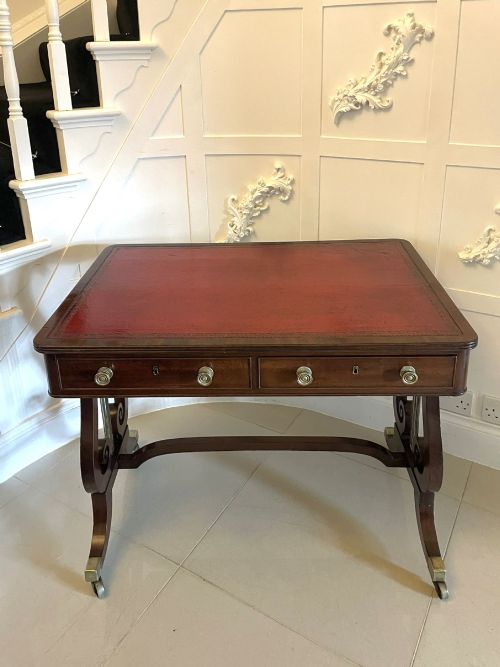
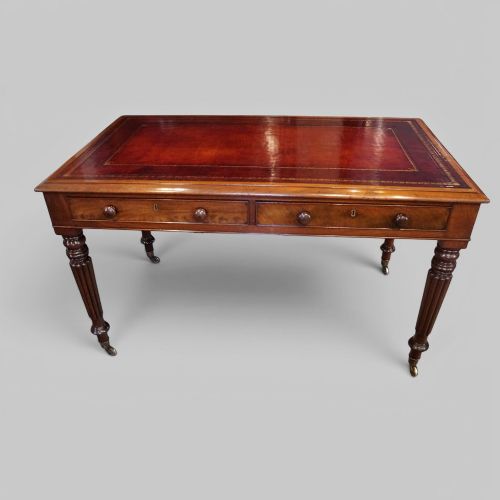
A red mahogany desk delivers robust workspace and deep timber grain, anchoring any study with period presence.
Forms and periods
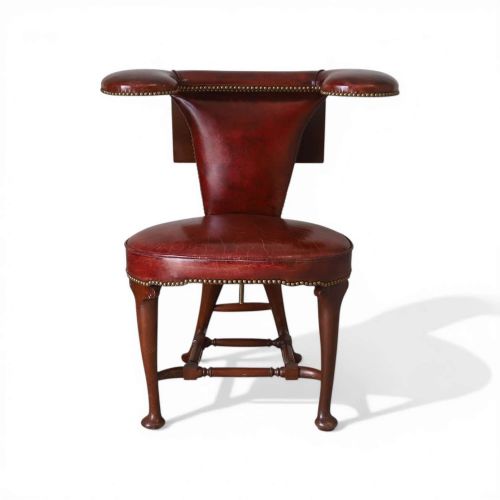
Every red mahogany desk brings substantial timber presence into a room, spanning forms from pedestal desks to compact davenports. Buyers seeking a red mahogany desk encounter pieces originating across the Victorian era, the Regency period, and the opening decades of the twentieth century.
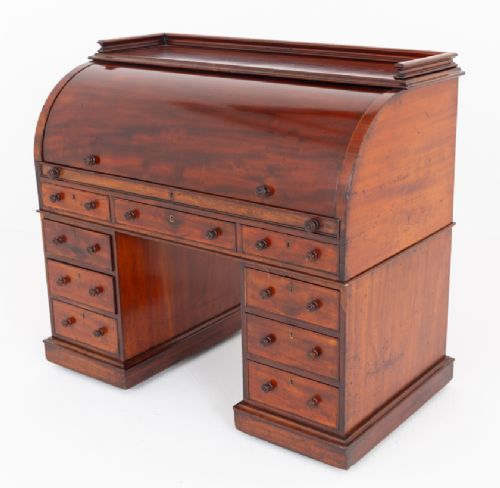
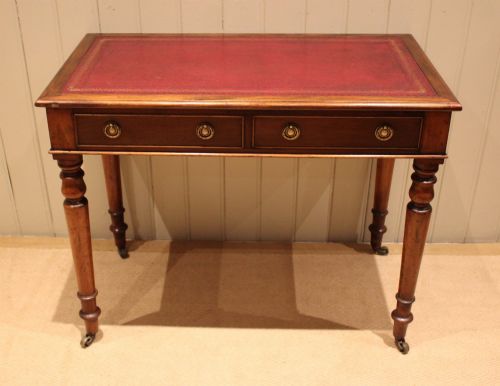
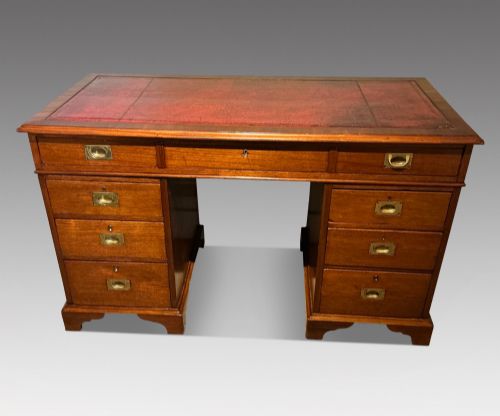
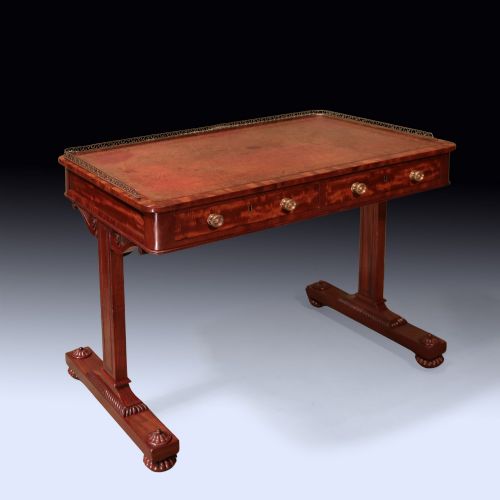
Pedestal configurations and partner tables dominate the larger formats, while smaller writing tables and davenports provide compact alternatives. These pieces utilise rich timber figures to create commanding focal points within libraries and studies.
Standards of craftsmanship
Superior examples display exceptional figure within the mahogany timber, particularly where flame veneer or figured panels wrap around pedestal drawers and writing surfaces. The depth of the timber grain and the precision of the joinery set the finest pieces apart from standard utility furniture.
The integration of original brass hardware and well-preserved leather inserts indicates higher original manufacture. Proportions and balanced proportions across partners desks and large writing tables reflect the hand of skilled cabinet makers.
Retail Price Guide 2026
Typical UK retail prices for red mahogany desk, calculated from the Sellingantiques database of over a million retail prices indexed since 2003. This retail price guide relies exclusively on Sellingantiques data; no external sources or auction records are used, so the figures do not describe the wider market.
Lockable davenport drawers ensure your diary remains secret from inquisitive Victorian houseguests.
Jas Shoolbred and Co
The Red Mahogany Desk Glossary
- Flame mahogany
- A veneer cut from timber fork sections to produce a rippling, flame-like pattern across desk fronts. This distinctive figuring requires expert matching by the cabinet maker.
- Partners desk
- A large double-sided pedestal desk designed for two people to work opposite one another. These substantial pieces feature drawers on both longitudinal faces.
- Davenport
- A compact small desk featuring a sloping writing surface above a bank of side drawers. This form became popular during the Victorian period for boudoirs and smaller studies.
- Fielded panel
- A raised central wooden panel set within a recessed frame on desk sides or modesty boards. This construction method allows timber to expand and contract safely.
Frequently Asked Questions
How do I care for the leather top?
Leather writing surfaces require occasional treatment with specialist leather balms to maintain flexibility and prevent cracking over decades of daily use.
Avoid placing damp items directly onto the hide, and use blotting paper for ink or liquid spills to protect the underlying timber frame.
Can a partners desk be placed freestanding?
Partners desks are specifically designed to stand away from walls because drawers and panel work extend around all four sides. This allows two people to sit opposite each other in the centre of a room.
Their finished backs make them ideal statement pieces for open study layouts rather than being pushed against room boundaries.
What is the difference between a pedestal and writing desk?
Pedestal formats incorporate banks of drawers descending to the floor on one or both sides of a central kneehole space. They offer substantial storage capacity and heavy structural timber.
Writing tables rely on slender legs supporting a single frieze drawer, offering a lighter visual presence suitable for smaller rooms.
How do I distinguish Regency from Victorian examples?
Regency pieces often display cleaner classical lines, sometimes incorporating brass inlay or sabre legs influenced by earlier neoclassical design traditions. Their mahogany timber selection frequently exhibits bold grain figures.
Victorian models tend toward heavier proportions, fielded panels, and robust pedestal construction designed for nineteenth-century office environments.