
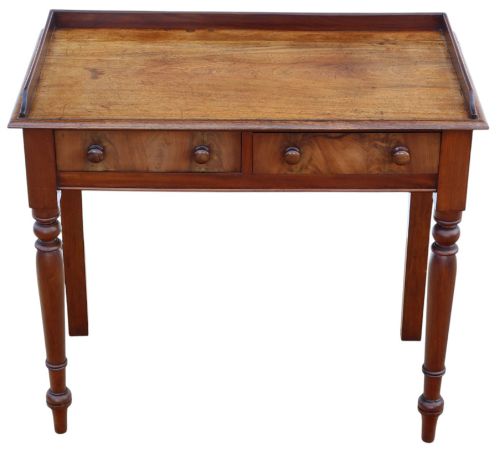
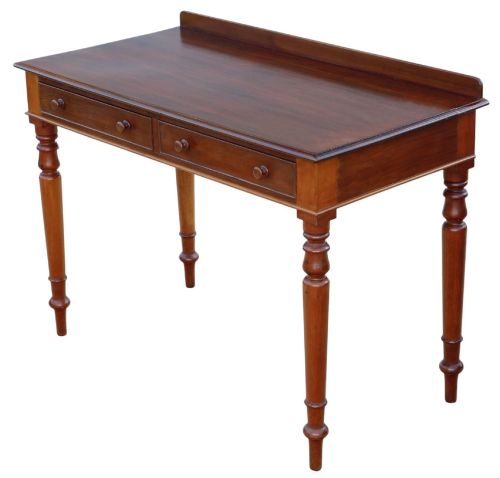
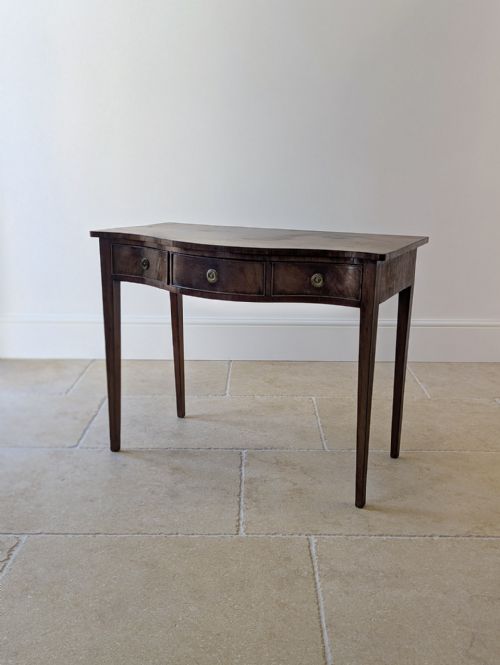
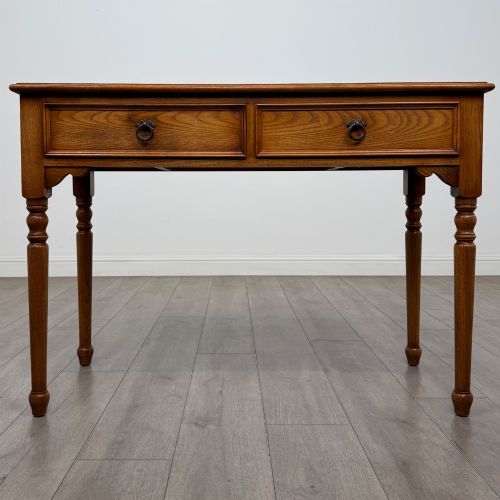

Antique Dressing Desk
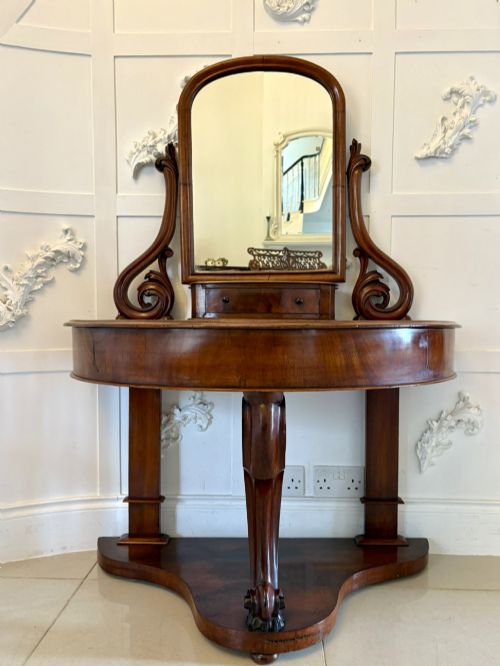
An antique dressing desk combines personal grooming and correspondence, offering fitted drawers and writing surfaces in mahogany, walnut, and yew.
The Form of the Antique Dressing Desk
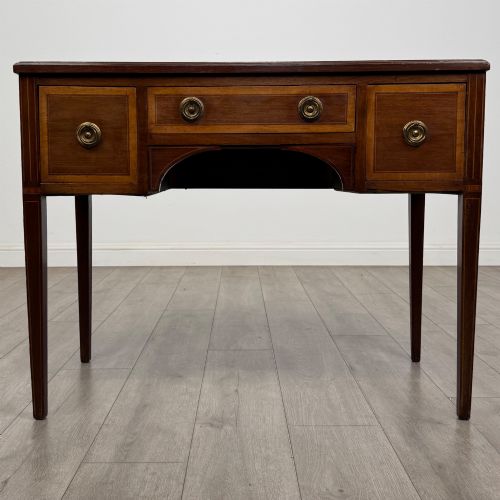
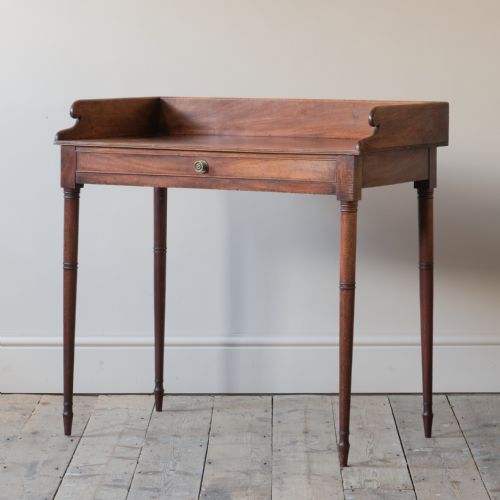
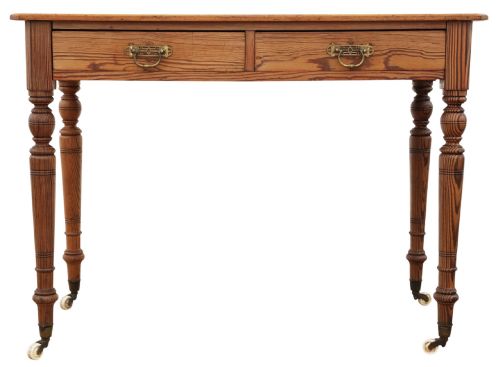
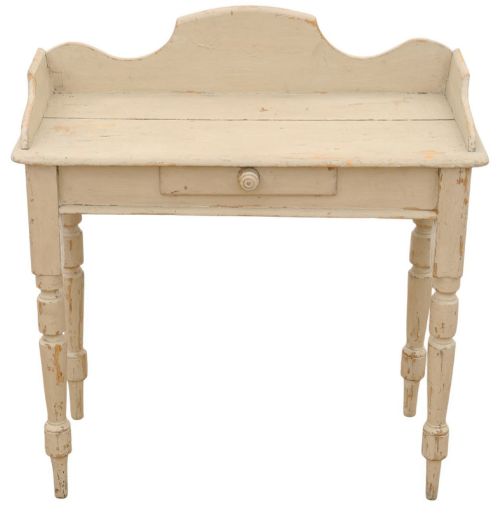
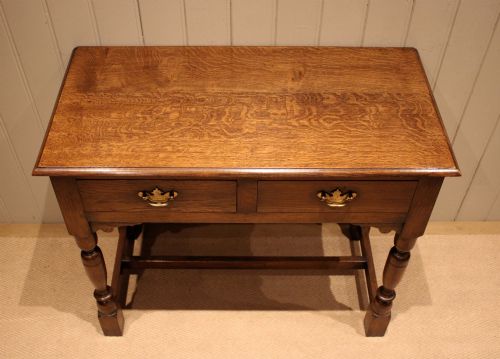
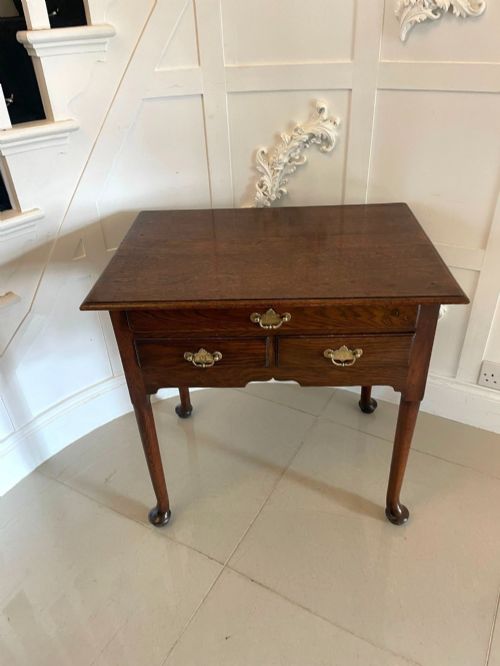
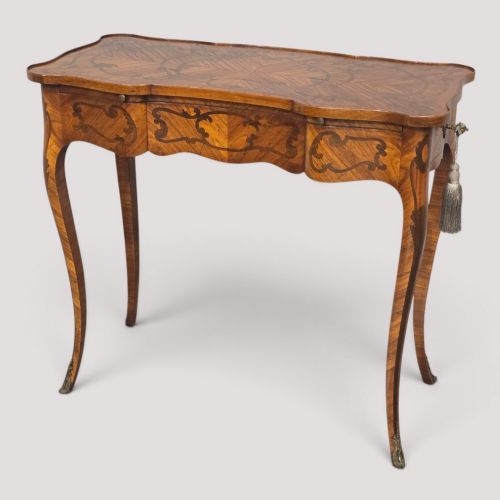
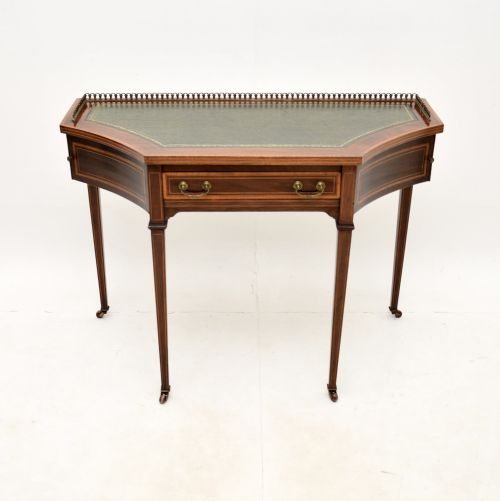
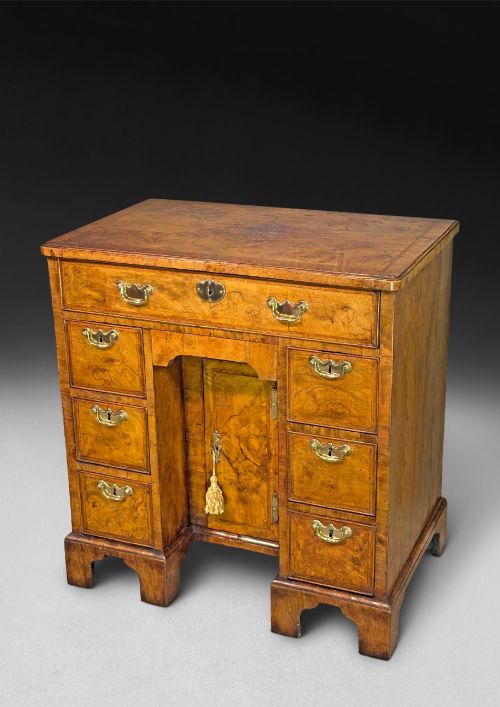
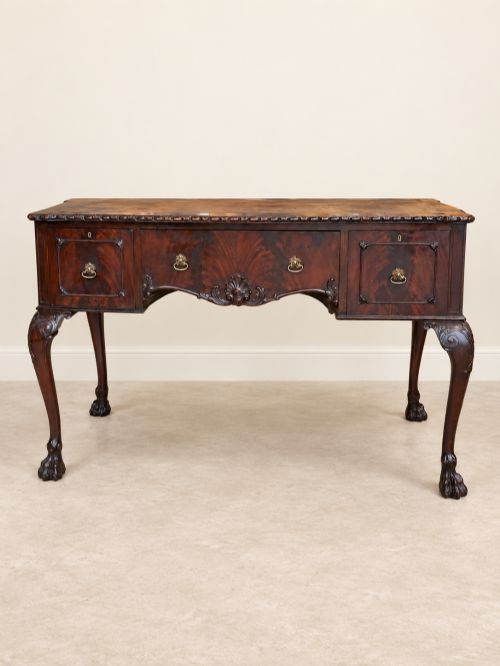
An antique dressing desk bridges the gap between bedroom vanity and private writing table, accommodating both correspondence and personal grooming within a single piece of furniture. These hybrid forms frequently overlap with lowboys, kneehole tables, and kidney-shaped writing desks found across the Georgian, Regency, and Edwardian periods.
The version most commonly met on this page is constructed from mahogany, often displaying figured veneers, multiple small drawers, and occasional satinwood or bone inlay. Makers designed these dual-purpose pieces for ladies and gentlemen who required a compact surface for letters and morning routines in the parlour or bedchamber.
Early examples originate in the eighteenth century as simple yew wood lowboys, evolving through the Regency and Victorian eras into elaborate twin-pedestal dressing tables and bureau plats. Later Edwardian interpretations lean towards inlaid mahogany and bow-fronted profiles, maintaining the essential integration of drawer space and flat top.
Materials and Construction
Cabinetmakers built these pieces using solid timber frames of mahogany, walnut, and yew wood, frequently applying flame mahogany veneer or burr walnut to prominent drawer fronts and top surfaces. Structural integrity relied on traditional joinery, including hand-cut dovetails for the numerous small drawers required to store toiletries and writing implements.
Secondary elements incorporated brass handles, escutcheons, leather writing inserts, and delicate stringing in satinwood or bone to delineate borders. Workshops selected dense native and imported hardwoods to withstand daily use while providing a stable canvas for French polish or wax finishes.
Retail Price Guide 2026
Typical UK retail prices for dressing desk, calculated from the Sellingantiques database of over a million retail prices indexed since 2003. This retail price guide relies exclusively on Sellingantiques data; no external sources or auction records are used, so the figures do not describe the wider market.
A surprising number of miniature desk clocks and heavy silver boxes share this category, proving that small valuables required serious desktop security.
Judging Quality and Execution
The division between standard output and finer workshop production rests in the choice of veneers and the precision of the cabinetwork. Superior examples display mirrored flame mahogany or burr walnut grain selections that wrap continuously across drawer banks, paired with robust secondary woods inside the carcass.
Refinement appears in the subtlety of the inlay work, the weight and original casting of the brass hardware, and the uncompromised symmetry of kneehole arches or serpentine fronts. Workshops of high standing demonstrated absolute control in the thickness of timber and the flush fitting of multiple internal partitions.
Gillows of Lancaster·JAS Shoolbred·Hobbs and Co
The Antique Dressing Desk Glossary
- Lowboy
- A small oak, walnut, or mahogany table with one or more tiers of drawers, originating in the late seventeenth century and frequently serving as a dressing or writing surface.
- Kneehole desk
- A desk or dressing table featuring a central recess for the user's legs, flanked by vertical banks of small drawers.
- Flame mahogany veneer
- A thin slice of mahogany taken from the point where the branch joins the main trunk, yielding a distinctive flickering flame pattern used on high-grade furniture surfaces.
- Bureau plat
- A freestanding writing table with drawers in the frieze, unencumbered by a superstructure, often adapted for dual use as a dressing table.
- Stringing
- Thin inlay lines of a contrasting wood, such as satinwood, embedded into the surface of mahogany or walnut furniture to define geometric borders.
Frequently Asked Questions
How do I distinguish a dressing desk from a standard writing table?
A dressing desk typically incorporates compartmentalised interior drawer layouts specifically sized for cosmetics, brushes, and small personal items rather than bulk stationery.
Many examples also retain fittings for mirrors or exhibit proportions shallower than a traditional library table to suit a bedroom setting.
Were these desks meant for bedrooms or sitting rooms?
Their placement varied according to the domestic habits of the Georgian and Victorian periods, moving freely between private bedchambers and ladies' morning rooms.
Because they combined writing surfaces with storage for personal grooming, owners utilised them wherever morning correspondence and toilet took place.
What timber is most common in these pieces?
Mahogany dominates the surviving record, appearing both as solid boards and as figured veneers over secondary timber frames.
Walnut and burr walnut also feature prominently across Victorian and Edwardian examples, alongside occasional regional pieces fashioned from yew wood.
How should I care for the leather writing surface?
Leather inserts benefit from occasional treatment with neutral microcrystalline wax or specialist leather balm to prevent drying and cracking.
Avoid excessive moisture or direct sunlight, which can fade the gilt tooling and warp the underlying timber substrate.