

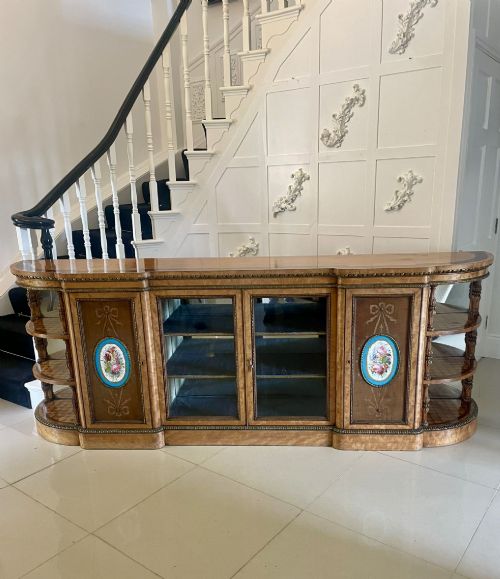
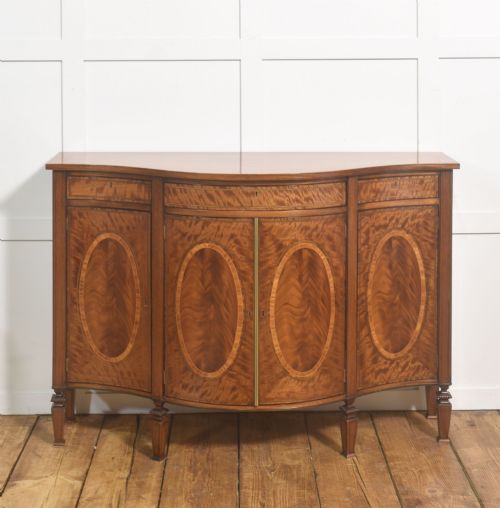
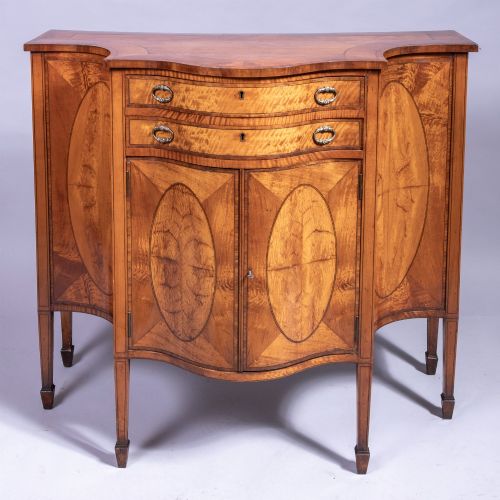

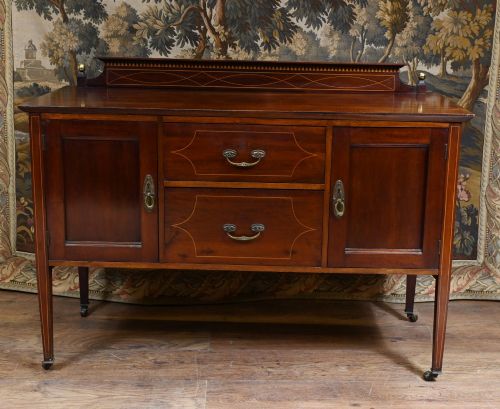
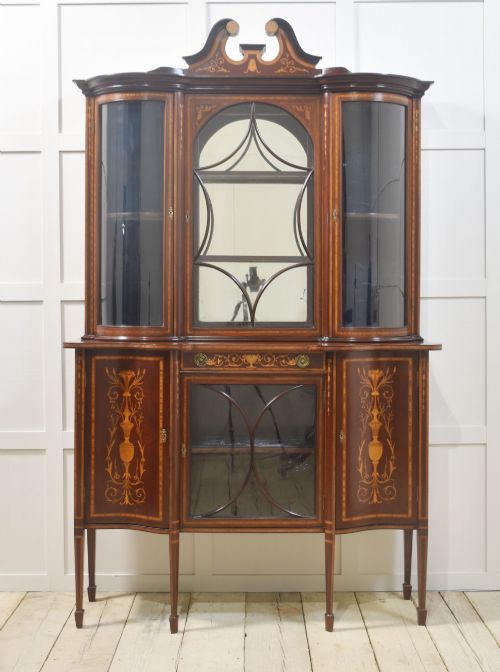
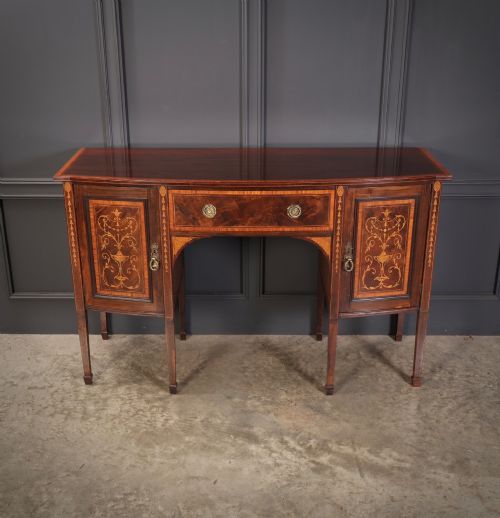
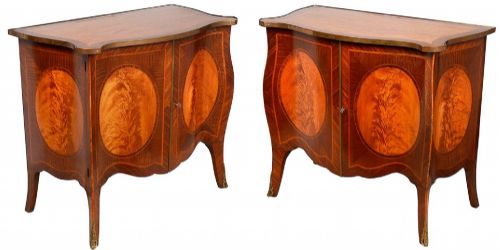
Satinwood Inlaid Sideboard
A satinwood inlaid sideboard brings pale exotic timber and fine classical detailing into a room, offering both display surface and concealed storage.

Satinwood Inlaid Sideboard
A satinwood inlaid sideboard is a timber serving and storage piece defined by pale yellow wood grounds decorated with contrasting botanical or geometric borders. Buyers searching this phrase look for a substantial dining room furnishing that combines functional cupboards and drawers with decorative presence.
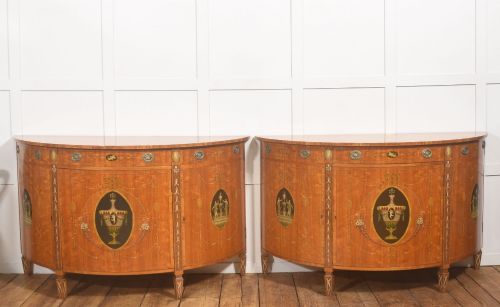
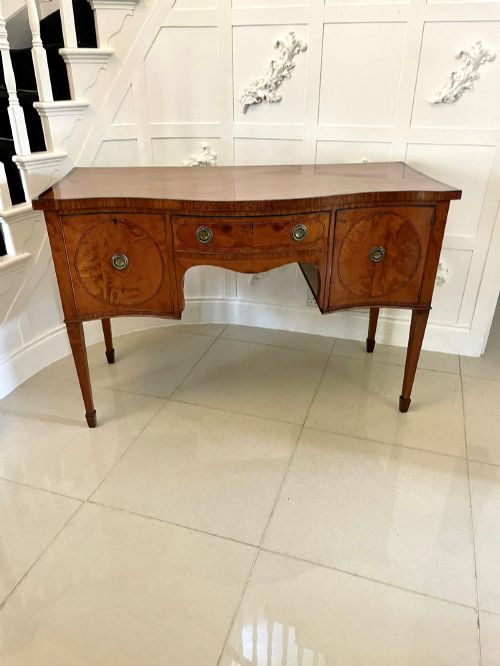
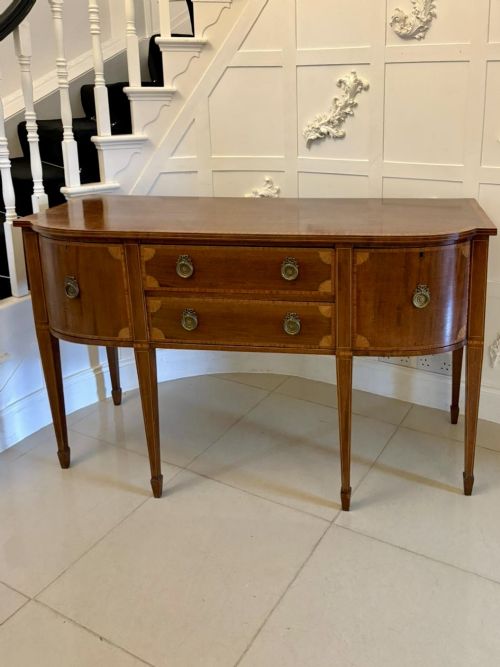
Most examples encountered here belong to the Sheraton Revival style of the Edwardian period or late Victorian era, taking inspiration from eighteenth-century Neoclassical design. These later interpretations often present serpentine or bow-front shapes alongside simpler straight-front carcases.
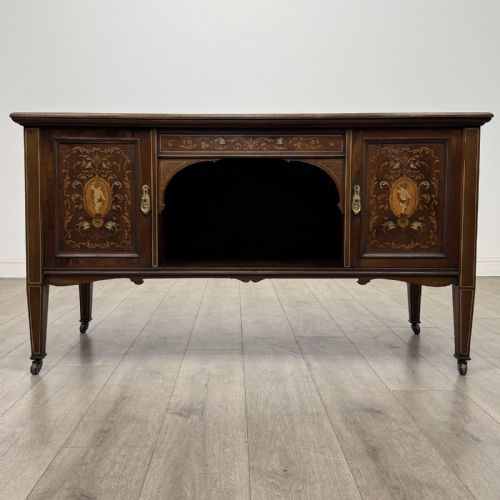
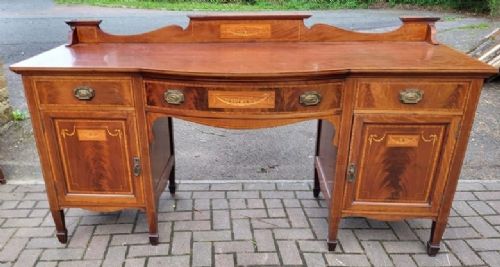
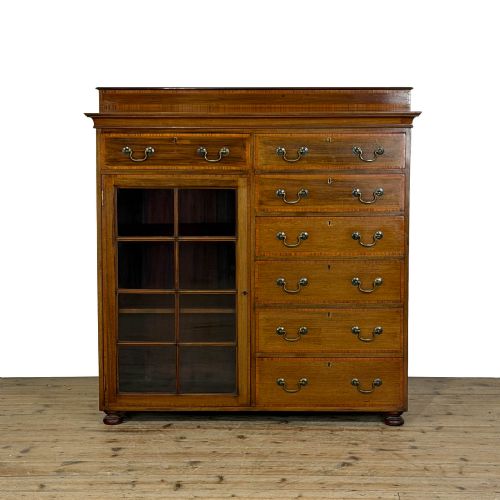
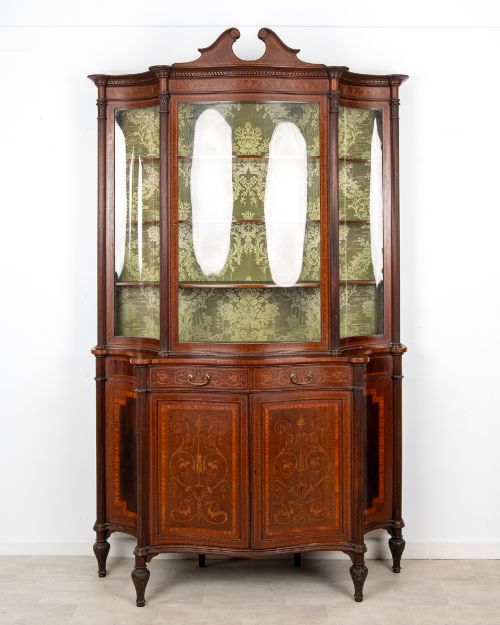
Formations vary across the selection from traditional pedestal sideboards to commodes, side cabinets, and display pieces sharing the same characteristic timber work and inlay techniques. The underlying structure typically relies on mahogany or other cabinet woods faced or banded with light-toned veneers.
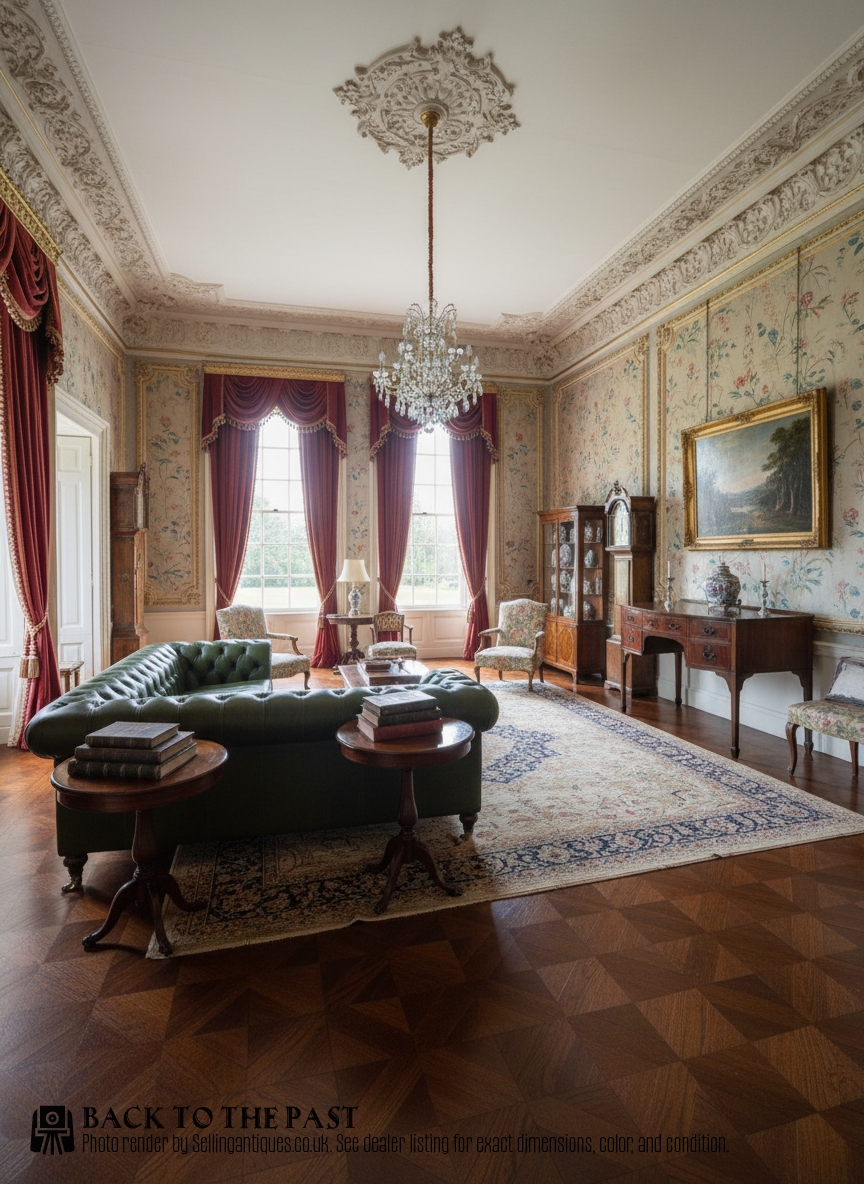
Distinctions in craftsmanship and design
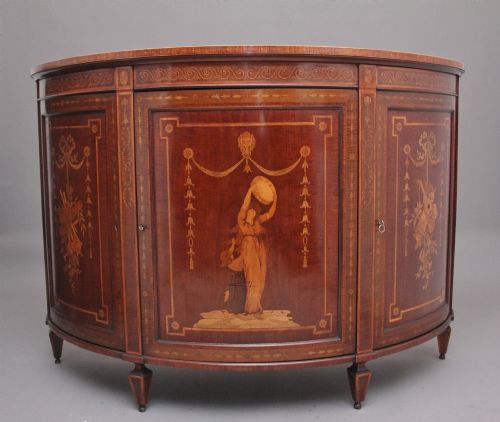
The sophistication of the marquetry separates standard production from exceptional pieces, with master workshops executing complex pictorial urns and shading using hot sand. Simpler linear stringing and symmetrical banding define more straightforward examples.
Timber selection dictates visual depth, where dense flame mahogany crossbanding and richly figured satinwood create greater reflectivity than plain or uniform veneers. The precision of the mitres and the alignment of the grain across drawer fronts show the level of workshop care.
Named makers and documented retail houses provide an additional tier of distinction, linking specific pieces to established cabinet-making firms operating in London.
Satinwood Inlaid Sideboard Retail Price Guide 2026
Typical asking prices for satinwood inlaid sideboard among the pieces listed under this phrase on Sellingantiques today, from the lower quarter to the upper quarter. They describe what is for sale here now, not the wider market.
Some sideboards hide purpose-built compartments once reserved for cooling wine bottles beside the family silver.
Edwards & Roberts·James Hicks·Waring & Gillow·Collinson & Lock·Gillows·Henry Walker·Maple & Co.
The Satinwood Inlaid Sideboard Glossary
- Satinwood
- A hard, lustrous timber native to Ceylon and the West Indies, prized for its golden-yellow colour and natural sheen. It serves as the primary veneer on higher-status Edwardian and Georgian revival furniture.
- Marquetry
- The art of forming decorative patterns by fitting together small pieces of veneer into a paper template before gluing them to a carcase. This technique creates pictorial scenes, urns, and floral scrolls across cabinet doors.
- Crossbanding
- A strip of veneer applied across the grain direction of a panel, usually framing a drawer front or table top. It creates a formal border that accentuates the central wood figure.
- Bow-front
- A convex, curved cabinet front that projects outward in an arc. This shape gained popularity during the late eighteenth century and recurred frequently in Sheraton Revival pieces.
- Demi-lune
- A half-moon shape used for the footprint of commodes and side cabinets. These pieces fit flat against a wall while presenting a curved profile to the room.
Satinwood Inlaid Sideboard: Frequently Asked Questions
What distinguishes a sideboard from a commode?
A sideboard is typically a longer dining room piece designed for serving food and storing tableware, featuring cupboards and drawers arranged horizontally. A commode is more compact and often built with a serpentine or demi-lune shape for formal reception rooms.
While both utilise satinwood and marquetry inlay, their proportions and original domestic uses differ according to the rooms they were intended to inhabit.
How do I care for satinwood furniture?
Satinwood requires protection from direct sunlight to preserve its golden colour and prevent the pale veneer from darkening unevenly. Regular dusting with a soft, dry cloth maintains the polished surface without the need for heavy waxes.
Keeping the piece away from direct heat sources prevents the timber from drying out and stops the delicate boxwood stringing from lifting.
Are these pieces Georgian or Edwardian?
While the style originates in the eighteenth century under designers like Sheraton and Adam, many surviving examples date from the Edwardian period around nineteen hundred. These later pieces are revival works that emulate earlier Neoclassical forms with great technical skill.
Construction details, secondary woods, and hardware help differentiate original Georgian furniture from subsequent revival interpretations.
How was marquetry colored?
Cabinet makers achieved shaded effects in floral and pictorial marquetry by scorching the edges of individual wood pieces in hot sand. This burning technique created a three-dimensional illusion of depth on ribbons, leaves, and classical urns.
Different wood species also provided natural colour variations, ranging from dark rosewood to pale boxwood and golden satinwood.