

Edwardian Mahogany Server
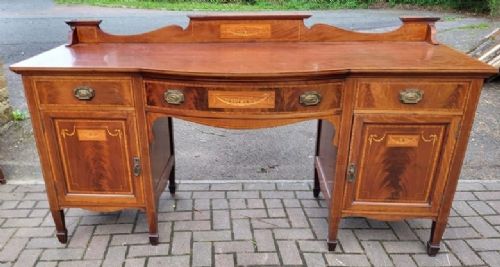
An edwardian mahogany server brings domestic refinement into a dining room through polished timber and classical inlay.
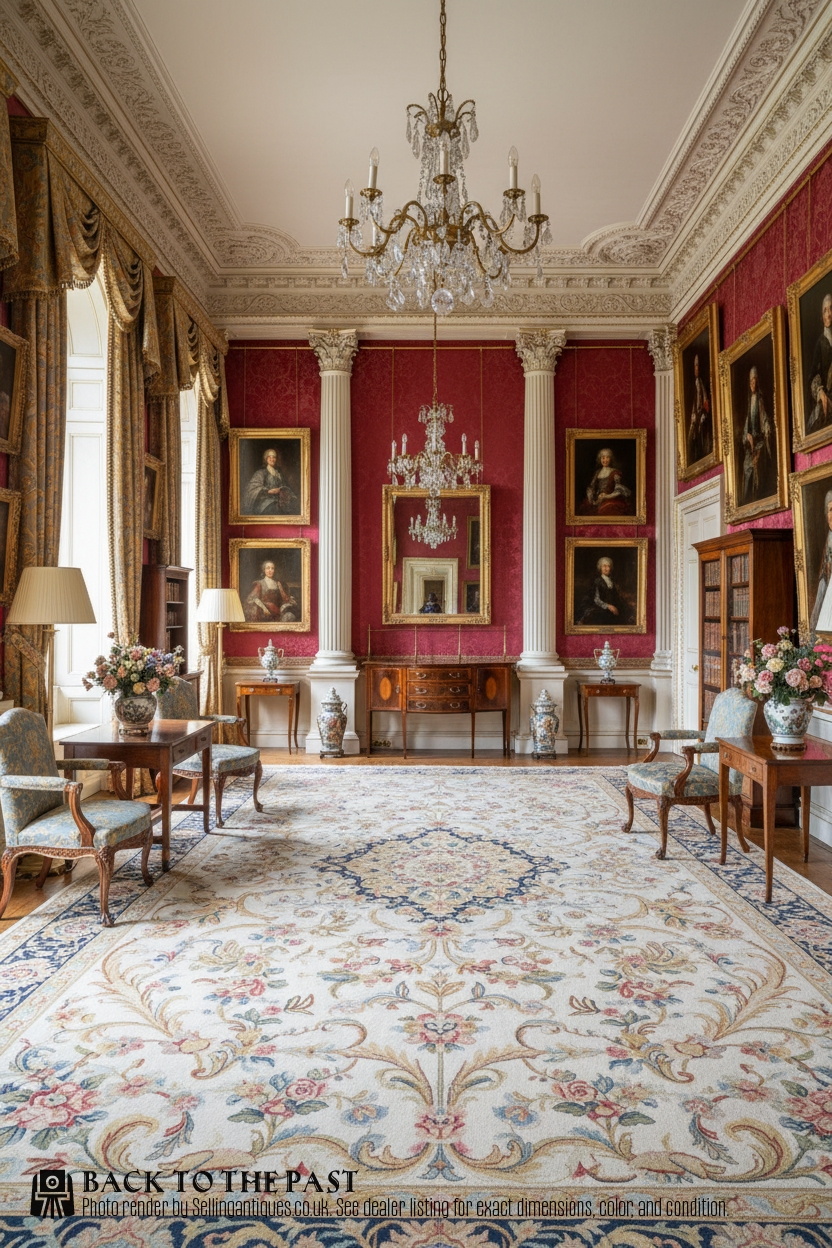
Edwardian Mahogany Server
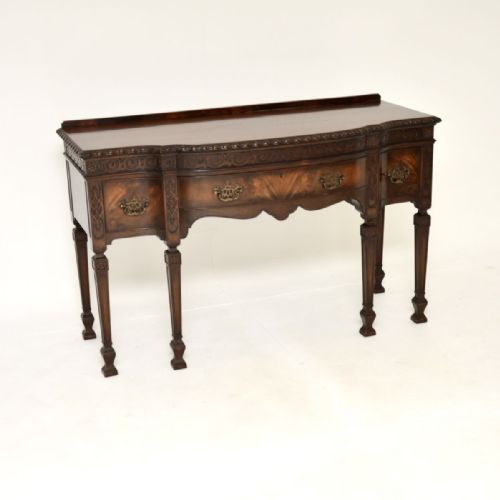
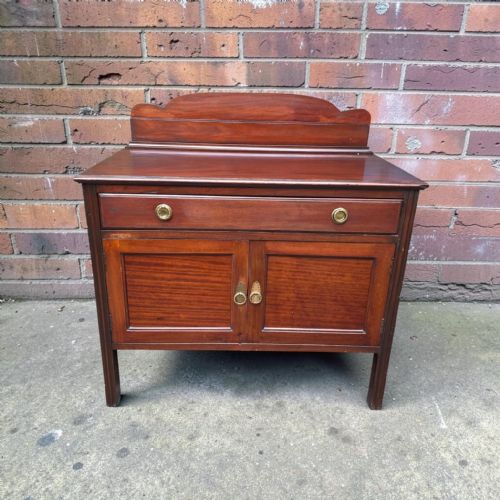
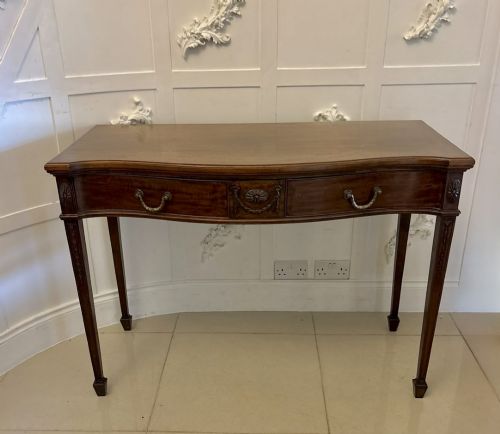
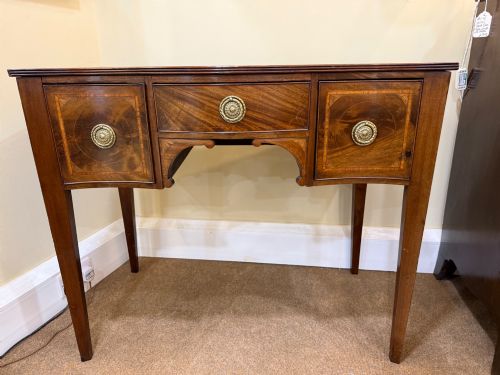
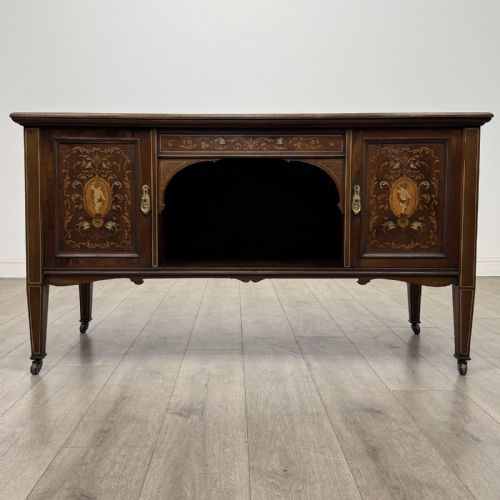
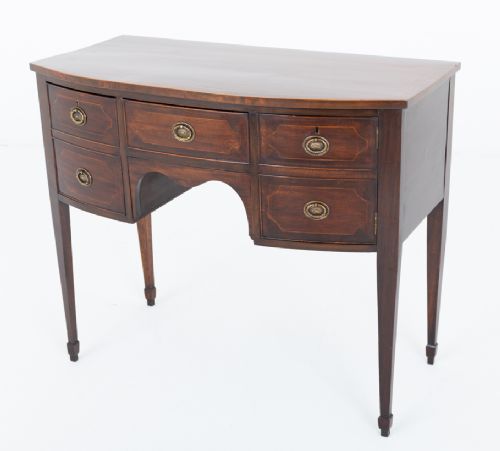
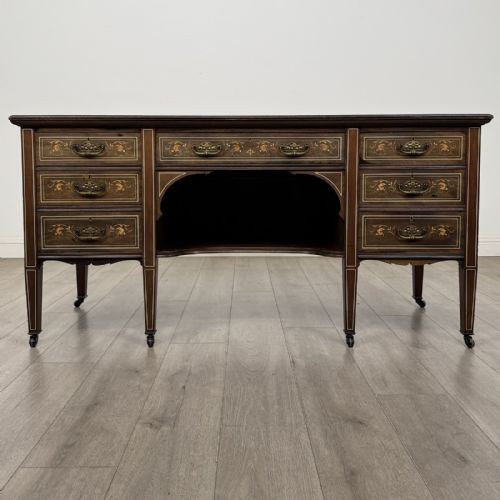
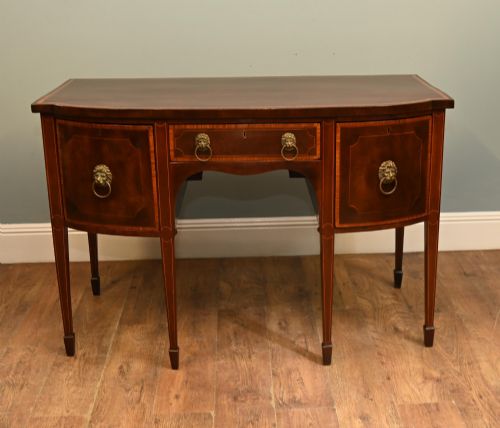
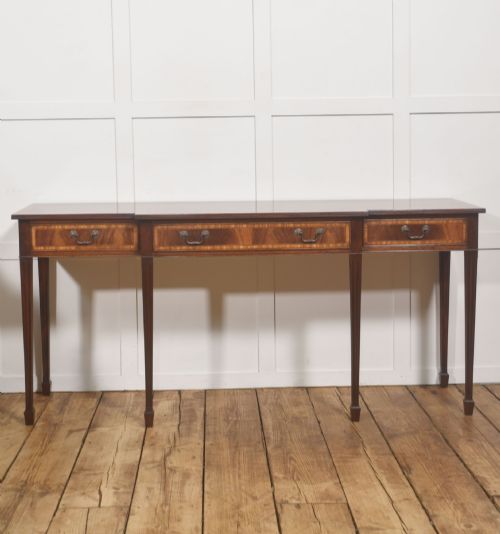
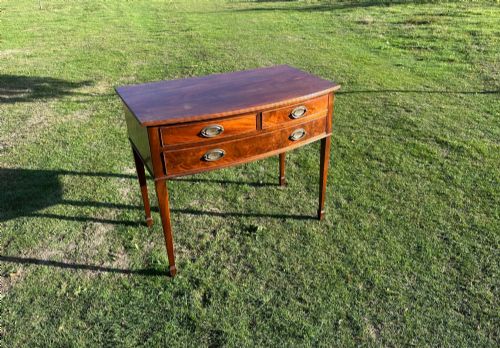
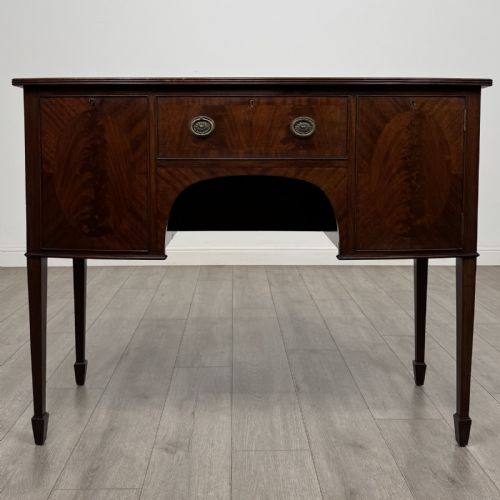
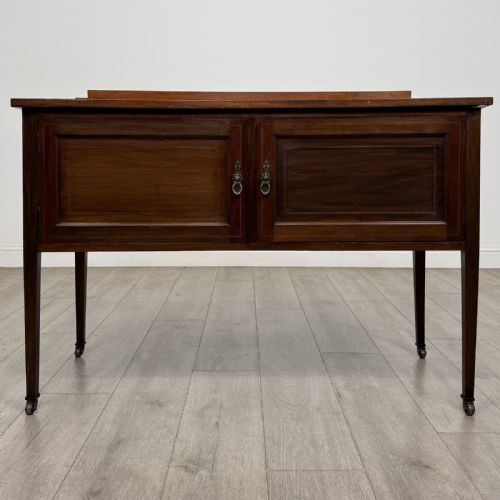
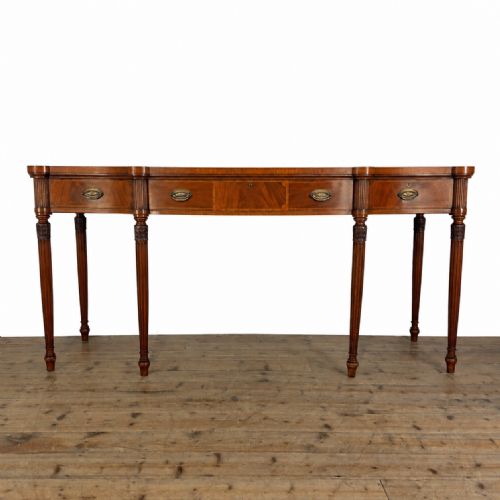
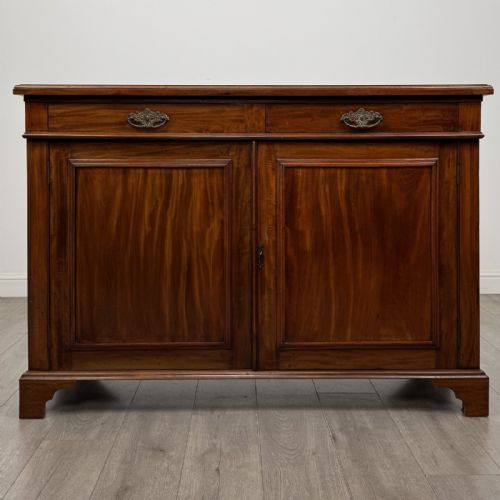
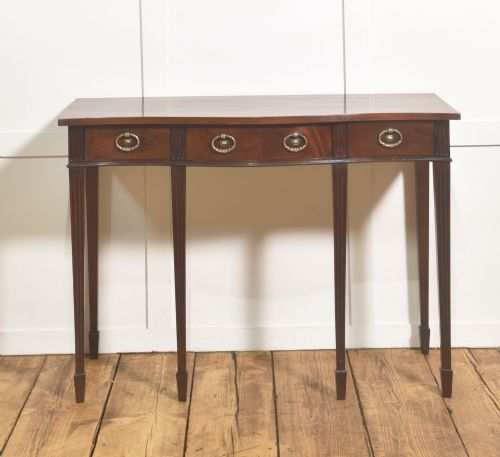
An edwardian mahogany server is a dining room storage piece designed for holding service dishes and cutlery, taking forms such as sideboards, buffets, and serving tables. Buyers seeking this phrase encounter pieces shaped with straight, bow-front, or breakfront profiles, often standing on tapered legs or paw feet.
The pieces on this page span the Edwardian era and the wider nineteenth and twentieth centuries, incorporating revival styles like Sheraton and Adam. Alongside dedicated servers, the selection includes related dining furniture such as console tables, chiffoniers, and sideboards.
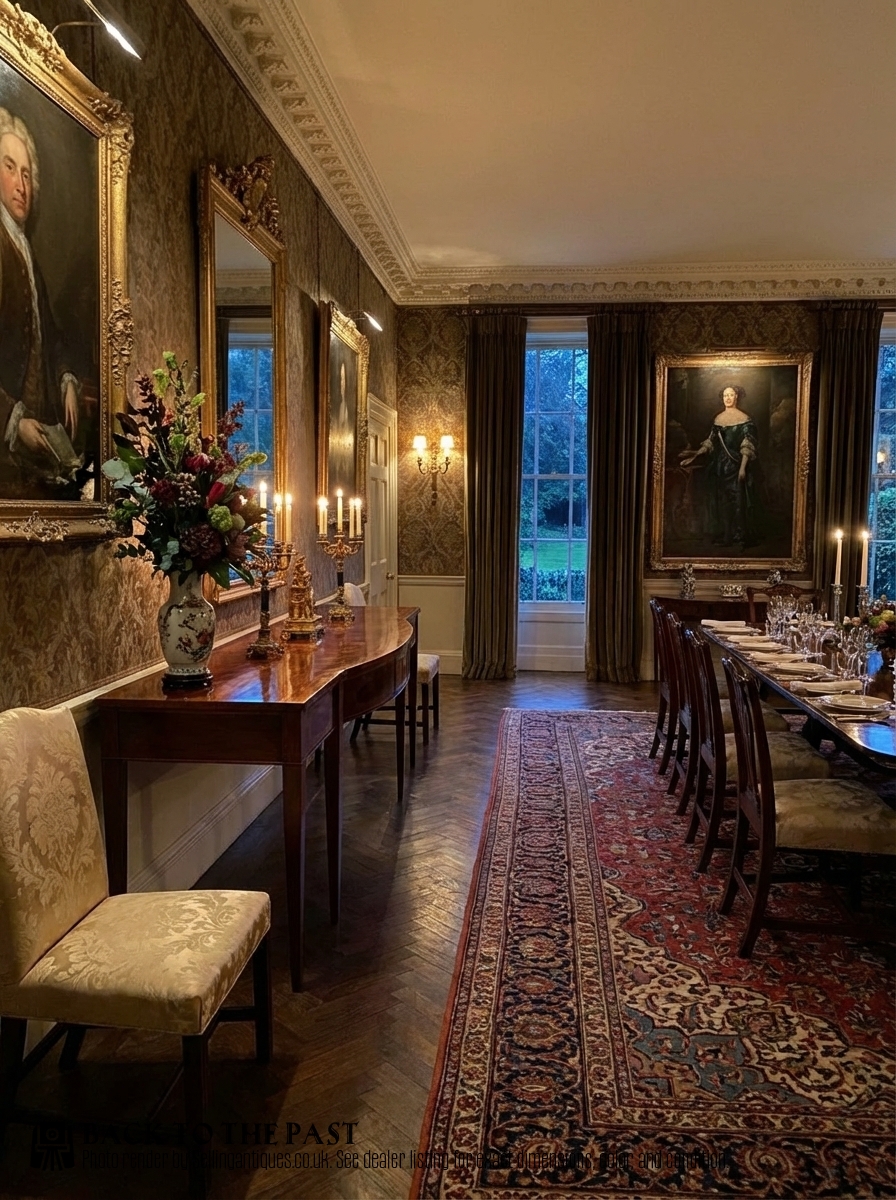
What varies in quality
The standard of a piece rests upon the selection of the timber and the precision of the cabinet work. Figured or flame mahogany veneers show greater depth and movement than plain stock, while crisp, tightly fitted inlay demonstrates superior workshop skill.
Proportion and architectural balance set finer examples apart from simpler utility items. Well-executed crossbanding and balanced brass mounts elevate the presence of a server within a room.
Edwardian Mahogany Server Retail Price Guide 2026
Typical asking prices for edwardian mahogany server among the pieces listed under this phrase on Sellingantiques today, from the lower quarter to the upper quarter. They describe what is for sale here now, not the wider market.
Several servers hide deep cellarette drawers once intended for cooling wine bottles on ice beside the dining table.
Hewetsons London·M D Miller And Sons Nottingham
The Edwardian Mahogany Server Glossary
- Bow-front
- A convex curved cabinet front that projects outward in a smooth arc. This shape gained popularity during the late eighteenth century and returned during revival periods.
- Crossbanding
- A strip of veneer applied to the border of a panel or top so that the grain runs at right angles to the central surface. It frames the primary timber and adds visual contrast.
- Breakfront
- A piece of furniture where the central section projects forward from the flanking outer sections. This arrangement creates depth and breaks up the linear profile of a sideboard.
- Marquetry
- The art of forming decorative patterns using fitted pieces of different coloured veneers. Artisans cut wood, shell, or ivory to create floral or geometric pictures.
- Stringing
- Thin inlay lines of contrasting wood used to edge panels and drawers. It outlines the structural geometry of the furniture.
Edwardian Mahogany Server: Frequently Asked Questions
How do I spot an Edwardian server?
Look for lighter proportions combined with classical revival decoration such as satinwood inlay and bellflower motifs. These pieces often feature tapered legs rather than heavy Victorian plinth bases.
Check interior construction details and timber choices to confirm the manufacturing period matches the stylistic cues.
What is the difference between a server and a sideboard?
Servers tend to be lighter, more compact tables or low cabinets designed specifically for holding food and tableware during meals. Sideboards generally offer larger storage capacities with multiple cupboards and drawers.
Both forms share similar decorative vocabulary within the Edwardian period.
How do I care for mahogany surfaces?
Keep wooden furniture away from direct heat sources and strong sunlight to prevent the timber and veneers from drying out. Dust regularly with a dry cloth and apply a quality wax polish sparingly.
Avoid using modern silicone sprays which can damage the traditional polish finish over time.
What styles influenced Edwardian servers?
Cabinet makers drew heavily upon eighteenth-century designs by Sheraton and Hepplewhite, reviving classical symmetry and refined inlay work. This Sheraton Revival movement valued elegance and lightness over heavy Victorian mass.
Neo-Classical details like urns, swags, and bellflowers frequently appear on these pieces.