


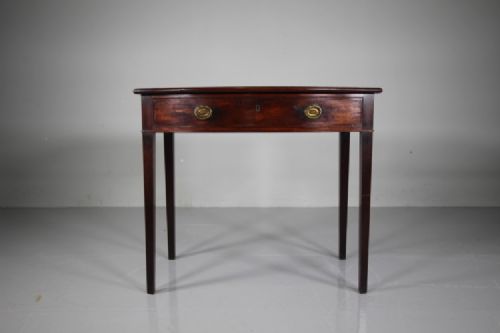


Bow Front Side Table
A bow front side table brings curved elegance to a room, offering practical surface space paired with a distinctively rounded profile.
What these pieces are
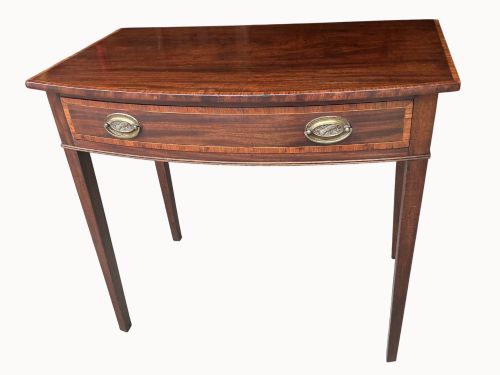
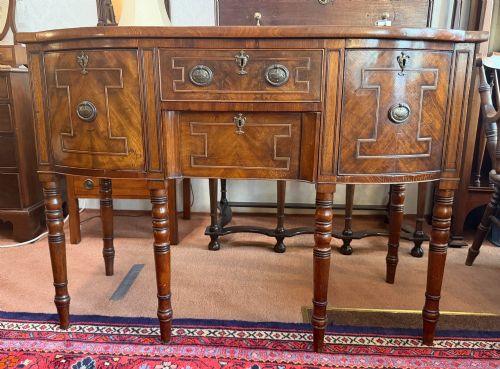
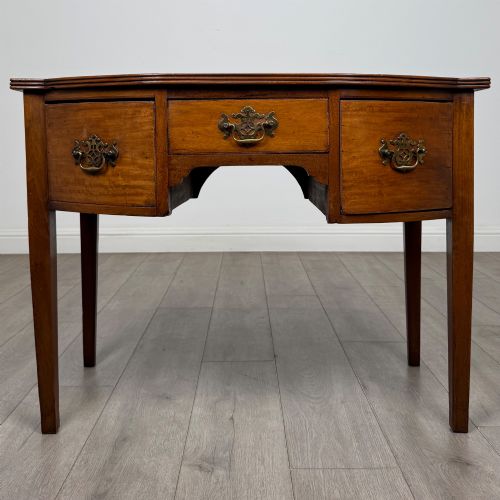
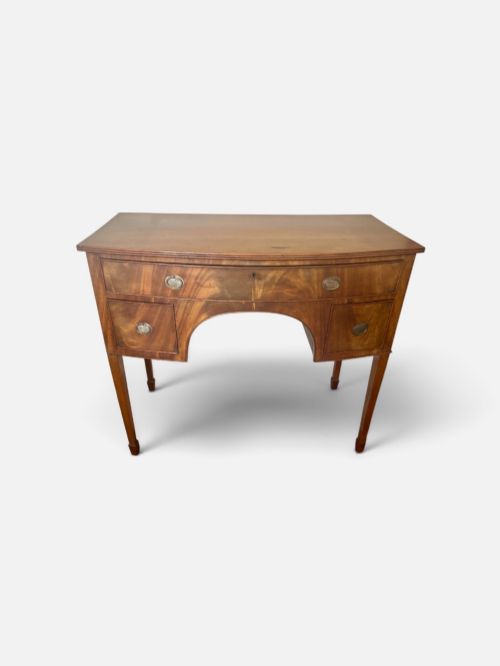
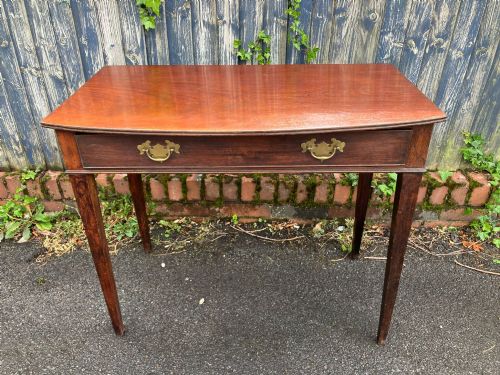
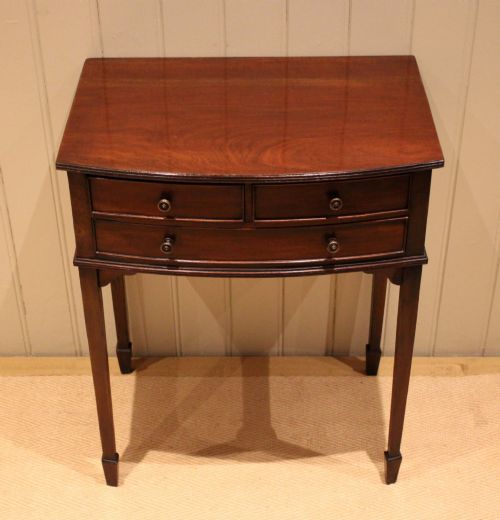
A bow front side table is a domestic surface featuring a convex curved front that softens the angles of a traditional room. The form appears most frequently in Georgian, Regency, and nineteenth century pieces designed for versatile placement around the house.
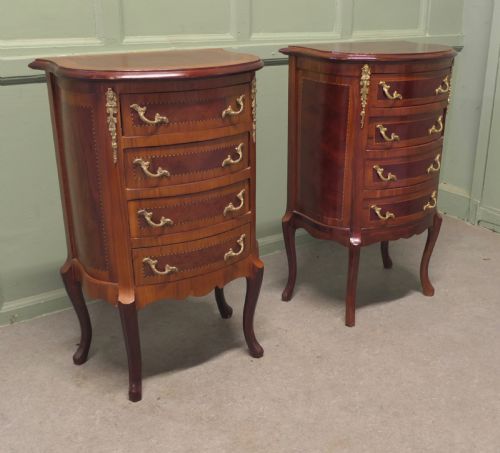
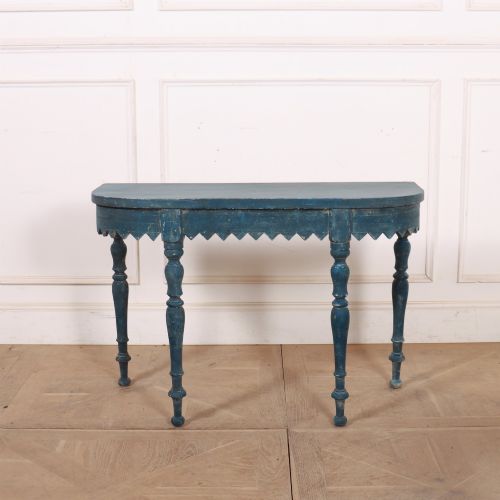
Makers adapted this curved format for side tables, dressing tables, lamp tables, and console tables. Mahogany remains the dominant timber across the selection, complemented occasionally by oak, pine, walnut, and satinwood.
Examples range from restrained George III designs to Edwardian and later interpretations. Buyers encounter standard side tables alongside multi-functional pieces intended for writing or dressing.
How they were made
Cabinetmakers constructed these curved fronts using solid mahogany or framed panels with carefully fitted veneers. Crossbanding and inlaid details frequently decorate the top surfaces and drawer borders of finer examples.
Structural hardware such as brass handles and pulls accompany the timber construction. Certain pieces incorporate white marble tops set into the wooden framework, providing an alternative durable surface.
Retail Price Guide 2026
Typical UK retail prices for bow front side table, calculated from the Sellingantiques database of over a million retail prices indexed since 2003. This retail price guide relies exclusively on Sellingantiques data; no external sources or auction records are used, so the figures do not describe the wider market.
Pieces span several eras, recording periods from the Georgian and Regency epochs through to the Edwardian period and the nineteenth century.
What varies in quality
The sophistication of the timber grain and the precision of the curved drawer joinery dictate the standing of an individual piece. Finer examples display thoughtful grain matching across the convex sweep and crisp execution of crossbanding.
Proportion and the handling of secondary woods reflect the workshop standards of the period. Subtle decorative choices, such as inlaid stringing or quality brass fittings, separate standard utility pieces from more ambitious cabinet work.
Maples
The Bow Front Side Table Glossary
- Bow front
- A convex curved cabinet front that swells outward in the centre. This profile became a hallmark of late eighteenth and nineteenth century case furniture.
- Crossbanding
- A strip of veneer applied to the border of a tabletop or drawer front with the grain running perpendicular to the main surface. It provides a neat contrasting frame.
- Dressing table
- A low table fitted with drawers and often a mirror, designed for grooming. Many share the same proportions and curved framework as standard side tables.
- Satinwood
- A pale, lustrous timber native to India and Ceylon, utilised for high-end furniture decoration and occasional light-coloured veneer work.
Frequently Asked Questions
What is a bow front side table?
A bow front side table is a small furnishing featuring a rounded, convex front profile. These tables provide surface and storage space while introducing softer geometric lines to an interior.
Cabinetmakers produced them across various historical periods, adapting the curved format for general domestic use as side, dressing, or lamp tables.
How do I date a bow front side table?
Dating relies on examining the timber selection, secondary woods, construction methods, and stylistic cues. Georgian and Regency examples often display solid mahogany frames and hand-cut dovetails.
Later Victorian and Edwardian pieces exhibit different secondary timbers and manufacturing techniques that help distinguish their age from earlier work.
Where should I place a bow front table?
These tables suit hallways, living rooms, and bedrooms due to their compact footprint and curved profile. The rounded front reduces sharp corners in high-traffic corridors.
They function effectively as lamp tables, console surfaces, or auxiliary desks depending on the specific height and drawer configuration.
What woods were used for these tables?
Mahogany is the primary timber found across the selection, appearing in both solid form and veneer. Cabinetmakers also utilised oak, walnut, pine, and satinwood.
Some pieces incorporate contrasting veneers and crossbanding to accentuate the curved front framework.