

Mahogany Hallway Table
A mahogany hallway table anchors a narrow entrance with dark timber and clean proportions, offering a practical surface for post and keys.

Mahogany Hallway Table
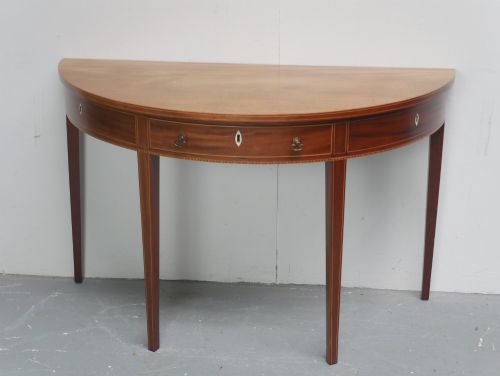
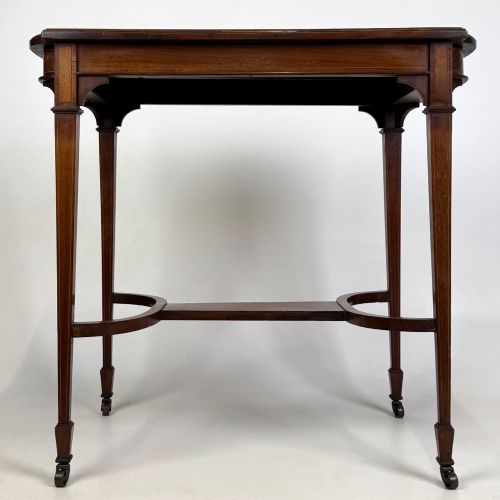
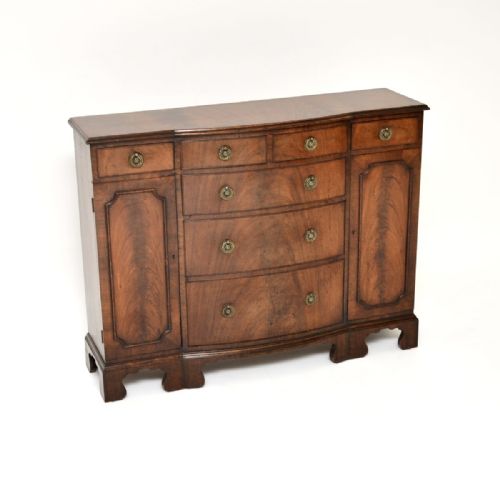
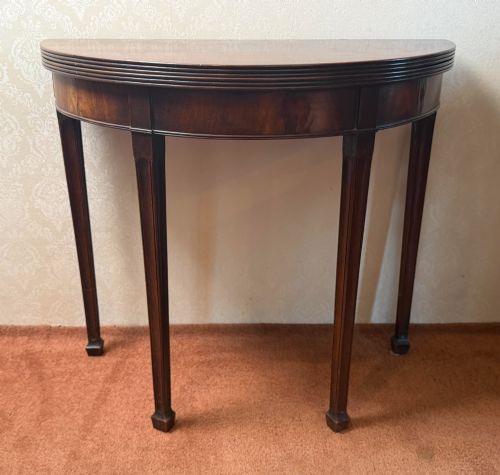
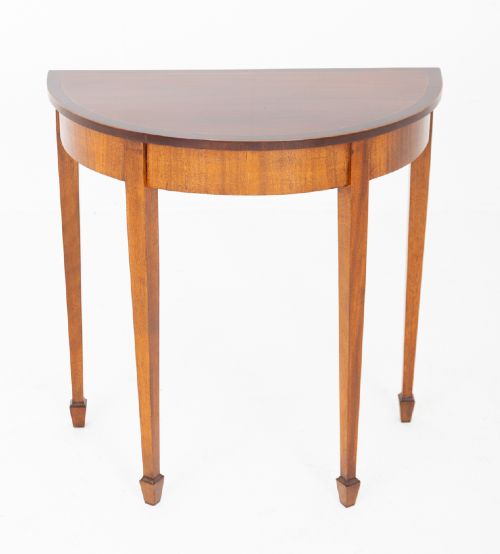
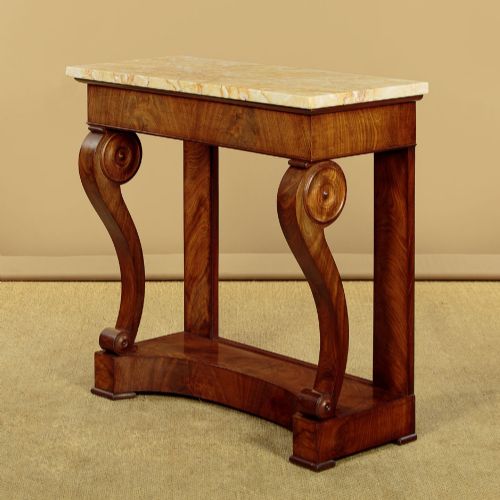
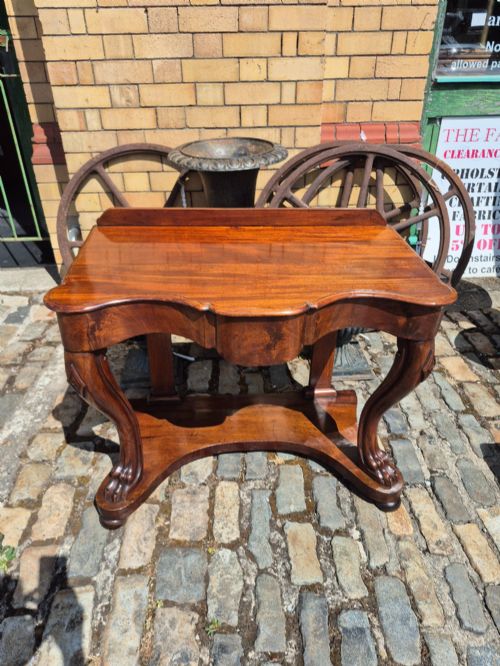
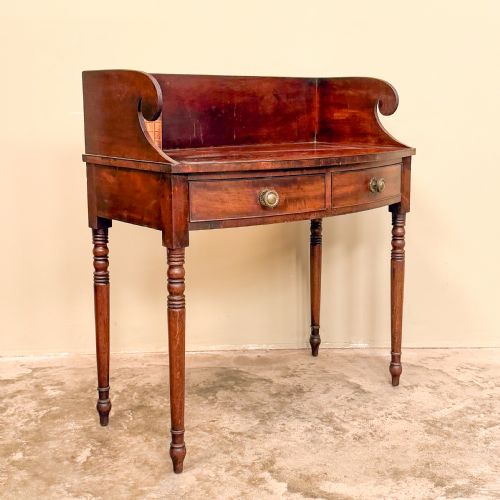
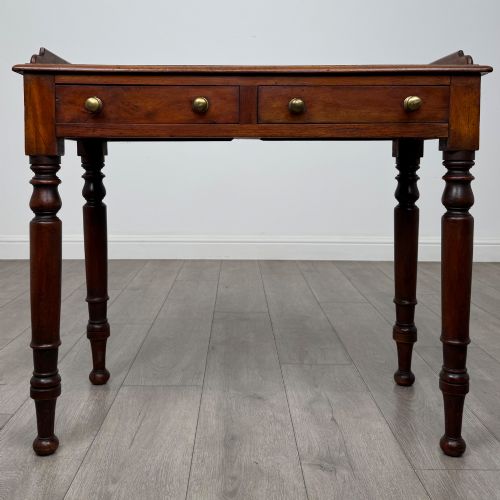
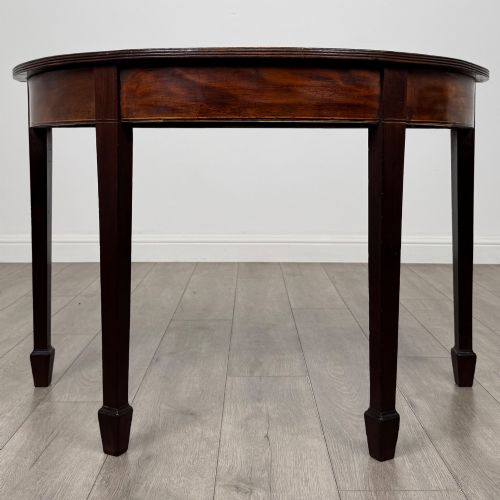
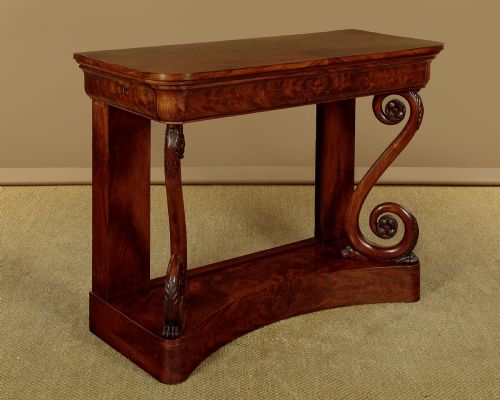
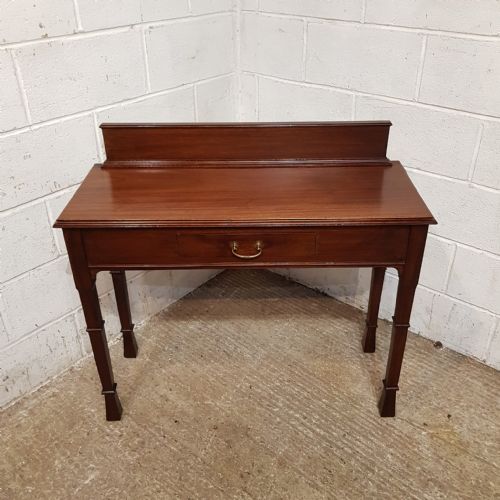
When you search for a mahogany hallway table, you encounter console tables, side tables, and demilune forms designed to stand flush against a wall in a passage or reception room. These pieces emerge from periods spanning the eighteenth, nineteenth, and early twentieth centuries, including Georgian, Regency, Victorian, and Edwardian eras.
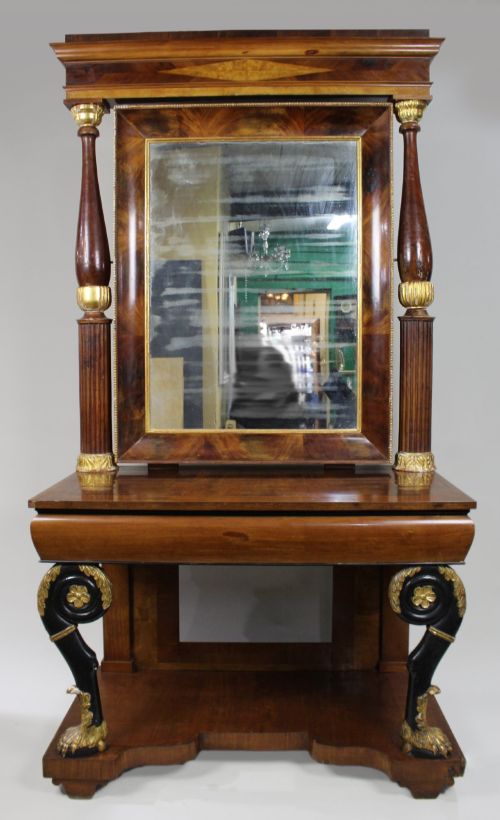
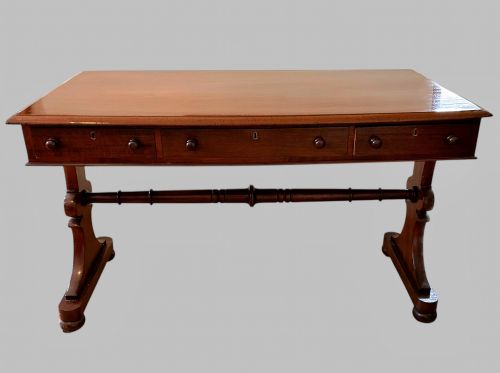
The format varies from simple single-drawer side tables to grander marble-topped console tables with matching pier mirrors. You also meet tea tables, serving tables, and library tables adapted over time to serve as narrow surfaces for a hallway.
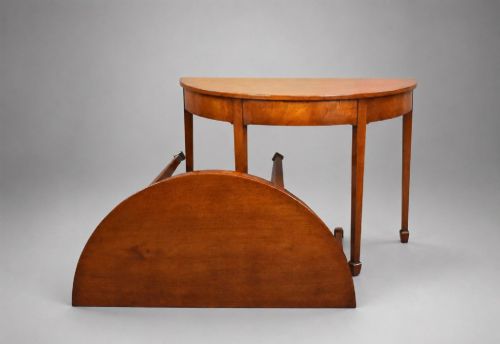
Originating largely from English and French workshops, these tables utilise traditional timber construction tailored to domestic spaces where depth is restricted. The demilune or half-moon shape appears frequently, allowing the table to project minimally into a corridor.
How they were made
Cabinet makers utilised solid mahogany and flame mahogany veneer applied to secondary woods, often accentuating the surfaces with boxwood and satinwood inlay. Timber selection dictated the grain pattern, ranging from quiet straight lines to highly figured flame effects.
Structural elements incorporated brass details, parcel gilding, and inset marble tops, particularly on nineteenth-century French Empire and Victorian pieces. Joinery relied on traditional hand-cut joints, while drawers featured hand-cut dovetails and solid timber linings.
Mahogany Hallway Table Retail Price Guide 2026
Typical asking prices for mahogany hallway table among the pieces listed under this phrase on Sellingantiques today, from the lower quarter to the upper quarter. They describe what is for sale here now, not the wider market.
Some nineteenth-century tables arrive with secret drawers deep beneath the top, originally intended for hiding silver keys or calling cards.
What varies in quality
Quality rests in the crispness of timber carving, the depth of the mahogany grain, and the precision of the boxwood or satinwood inlay work. Superior examples exhibit tightly figured flame mahogany veneers that align smoothly across drawer fronts and tabletops.
The refinement of secondary materials also distinguishes the tier of a piece, such as heavy white marble slabs fitted neatly into moulded wooden frames or cast brass mounts finished with sharp chiselling. Structural integrity, down to the timber thickness in drawer linings and the stability of the legs, separates standard production from finer cabinet work.
Krieger Paris·M. D. Miller and Sons·Druce and Co
The Mahogany Hallway Table Glossary
- Demilune
- A half-moon shape used for console and side tables designed to stand flat against a wall. This profile minimises the footprint in narrow spaces.
- Flame mahogany veneer
- A thin slice of wood cut from the fork of a mahogany tree to create a distinctive flickering flame pattern. Cabinet makers applied this to prominent surfaces like tabletops and drawer fronts.
- Inlay
- A technique where contrasting materials such as boxwood or satinwood are set flush into the mahogany surface to form geometric or floral patterns. This ornamentation defines many Edwardian and Georgian pieces.
- Pier mirror
- A tall wall glass designed to hang directly above a console table between two windows. It reflects light and completes the architectural arrangement in a hall or reception room.
- Console table
- A table supported by wall brackets or front legs, built to stand against a vertical surface. These forms often feature marble tops or elaborate carved supports.
Mahogany Hallway Table: Frequently Asked Questions
How do I date a mahogany table?
Dating relies on combining the stylistic details, timber treatments, and construction methods visible in the piece. Georgian and Regency pieces show distinct classical proportions, whereas Victorian and Edwardian examples often incorporate richer veneers or simpler inlaid borders.
Examining drawer construction, such as hand-cut dovetails, also helps establish the era of manufacture.
Are these tables suitable for everyday use?
These tables provide sturdy surfaces for daily items like post, lamps, and trays in a busy entrance. Their historical construction handles normal domestic weight easily.
Using coasters and placing them away from direct heat sources protects the polished mahogany surface and veneer over time.
Why do some tables have marble tops?
Marble tops provided a durable, stain-resistant surface that tolerated wet items or heavy objects. They appear frequently on nineteenth-century console tables and serving pieces.
This addition brought a cooler texture and contrasting colour to the dark mahogany woodwork.