





Chinese Chippendale Table
A chinese chippendale table brings fretwork and pagoda lines to a room, offering the unmistakable carved geometry of eighteenth-century taste.

Chinese Chippendale Table
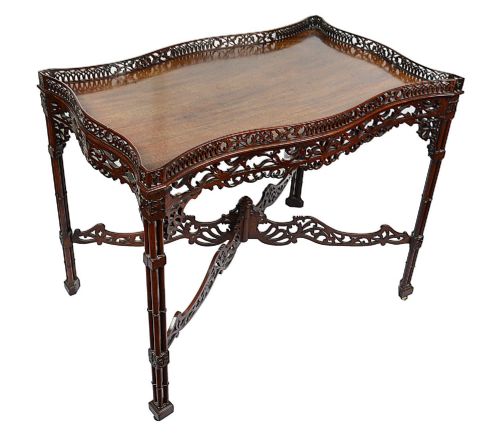
A chinese chippendale table draws upon the orientalist design vocabulary popularised in the eighteenth century and revisited in later revival periods. These pieces appear in forms ranging from side tables and console tables to writing tables, silver tables, and kettle stands.
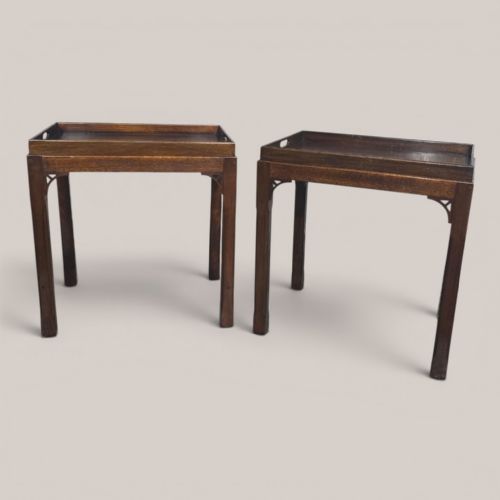
The buyer encounters authentic eighteenth-century examples alongside Victorian, Edwardian, and early twentieth-century revival pieces. Side tables and console tables dominate the selection, often displaying characteristic fretwork galleries and Marlborough legs.
Construction and timber
Makers built these tables primarily from solid mahogany, occasionally utilising flame mahogany veneer on top surfaces. Timber selection governed the weight and grain pattern of each piece, providing a stable foundation for intricate pierced carving.
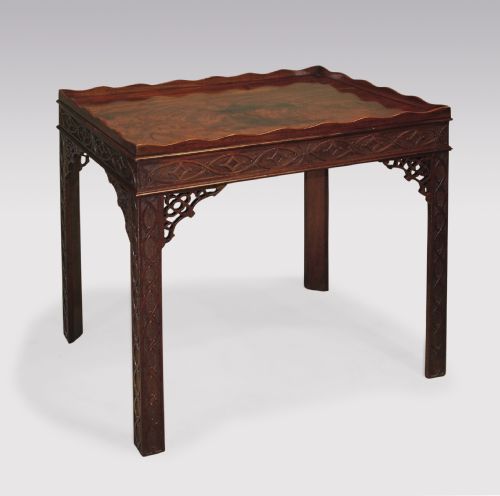
Joinery techniques combined traditional cabinet-making frames with applied fretwork panels and corner brackets. Pierced stretchers and carved legs required precise hand-tool work to achieve the architectural lattice patterns defining the style.
Chinese Chippendale Table Retail Price Guide 2026
Typical asking prices for chinese chippendale table among the pieces listed under this phrase on Sellingantiques today, from the lower quarter to the upper quarter. They describe what is for sale here now, not the wider market.
Materials documented across the inventory consist entirely of mahogany and flame mahogany veneer.
Evaluating craftsmanship and proportion
Quality rests upon the crispness of the hand-carved fretwork and the integration of structural components. Superior examples maintain balance between decorative pierced rails and robust supporting legs without clumsy joints.
The depth of relief carving and the selection of figured mahogany distinguish finer tables from simpler production pieces. Original surface patination and intact fretwork elevate a piece above later replacements or heavily restored items.
Butler
The Chinese Chippendale Table Glossary
- Marlborough leg
- A heavy, straight, square leg often used in Chinese Chippendale furniture. It frequently terminates in a block foot or simple plinth.
- Fretwork
- Openwork geometric or lattice carving resembling bamboo or Chinese screens. This ornamental pattern defines the visual character of the style.
- Silver table
- A specialised occasional table with a raised gallery edge designed for displaying or serving tea and silver. These pieces often feature pierced brackets beneath the frame.
- Chippendale Revival
- A period of nineteenth and early twentieth-century manufacture replicating eighteenth-century designs. Makers during this era reinterpreted classic forms using contemporary workshop methods.
Chinese Chippendale Table: Frequently Asked Questions
How do I spot a revival piece?
Revival pieces date from the Victorian, Edwardian, or early twentieth-century periods rather than the mid to late eighteenth century. Tool marks, timber seasoning, and secondary woods help distinguish these later interpretations from period originals.
Examination of the structural joints and the crispness of the carving reveals the era of manufacture. Revival pieces often exhibit standardised machine-assisted elements alongside hand-finished details.
Where should I place a console table?
A console table works well against a principal wall in a hallway, drawing room, or dining space. Its shallow depth accommodates narrow circulation areas while providing a surface for decorative objects.
Pairing the table with a mirror or hanging art above it completes the traditional arrangement. Ensure the floor is level so the straight legs sit evenly without rocking.
What is fretwork on these tables?
Fretwork refers to the pierced lattice panels applied to aprons, legs, and gallery rails. This ornament mimics traditional Chinese architectural woodwork and bamboo framing.
Because the fretwork is intricate, gentle dusting with a soft brush keeps the geometric interstices clean. Avoid wet cloths that might loosen the small glued components.
Are all these tables made of mahogany?
Mahogany is the dominant timber recorded across the evidence, appearing in both solid form and as flame mahogany veneer. The wood provided the necessary tensile strength for slender-looking supports and intricate carving.
Secondary timbers may appear in internal framing or drawer linings on certain forms. The primary show surfaces consistently display rich reddish-brown mahogany grain.