


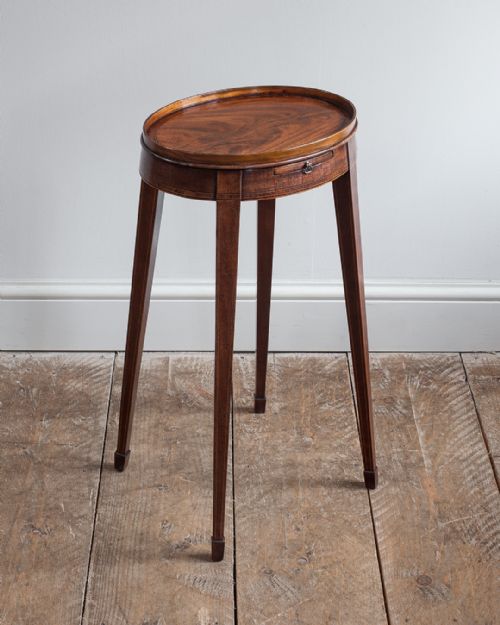


Mahogany Kettle Stand
A mahogany kettle stand brings the refined proportions of eighteenth-century entertaining into a modern room as a compact surface.

Mahogany Kettle Stand
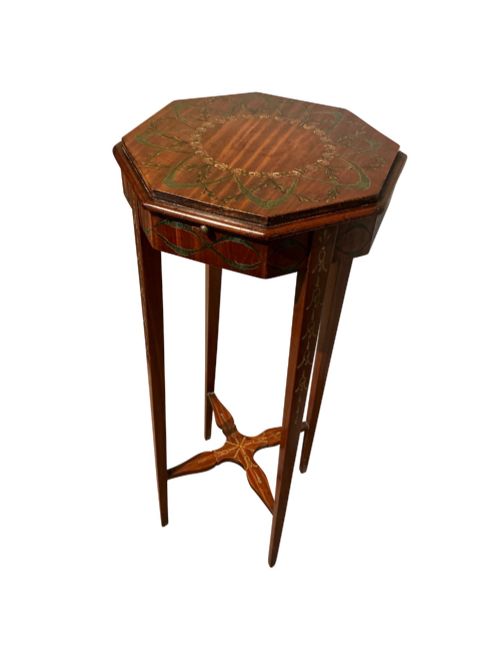
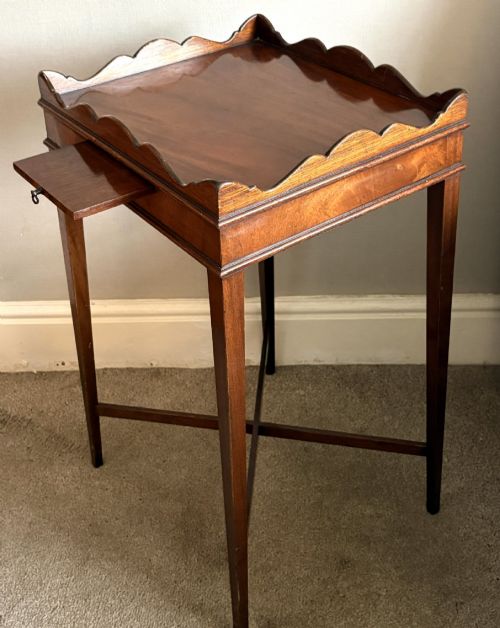
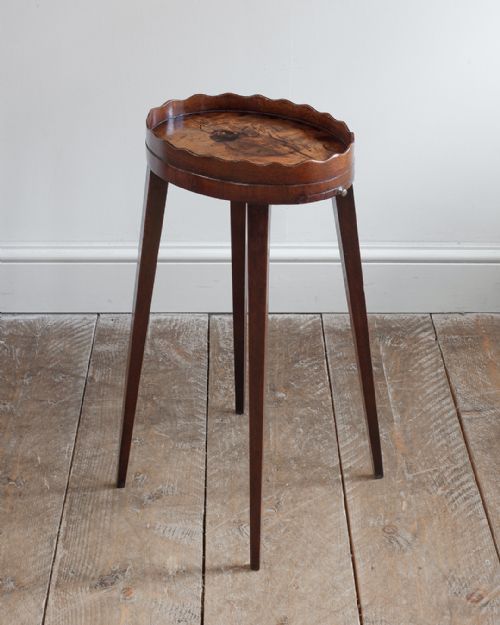
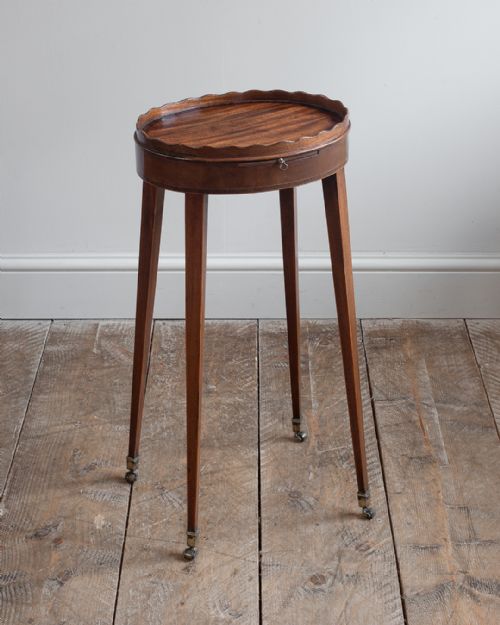
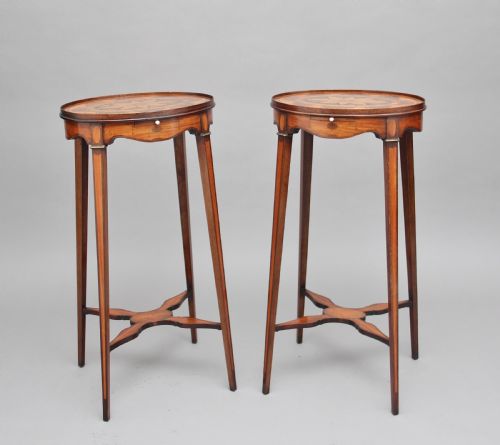
A mahogany kettle stand is a small, elevated table historically designed to hold a heavy tea urn or kettle near a seating area. These pieces appear across Georgian, Regency, and Victorian periods, taking forms from tripod dish-top tables to square and octagonal designs.
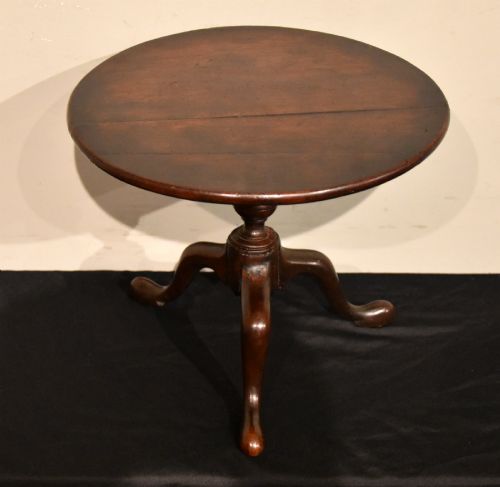
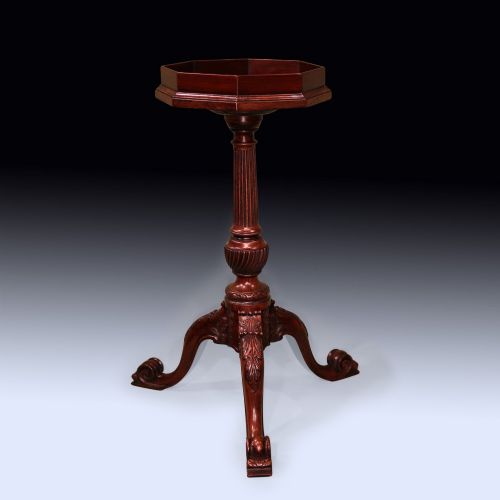
The version most commonly met on this page is the eighteenth-century George III tripod stand, often featuring a raised piecrust or dished top to secure the vessel. Alongside these, later Edwardian and Sheraton revival interpretations emerge in varied geometric shapes.
Beyond serving tea, these compact tables function readily as lamp stands or occasional tables in tight spaces. Their modest footprint and raised edges make them practical for displaying small objects.
How they were made
Makers shaped these stands primarily from solid mahogany, sometimes incorporating secondary timbers like oak or adding satinwood and bone inlay for decorative contrast. Ormolu mounts appear on later Victorian examples to enrich the polished wood surfaces.
Construction relied on stable tripod bases with turned or carved pillar supports, joining the top through clever pivoting mechanisms or fixed blocks. Skilled hands carved details such as piecrust rims, birdcage actions, and claw-and-ball feet directly into the dense hardwood.
Mahogany Kettle Stand Retail Price Guide 2026
Typical asking prices for mahogany kettle stand among the pieces listed under this phrase on Sellingantiques today, from the lower quarter to the upper quarter. They describe what is for sale here now, not the wider market.
Listings feature mahogany, satinwood, and yew wood alongside brass mounts and bone inlay across Georgian, Regency, and Edwardian periods.
What varies in quality
The standard of carving dictates the upper tier of these pieces, separating crisp, deep relief work from softer, mechanical secondary shaping. Timber selection also defines value, with dense, deeply figured mahogany and tight grain patterns marking superior workshops.
Proportion and stability drive the distinction between everyday utility and high craftsmanship. A well-balanced pillar, tight joinery at the tripod knees, and an original dished top carved from a single solid board distinguish the finest examples.
The Mahogany Kettle Stand Glossary
- Piecrust top
- A raised, scalloped rim carved from the solid wood of the tabletop. This edge prevented a heavy kettle or tea urn from sliding off during service.
- Tripod base
- A three-legged support structure attached to a central pillar. This design remained stable on uneven historic floorboards.
- Birdcage
- A timber mechanism beneath the tabletop that allowed the surface to rotate and tilt. It provided convenience for storage and serving.
- Dish top
- A tabletop with a concave centre hollowed out from the solid board. It offered containment for liquid spills and vessel bases.
- Treen
- Small handmade wooden household objects. These items display the turned and carved skills of vernacular woodwork.
Mahogany Kettle Stand: Frequently Asked Questions
What is a mahogany kettle stand used for?
These tables supported heavy silver or porcelain tea kettles during the eighteenth century, keeping hot water close to guests. Today, their compact size suits them for holding small lamps or decorative items.
Their raised rims and stable tripod bases prevent sliding, making them practical surfaces beside armchairs or in narrow hallways.
How do I spot an 18th-century kettle stand?
Eighteenth-century examples typically employ solid mahogany with hand-cut dovetails, pegged joints, and traditional patination built up over generations. The turning on the central pillar feels sharp and organic rather than uniform.
Look underneath the top to inspect the block and pivot mechanisms, which often reveal the hand-tool marks characteristic of early cabinetmaking.
Are these tables sturdy enough for daily use?
Despite their slender proportions and delicate three-legged frames, these stands handle normal daily placement of lamps or drinks reliably. The heavy hardwood construction distributes weight effectively over the tripod feet.
Care should be taken when moving them, lifting from the central pillar or lower stem rather than pulling by the outer edge of the top.
What is the difference between a wine table and a kettle stand?
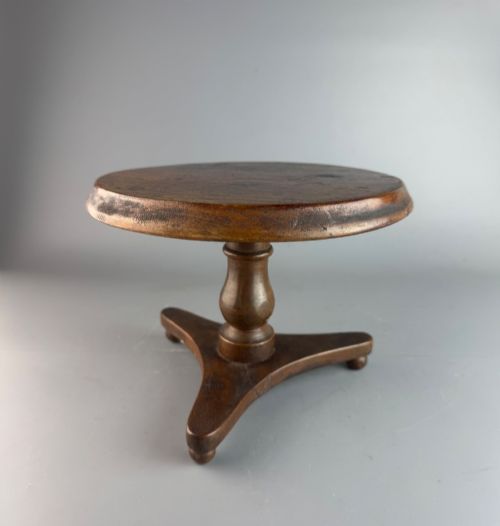
While both share small circular tops and tripod bases, kettle stands frequently feature specialised dished or piecrust edges to secure vessels. Wine tables often present flat, plain boards intended to hold glasses and bottles.
In practice, makers and historical records often used both terms interchangeably for the same form of small occasional table.