





Chippendale Urn Stand
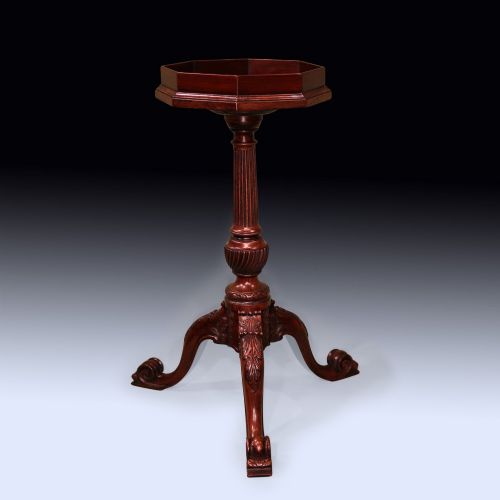
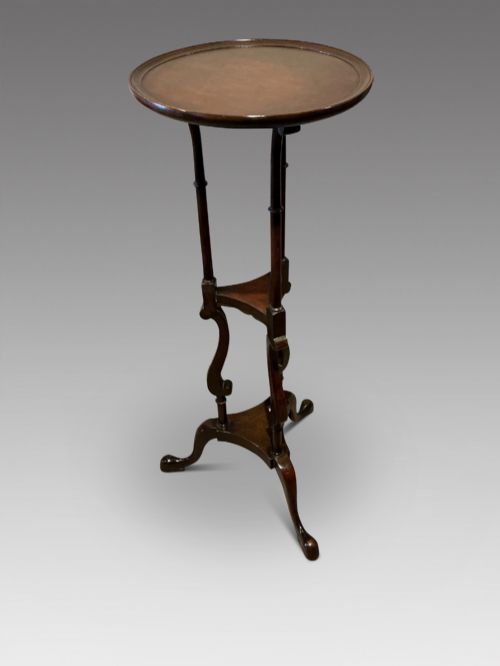
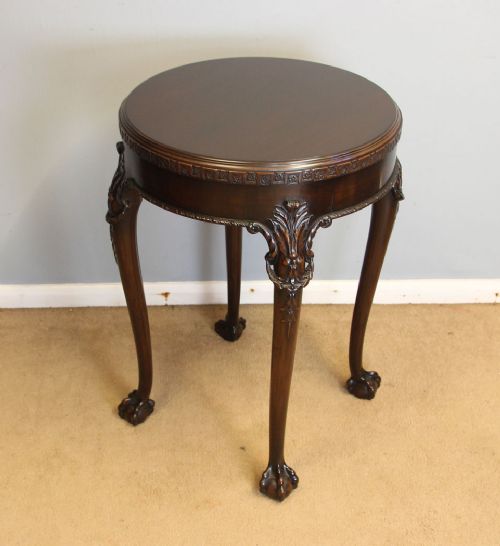
These chippendale urn stand pieces are compact serving tables designed for the Georgian tea table, offering a graceful focal point for any room.

Chippendale Urn Stand
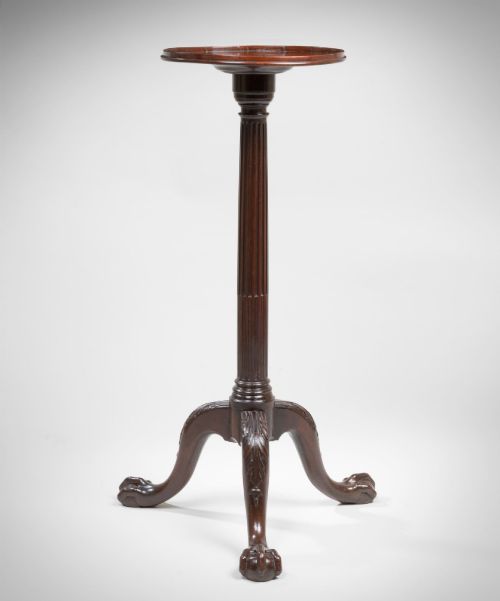
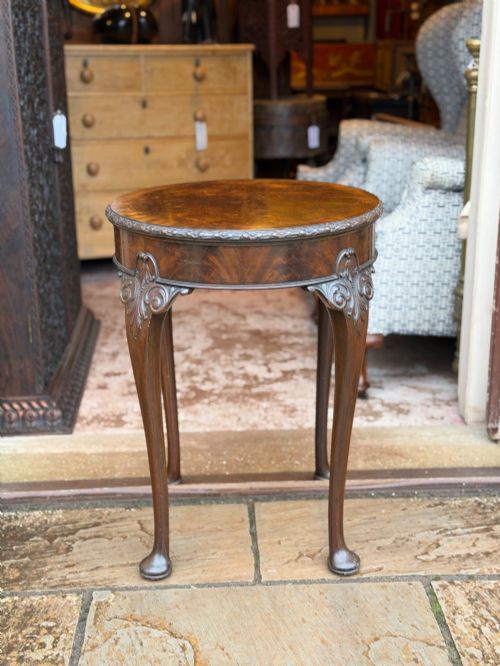
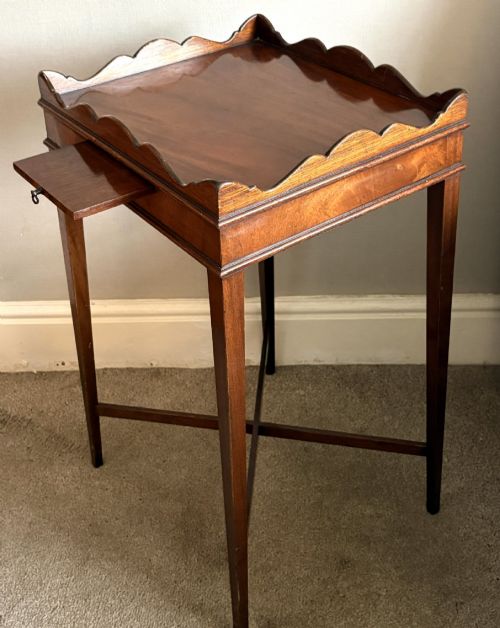
A chippendale urn stand is a small, elevated table designed specifically to hold a hot water urn or kettle during tea service. Most examples seen here emerge from the 18th Century and Georgian periods, alongside later Chippendale Revival interpretations from the Edwardian era and the early 20th century.
The forms span from dedicated kettle stands and torcheres to plant stands, occasional tables, and wig or washstands. These compact pieces serve versatile functions in modern interiors as lamp tables or pedestals, maintaining their historic proportions.
Makers produced these stands primarily in mahogany, occasionally incorporating brass fittings. The stylistic vocabulary draws directly from Georgian and Chinese Chippendale traditions, defined by carved details and slender upright supports.
How they were made
Makers constructed these stands using solid mahogany, valued for its density and stability when fashioned into slender legs and delicate gallery tops. Carpenters shaped the timber by hand, employing mortise and tenon joints to secure the frames of these small tables.
Carved ornament defines the Chippendale and Georgian examples, executed directly into the mahogany timber rather than applied as separate mouldings. Brass hardware appears on select variants, providing functional pivots or handles where trays and cabinets require them.
Chippendale Urn Stand Retail Price Guide 2026
Typical asking prices for chippendale urn stand among the pieces listed under this phrase on Sellingantiques today, from the lower quarter to the upper quarter. They describe what is for sale here now, not the wider market.
Listings feature mahogany as the sole primary timber, spanning the 18th Century to the 1930s across diverse forms including torcheres and wig stands.
What varies in quality
The distinction between an 18th Century original and a later revival piece rests in the crispness of the hand-carved details and the choice of dense, patinated mahogany. Early makers expended great effort on proportion and joinery, whereas revival pieces from the Edwardian period often rely on machine-milled elements.
Surface finish and timber selection separate finer examples from simpler utility tables. Stands featuring well-figured mahogany grain and integrated gallery edges command greater appreciation than plain occasional variants.
The Chippendale Urn Stand Glossary
- Chippendale
- A style of English furniture spanning the 18th Century, named after cabinetmaker Thomas Chippendale. It incorporates Gothic, Chinese, and Rococo motifs.
- Torchere
- A tall, slender stand designed to support a candelabrum or lamp. These pieces often feature a small circular top supported on a single pillar or tripod base.
- Gallery
- A raised wooden or brass rim surrounding the edge of a tabletop. This feature prevented tea urns or small vessels from sliding off during service.
- Wig stand
- A specialised small table with multiple small basins or rings at the top designed to hold gentleman's hairpieces. They frequently date to the Georgian period.
- Jardiniere
- A decorative receptacle or stand meant to hold a plant or flower pot. In mahogany, these often take the form of slatted or galleried plant stands.
Chippendale Urn Stand: Frequently Asked Questions
What is a chippendale urn stand used for?
These small tables were originally constructed to hold heavy silver or porcelain urns filled with hot water for tea. Their compact surface kept heated vessels safely elevated away from wooden dining and tea tables.
Today, buyers utilise them as bedside tables, lamp stands, or pedestals for displaying decorative objects in smaller reception spaces.
How do I date a mahogany urn stand?
Dating relies upon examining the construction methods, timber patination, and stylistic markers present in the woodwork. 18th Century and Georgian pieces exhibit hand-cut joinery and dense, aged mahogany surfaces.
Revival examples from the Edwardian period or the early 20th century display different secondary woods and less wear to the internal framing elements.
Are these stands sturdy enough for daily use?
Despite their slender proportions and delicate appearance, period stands were built to support heavy metal urns filled with water. Their tripod or four-legged bases provide stable support for modern lamps and small plants.
Care should be taken not to overload the upper gallery trays, as historical joints benefit from gentle handling rather than heavy weight.
What distinguishes Chinese Chippendale style?
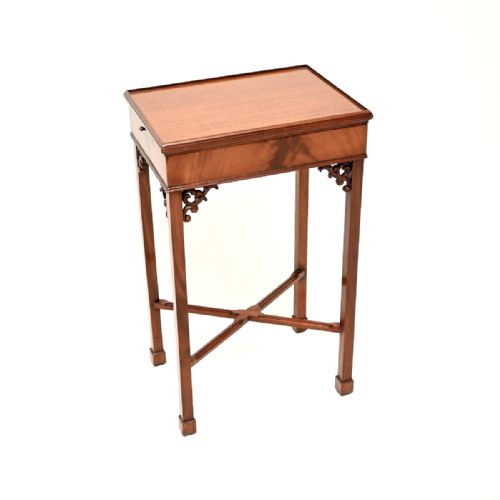
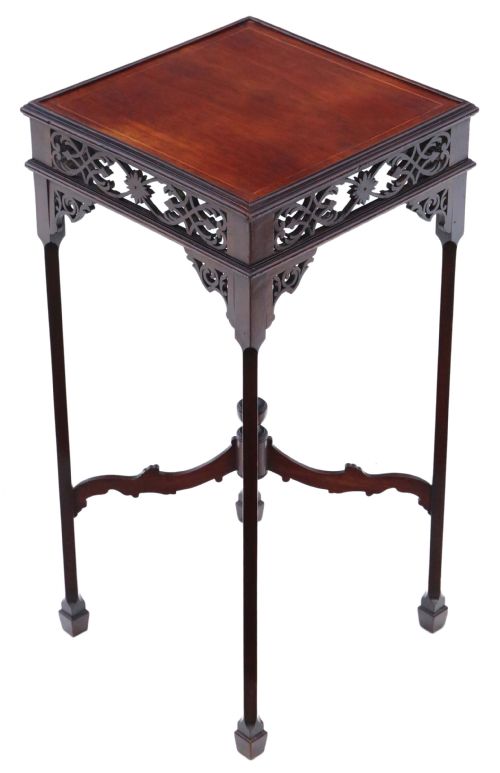
This specific design stream incorporates fretswork galleries, lattice patterns, and clustered column legs inspired by European interpretations of Chinese motifs. These decorative elements appear frequently on tea and kettle stands from the 18th Century.
Later revival makers copied these intricate pierced brackets and straight leg forms during the Edwardian era to satisfy demand for exotic period revival furniture.