

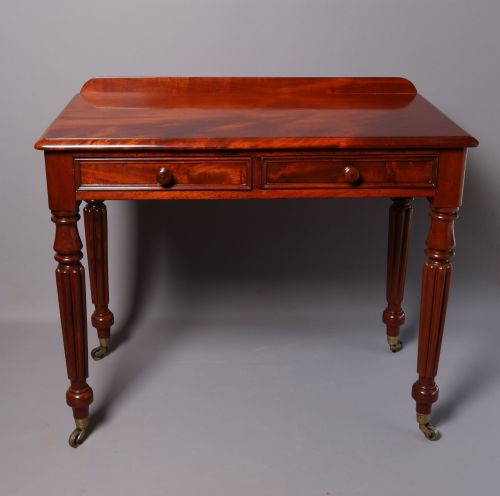
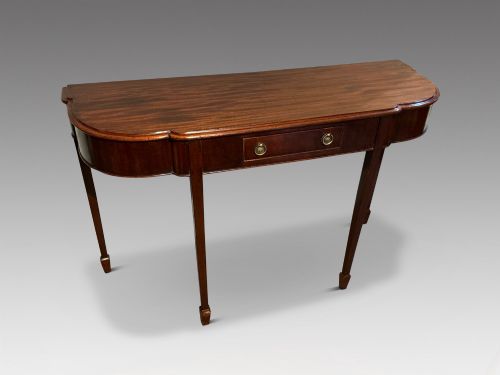
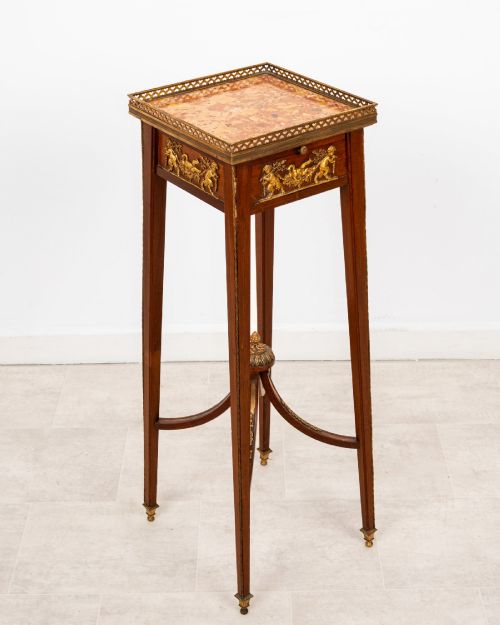
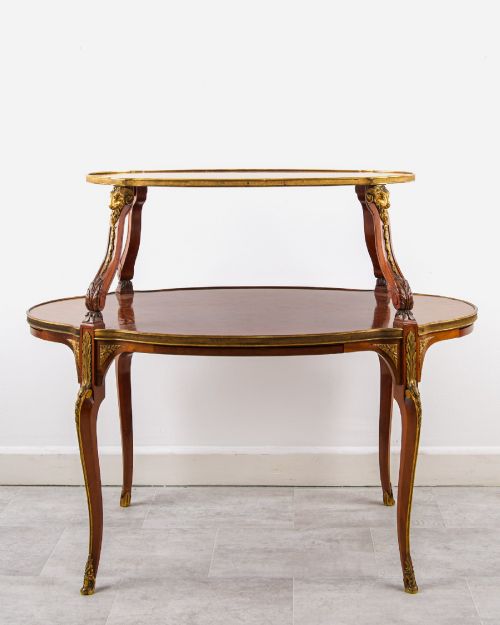
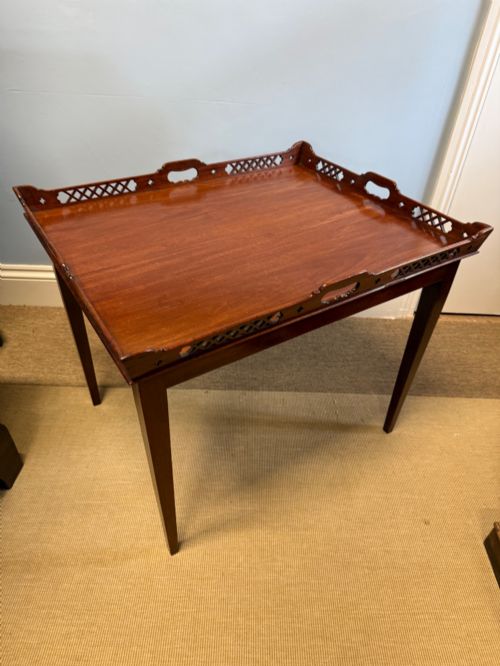


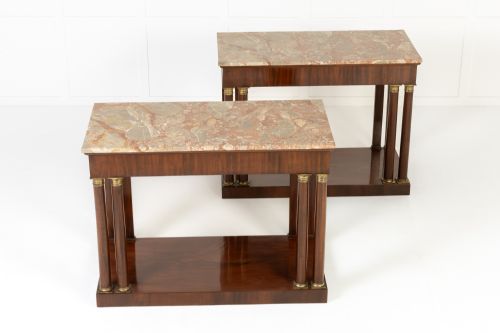

Red Mahogany Side Table
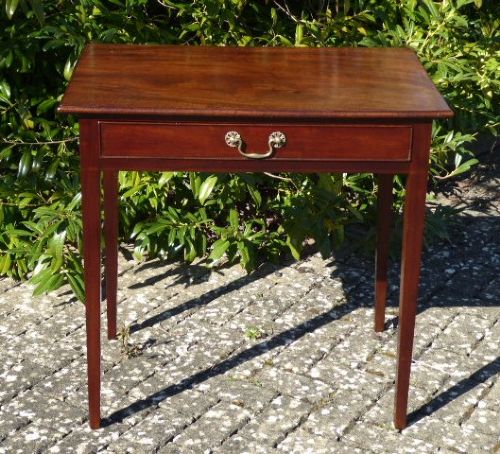
A red mahogany side table brings solid proportions and deep timber grain to a room, ranging from simple Georgian drawer pieces to elaborate Edwardian designs.
Red Mahogany Side Table
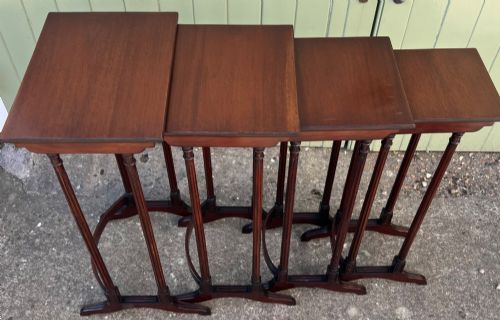
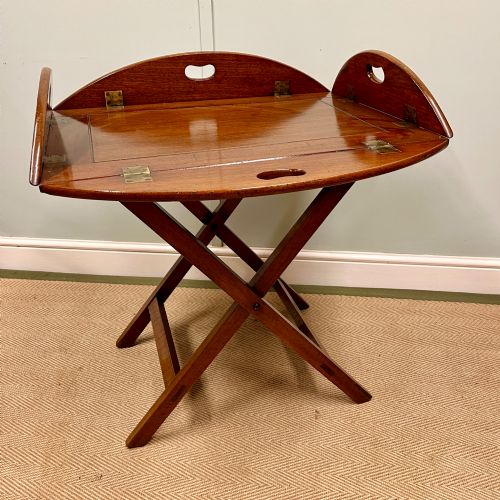
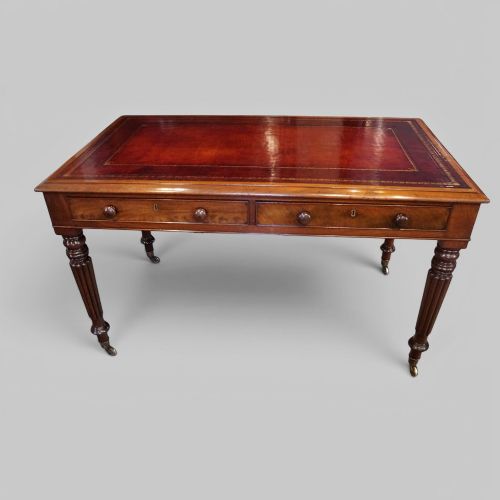
A red mahogany side table encompasses a variety of formats found across centuries, including Georgian writing tables, Victorian occasional pieces, and Edwardian tiered étagères. Buyers searching this phrase meet functional furniture designed for domestic spaces, spanning simple single-drawer items to serpentine console tables.
The materials and periods represented stretch from the 18th century through the Edwardian era, incorporating styles such as Chippendale Revival and French Louis XVI. Many examples feature rich timber grain augmented by brass hardware, marble tops, or subtle inlay work.
Most entries function as compact serving surfaces, writing desks, or lamp stands. The selection balances utilitarian forms from the Georgian period with decorative display tables from later decades.
Materials and construction methods
Cabinet makers utilised solid mahogany and figured veneers applied to stable secondary timbers, building frames with traditional jointing techniques. Surface treatments often involved hand-applied polish that enhanced the natural red hues and complex grain patterns of the wood.
Decorative embellishments on select pieces include cast or chased ormolu mounts, brass gallery rails, and intricate satinwood inlay. Marble inserts appear on French and later Victorian tops, providing a durable surface resistant to liquid and heat.
Red Mahogany Side Table Retail Price Guide 2026
Typical asking prices for red mahogany side table among the pieces listed under this phrase on Sellingantiques today, from the lower quarter to the upper quarter. They describe what is for sale here now, not the wider market.
Several tables feature hidden compartments and folding leaves designed to keep secrets as secure as the morning tea service.
Determining quality and craftsmanship
The standard of timber selection largely dictates value, with heavily figured mahogany veneers and well-matched grain patterns marking superior workshops. Construction details such as hand-cut dovetails on drawer linings and solid secondary woods separate standard production from high-grade commissions.
Ornamentation also marks the tier of a piece, from cast brass handles and detailed ormolu mounts to simpler turned legs. The precision of the joinery and stability of the frame over centuries indicate the original maker's skill.
François Linke
The Red Mahogany Side Table Glossary
- Figured mahogany
- Timber exhibiting distinctive, highly decorative grain patterns such as flame or fiddleback. This wood was selected for prominent surfaces on high-end cabinet work.
- Serpentine
- A furniture front or edge curving inward centrally and outward at the ends in a gentle wave. This shape requires advanced woodworking skill to construct accurately.
- Ormolu
- Gilded bronze mounts applied to furniture for decorative effect. It appears frequently on French-influenced tables from the 19th century.
- Gallery
- A small raised border surrounding the edge of a tabletop to prevent items from rolling off. They are typically fashioned from brass or pierced wood.
- Demi-lune
- A half-moon shape used for console and side tables designed to sit flush against a wall. These pieces often feature folding tops or multiple tapered legs.
Red Mahogany Side Table: Frequently Asked Questions
What periods do these side tables come from?
The listings include examples spanning the 18th century through the Edwardian period. Georgian and Victorian pieces appear alongside later revival styles.
Craftsmanship and materials evolved across these eras, moving from utilitarian Georgian drawer tables to ornate French-influenced designs of the late 19th century.
How were these tables used originally?
These tables served multiple domestic purposes, acting as writing desks, hall furniture, or bedside stands. Many supported lamps, tea services, or display items.
Certain formats included drawers for papers or fold-over leaves for expanding surface area during social gatherings.
How do I care for a mahogany surface?
Maintain the wood by dusting with a soft dry cloth and avoiding direct sunlight or excessive heat sources. Periodic application of appropriate wax polish preserves the finish.
Protect marble tops from acidic substances and abrasive cleaners to maintain the stone surface.
How can I tell a Georgian piece from a Victorian one?
Georgian examples often display restrained lines, solid timber construction, and simple brass pulls. Victorian tables frequently utilise heavier proportions, elaborate carving, and figured veneers.
Secondary woods and construction methods inside drawers also offer clues to the manufacturing decade.