

Mahogany Table with Shelf
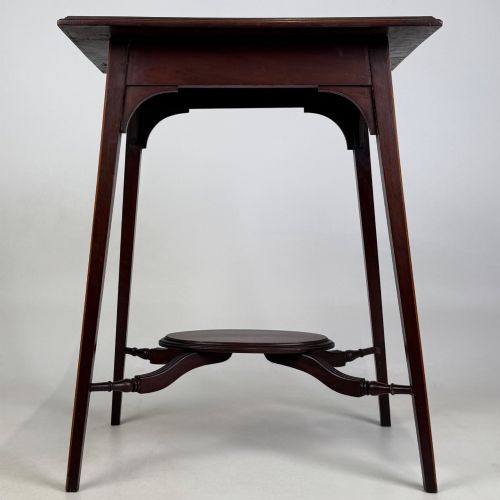
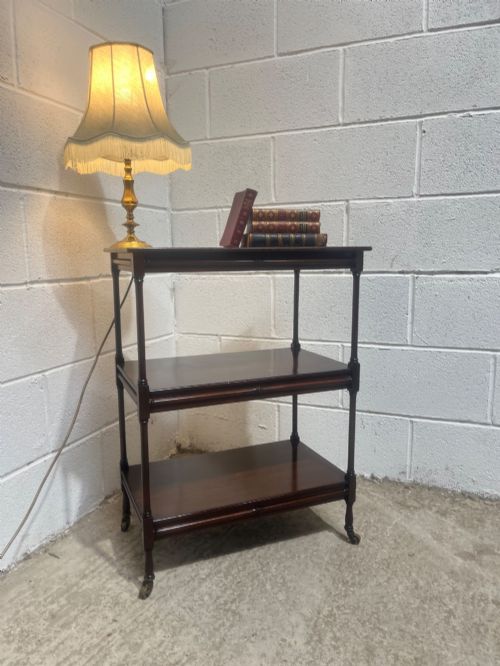
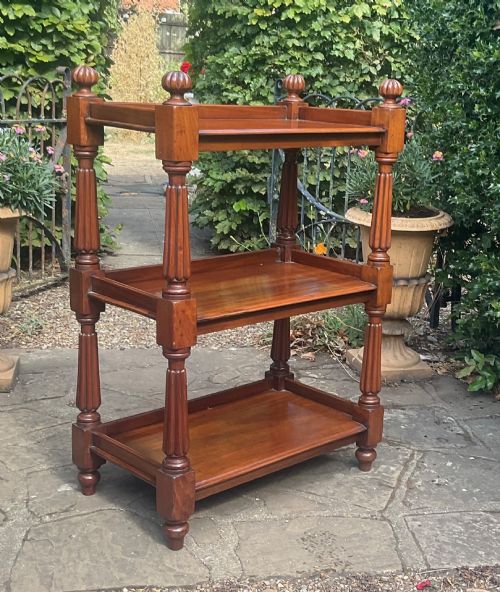
A mahogany table with shelf offers practical tiered surfaces in rich timber, combining display space below with a solid top for daily use.
What the pieces are
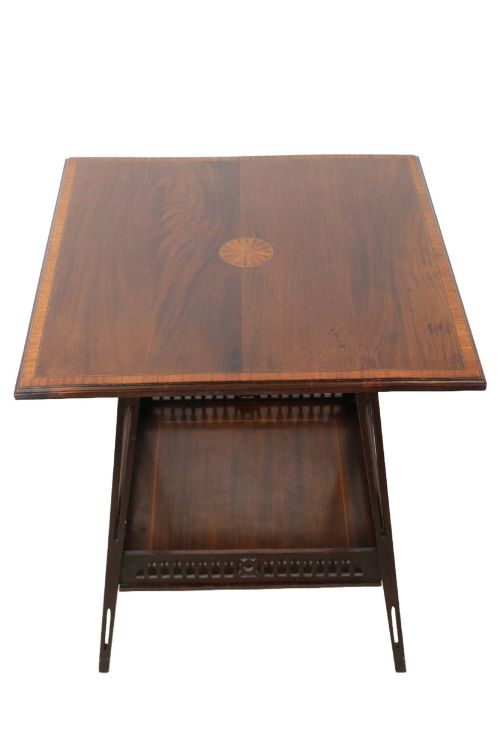
A mahogany table with shelf typically appears as an Edwardian occasional piece, a side table, or a tea table designed for domestic utility. These pieces frequently date from the Edwardian era, around nineteen hundred, or the nineteenth century, reflecting the prevailing taste for versatile furniture.
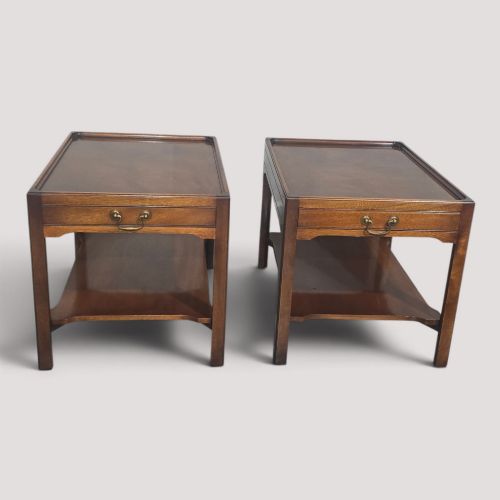
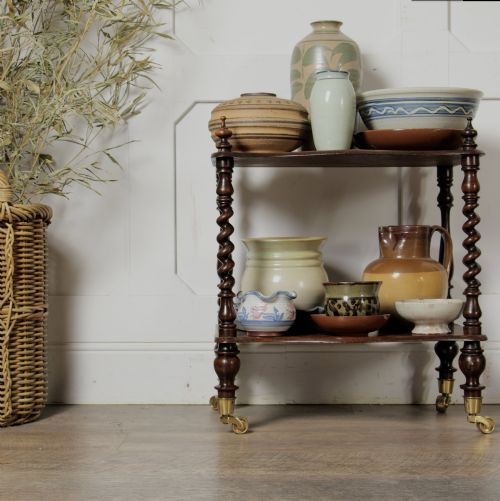
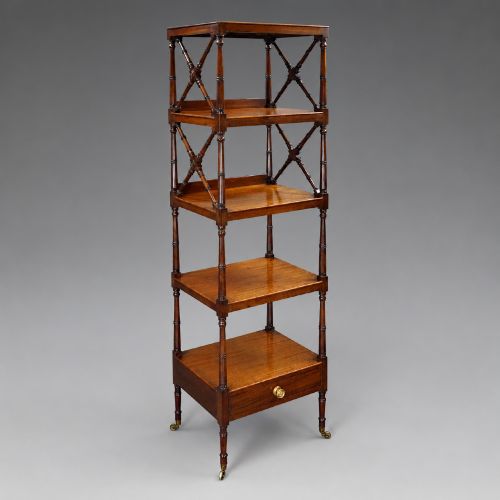
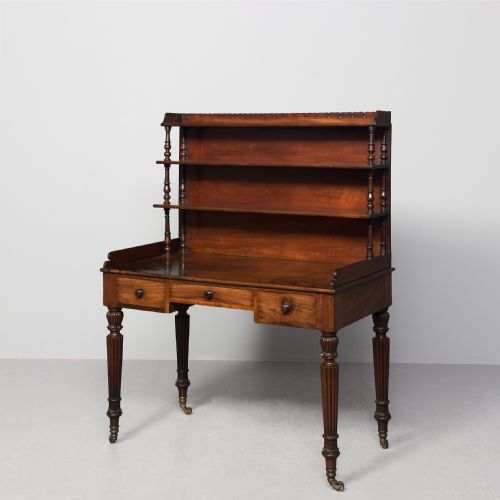
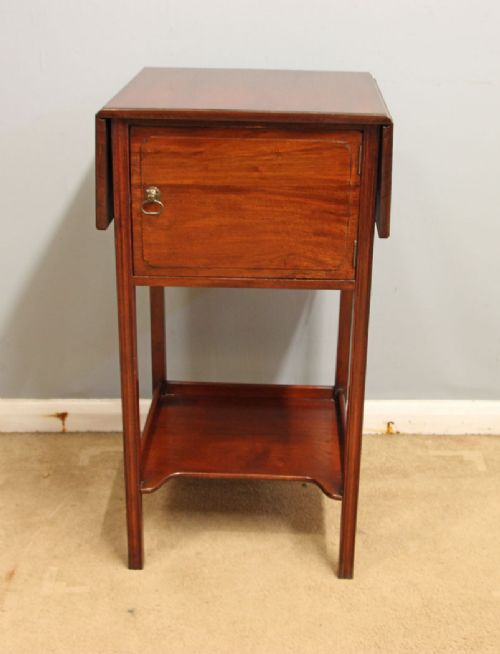
Forms include oval occasional tables, bow-fronted side tables, servers with drawers, and four-flap tea tables equipped with a lower tier. The under shelf provides additional space for books or decorative objects while adding structural stability to the frame.
Revival styles heavily influence the selection, with Chippendale Revival and Sheraton Revival designs appearing alongside simpler Edwardian constructions. Makers utilised both solid timber and mahogany veneer to achieve these versatile domestic forms.
How they were made
Joiners constructed these tables primarily from mahogany and mahogany veneer, supported by secondary structural woods. Brass details occasionally appear as drawer pulls or decorative accents on specific forms.
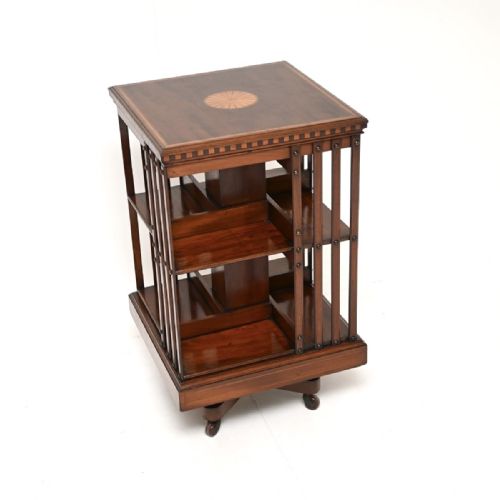
Craftsmen enriched many surfaces using wood inlay, incorporating contrasting materials such as boxwood and satinwood to create delicate banding and geometric motifs. This decorative technique highlights the revival styles popular during the Edwardian period.
Retail Price Guide 2026
Typical UK retail prices for mahogany table with shelf, calculated from the Sellingantiques database of over a million retail prices indexed since 2003. This retail price guide relies exclusively on Sellingantiques data; no external sources or auction records are used, so the figures do not describe the wider market.
Listings feature pieces spanning the nineteenth century, nineteen hundred, nineteen-twenty, and the Edwardian period, constructed in mahogany, boxwood, satinwood, and brass.
What varies in quality
The refinement of the timber selection dictates the visual impact of each piece, distinguishing simple utility items from finely figured examples. The crispness and precision of the boxwood and satinwood inlay further separate standard production from superior work.
Structural complexity influences value, particularly in folding mechanisms found on tea tables or the integration of multiple drawers within a server. Superior joinery ensures the under shelf remains stable and firmly fixed to the supporting legs.
The Mahogany Table with Shelf Glossary
- Occasional table
- A small, movable table designed for specific, intermittent use in a principal room. These versatile pieces suit sitting rooms and halls alike.
- Tea table
- A hinged or folding top table originally intended for serving afternoon tea. Many examples feature multiple flaps that open to expand the surface area.
- Wood inlay
- A decorative technique where contrasting timbers are fitted into hollowed recesses on the primary surface. Boxwood and satinwood frequently serve this purpose on mahogany furniture.
- Server
- A low case piece with drawers designed for holding dining or tea accessories. They offer surface space above and storage below.
Frequently Asked Questions
What is an under shelf?
An under shelf is a secondary horizontal board placed lower down between the legs of a table. It connects the supports and provides an extra surface for storage or display.
This lower tier adds rigidity to the frame while keeping items accessible just above floor level. In historical pieces, it often matches the timber of the main top.
How do I date an Edwardian table?
Dating relies on stylistic markers, construction methods, and timber characteristics typical of the period around nineteen hundred. Edwardian pieces often revive earlier Sheraton or Chippendale motifs with lighter proportions.
Examination of the secondary woods and veneer thickness also helps establish the era of manufacture. Makers of this time balanced historical revival aesthetics with modern domestic convenience.
Are these tables solid mahogany?
Some tables utilise solid mahogany throughout, while others incorporate mahogany veneer over a secondary wood core. Veneering allowed makers to display attractive grain patterns on flat surfaces without excessive weight.
The presence of veneer does not indicate lesser quality, as fine cabinetmakers frequently employed it for decorative effect. Both solid and veneered constructions appear across the available periods.
Where should I place a side table?
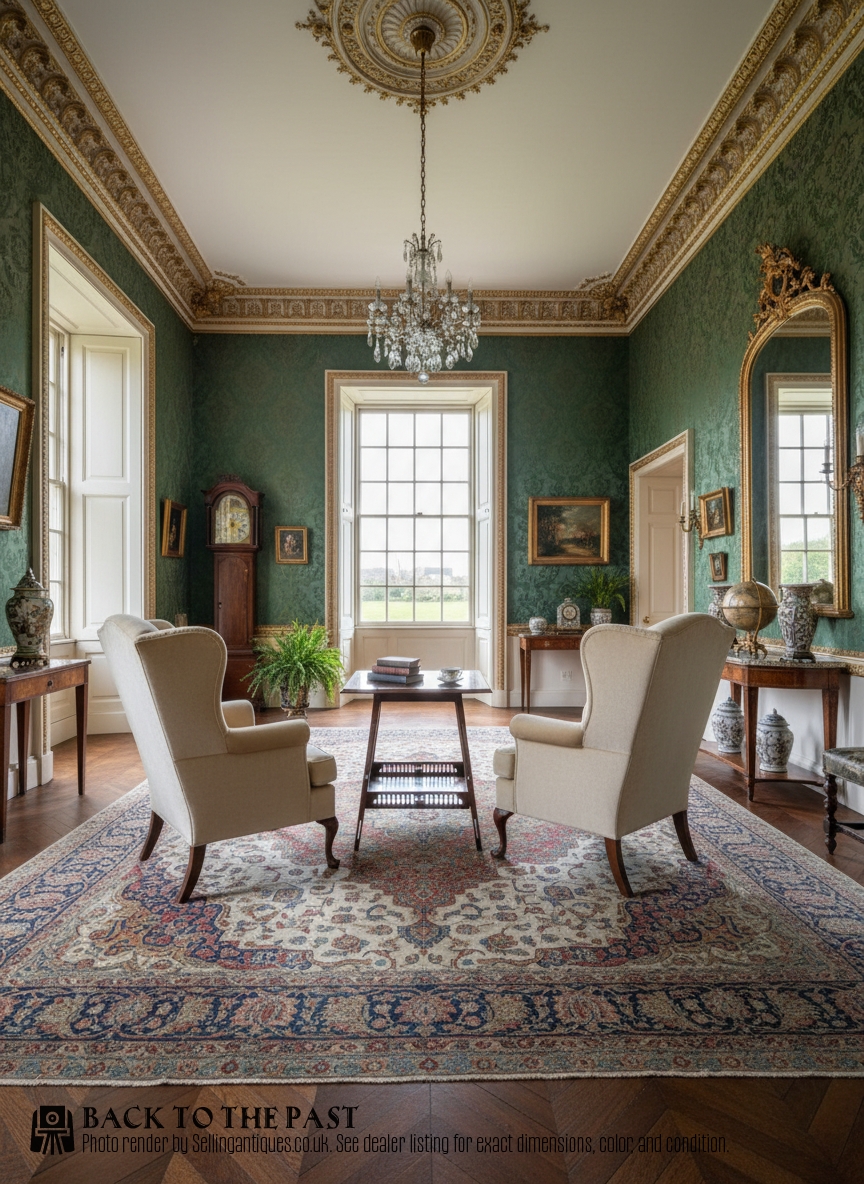
A side table suits hallways, living rooms, or landings where surface space is needed without a large footprint. The under shelf provides an ideal spot for stacking books or small decorative objects.
Keeping the table away from direct heat sources helps protect the mahogany timber and any delicate inlay work. These versatile forms adapt easily to various interior settings.