


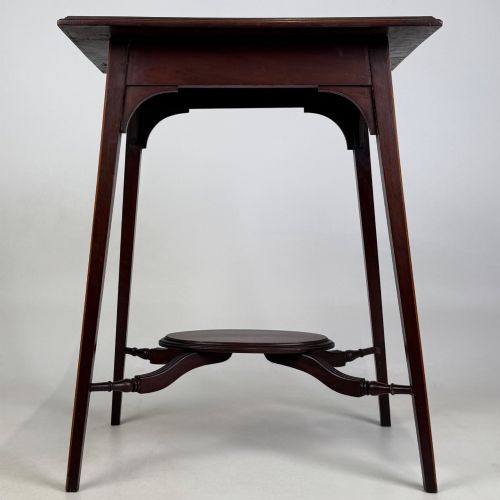
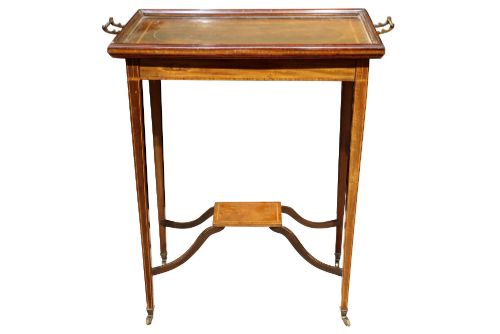
Edwardian Mahogany Occasional Table
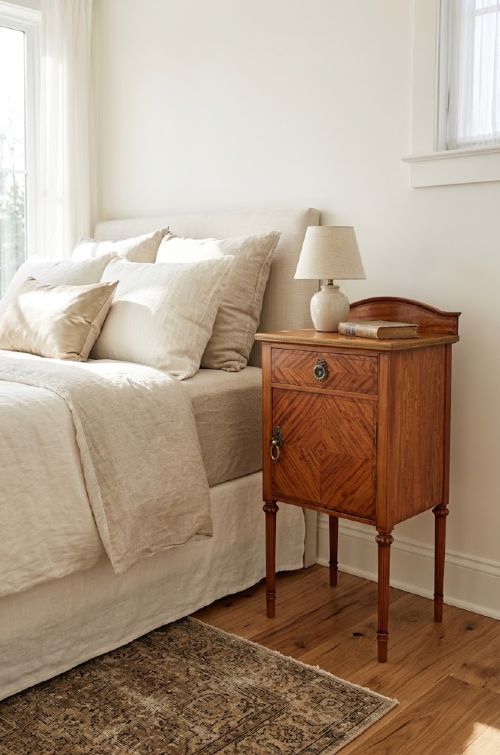
When you choose an edwardian mahogany occasional table, you bring home a versatile piece designed for daily use in sitting rooms and halls.

Edwardian Mahogany Occasional Table
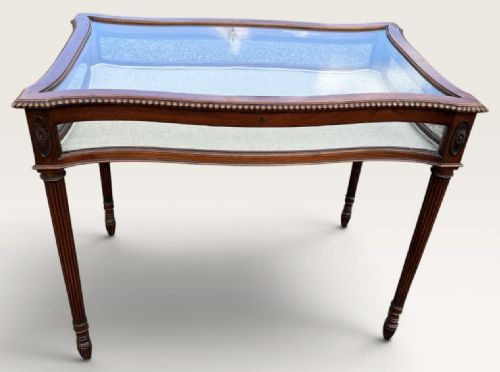
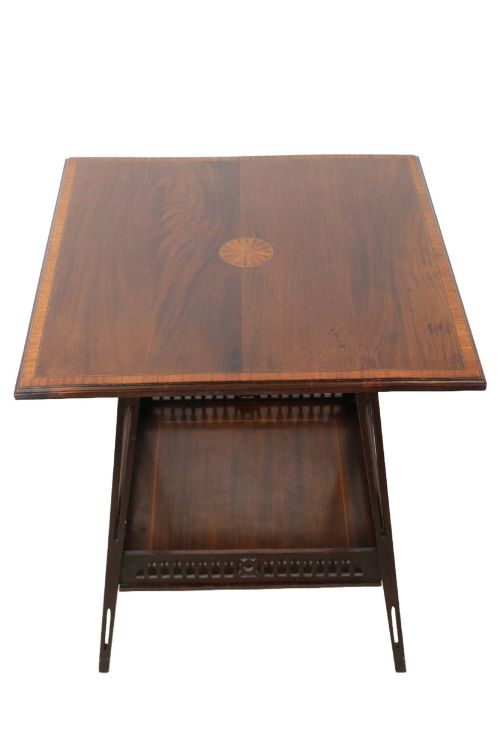
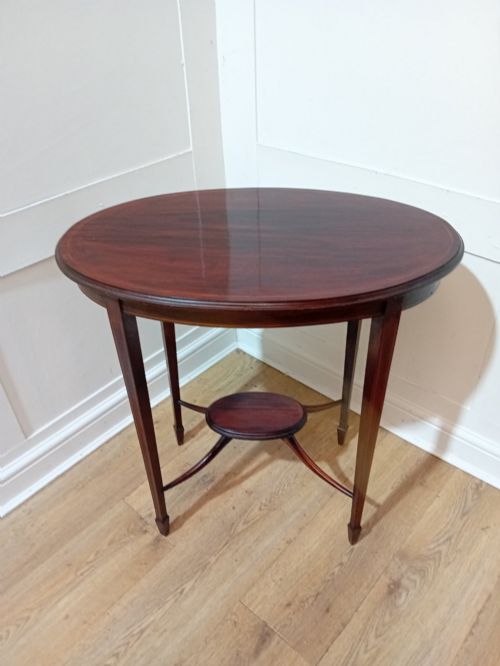
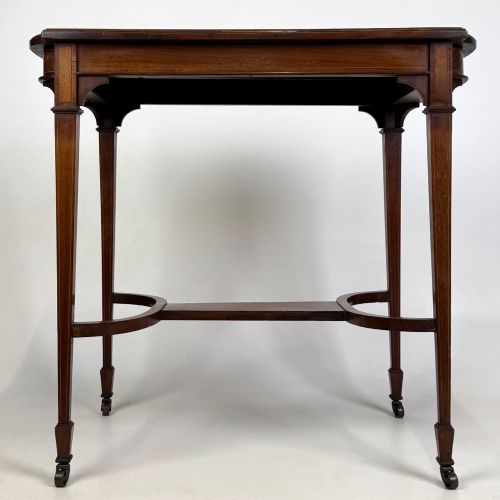
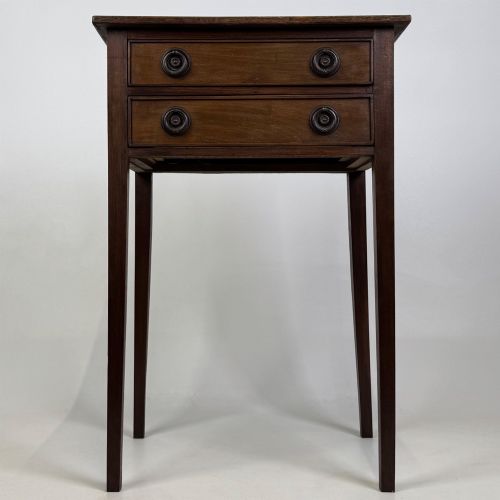
An edwardian mahogany occasional table is a lightweight, moveable piece of furniture intended for holding lamps, drinks, or books within a room. The examples found here span the Edwardian period alongside late Victorian and early twentieth-century echoes of Georgian and Sheraton styles.
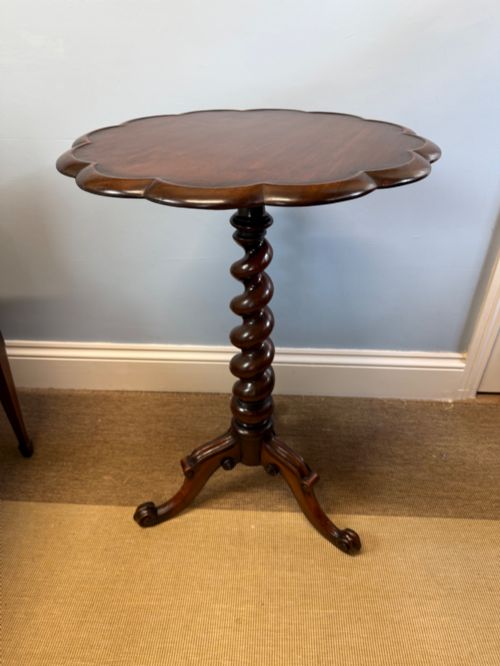
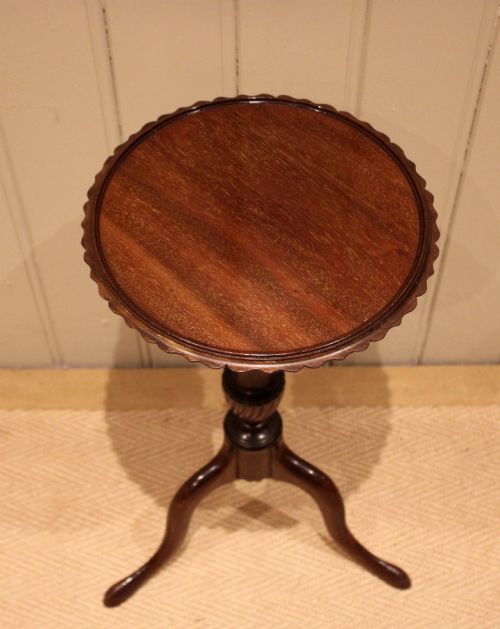
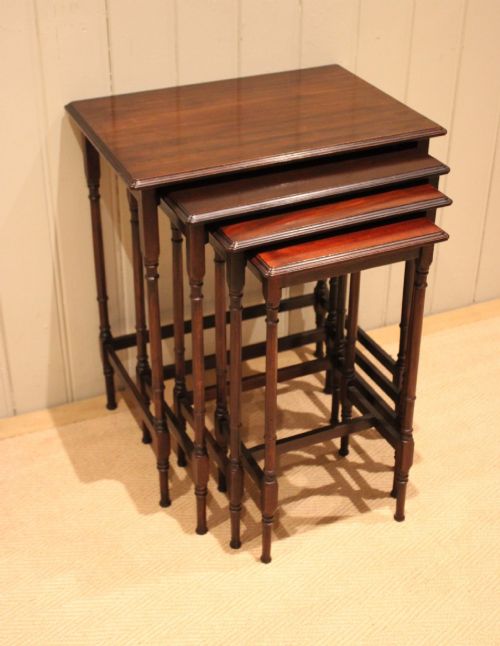
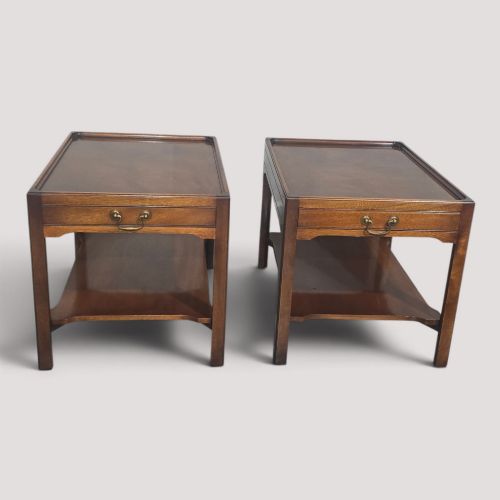
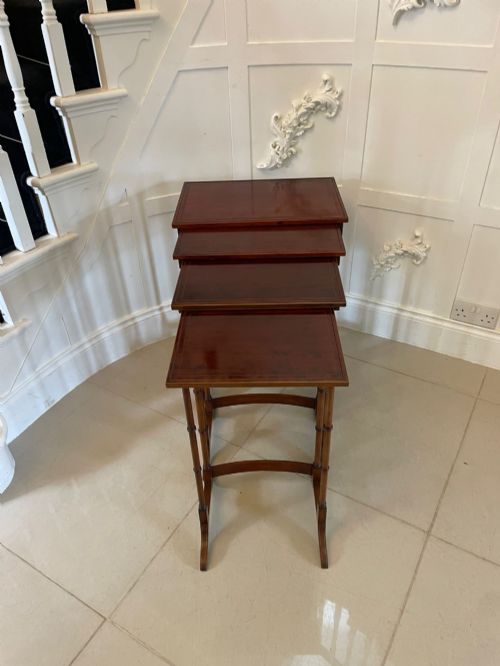
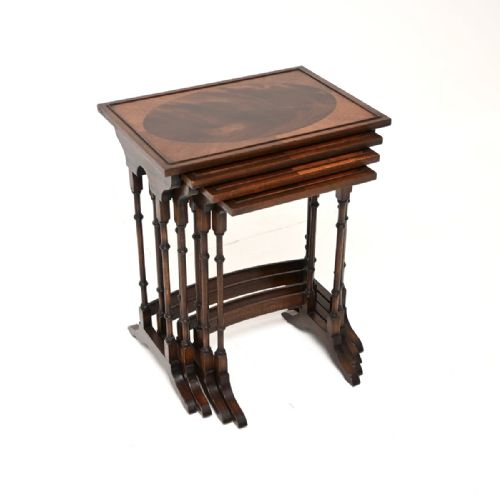
Most pieces take compact forms such as circular, oval, or octagonal tops supported by tripod legs, square tapered legs, or multi-tiered structures. Nests of tables and tray-top designs also appear frequently, offering practical surfaces that tuck away when not needed.
Makers of the period adapted earlier cabinet-making traditions to suit lighter domestic interiors. These tables served multiple functions in homes, operating as wine tables, lamp tables, or small display stands.
Materials and Construction Techniques
Cabinet makers built these tables primarily from solid mahogany and mahogany veneers, often selecting figured timber for the main surface. Secondary woods formed the internal framing and drawer linings.
Decoration relied heavily on contrasting timbers such as satinwood and boxwood, applied as stringing, cross-banding, or geometric inlay upon the tops and legs. Turning lathes produced slender table legs, while specialised joinery created tilt-top mechanisms and nesting frameworks.
Edwardian Mahogany Occasional Table Retail Price Guide 2026
Typical asking prices for edwardian mahogany occasional table among the pieces listed under this phrase on Sellingantiques today, from the lower quarter to the upper quarter. They describe what is for sale here now, not the wider market.
Some tables came equipped with bamboo-turned legs, proving that interior decorators of 1900 loved a botanical twist.
What Varies in Quality
The degree of hand-craftsmanship distinguishes standard production from exhibition-grade pieces. Finely cut inlay, precise boxwood stringing, and well-figured mahogany indicate higher workshop standards during the Edwardian era.
Structural integrity also varies according to the original design. Heavier tables with solid timber tops and robust joints hold up better to movement than lighter models with fragile veneer edges or loose leg assemblies.
Trevor Page & Co
The Edwardian Mahogany Occasional Table Glossary
- Cross-banding
- A narrow strip of veneer applied to the edge of a table top with the grain running perpendicular to the main surface. This technique frames the centre wood and adds visual contrast.
- Stringing
- Thin inlaid lines of contrasting timber, such as boxwood, set flush into channels carved into the mahogany surface. It creates delicate geometric borders on table tops and legs.
- Piecrust rim
- A raised, decoratively carved edge shaped in small curves resembling pastry work. This detail appears on circular occasional and tilt-top tables.
- Sutherland table
- A narrow drop-leaf table with hinged flaps supported by swinging gate legs. When folded down, the table occupies minimal floor space.
- Quarter-sawn
- Timber cut radially from the growth rings to produce stable boards with distinctive grain patterns. Cabinet makers utilised this cut to prevent warping on prominent table tops.
Edwardian Mahogany Occasional Table: Frequently Asked Questions
Where were occasional tables placed?
These tables sat beside armchairs, in hallways, or near windows to hold small decorative items, reading material, or tea service.
Their lightweight construction allowed servants or residents to move them around the room as daily needs changed.
How do I identify an Edwardian piece?
Edwardian tables typically display lighter proportions, brighter mahogany finishes, and subtle satinwood or boxwood inlay compared to heavier Victorian furniture.
Design influences from the Sheraton and Chippendale revivals also point toward this late nineteenth and early twentieth-century era.
Can I use these tables daily?
Solid construction and durable timber make these tables suitable for holding lamps, drinks, or plants in modern living spaces.
Using coasters and placing them away from direct heat sources helps protect the polished mahogany finish from moisture rings and warping.
What is a nest of tables?
A nest consists of a set of graduated tables designed to slide neatly beneath one another into the footprint of the largest single table.
This format provided extra surface space for guests during tea without permanently crowding the room.