
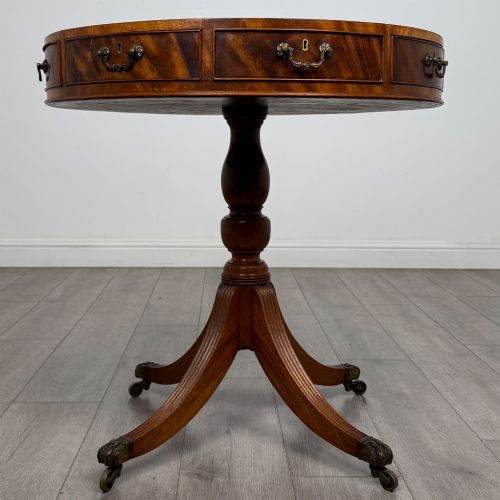
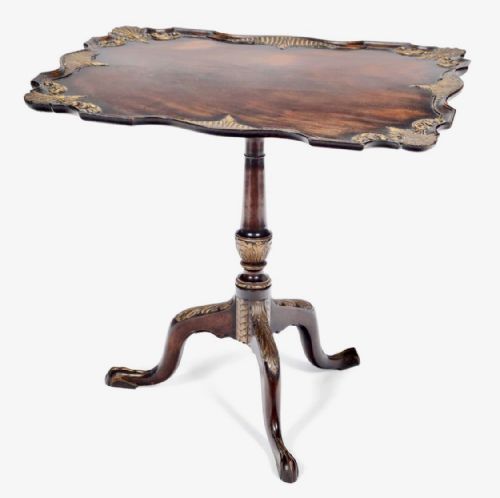
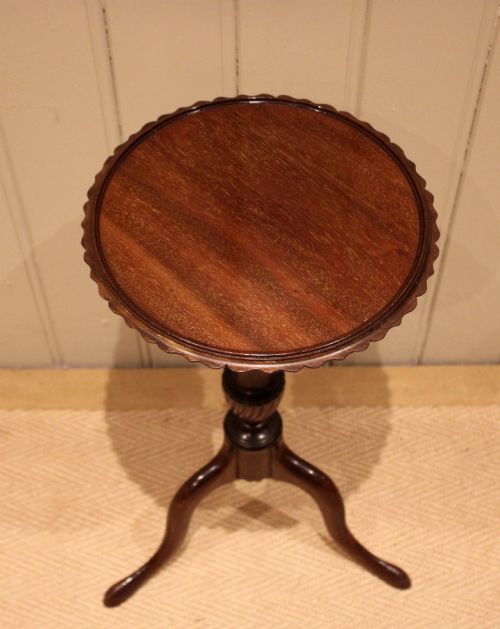
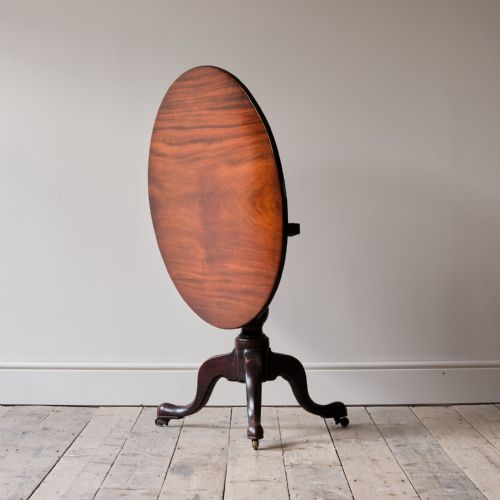


Antique Tripod Occasional Table
An antique tripod occasional table offers nimble, versatile surface space on a three-legged base, spanning Georgian to Victorian periods.

Forms and Origins
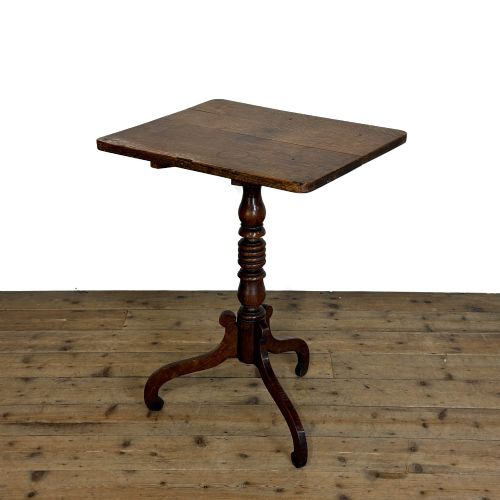
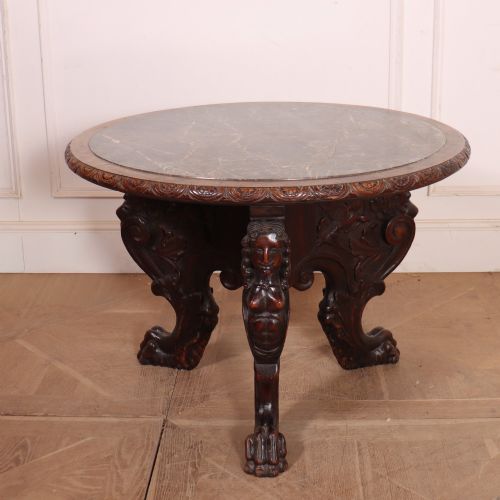
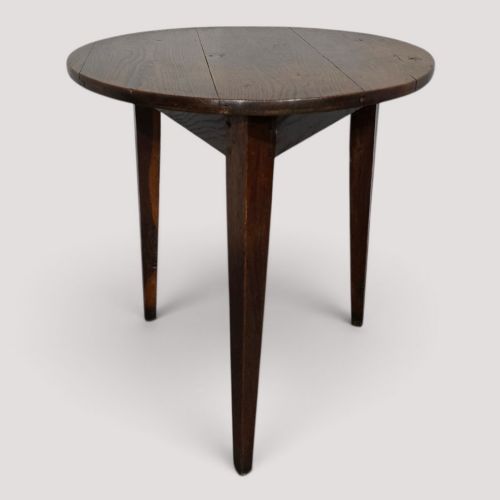
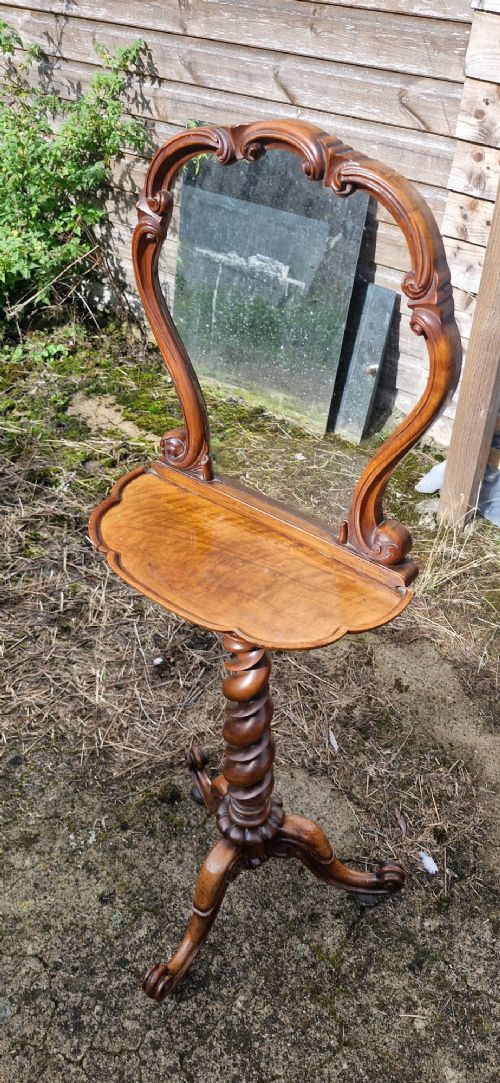
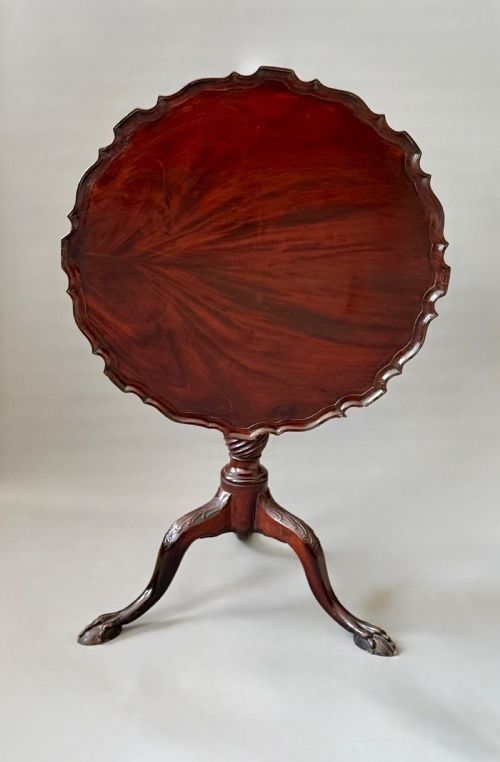
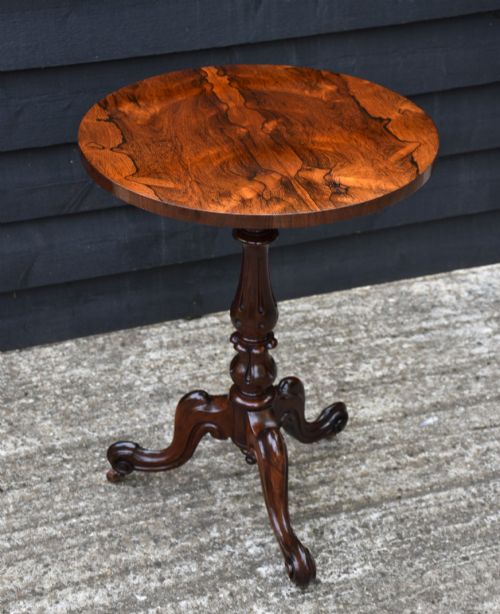
When you search for an antique tripod occasional table, you encounter compact circular, square, and oval surfaces designed for wine, lamps, or general side use. The selections here span the eighteenth and nineteenth centuries, taking the form of wine tables, supper tables, and lamp tables.
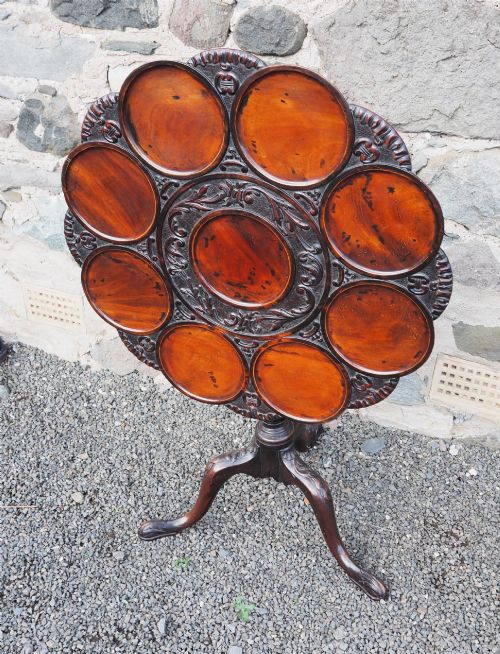
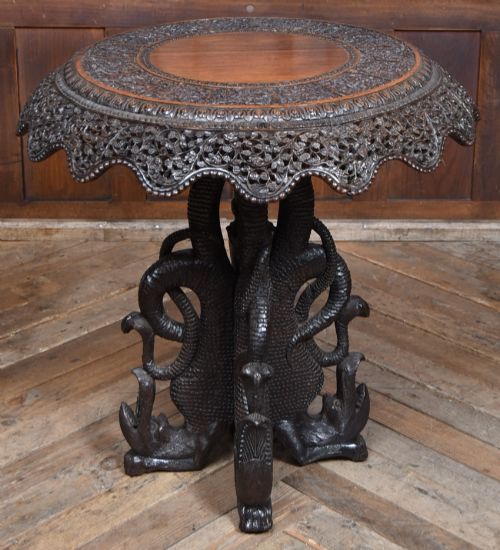
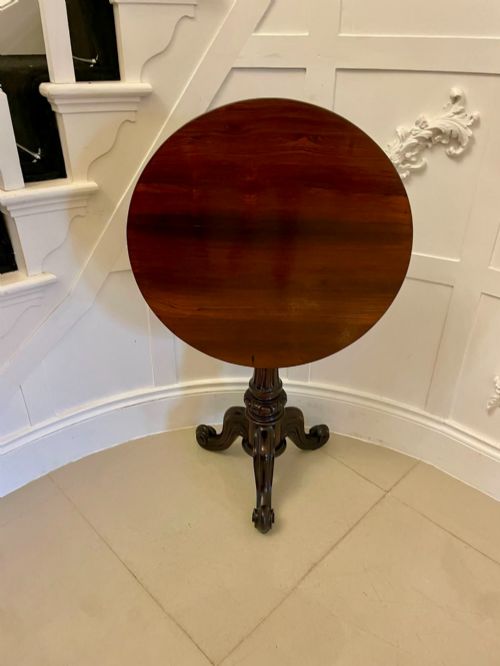
Georgian and Regency examples sit alongside Victorian and Anglo-Indian variants, demonstrating the enduring utility of the three-legged pedestal format. The most common specimens meet you as circular mahogany tables, often featuring tilt-top mechanisms for storage against a wall.
Materials and Technique
Cabinetmakers constructed these tables from dense hardwoods including mahogany, rosewood, walnut, oak, and fruitwood, sometimes incorporating brass fittings or bone inlay. Tops were frequently turned from a single solid board or matched veneers over secondary timbers.
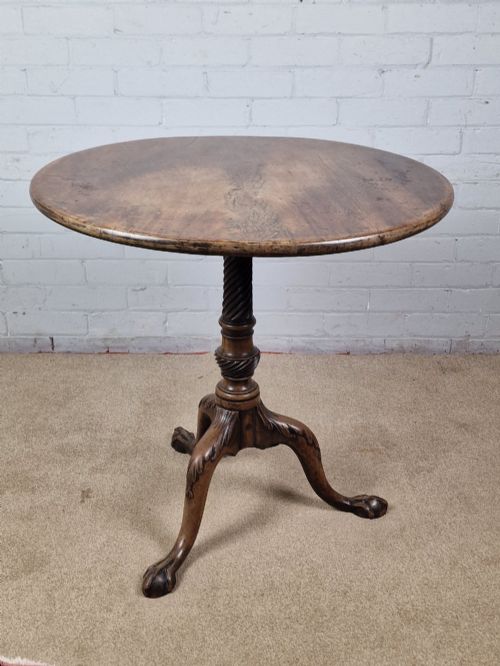
The characteristic three-legged base relies on a central pillar joined to splayed legs via dovetail or tenon joints, sometimes enhanced by turned central columns or carved barley twist stems.
Retail Price Guide 2026
Typical UK retail prices for tripod occasional table, calculated from the Sellingantiques database of over a million retail prices indexed since 2003. This retail price guide relies exclusively on Sellingantiques data; no external sources or auction records are used, so the figures do not describe the wider market.
Listings feature mahogany, rosewood, walnut, oak, fruitwood, and olive wood across Georgian, Regency, Victorian, and Anglo-Indian styles.
Judging the Standard
Quality rests on the selection of timber figures - such as flame mahogany, burr walnut, or birds-eye maple - and the crispness of hand-carved details on the knees, feet, and pillar. Superior execution shows in the seamless operation of tilt-top mechanisms and the rigid stability of the tripod base without wobble.
The Antique Tripod Occasional Table Glossary
- Tripod base
- A furniture support consisting of three legs radiating from a central pillar. This design ensures stability on uneven historical floorboards.
- Tilt-top
- A hinged table top that pivots to a vertical position. This allows the piece to be stored flat against a wall when not in use.
- Birdcage
- A timber framework beneath the table top that allows the surface to both rotate and tilt. It connects the top to the central pillar.
- Pie crust
- A carved, raised decorative edge shaped in undulating curves. It is typically worked from the solid timber of the table top.
- Barley twist
- A carved spiral column resembling a twisted rope. This decorative turning appears frequently on nineteenth-century table stems.
Frequently Asked Questions
What is an antique tripod occasional table used for?
These tables served historically for holding wine glasses, candles, or reading lamps beside seating. Today they function flexibly as small side tables or lamp stands in living spaces.
Their compact footprints allow them to fit into tight corners and alongside armchairs where standard four-legged tables prove too cumbersome.
How do I identify a Georgian tripod table?
Georgian examples, typically dating from the eighteenth century, feature rich mahogany or oak timbers with restrained classical carving. Look for honest construction marks and patination acquired over centuries of domestic use.
Many of these earlier pieces incorporate tilt-top mechanisms with birdcage mounts beneath the circular or dish-shaped top.
What does tilt-top mean on these tables?
A tilt-top table has a hinge mechanism allowing the top to pivot flat against the central pillar. This clever design saved valuable floor space in historical rooms when dining or entertaining ended.
When examining a tilt-top, check the brass catch or wooden wedge that locks the top securely into its horizontal position.
Are Victorian tripod tables different from Georgian ones?
Victorian versions often introduce heavier ornamentation, varied woods like walnut and rosewood, and styles such as barley twist stems or ebonised papier-mâché finishes. They reflect industrial-era production methods alongside traditional hand-carving.
While Georgian pieces favour simple elegance, Victorian iterations embrace diverse global influences including Anglo-Indian and Burmese carving.