


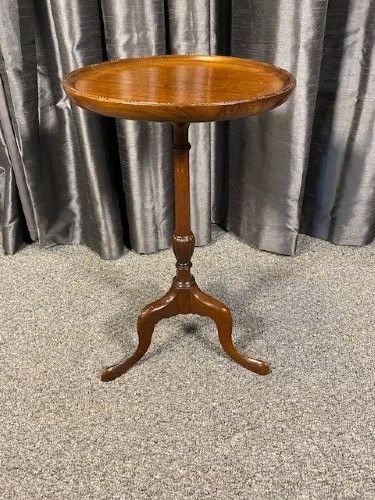
Circular Mahogany Side Table
A circular mahogany side table brings centuries of British and continental craft into a room, offering a compact surface built from rich timber.
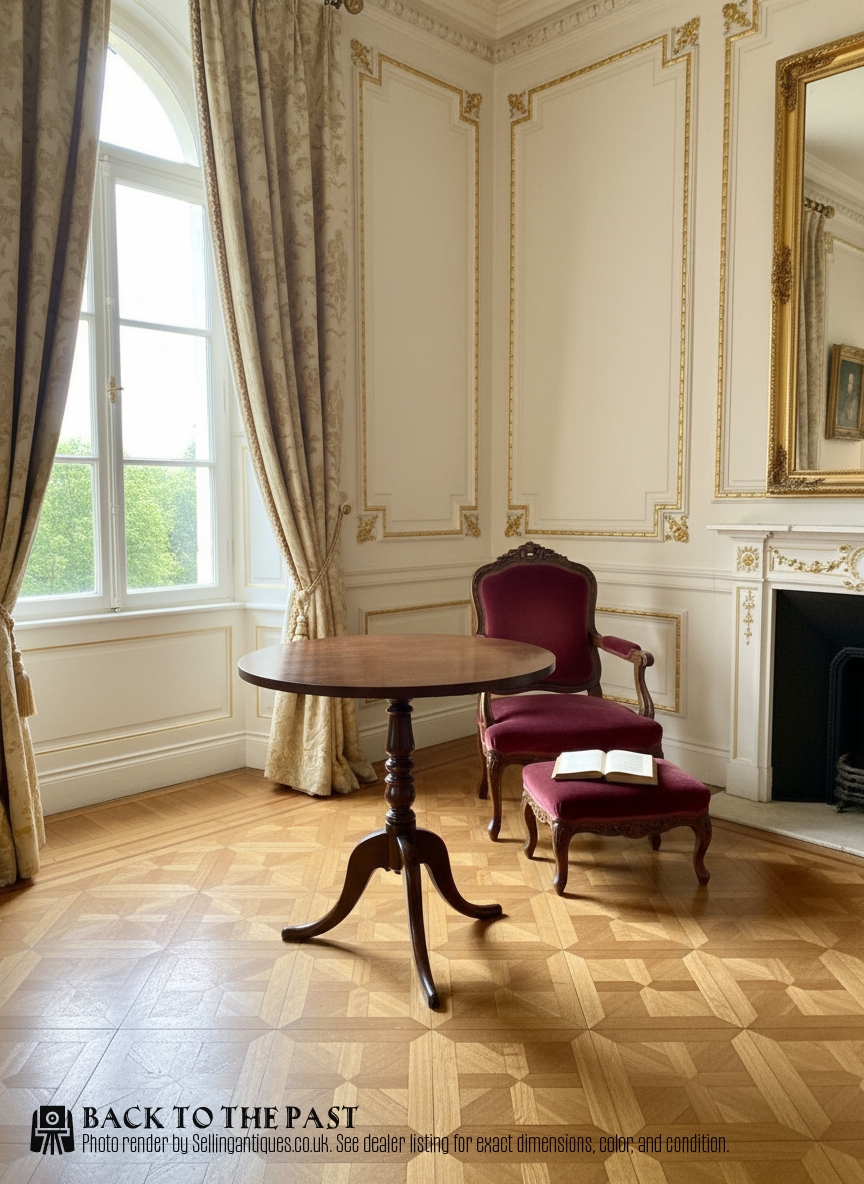
Circular Mahogany Side Table
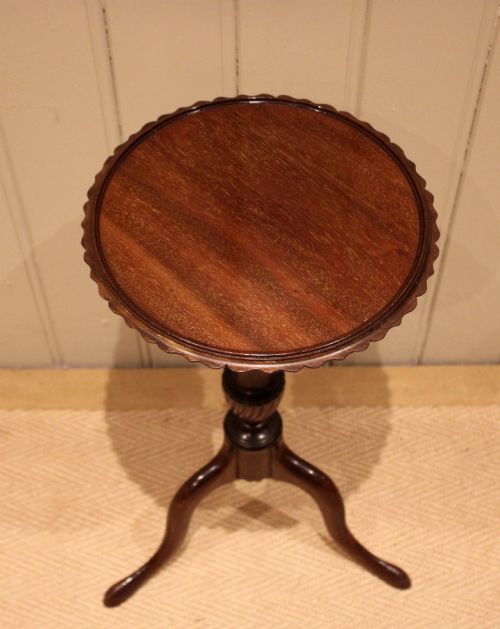
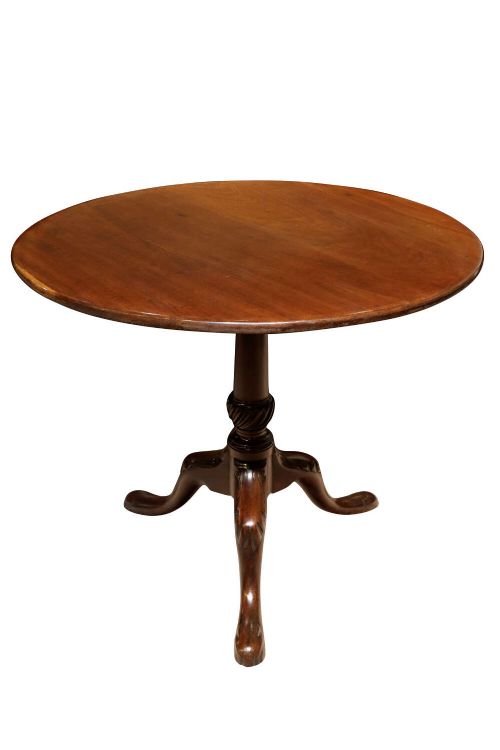
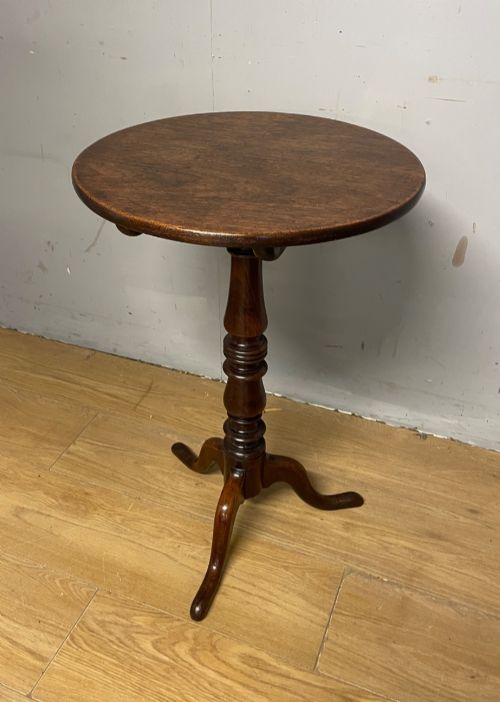
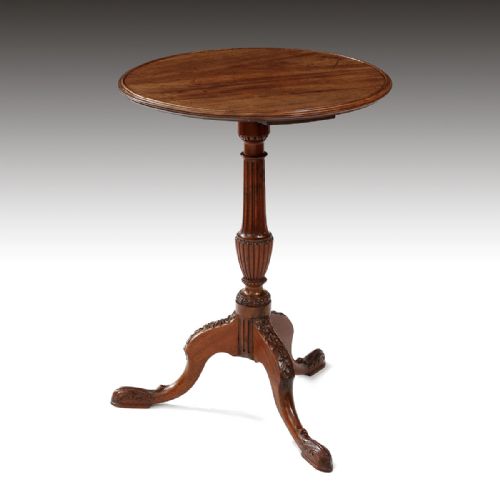
A circular mahogany side table appears across several centuries of domestic furniture production, spanning the Georgian, Regency, Victorian, and Edwardian eras. Buyers searching for a circular mahogany side table frequently encounter tripod wine tables, tilt-top occasional pieces, and pedestal centre tables designed for versatile placement. These items served specific functions in historic interiors, from holding tea services and lamps to acting as supper tables.
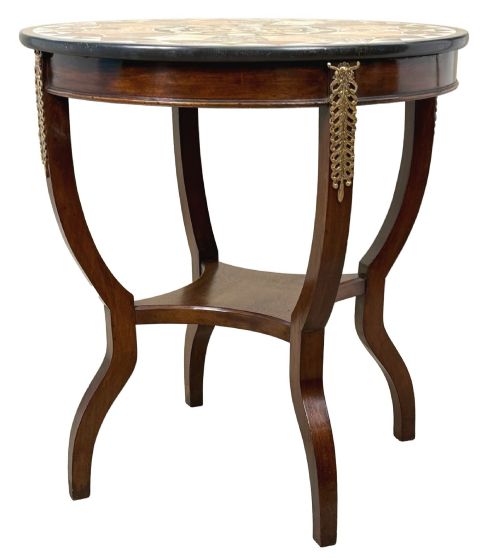
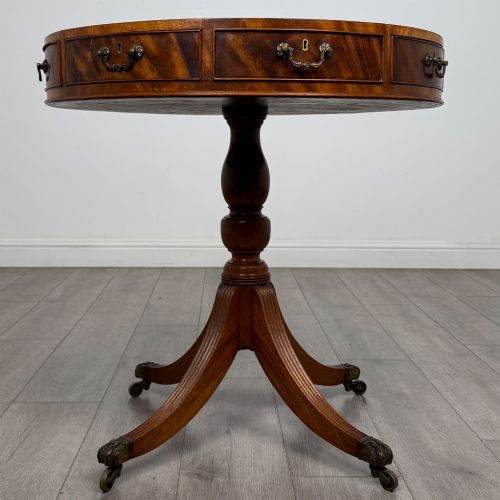
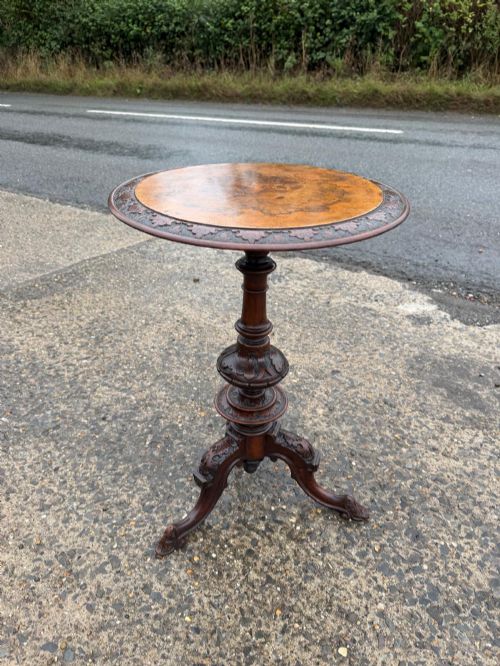
The material palette centres firmly on mahogany, sometimes enriched with satinwood inlay, burr wood top sections, or marble and leather inserts. Forms range from simple small wine tables with tripod legs to large console and drum tables supported by central pedestals. The selection reflects both English cabinet-making traditions and French influences such as the gueridon.
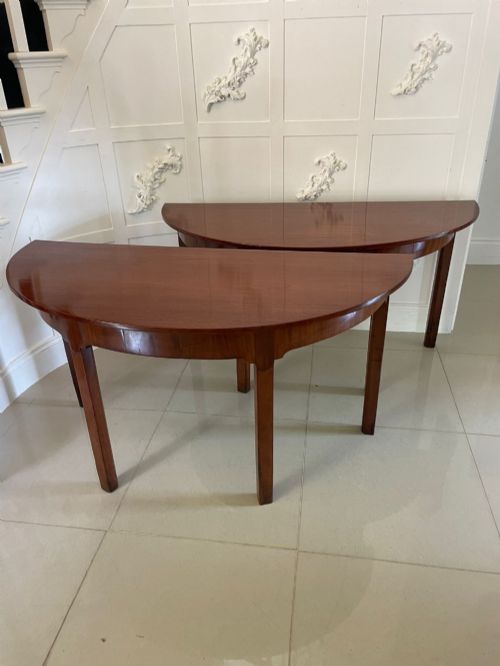
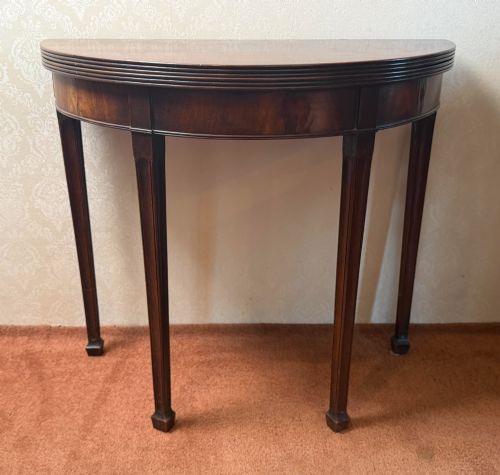
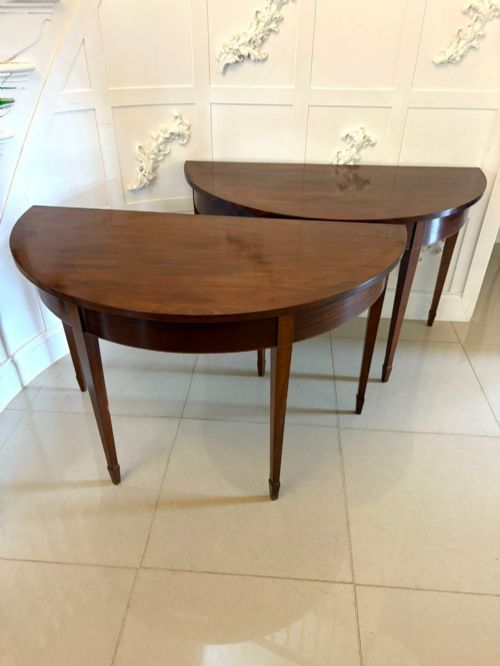
Examples on this page draw from periods including the 18th century, the Regency epoch, and the Edwardian period. Many retain functional mechanisms such as snap-top actions, revolving tops, or folding leaves for demi-lune configurations. This variety ensures that tables suit both period properties and modern rooms requiring compact wooden surfaces.
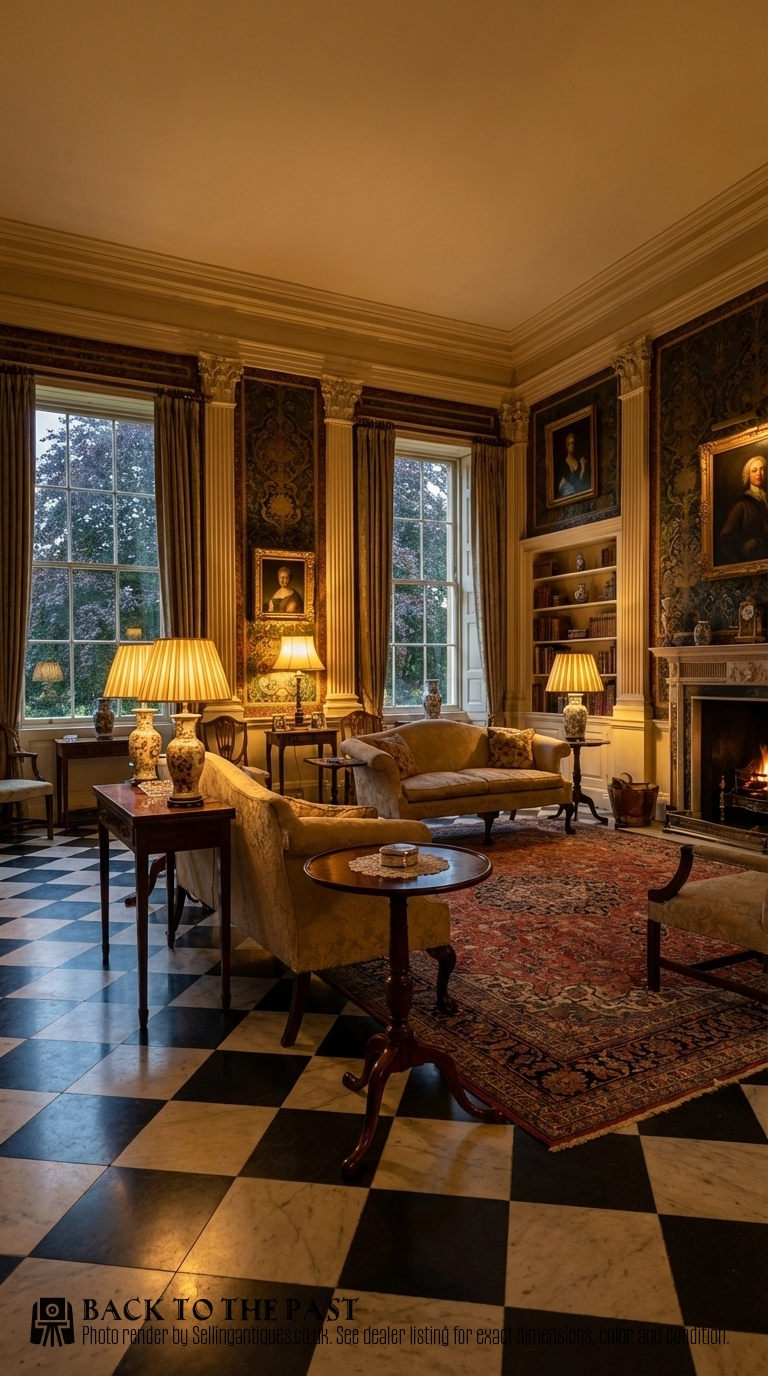
How they were made
Cabinet-makers constructed these tables using solid mahogany or applied mahogany veneer over secondary timbers, frequently selecting figured grain for prominent display on table tops. Structural elements like tripod legs and pedestals demanded precise timber seasoning to prevent warping over long periods of use.
Surface enhancement often involved brass hardware, leather writing or serving surfaces, and inset marble slabs framed by turned or moulded wooden borders. Joinery relied on traditional techniques such as tenoning, dovetailing, and pivoting metal fixtures for tilt-top or revolving mechanisms.
Circular Mahogany Side Table Retail Price Guide 2026
Typical asking prices for circular mahogany side table among the pieces listed under this phrase on Sellingantiques today, from the lower quarter to the upper quarter. They describe what is for sale here now, not the wider market.
The inventory records multiple variations of the form, including tripod wine tables, fold-over tea tables, and French gueridons.
What varies in quality
Quality in a circular mahogany side table depends heavily on the selection of timber figure, such as highly figured mahogany or burr wood, and the crispness of carved details on pedestals and tripod legs. Better examples demonstrate careful matching of veneers and harmonious proportions between the top and the supporting base.
The integrity of mechanical elements, including tilt-top latches, revolving pivots, and folding hinges, marks the distinction between standard production and finer cabinet-making. Original surfaces and patination left by age further separate standard domestic items from pieces of higher workshop standing.
Gillow
The Circular Mahogany Side Table Glossary
- Tripod table
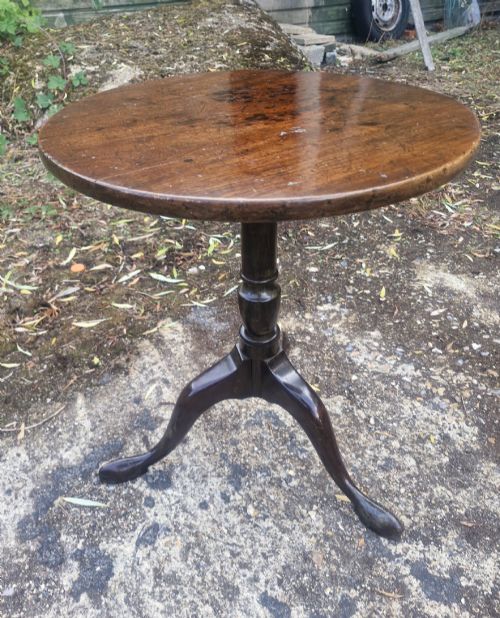
- A freestanding table supported by three legs radiating from a central pillar. This form gained popularity during the Georgian period for stability on uneven floors.
- Gueridon
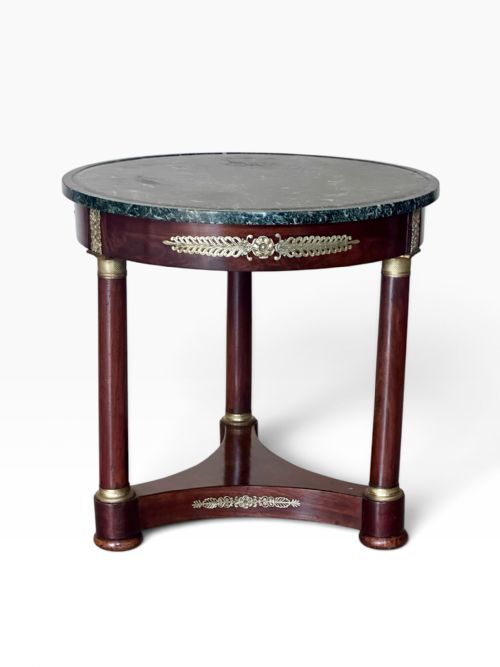
- A small ornamental French table designed to hold a lamp or decorative object. These frequently incorporate marble tops and ormolu mounts.
- Demi-lune
- A half-moon shaped console or table designed to stand flat against a wall. Pairs of these can be joined to form a complete circular dining surface.
- Snap top
- A spring-loaded or latch mechanism that locks a tilting table top securely into the horizontal position. It prevents accidental tipping during everyday use.
Circular Mahogany Side Table: Frequently Asked Questions
What is a tilt-top table used for?
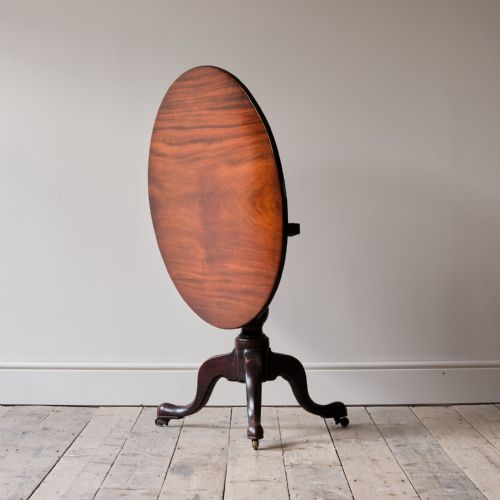
A tilt-top table served historically as a versatile surface for tea, reading, or evening supper. When not in use, the mechanism allowed the top to pivot flat, saving valuable floor space in smaller rooms.
Today, these tables function effectively as lamp stands or display surfaces while retaining their historic folding capability.
How do I identify a Georgian table?
Georgian pieces typically display rich, dense mahogany timber with deep patination accumulated over centuries of use. Look for classic design elements such as slender tripod legs, bird-cage turning mechanisms, and restrained carving.
Construction methods from this era rely on traditional joinery without modern metal fasteners, pointing to 18th-century workshop origins.
What is a gueridon table?
A gueridon is a distinct form of small circular table originating in French design traditions. These pieces frequently incorporate imported marble tops and sometimes feature brass or ormolu mounts.
They were traditionally used to hold heavy candlesticks or decorative objects in formal reception rooms.
Can I use a wine table daily?
Wine tables provide sturdy surfaces suited for holding cups, books, or small lamps beside seating. Their compact footprints allow them to fit easily into narrow corners or beside sofas.
Care should be taken to protect polished wooden or leather surfaces from moisture and direct heat.