


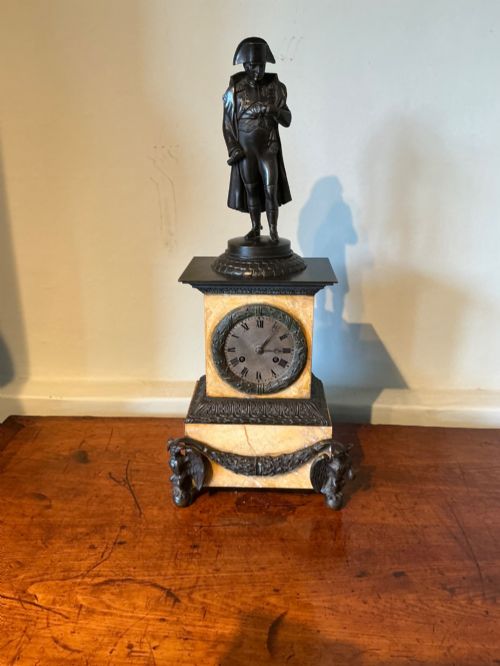
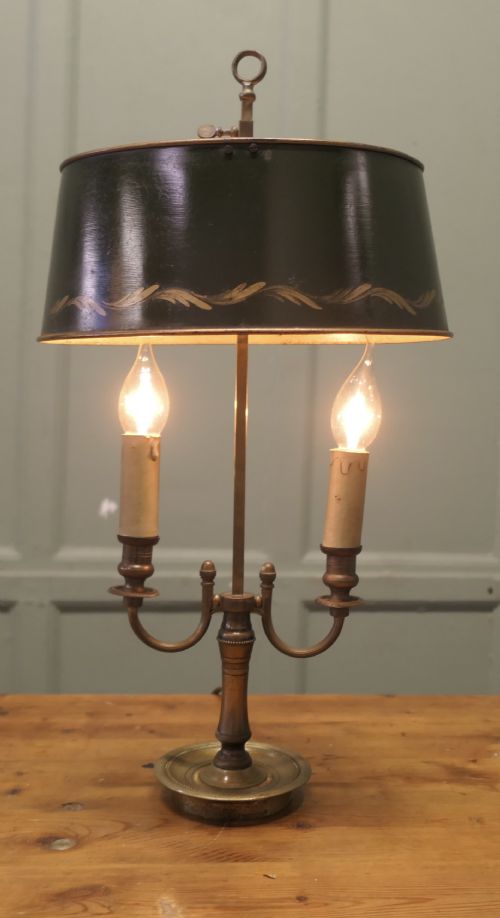
French Empire Table
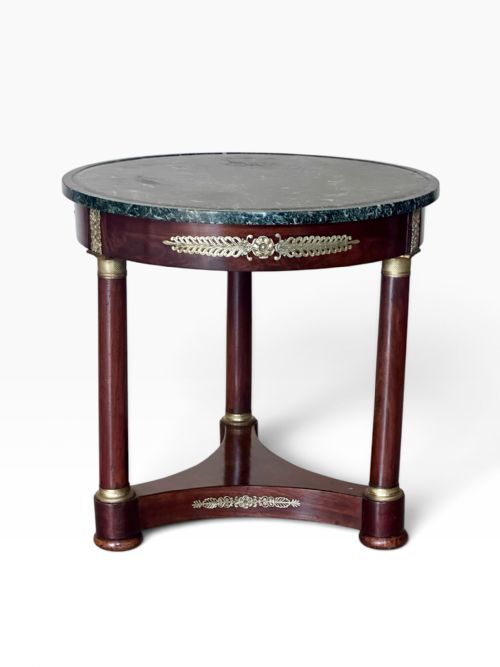
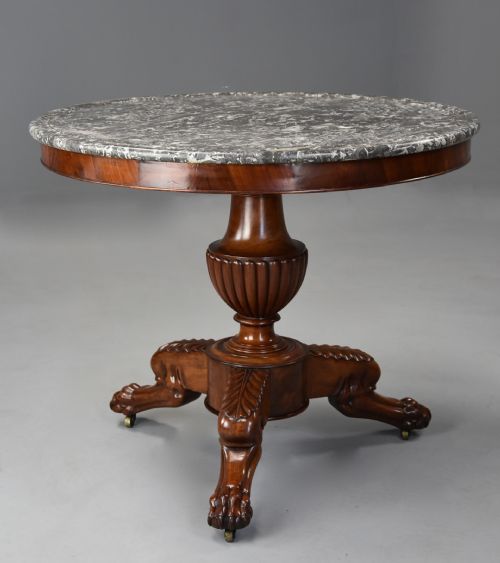
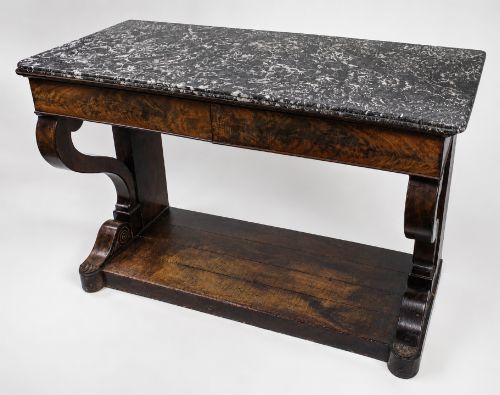
When you search for a french empire table, you uncover formal mahogany centre pieces, marble-topped gueridons and console tables defined by classical restraint and bronze mounts.

French Empire Table
The french empire table category encompasses circular gueridons, heavy console tables and occasional side pieces originating primarily from the nineteenth century.
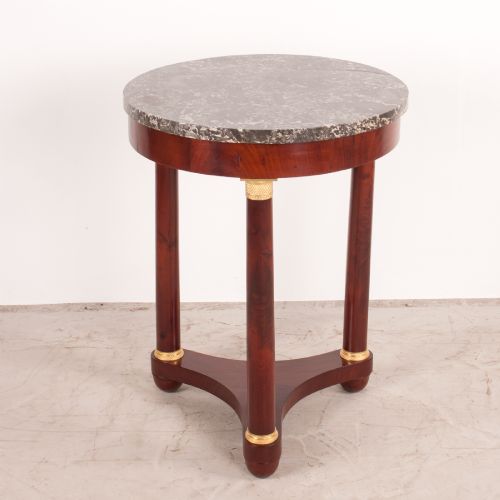
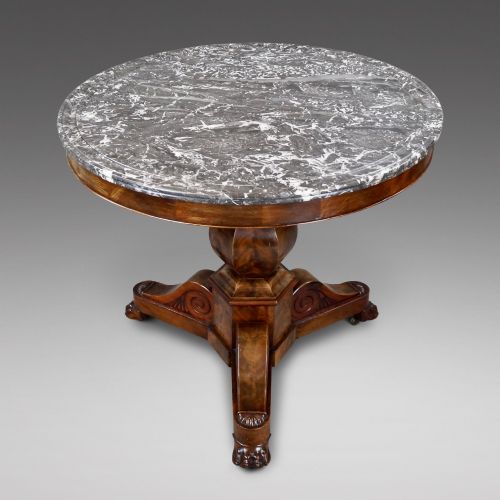
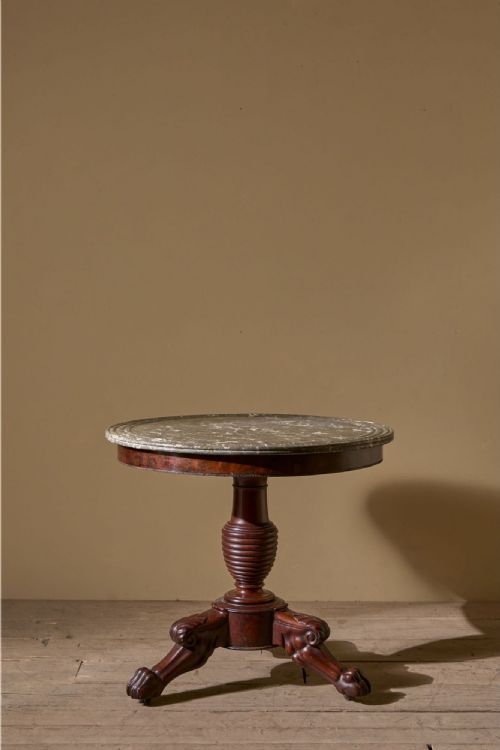
Buyers meet round mahogany gueridons resting on central pillars or tripod legs, frequently surfaced with white, grey or red marble.
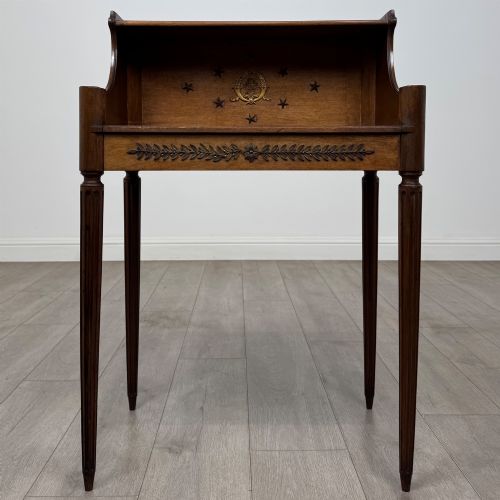
Console tables designed to sit flush against walls appear alongside dressing tables and occasional pieces featuring neoclassical architectural lines.
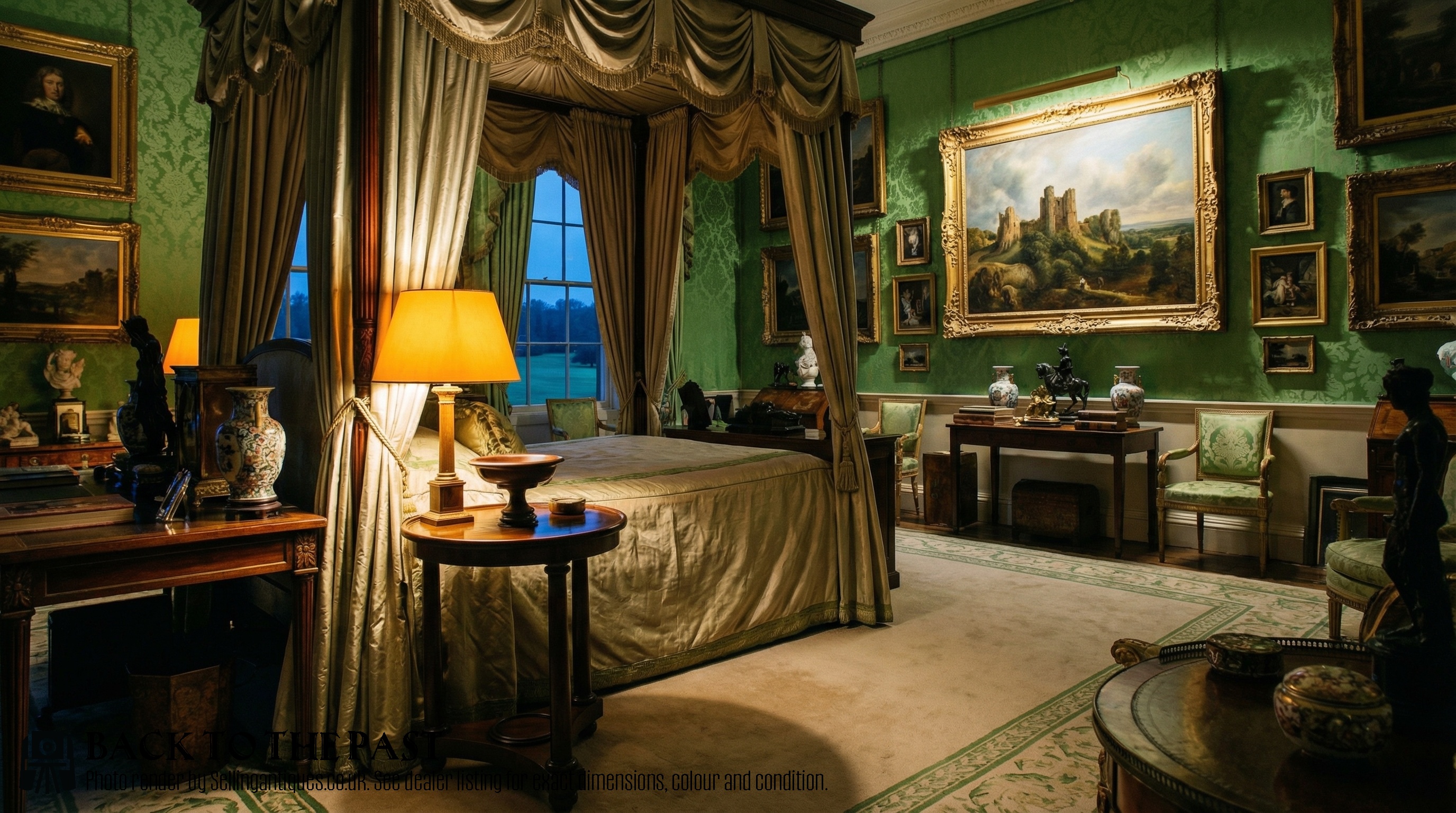
Materials and construction
Cabinet makers utilised dense timbers such as mahogany, flame mahogany and walnut as the structural carcasses for these tables.
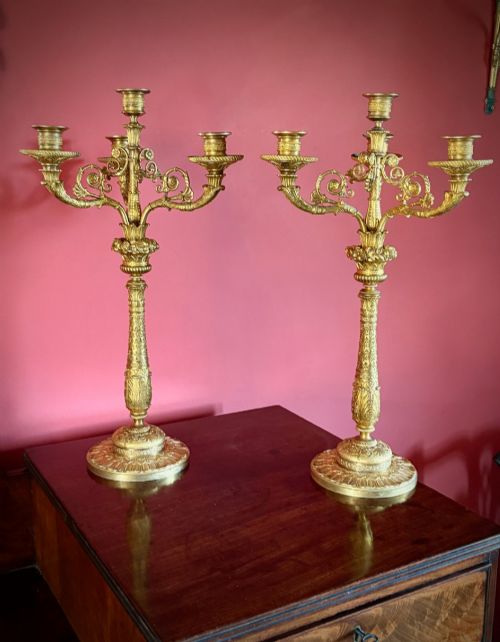
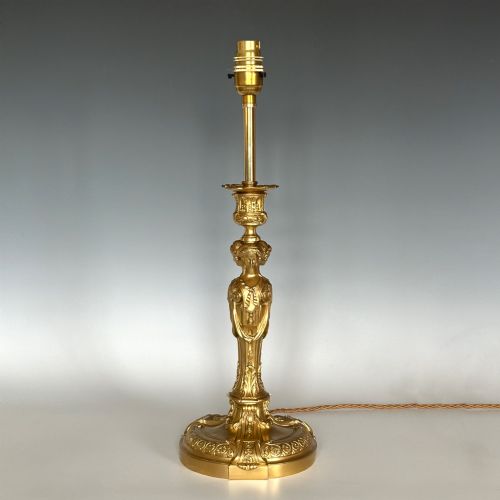
Gilt bronze and ormolu mounts, cast and chased with classical motifs, provide the metallic ornamentation characteristic of the period.
Insets of marble, leather and glass form the working upper surfaces supported by these wooden and bronze frames.
French Empire Table Retail Price Guide 2026
Typical asking prices for french empire table among the pieces listed under this phrase on Sellingantiques today, from the lower quarter to the upper quarter. They describe what is for sale here now, not the wider market.
Listings feature mahogany, walnut, fruitwood and kingwood paired with white, grey and red marble.
Judging execution and design
The crispness of the chasing on the ormolu mounts separates standard production pieces from workshop examples of higher artistic ambition.
Timber selection dictates overall visual weight, with matched flame mahogany veneers demonstrating superior cabinet work compared to plain secondary woods.
The integration of structural elements, such as carved swan supports or architectural marble tops, indicates the original maker's intent.

Japy Freres·Siffel and Cartier·Pierre Philippe Thomire·Krieger Paris·Reiche
The French Empire Table Glossary
- Gueridon
- A small circular table on a central pillar or tripod base. These pieces frequently feature marble tops and gilt bronze mounts.
- Ormolu
- Gilded bronze used extensively for decorative mounts on furniture and clocks. The technique involves applying a mercury-gold amalgam to cast bronze.
- Console table
- A table designed to stand against a wall, often secured with brackets. They commonly display heavy marble surfaces and mirrored backs in this aesthetic.
- Neoclassical
- A style drawing inspiration from the classical art and culture of ancient Greece and Rome. This movement heavily influenced the symmetrical lines of the period.
- Flame mahogany
- Timber cut to accentuate the rippling, flame-like grain patterns in the wood. Cabinet makers prized this veneer for principal display surfaces.
French Empire Table: Frequently Asked Questions
What is a gueridon table?
A gueridon is a round occasional table supported by a central column or tripod legs. They were used informally for holding lamps or small decorative objects.
In this category, they typically feature mahogany construction paired with inset marble tops and bronze mounts.
How do I spot an original piece?
Examine the timber underneath and the weight of the bronze mounts to understand the construction methods. Older pieces show traditional joinery and hand-chased metalwork rather than modern casting.
Look for the integration of materials like flame mahogany and natural veined marble characteristic of the nineteenth century.
Where should I place a console table?
Console tables fit naturally against flat walls in hallways, drawing rooms or dining spaces. Their shallow depth allows them to occupy narrow areas without blocking movement.
Pairing them with a matching mirror or placing a bronze lamp on top completes the traditional arrangement.
What maintenance do these tables need?
Keep wooden surfaces clean using traditional paste wax rather than modern silicone sprays to preserve the finish. Protect marble inserts from acidic spills that can etch the polished stone surface.
Handle ormolu mounts gently with a dry cloth to avoid damaging the historical mercury gilding.