





Classical Console Table
A classical console table brings architectural symmetry and formal elegance to an interior, anchoring a hallway or reception room with distinct period character.

Classical Console Table
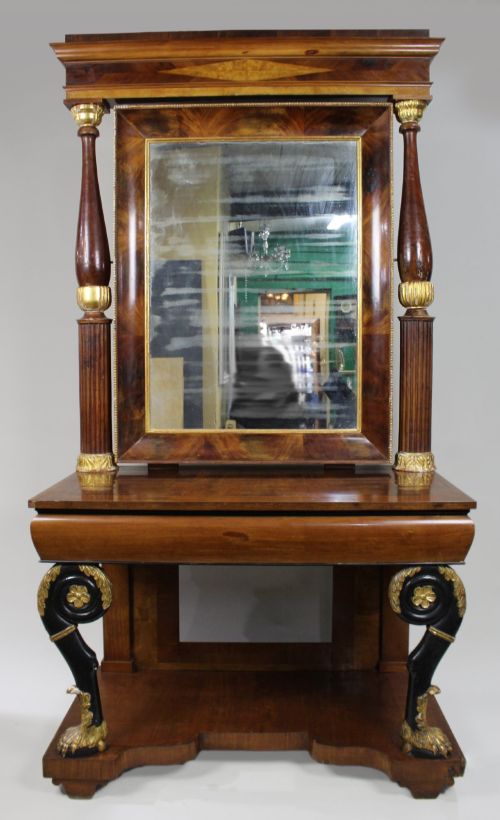
A classical console table is typically designed to stand against a wall, frequently paired with a matching pier mirror or surmounted by a decorative surface.
The pieces appearing on this page span the eighteenth, nineteenth, and early twentieth centuries, drawing heavily upon Regency, Georgian, Victorian, and continental Neoclassical design vocabularies.
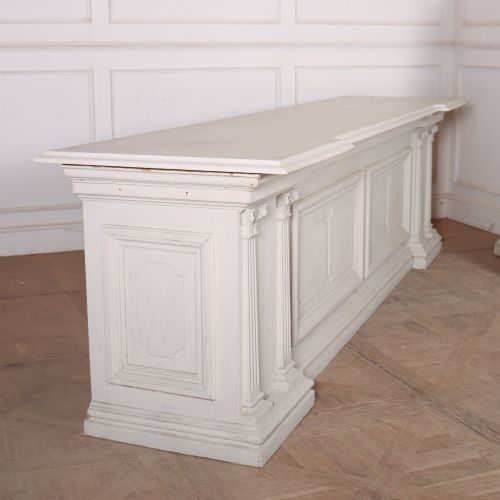
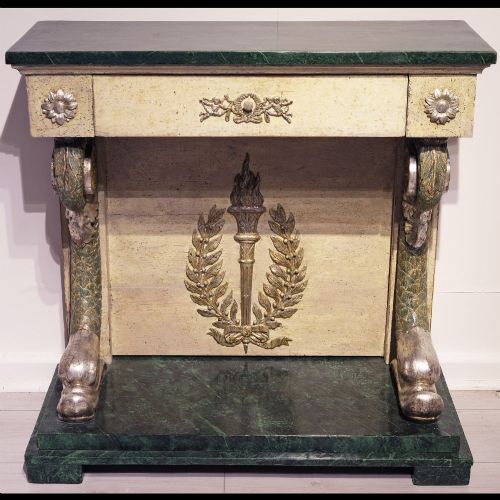
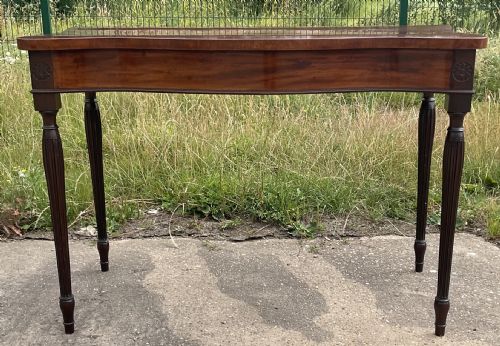
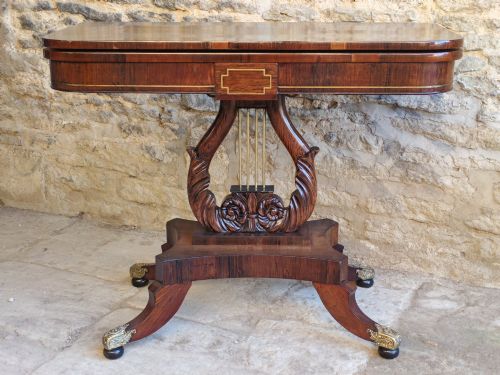
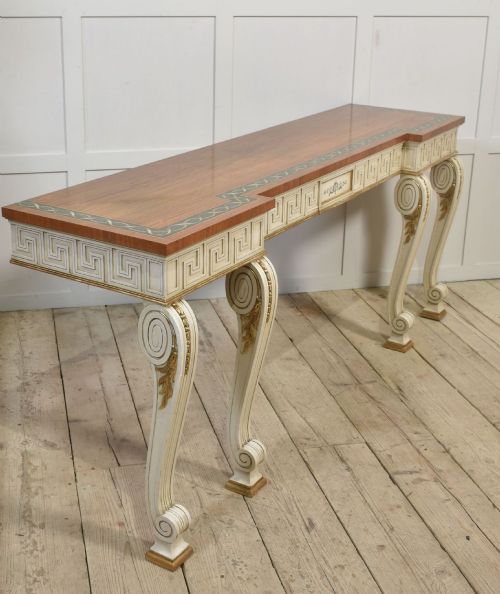
Forms range from straight-fronted serving tables and demi-lune card tables to elaborate Italian and French console tables supported by carved giltwood or painted framing.
How They Were Made
Cabinetmakers utilised dense timbers such as mahogany, walnut, and satinwood, frequently applying flame veneers or decorative painted finishes to achieve a polished surface.
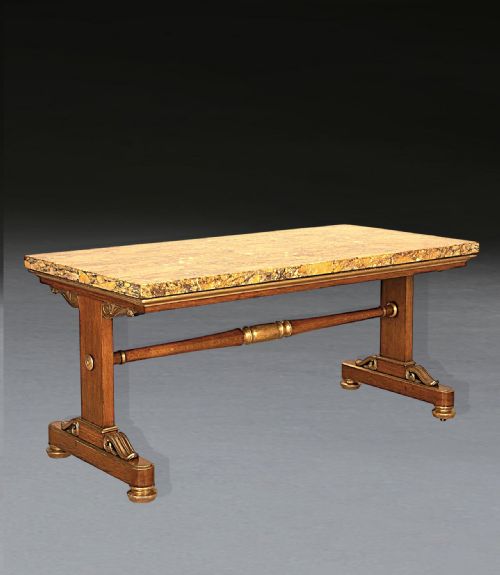
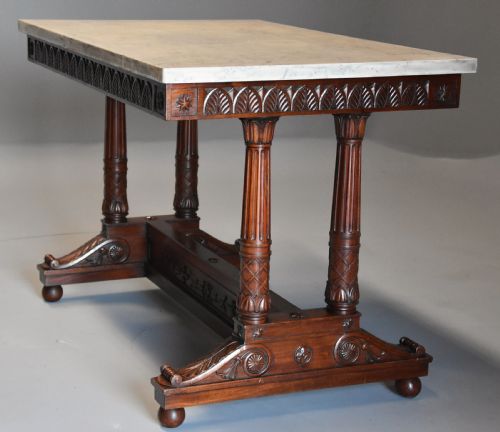
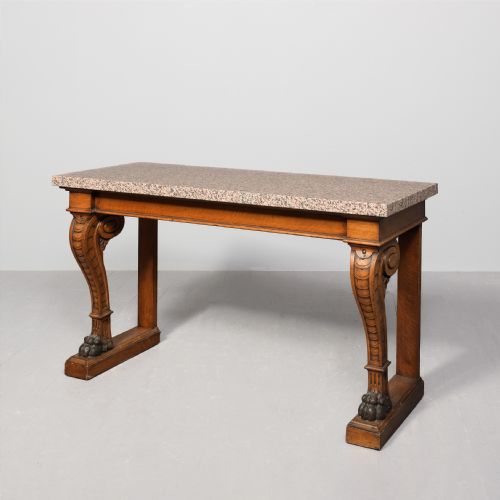
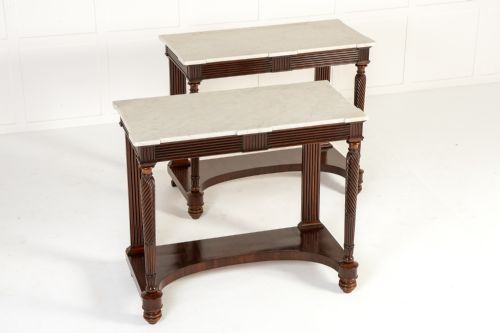
Heavy stone slabs in marble, granite, or faux porphyry provide the characteristic heavy tops, supported by carved wood, parcel gilt details, and cast brass mounts.
Listings feature eighteenth and nineteenth-century examples utilising mahogany, satinwood, marble, and giltwood within various Neoclassical and Empire styles.
What Varies in Quality
The distinction between standard production and exhibition pieces rests on the crispness of the hand-carved ornamentation and the selection of figured timbers.
Original stone tops integrated tightly with structural frames indicate high workshop standards, whereas later adaptations reveal less cohesive proportions.
Alexander McKenzie of Glasgow·Pietro Ferrario·Mack Williams and Gibton
The Classical Console Table Glossary
- Console table
- A side table designed to be fixed against a wall, often supported by brackets or console legs rather than four standard vertical posts.
- Demi-lune
- A half-moon shape commonly utilised for card and side tables during the neoclassical period.
- Giltwood
- Timber coated with a thin layer of gold leaf, frequently employed on highly decorative frames and mounts.
- Parcel gilt
- A decorative technique where only specific carved elements or raised details of a wooden object are gilded.
- Pier mirror
- A large looking glass designed to hang on the wall space between two windows, frequently positioned directly above a console table.
Classical Console Table: Frequently Asked Questions
Where should I place a classical console table?
These tables traditionally occupy entrance halls, corridors, or the spaces between windows beneath large mirrors.
Their shallow depth allows them to sit comfortably in circulation areas without obstructing movement.
How do I identify a Regency period table?
Regency pieces often display bold architectural motifs, dark mahogany timbers, and classical brass or giltwood mounts.
They frequently draw inspiration from ancient Roman and Greek design.
Were marble tops original to these tables?
Many nineteenth-century console and serving tables were specifically constructed to carry heavy stone surfaces.
Italian and French examples particularly favoured inset marble, granite, or onyx slabs.
What is a demi-lune table used for?
Demi-lune tables functioned as side furniture or card tables, featuring folding tops that opened for games.
Their flat back allowed them to sit flush against the wall when closed.