
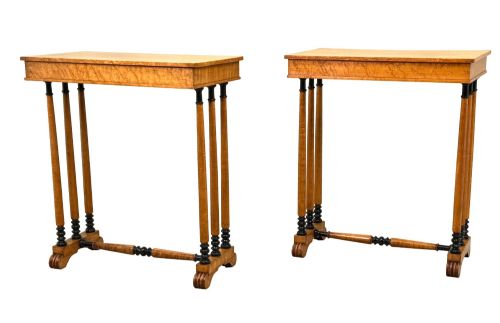
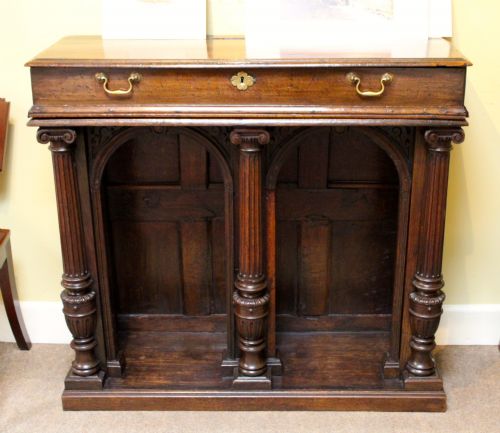
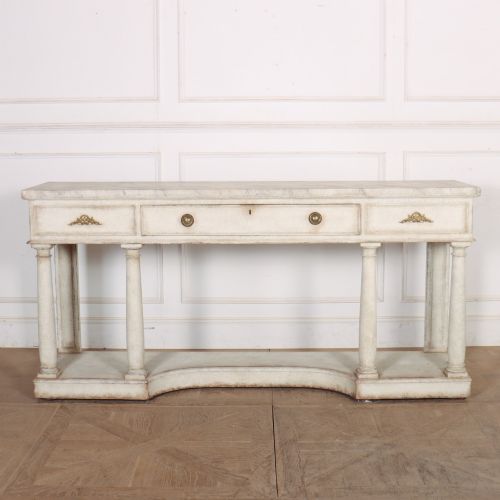
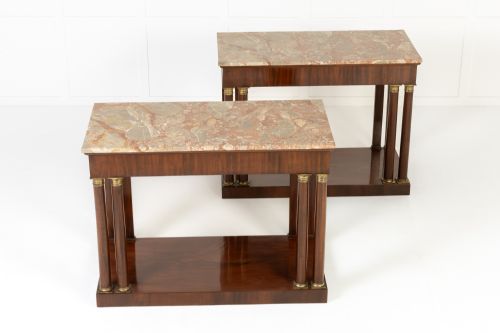


Column Console Table
Column console table forms anchor a hallway with architectural dignity, offering a sturdy architectural surface born from neoclassical design.
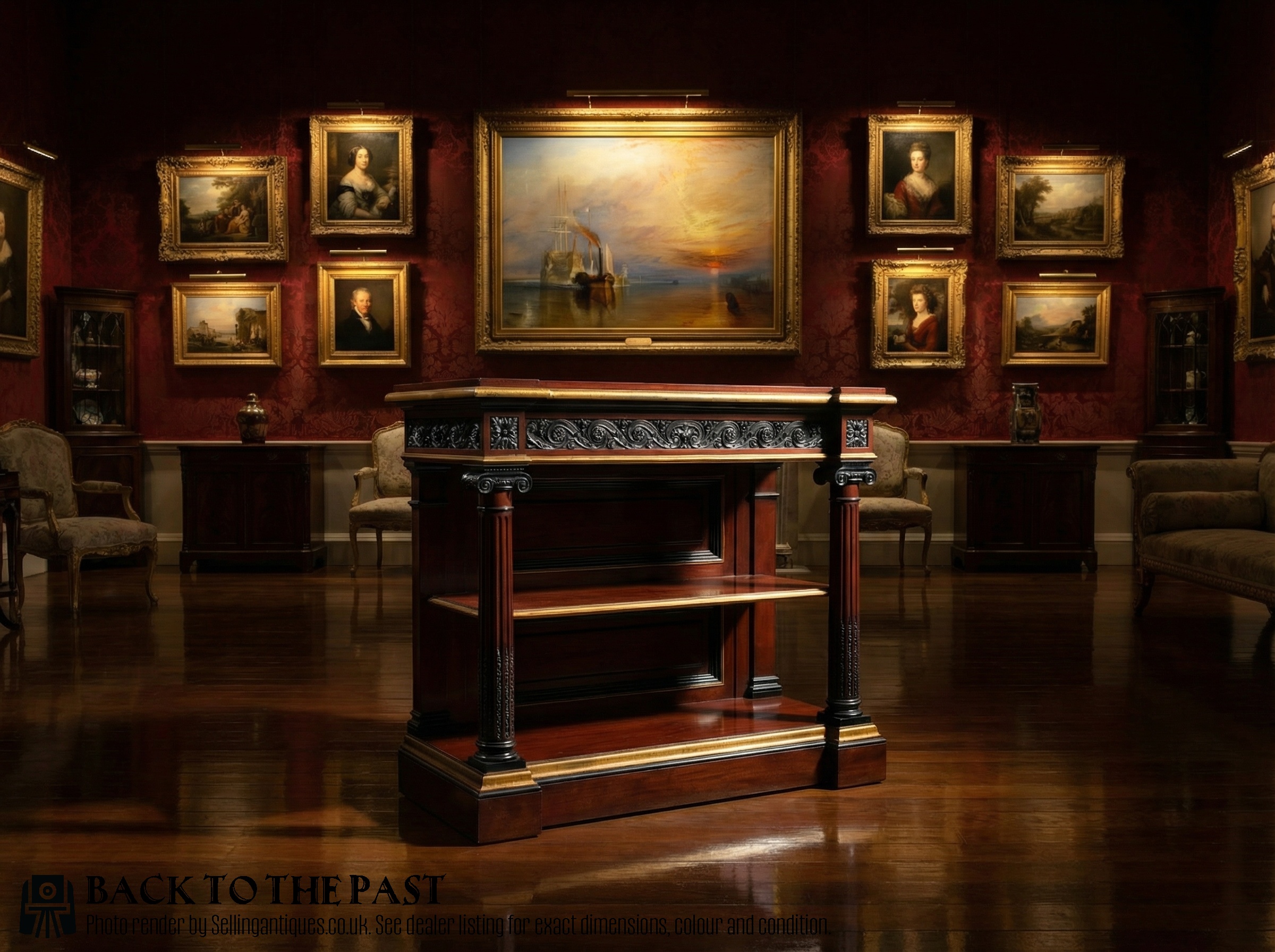
Column Console Table
A column console table provides a narrow surface designed to stand flat against a wall, frequently incorporating structural columns or pilasters into its frame. When searching for a column console table, buyers encounter forms spanning the Regency, Victorian, and Georgian periods alongside French Empire and Italian neoclassical examples.
The selection here ranges widely in function and form, including dedicated serving tables, card tables, side tables, and chiffoniers alongside classic console and pier tables. Mahogany, walnut, oak, and rosewood form the primary wooden structures, often complemented by marble tops and brass mounts.

How they were made
Cabinet makers utilised dense hardwoods like mahogany, walnut, and rosewood, frequently applying flame mahogany or burr walnut veneers to display rich grain patterns. Structural elements often rely on solid oak and pine timbers for internal framing and carcass construction.
Many examples integrate heavy marble slabs into the upper surface, while others feature ebonised wood, gilding, and painted finishes. Brass inlay, Corinthian capitals, and turned barley twist columns demonstrate the detailed joinery and architectural ornamentation typical of the periods.
Listings feature 19th Century, Regency, Victorian, and 18th Century pieces built from mahogany, walnut, oak, marble, and rosewood.
What varies in quality
The standard of a piece rests upon the choice of timber and the precision of its architectural carving. Superior examples display carefully selected veneer grains and crisply detailed column capitals rather than generic surface ornamentation.
Proportion and structural integrity dictate the standing of an item within its period. Refined execution in the turning of wood and the integration of heavy marble tops distinguish more ambitious workshop output from simpler utilitarian items.
The Column Console Table Glossary
- Console table
- A table designed to stand against a wall, traditionally supported by brackets or architectural columns rather than four independent legs. These pieces anchor hallways and principal reception rooms.
- Marble top
- A polished stone slab fitted to the upper surface of a table or chiffonier. This provides a cool, durable working surface resistant to liquid and heat.
- Barley twist
- A type of turning shaped like a spiral rope, popular in furniture joinery during the seventeenth and nineteenth centuries. It adds dynamic movement to vertical supports.
- Pilaster
- A rectangular architectural column projecting slightly from a wall or furniture frame. It imparts a classical architectural facade to the base.
- Veneer
- A thin layer of figured wood applied over a secondary timber foundation to display decorative grain patterns. Flame mahogany and burr walnut are common applications.
Column Console Table: Frequently Asked Questions
Where should I place a console table?
A console table fits naturally in a hallway, entranceway, or living room against a flat wall. Its shallow depth ensures it occupies minimal floor space while providing a useful display surface.
Parks well beneath mirrors or artwork, a console table functions effectively as a focal point for decorative objects, lighting, and everyday items.
How do I identify a Regency period table?
Regency pieces often display classical architectural motifs, including brass inlay, carved columns, and dark mahogany or rosewood timbers. Proportions lean toward formal neoclassical designs inspired by ancient Greek and Roman forms.
Look for architectural elements such as Corinthian capitals and bold column supports that reflect the design vocabulary of the early nineteenth century.
What is the difference between a console and a side table?
A console table is traditionally designed to be placed flat against a wall, sometimes relying on the wall for partial structural support or featuring flat backs. Side tables are generally freestanding pieces finished on all sides.
While both offer surface space, console tables lean towards architectural ornamentation and placement in formal circulation areas like hallways.
Can these tables support heavy objects?
Many console tables feature robust solid timber frames and heavy marble tops designed to bear substantial weight. However, wall-mounted or bracketed variations may require additional stability depending on their construction.
Examining the underframe and leg joints reveals the load-bearing capacity of an individual piece before placing heavy ornaments or lamps upon it.