




Classical Revival Table
These pieces take the forms of marble, ormolu, and satinwood, drawing on classical antiquity to anchor a room.
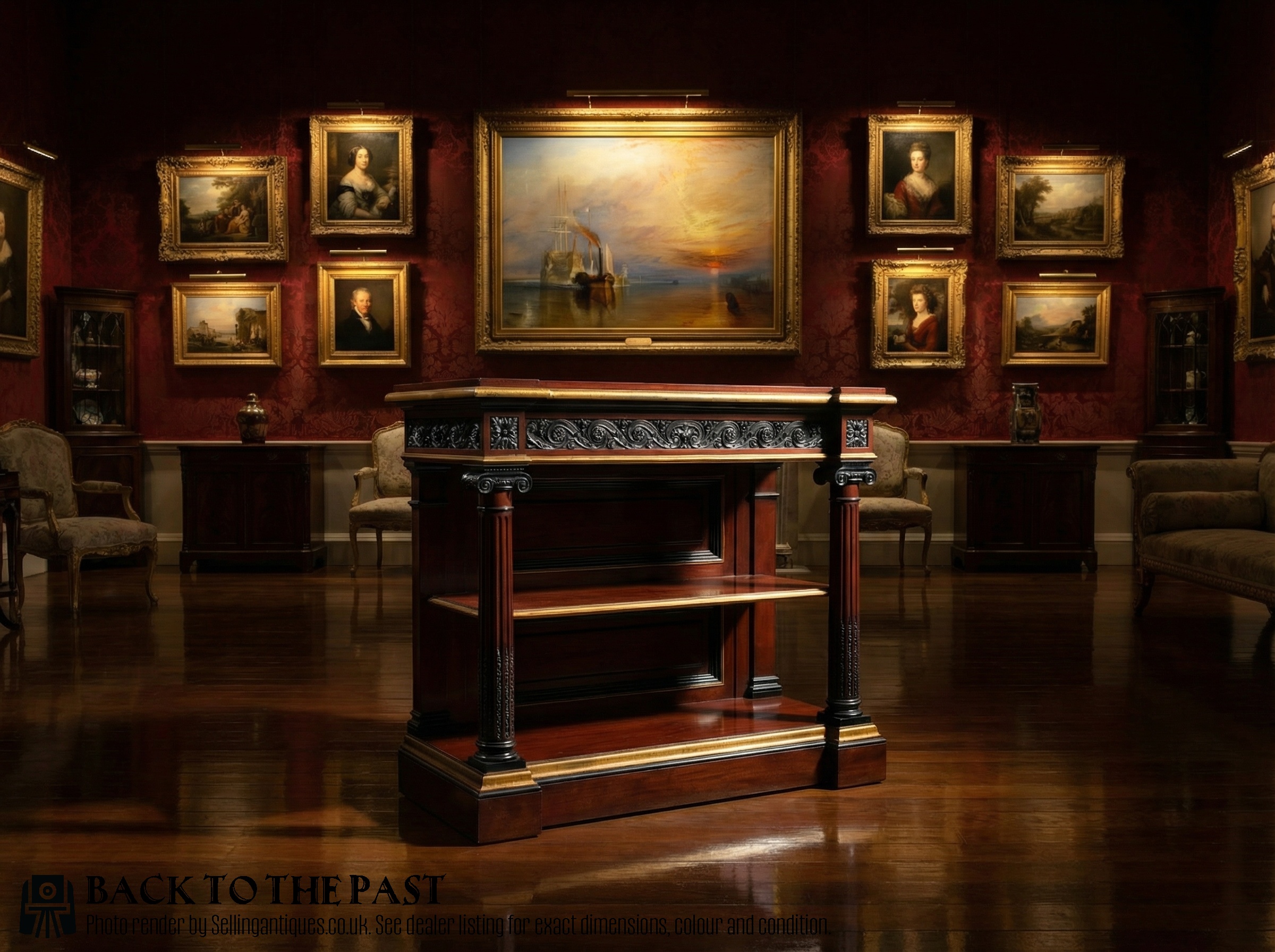
Classical Revival Table
When you search for a classical revival table, you find pieces shaped by nineteenth and early twentieth-century revivals of ancient Greek, Roman, and Renaissance motifs. The selection leans heavily towards console tables, writing desks, and centre tables finished in mahogany, satinwood, and giltwood.
You meet console tables with marble or onyx tops and console designs set against hallway walls, alongside occasional side tables and writing desks bearing marquetry. These items span Victorian, Edwardian, and early twentieth-century periods, often carrying French or English craftsmanship.
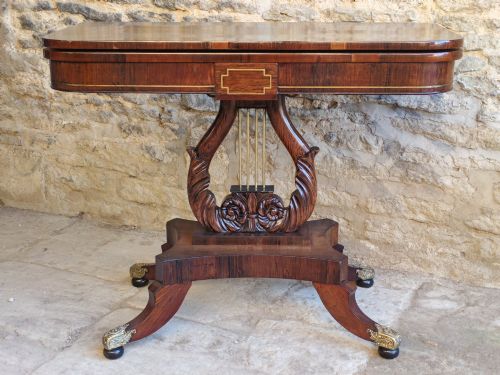
The decorative language borrows directly from archaeological discoveries, bringing architectural columns, lyres, and mythological mounts into domestic spaces. These tables serve practical functions in hallways and reception rooms while displaying historical ornament.
Materials and construction methods
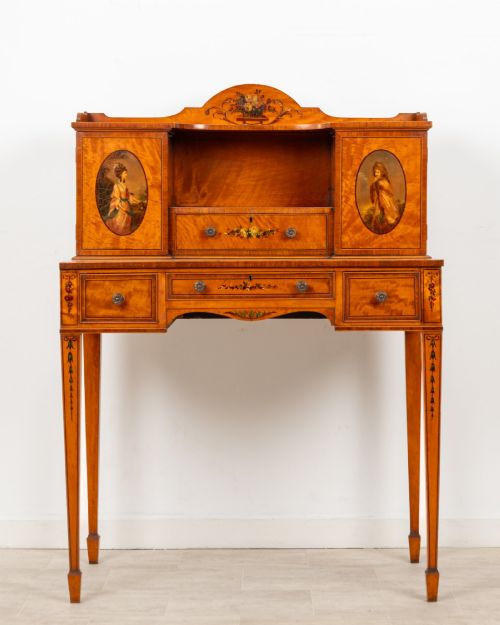
Makers utilised timber carcasses of mahogany, satinwood, and pine, frequently applying intricate marquetry inlay or hand-painted details across desk surfaces and friezes. Structural elements often incorporate carved and gilded wood or polished brass.
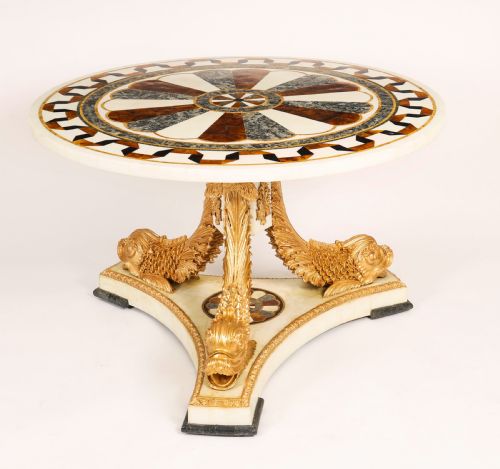
Tops rely on heavy slabs of white marble, black marble, or onyx, supported by gilded wood frames or classical console legs. Ormolu mounts, cast bronze, and brass details are fastened to the timber frames to accentuate architectural corners and apron rails.
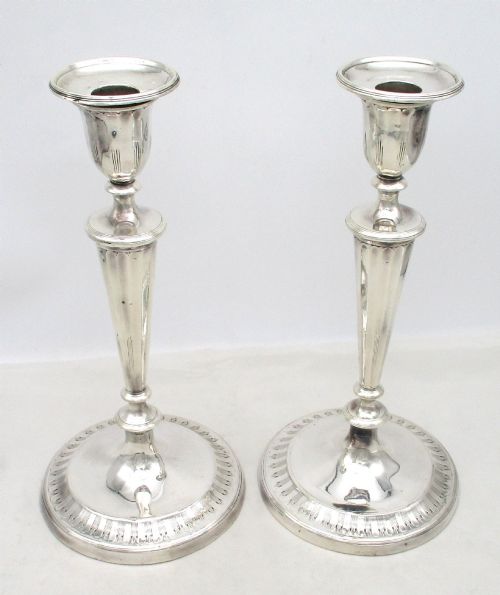
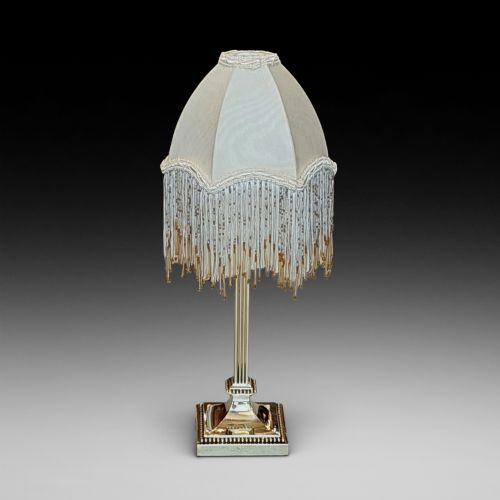
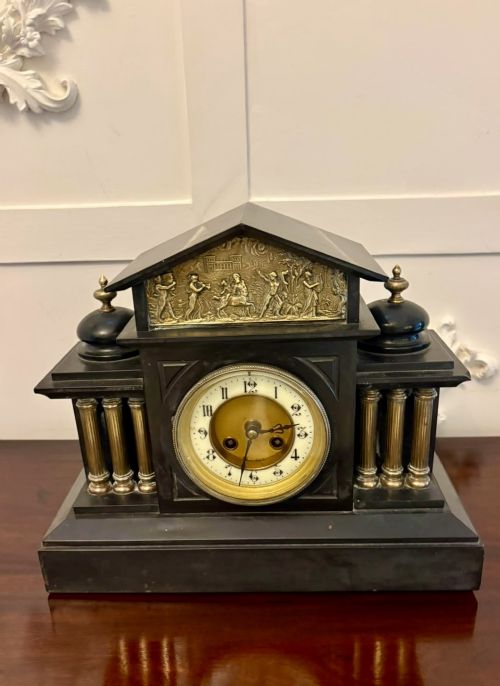
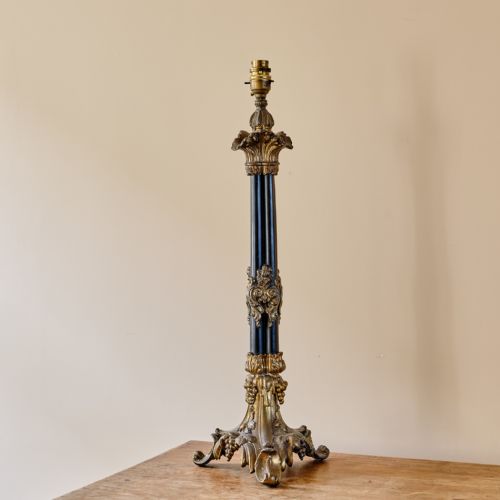
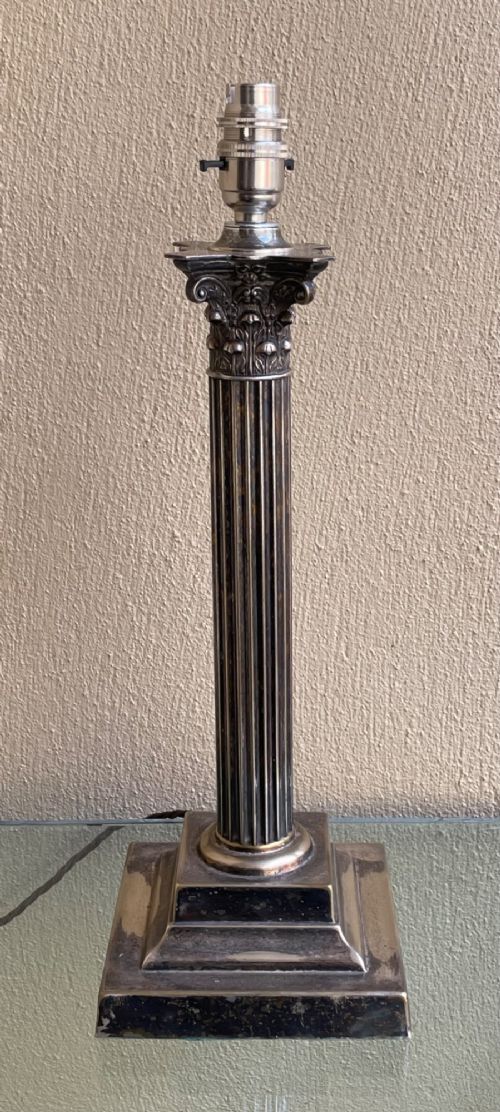
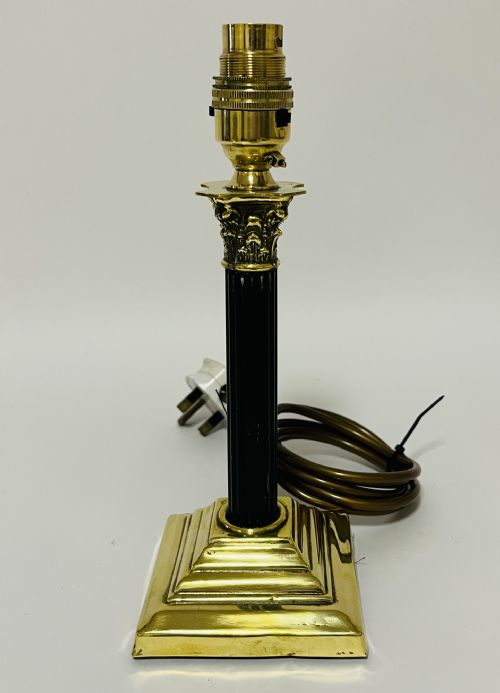
The object types recorded in this category include console tables, writing desks, and centre tables alongside architectural mantel clocks and lamps.
Judging the standard of execution
The calibre of a classical revival table rests on the crispness of its carved ornament and the depth of its giltwood or ormolu mounts. Finer examples display hand-chiselled detailing on metalwork and precise, tight joints within the timber framing.
Material selection divides standard production from exceptional work, particularly in the choice of flawless marble slabs, figured satinwood veneers, and dense mahogany. The integrity of the original gilding and the sharpness of marquetry inlay further distinguish superior items.
Edwards and Roberts·Harrison Brothers and Howson·Philippes Paris
The Classical Revival Table Glossary
- Ormolu
- Gilded bronze used for decorative mounts and hardware on furniture and clocks. This technique involves applying finely ground gold amalgam to cast bronze before heating.
- Marquetry
- Decorative veneer patterns assembled from thin pieces of wood, shell, or ivory to form pictures or geometric designs. Craftsmen apply these veneers onto the carcase of desks and tables.
- Console table
- A table designed to stand against a wall, typically secured with brackets or supported by front legs. These pieces frequently feature marble tops and ornate giltwood frames.
- Neoclassical revival
- An artistic movement drawing inspiration from classical Greece and Rome, prevalent during the nineteenth century. This style emphasises symmetry, columns, and architectural motifs.
- Satinwood
- A durable, lustrous timber with a natural golden sheen, popular for fine Edwardian and Victorian desks. Cabinet makers prize it for its smooth grain and pale colour.
Classical Revival Table: Frequently Asked Questions
What is a classical revival table?
A classical revival table is a piece of furniture from the nineteenth or early twentieth century that incorporates ancient Greek, Roman, or Renaissance design elements. These include architectural columns, console supports, and classical motifs applied to domestic tables and desks.
Such tables are constructed from woods like mahogany and satinwood, often finished with marble tops and giltwood or ormolu mounts. They reflect the period fascination with antiquity and the Grand Tour.
Where should I place a console table?
Console tables are traditionally designed to stand flat against a wall, making them suited for hallways, entranceways, and formal reception rooms. Their shallow depth allows them to occupy narrow spaces without blocking walkways.
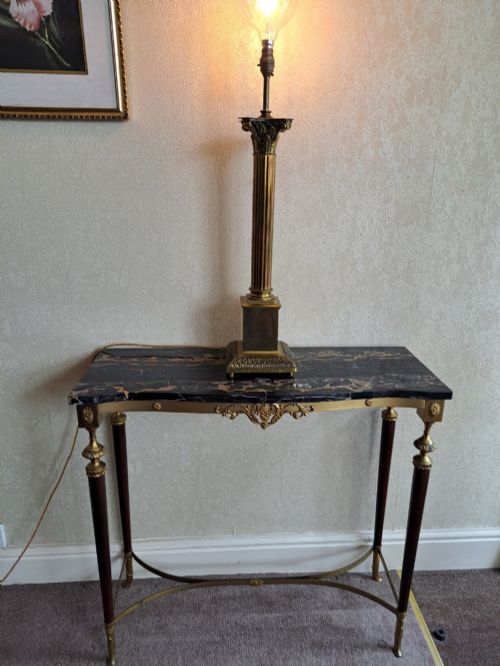
Because many feature decorative marble or onyx tops, they provide a sturdy surface for lamps, clocks, and decorative objects. Placing one beneath a mirror or painting creates a balanced focal point in a room.
How do I date a Victorian table?
Dating a Victorian piece involves examining the timber species, construction methods, and decorative styles recorded in the piece. Mid-nineteenth-century items often favour heavy mahogany and robust classical revival proportions, while later Victorian work incorporates lighter satinwood and refined marquetry.
Maker stamps, brass locks, and mounting techniques also help narrow down the decade of manufacture. Comparing the hardware to documented production periods provides a reliable guide.
How do I care for marble tops?
Marble tops require gentle cleaning with a soft, damp cloth and neutral soap, avoiding acidic cleaners that can etch the polished surface. Placing felt pads beneath objects prevents scratching the stone.
Routine dusting keeps the porous surface free from grit. Spills should be wiped immediately to prevent staining on lighter white or coloured marbles.