



Mirrored Pier Table
A mirrored pier table brings together console furniture and vertical glass to anchor a reception room with functional display space and reflected light.

Mirrored Pier Table
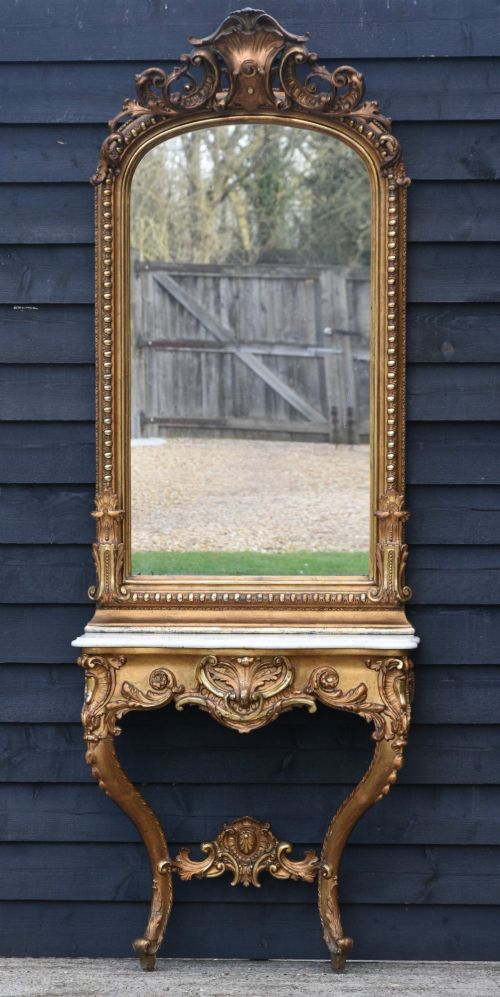
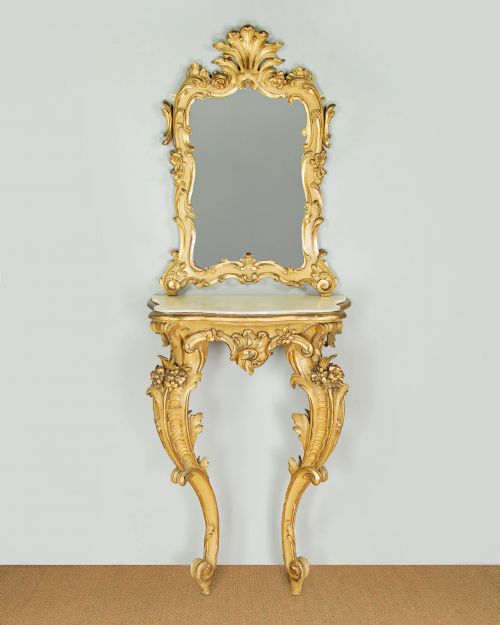
A mirrored pier table combines a low console base with an integrated or matched wall mirror designed to sit against the architectural pier between windows. The listings show these pieces predominantly spanning the nineteenth century, encompassing Regency, Victorian, and William IV eras alongside later revival interpretations.
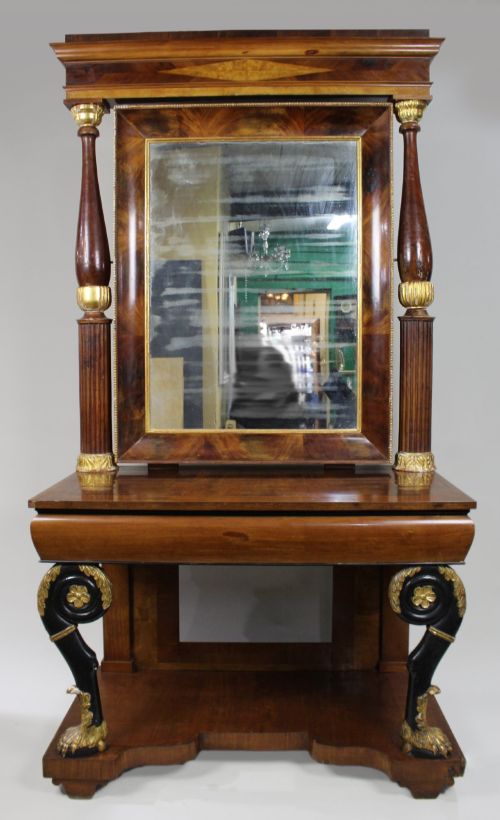
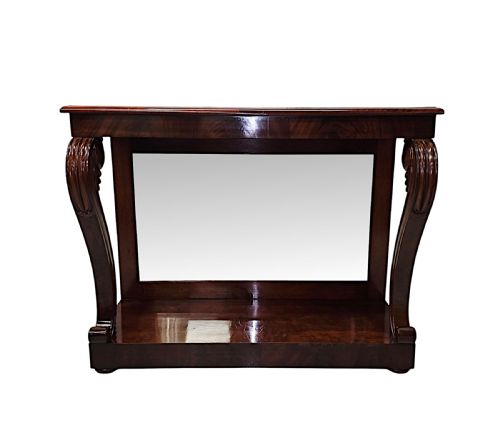
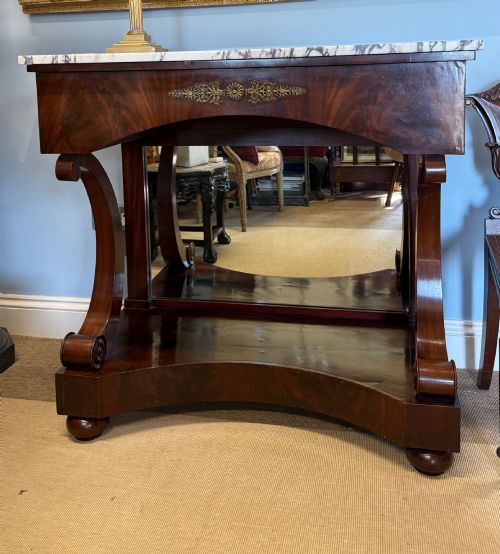
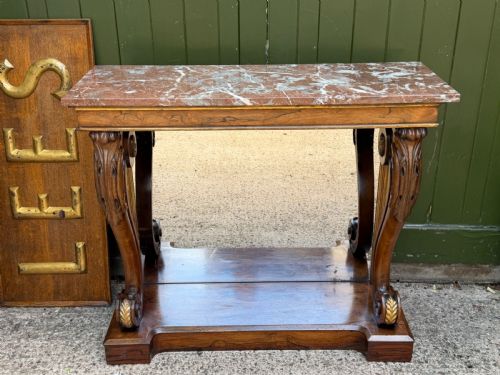
Forms vary between standalone console tables paired with separate mirror plates and unified sets where the table structure and mirror frame share identical decorative schemes. Mahogany, rosewood, and giltwood form the primary structural frameworks supporting inset mirror glass and stone surfaces.
Materials and construction methods
Cabinet makers utilised dense hardwoods such as mahogany and rosewood, frequently incorporating flame veneers and parcel-gilt details to enrich the surface texture. Giltwood and gesso form the decorative mouldings on nineteenth-century French and rococo revival frames.
Heavy marble slabs, including carrara varieties, provide durable tops for the console bases while mirror glass is secured within tall vertical wooden or gilded frames designed to mount directly above the table.
Some nineteenth-century makers introduced carved dolphins to support heavy marble tops, bringing marine motifs directly into the drawing room.
Assessing quality and execution
The refinement of the carved ornamentation and the depth of the timber figuring separate standard examples from masterworks. Hand-carved giltwood and intricate parcel-gilt detailing indicate superior workshop participation.
The integration between the table base and the mirror frame dictates structural coherence, where matched sets demonstrate unified design intent across both timber and glass components.
Gillingtons of Dublin·Donald Ross
The Mirrored Pier Table Glossary
- Pier table
- A low table designed to stand against the wall space between two windows, frequently paired with a tall mirror.
- Giltwood
- Timber coated with gold leaf or gold paint over a prepared gesso ground, common in decorative mirror frames.
- Parcel-gilt
- A decorative treatment where selected portions of a wooden object are highlighted with gilding while the underlying wood grain remains visible.
- Trumeau
- A decorative wall mirror or panel featuring painted or carved decoration within the upper section of the frame.
- Console table
- A support table fixed against a wall, often secured with brackets or resting upon front legs.
Mirrored Pier Table: Frequently Asked Questions
Where should a mirrored pier table be placed?
These pieces suit narrow wall sections between windows or blank expanses where the vertical mirror can reflect light back into the interior space.
The console base provides a surface for decorative objects while keeping the floor footprint relatively shallow.
How do I identify a Regency period piece?
Regency examples frequently feature dark timbers such as rosewood and mahogany combined with brass inlay or parcel-gilt accents.
The lines tend to draw from classical antiquity, reflecting the design vocabulary of the early nineteenth century.
Are the tables and mirrors always attached?
The inventory includes both unified console and mirror sets and independent console tables that accompany separate pier mirrors.
Matching timber finishes and coordinated carving styles usually indicate items designed to function as a pair.
What maintenance do marble tops require?
Marble surfaces need simple cleaning with a damp cloth and mild soap to protect the polished stone from staining.
Harsh acidic cleaners should be avoided to preserve the original surface sheen.