
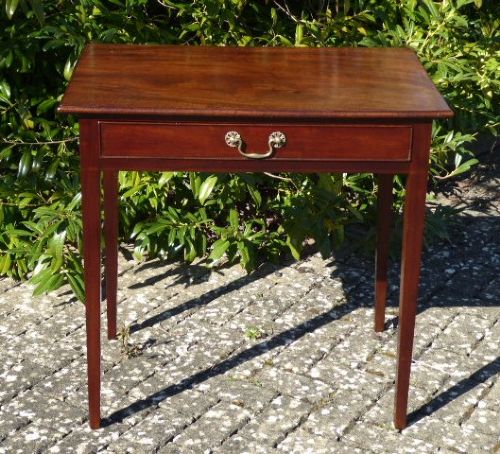
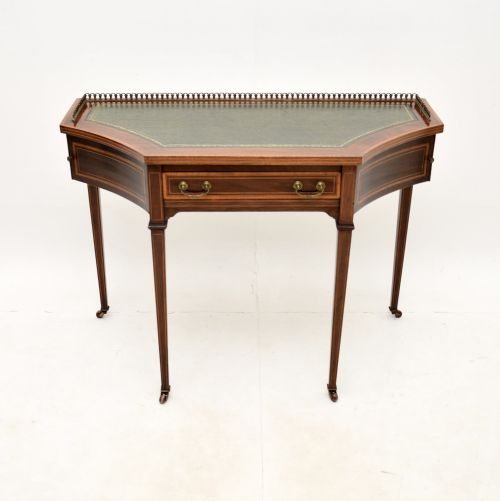
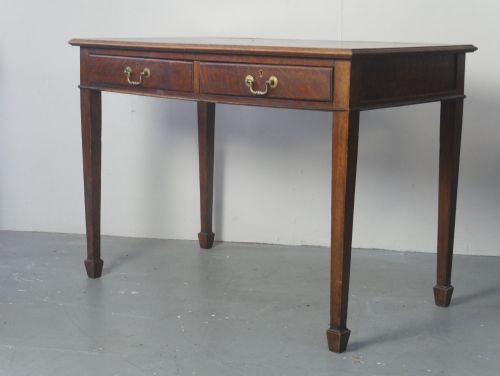
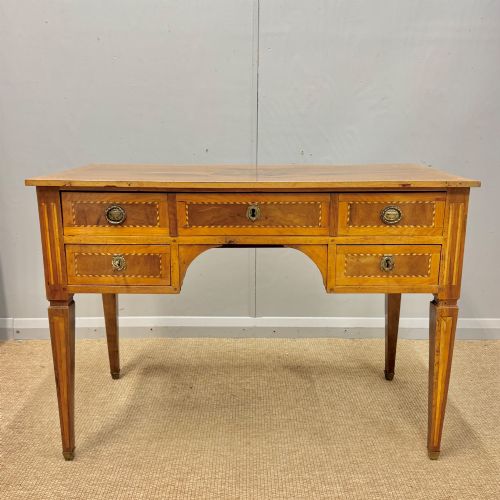
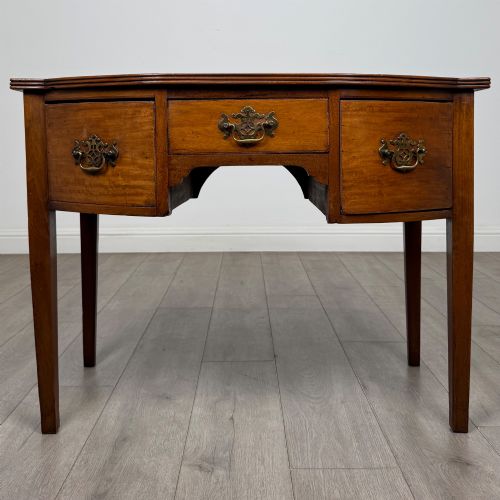
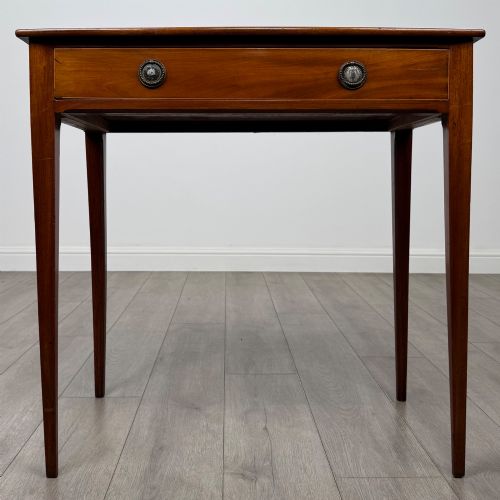
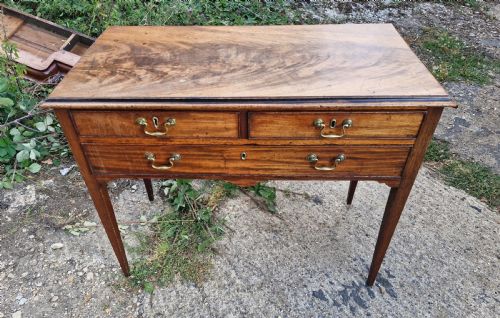
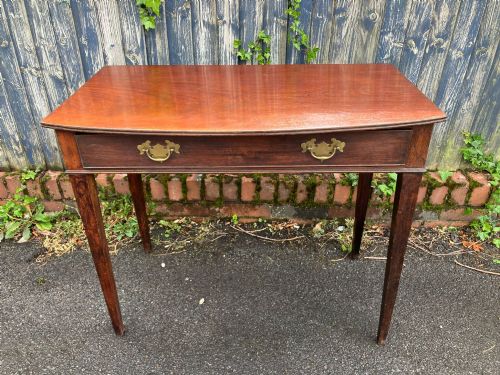
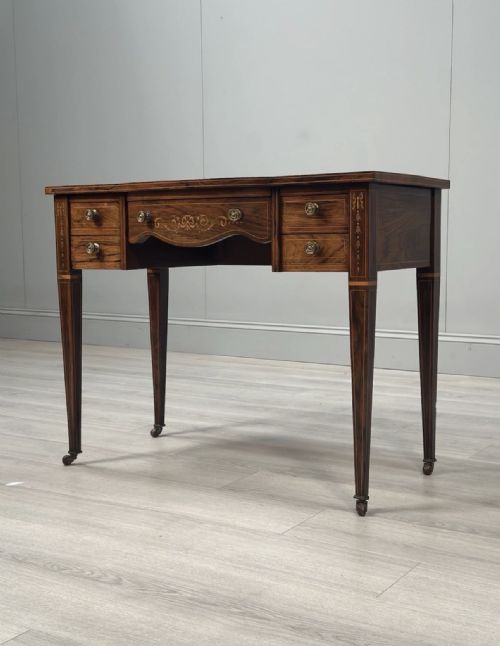
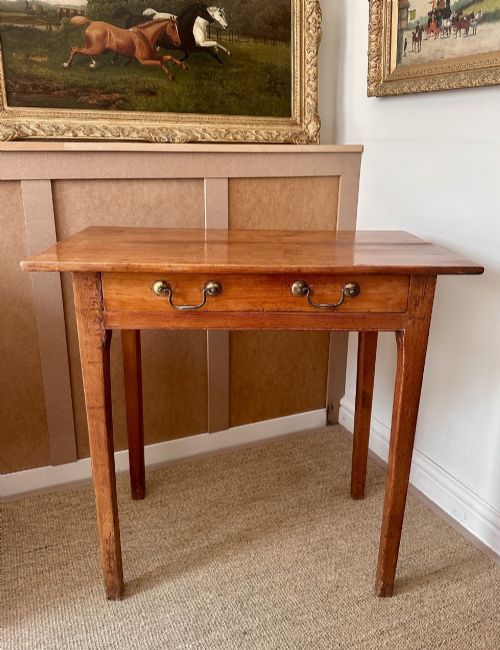
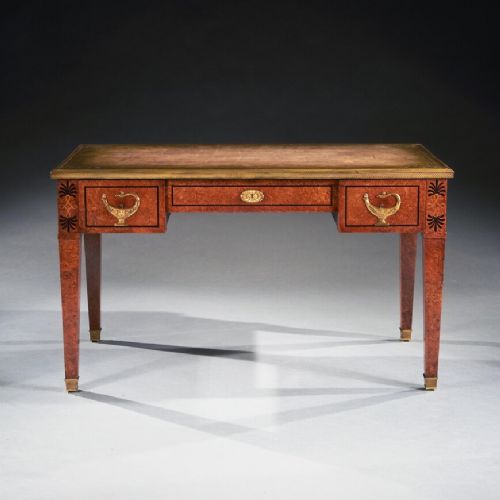
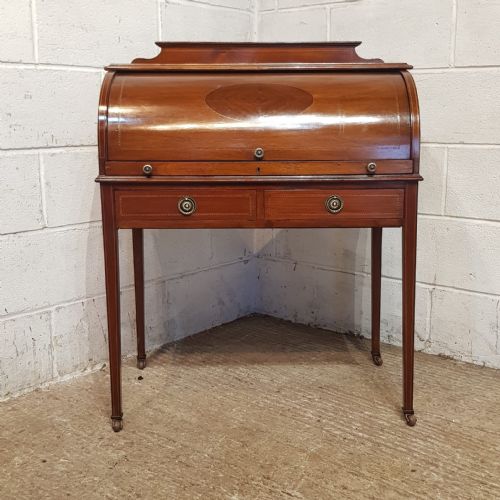
Tapered Leg Writing Table
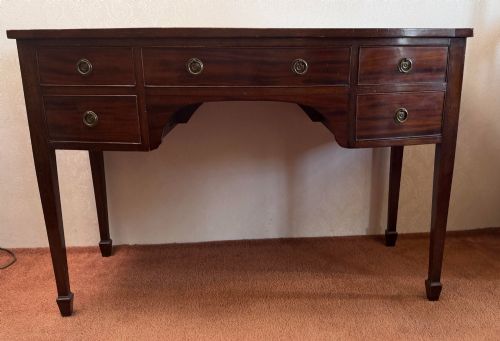
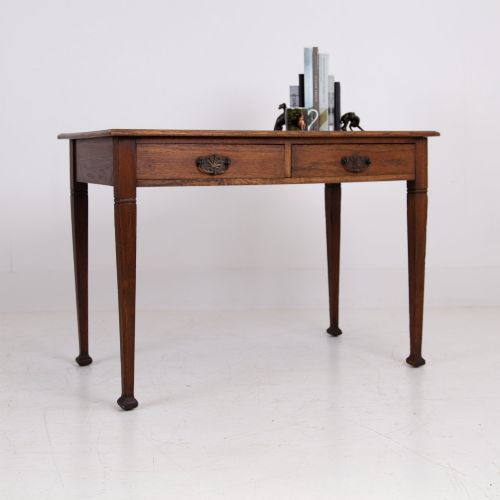
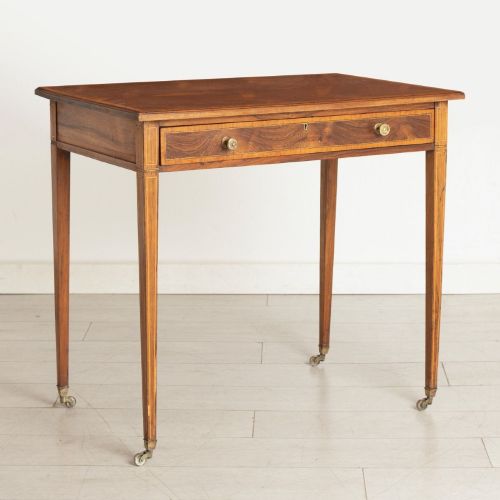
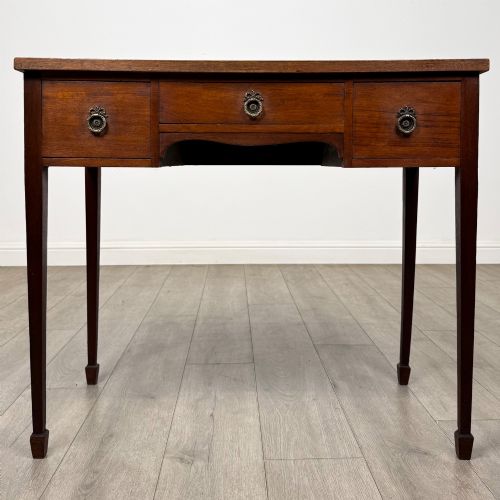
A tapered leg writing table offers a clean silhouette, combining a dedicated writing surface with slender supports.
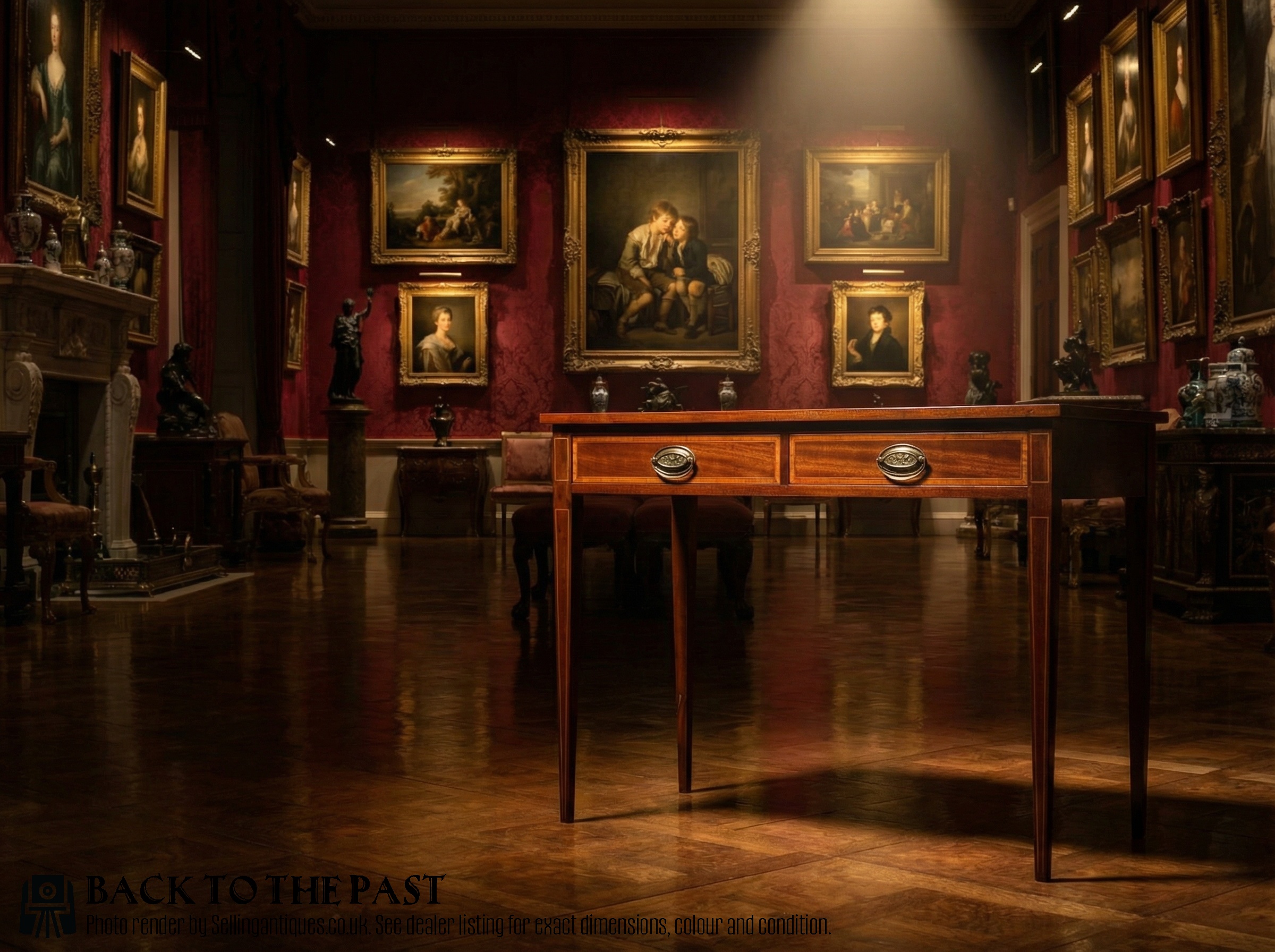
Tapered Leg Writing Table
A tapered leg writing table bridges the gap between utilitarian desks and refined parlour furniture, serving as a functional surface for correspondence. These pieces take various structural forms, appearing alongside side tables, desks, and lowboys within the Georgian, Edwardian, and nineteenth-century periods.
Most examples encountered on this page stem from the Georgian and Edwardian eras, utilising mahogany, oak, and rosewood. The proportions remain domestic rather than institutional, often incorporating single or multiple drawers beneath the primary writing surface.
Materials and Construction
Makers relied heavily on solid hardwoods like mahogany and oak for structural integrity, frequently applying figured veneers and decorative wood inlay to visible surfaces. Leather inserts often provide a durable writing plane atop the timber framework.
Brass hardware such as drawer pulls and mounts complement the primary woods, while secondary timbers like pine appear in drawer linings and internal framing.
Tapered Leg Writing Table Retail Price Guide 2026
Typical asking prices for tapered leg writing table among the pieces listed under this phrase on Sellingantiques today, from the lower quarter to the upper quarter. They describe what is for sale here now, not the wider market.
Listings feature mahogany, oak, rosewood, and pine pieces spanning the Georgian, Edwardian, and nineteenth-century periods.
Standards of Execution
Quality rests in the precision of the timber selection and the subtlety of the leg taper. Finer pieces display continuous grain matching across drawer fronts and delicate string inlay.
The rigidity of the frame and the smoothness of drawer action distinguish standard vernacular pieces from master cabinet work.
The Tapered Leg Writing Table Glossary
- Inlay
- A technique where pieces of contrasting wood or other materials are fitted into a recess in the primary surface to form a design.
- Lowboy
- A small colonial or English dressing table or side table featuring one or more rows of drawers beneath the top.
- Tambour
- A sliding door or top constructed from narrow strips of wood glued to a canvas backing, allowing it to curve around corners.
- Carlton House desk
- A distinctive nineteenth-century writing desk featuring a low, fitted superstructure curving around the back and sides of the writing surface.
- Pembroke table
- A small, drop-leaf table with hinged flaps on either side, often featuring slender legs and a single drawer.
Tapered Leg Writing Table: Frequently Asked Questions
What is a tapered leg writing table used for?
These tables provide a compact, dedicated surface for writing, correspondence, and light administrative tasks.
Historically placed in reception rooms or bedrooms, they function equally well as writing desks or occasional console surfaces in modern interiors.
How do I date a tapered leg writing table?
Dating relies on observing timber choices, construction techniques, and stylistic markers such as Sheraton revival motifs or Georgian proportions.
Later Edwardian interpretations often integrate machine-sawn elements and lighter satinwood banding compared to their eighteenth-century predecessors.
Are these desks suitable for daily computer use?
While sturdy enough for laptops and modern writing equipment, antique writing tables were built for paperwork rather than heavy office machinery.
Kneehole clearances and drawer depths should be measured carefully to ensure comfortable daily seating.
What woods were commonly used?
Mahogany and oak dominate the listings, offering durability and rich grain patterns suited to domestic display.
Rosewood, walnut, and satinwood appear on finer revival pieces, often accented with delicate inlay and brass hardware.