

Antique Kneehole Table
An antique kneehole table provides a compact workspace with central leg room flanked by pedestals of drawers, combining utility with refined timber framing.
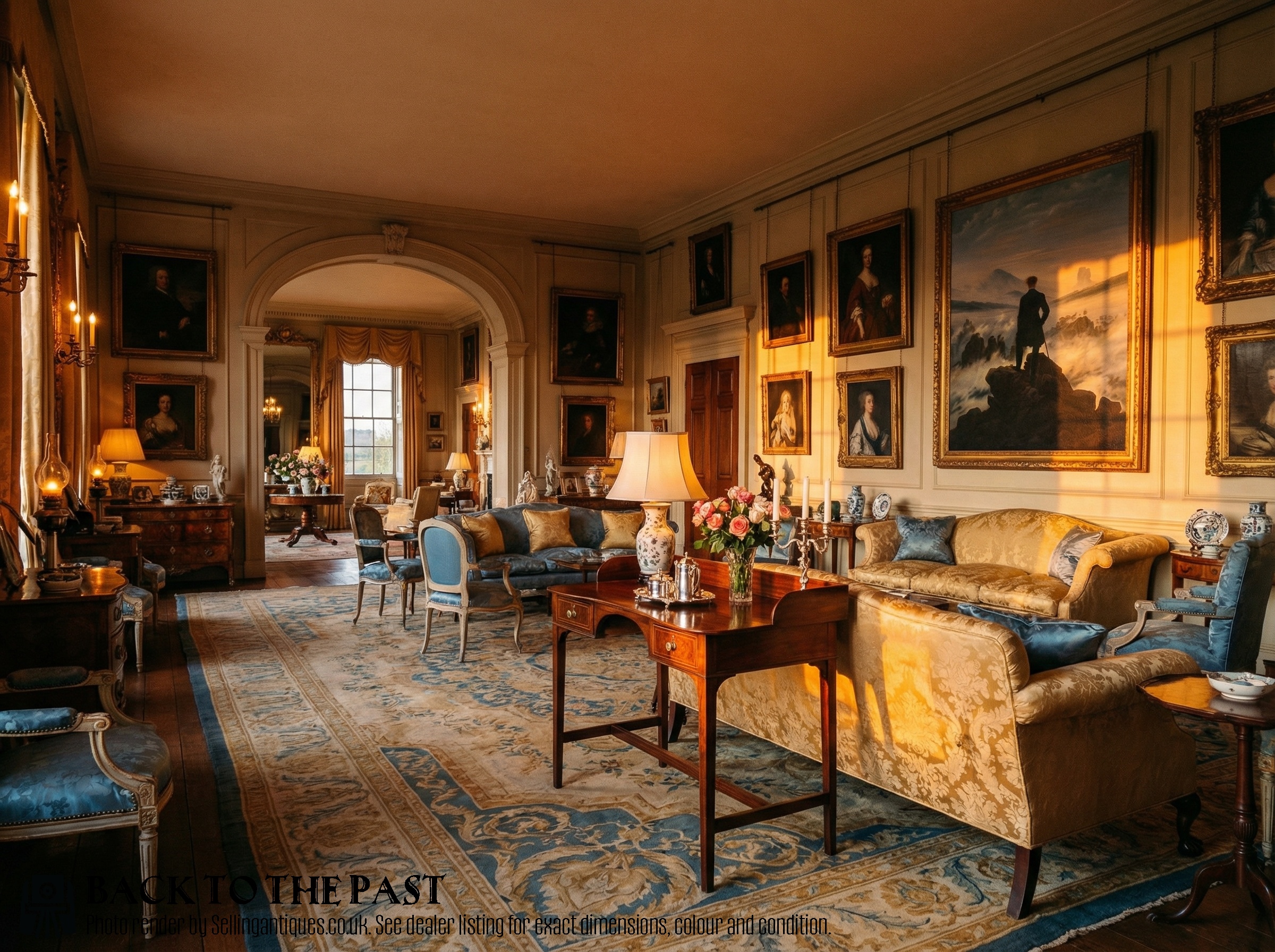
Antique Kneehole Table
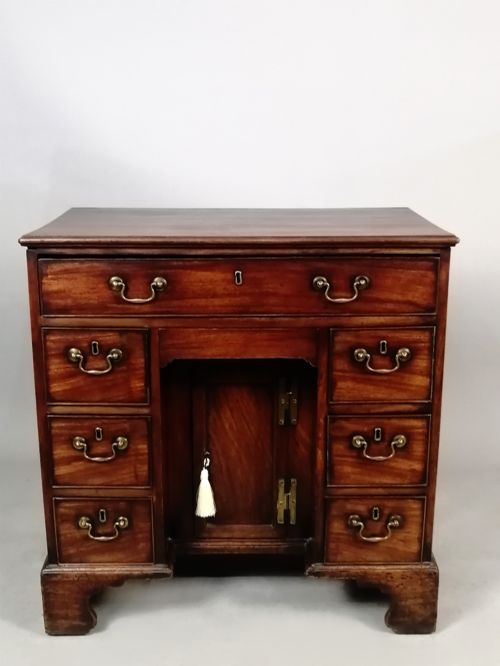
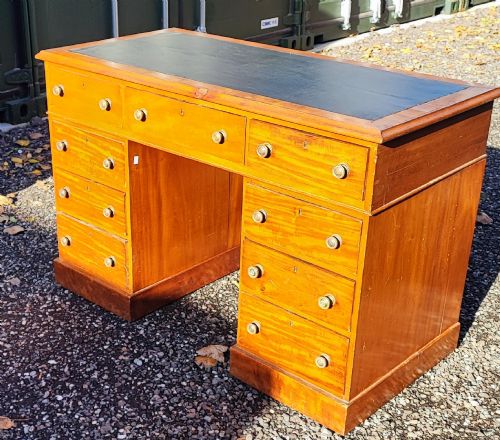
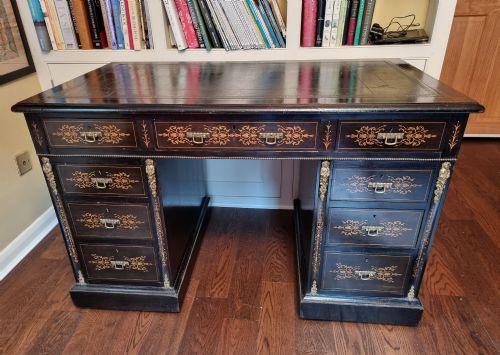
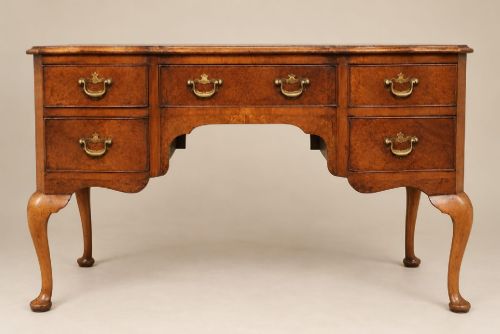
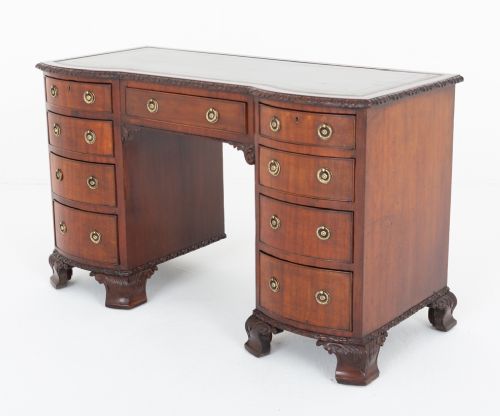
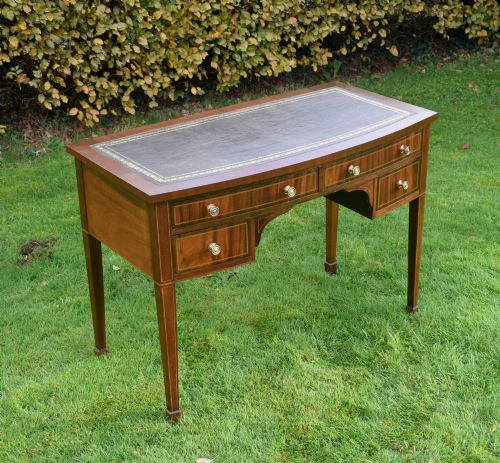
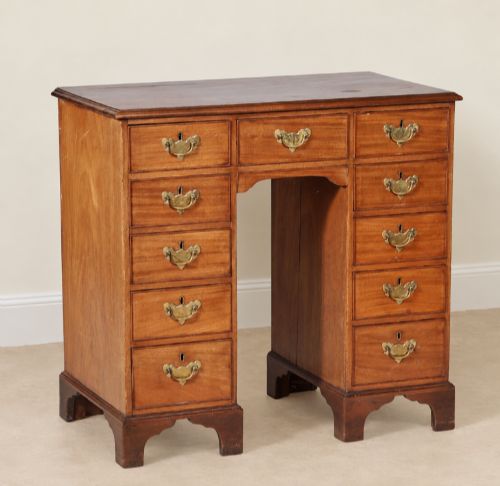
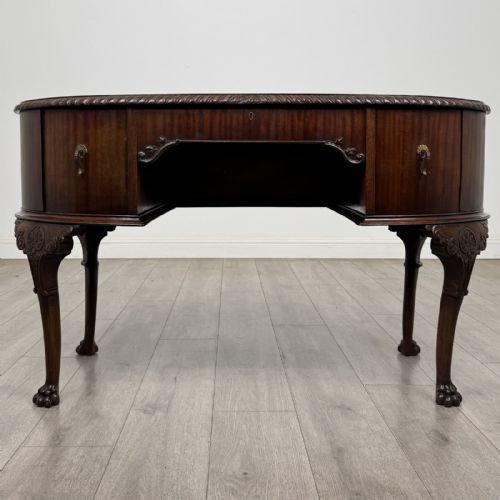
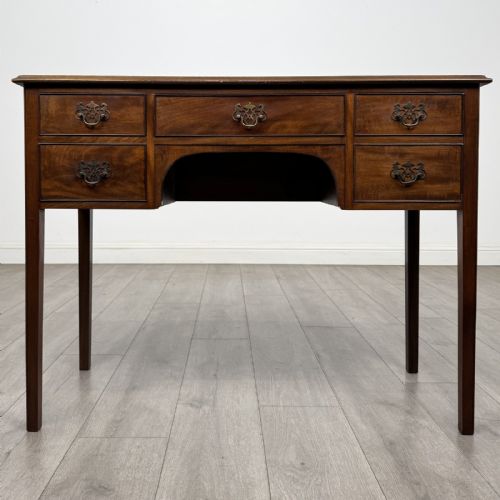
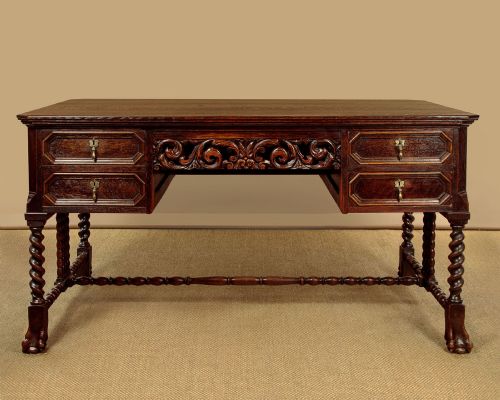
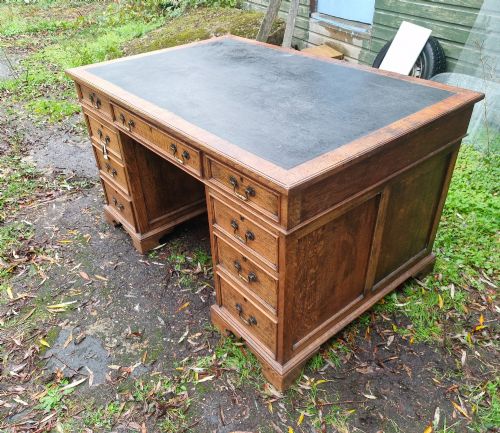
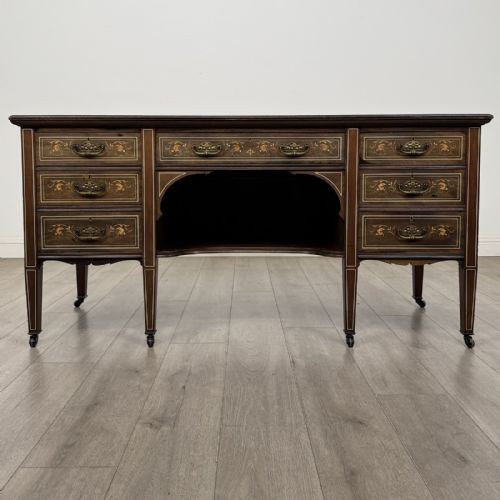
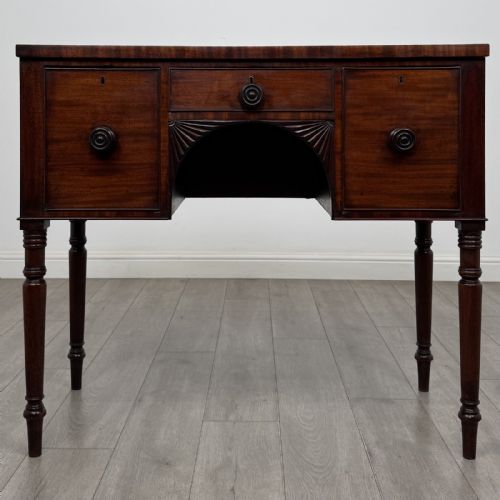
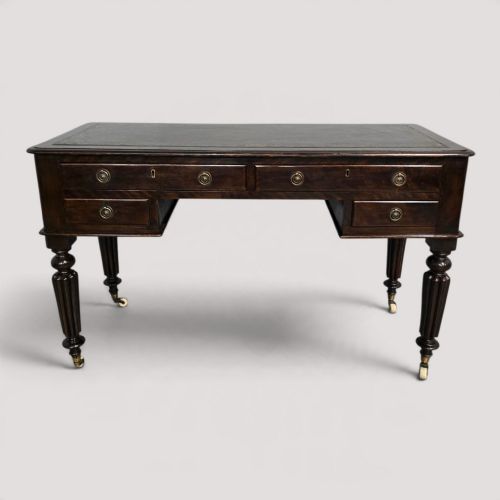
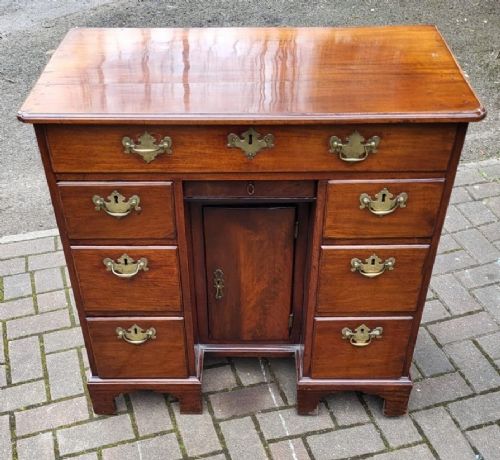
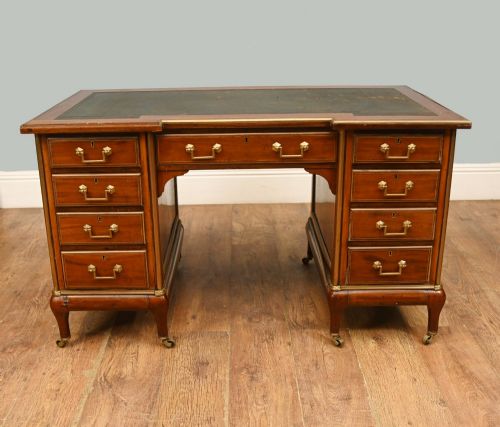
An antique kneehole table serves multiple domestic roles, appearing across the evidence as writing desks, dressing tables, and compact pedestal desks. The form centres on a recessed space for the legs, set beneath a drawer and flanked by banks of smaller drawers on either side.
The pieces span several centuries, with Georgian and 18th-century examples sharing catalogue space with Victorian, Edwardian, and Art Deco iterations. Buyers frequently encounter mahogany and walnut constructions, alongside occasional uses of oak, pine, yew wood, and maple.
Makers and designers from various periods adapted the layout for dressing rooms, studies, and parlours. From George II yew wood designs to 1930s burr walnut dressing tables with mirrors, the selection bridges formal writing furniture and functional dressing furniture.
How they were made
Cabinet makers utilised dense native and imported timbers, notably mahogany, walnut, burr walnut, and oak, often applying figured veneers to principal surfaces. Drawer linings and secondary woods frequently show pine or oak, constructed with traditional dovetailed joints.
Metal fittings played an integral role, with brass handles, escutcheons, and original brasses completing the joinery. Surface treatments involved leather inserts for desk tops and polished timber finishes that highlighted the grain patterns of satinwood, maple, and yew.
Antique Kneehole Table Retail Price Guide 2026
Typical asking prices for kneehole table among the pieces listed under this phrase on Sellingantiques today, from the lower quarter to the upper quarter. They describe what is for sale here now, not the wider market.
Listings feature woods spanning mahogany, walnut, burr walnut, oak, pine, satinwood, maple, and yew across multiple centuries.
What varies in quality
The refinement of timber selection distinguishes the tier of a piece, particularly where figured mahogany, burr walnut, or exotic veneers are chosen for drawer fronts and top panels. Master cabinet makers demonstrated skill in book-matching veneers and maintaining consistent grain continuity across multiple drawers.
Original hardware and fittings elevate a piece, especially when original brasses, handles, and leather writing inserts remain intact. The sophistication of internal drawer construction, fine dovetailing, and the retention of maker signatures or stamps further separate standard production from exceptional examples.
Trollope & sons·Maple & Co.·Holland & Sons·Wylie & Lochhead Glasgow
The Antique Kneehole Table Glossary
- Kneehole
- A recessed central space beneath a desk or dressing table top, designed to accommodate the user's legs while seated. This architectural arrangement allows for banks of drawers to flank either side.
- Pedestal desk
- A heavy freestanding desk comprising two supporting pedestals of drawers with a central connecting section. It evolved from earlier kneehole forms to provide greater storage capacity.
- Burr walnut
- Timber taken from the warted excrescences of a walnut tree, yielding intricate swirling grain patterns. Cabinet makers prized this wood for high-status veneering.
- Escutcheon
- A protective metal plate surrounding a keyhole, often fashioned from brass. It guards the surrounding wood from wear caused by the insertion of keys.
Antique Kneehole Table: Frequently Asked Questions
What is a kneehole table?
A kneehole table is a form of furniture featuring a central recessed space for the legs, positioned beneath a top surface and framed by pedestals of drawers.
They were traditionally used for writing, study, or personal grooming in domestic settings.
How do I date an antique desk?
Dating relies on observing timber choices, construction techniques such as dovetailing, and stylistic characteristics associated with periods like Georgian or Victorian.
Maker stamps or original brass hardware also help pinpoint the exact era of production.
Were these used for writing or dressing?
These pieces served both functions interchangeably depending on the domestic space and era. Many included mirrors or five-drawer layouts suited for dressing, while others featured leather tops for correspondence.
Makers adapted the internal configuration to suit the specific needs of the room.
What woods were commonly used?
Mahogany and walnut predominate across the centuries, often enhanced by burr walnut, satinwood, or maple veneers. Oak and pine also appear frequently in structural elements and regional pieces.
Exotic woods like yew wood feature in select 18th-century examples.