

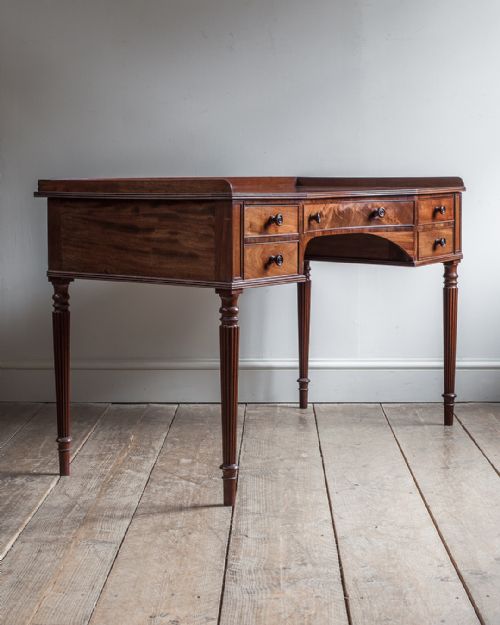
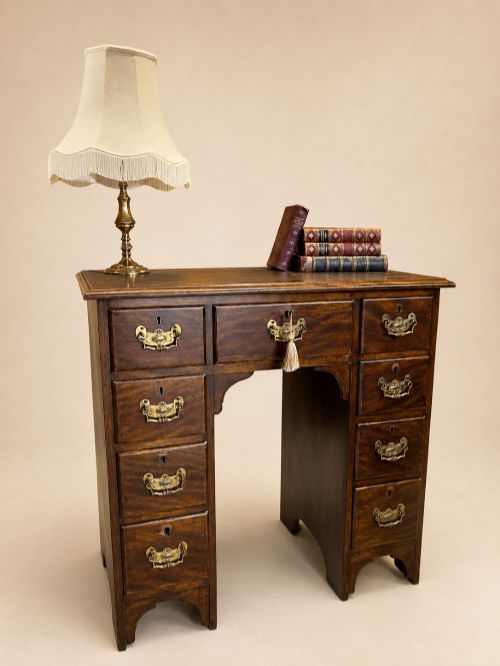
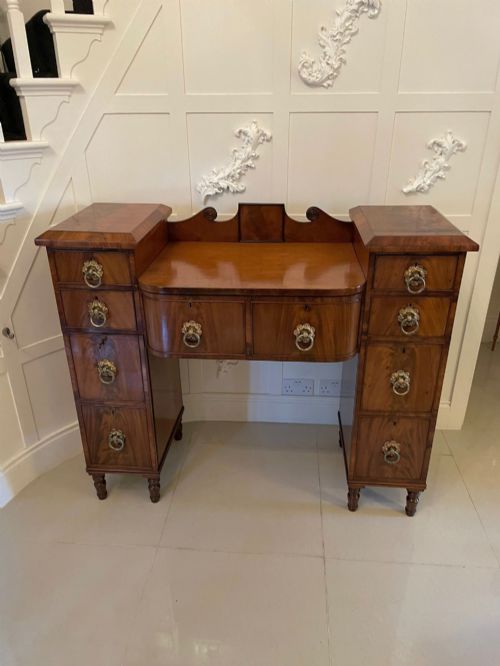
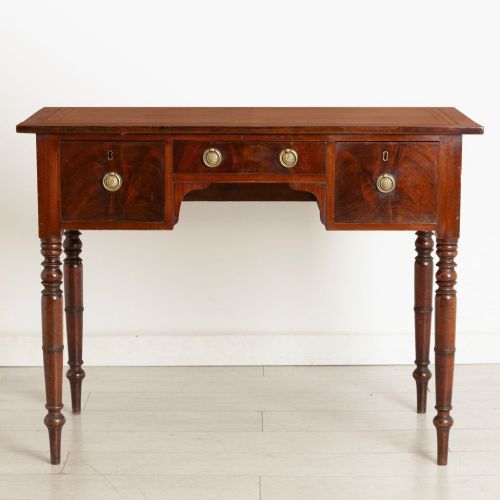
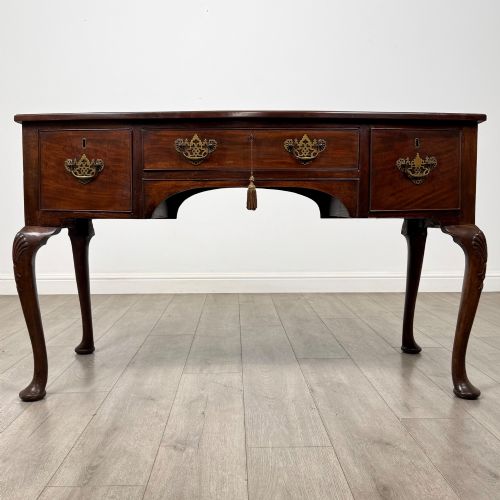
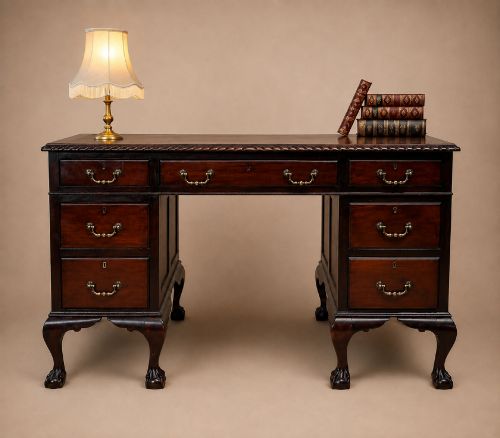
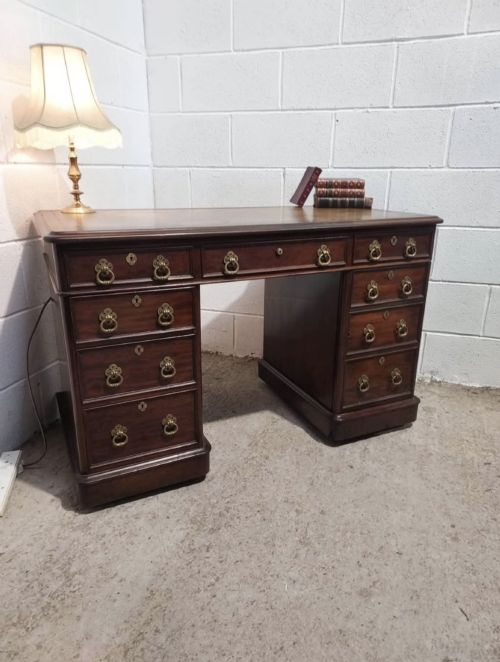
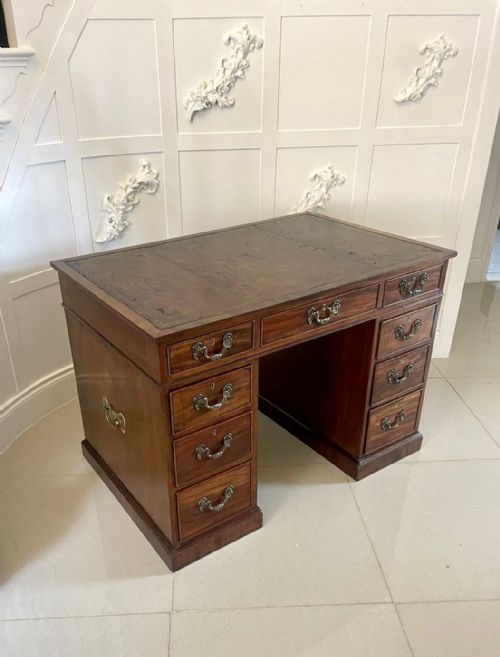
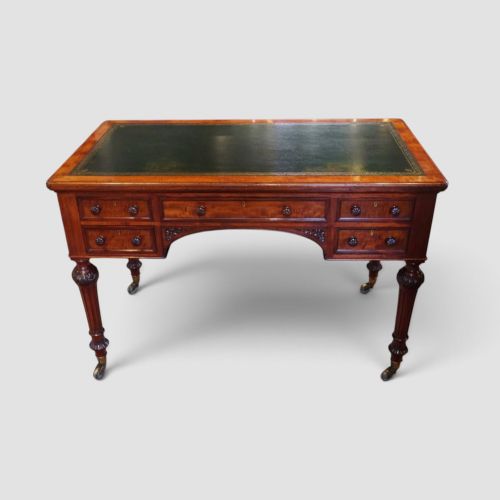
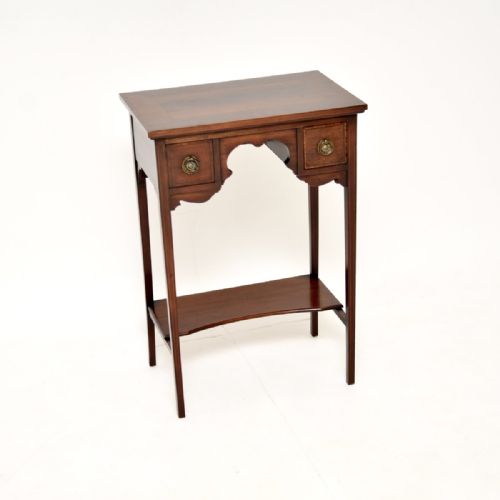

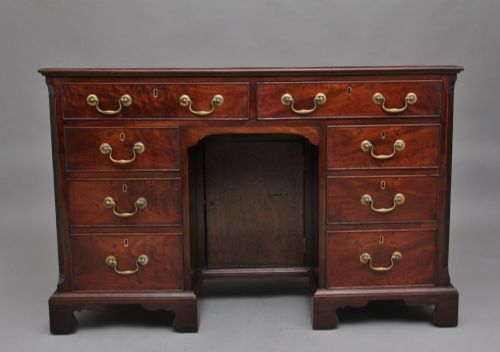
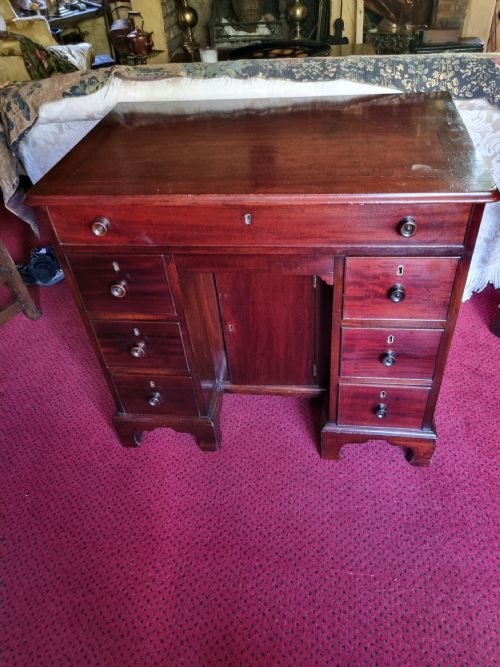

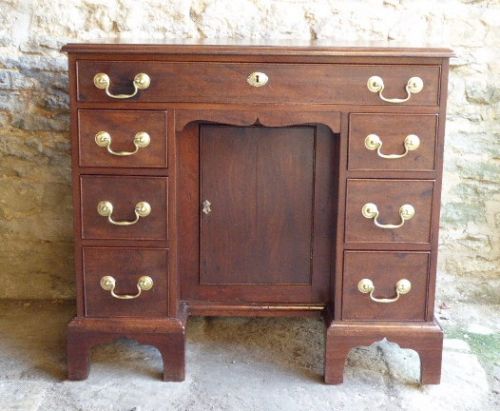
Dark Wood Kneehole Desk
A dark wood kneehole desk gives you a compact workspace with deep character, built from rich timbers designed to anchor a traditional study.
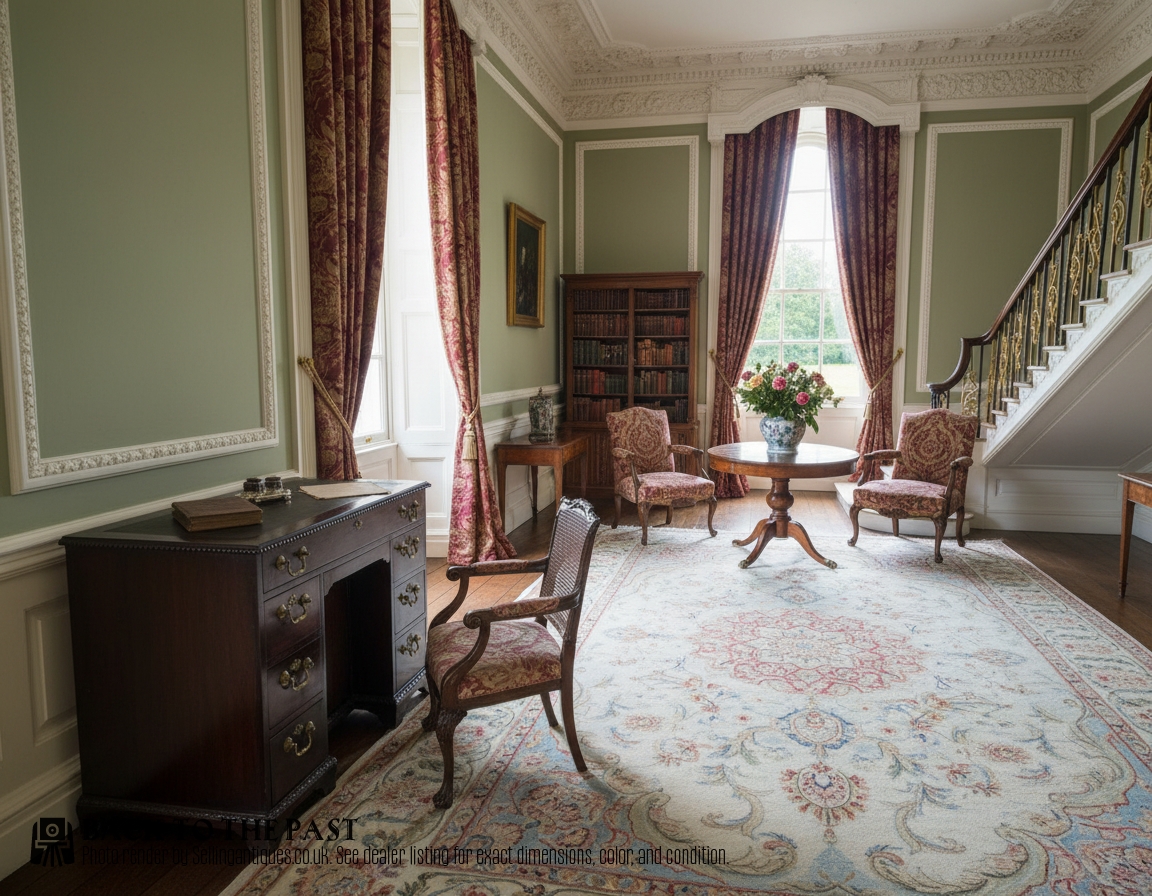
What these desks are
A dark wood kneehole desk provides a compact surface for correspondence with a central recess flanked by banks of smaller drawers. These pieces appear across the eighteenth and nineteenth centuries, often taking the form of a mahogany writing desk or a Georgian dressing chest.
The proportions are typically modest, making them suitable for smaller rooms where a full-sized partner desk would overwhelm the floor plan. You will encounter Georgian and Victorian examples, alongside occasional Edwardian and continental interpretations.
Makers utilised dense timbers such as Cuban mahogany and rosewood to construct these durable writing tables. The arrangement of drawers and cupboards within the recess remains a defining functional characteristic across the various stylistic revivals.
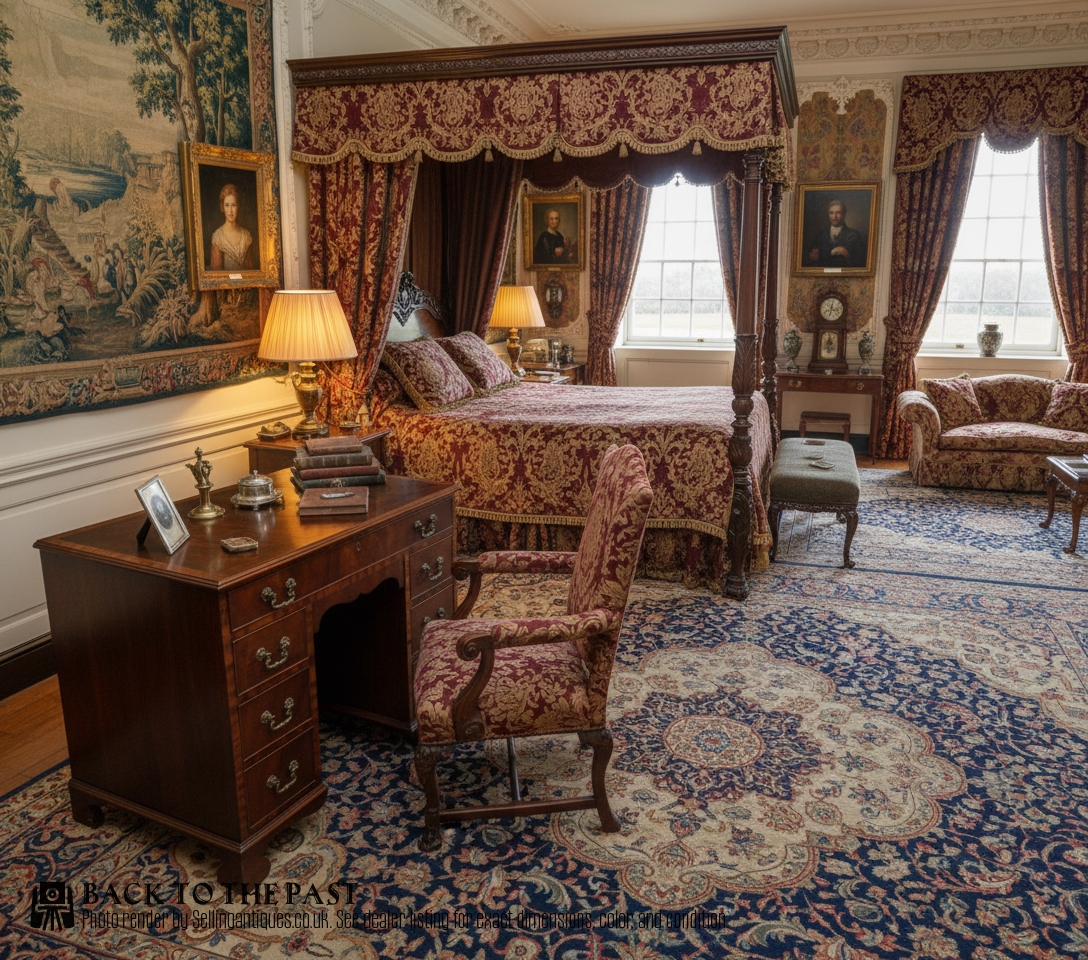
How they were made
Cabinetmakers constructed the primary carcasses from solid mahogany or rosewood, frequently selecting figured Cuban mahogany for the principal show surfaces. Drawer linings typically employ secondary timbers like oak or pine, assembled with traditional dovetail joints.
Cast brass handles and escutcheons punctuate the dark timber facades, secured with original or period-replacement hardware. Surface finishes rely on traditional polish that builds a deep lustre over the grain without obscuring its natural figure.
Retail Price Guide 2026
Typical UK retail prices for dark wood kneehole desk, calculated from the Sellingantiques database of over a million retail prices indexed since 2003. This retail price guide relies exclusively on Sellingantiques data; no external sources or auction records are used, so the figures do not describe the wider market.
Listings feature mahogany, Cuban mahogany, and rosewood across eighteenth and nineteenth-century periods.
What varies in quality
The grade of timber dictates the visual impact of the piece, with richly figured Cuban mahogany commanding greater presence than plain or later substitutes. The crispness of carved details, particularly on Chinese Chippendale or revival pieces, separates standard workshop production from finer cabinet work.
Originality of the brass hardware and the retention of fitted interior compartments influence the integrity of the desk. Subtle variations in the depth of the drawers and the neatness of the dovetailing reveal the competence of the original maker.
The Dark Wood Kneehole Desk Glossary
- Kneehole desk
- A freestanding writing table featuring a central recess beneath the writing surface, enclosed by pedestals of small drawers. This form allows the user to sit comfortably closer to the centre.
- Cuban mahogany
- A dense, dark timber prized for its rich grain and deep colour, commonly used in high-status eighteenth-century furniture. It is heavier and harder than other varieties of mahogany.
- Bureau mazarin
- A type of cabinet desk originating in France, featuring a central recessed cupboard flanked by columns of drawers. It represents an early continental form of the kneehole desk.
- Dovetail joint
- An interlocking wood joint formed by wedge-shaped fingers, used primarily in drawer construction to ensure durable corners. Fine, tight pins indicate skilled hand craftsmanship.
- Escutcheon
- A protective plate surrounding a keyhole, often cast in brass to complement the drawer pulls. These small decorative elements often help date the period of the piece.
Frequently Asked Questions
How do I date a kneehole desk?
Examine the secondary timbers inside the drawers and the construction methods used for the joints. Hand-cut dovetails and solid oak linings typically point to eighteenth-century origins.
Stylistic cues such as bracket feet, cockbeaded drawer edges, and the specific cut of the mahogany further help narrow down the decade of manufacture.
Were these desks used for writing or dressing?
Many examples served a dual purpose as both writing tables and dressing chests depending on the interior fittings. Some retain a fitted top drawer with compartments for grooming accessories.
The inclusion of a central cupboard within the kneehole often concealed sanitary equipment or additional storage for papers.
Will a kneehole desk fit in a modern room?
Their compact historical proportions make them well suited for contemporary studies or bedrooms where space is at a premium. The recessed kneehole provides adequate legroom for standard seating.
The dark timber tones anchor light modern interiors effectively, offering functional surface area without dominating the floor.
What is the difference between Georgian and Victorian desks?
Georgian pieces generally display restrained classical proportions and finer timber selection, such as Cuban mahogany. Their construction relies on meticulous hand joinery and subtle decorative mouldings.
Victorian iterations often embrace heavier proportions and revival styles like Chinese Chippendale or Louis XIV, utilising machine assistance alongside traditional methods.