

18th Century Kneehole Desk
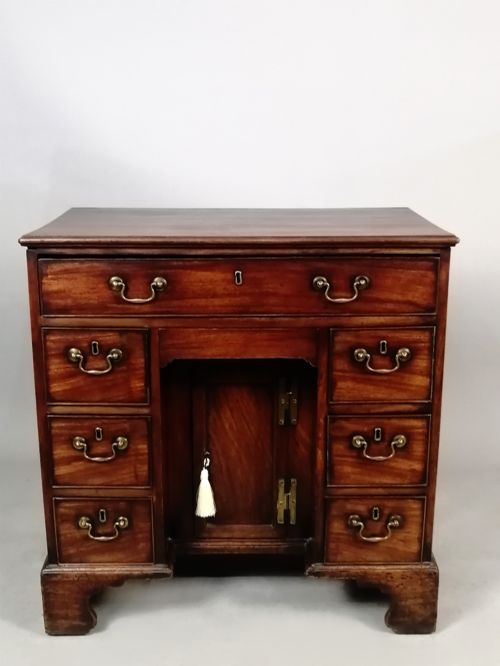
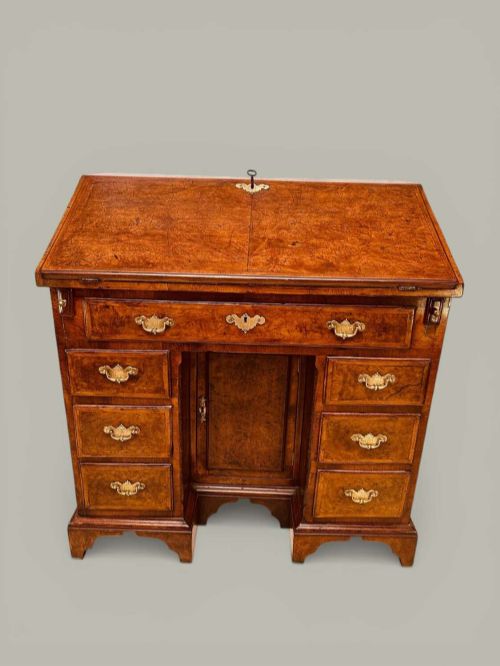
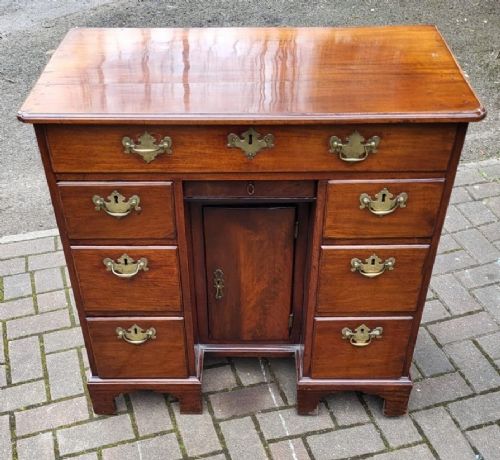
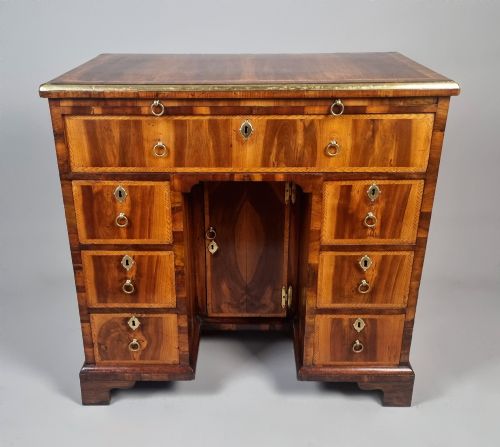
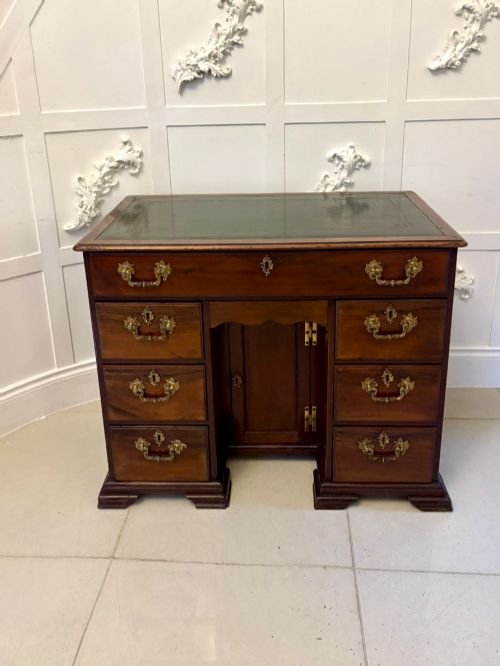
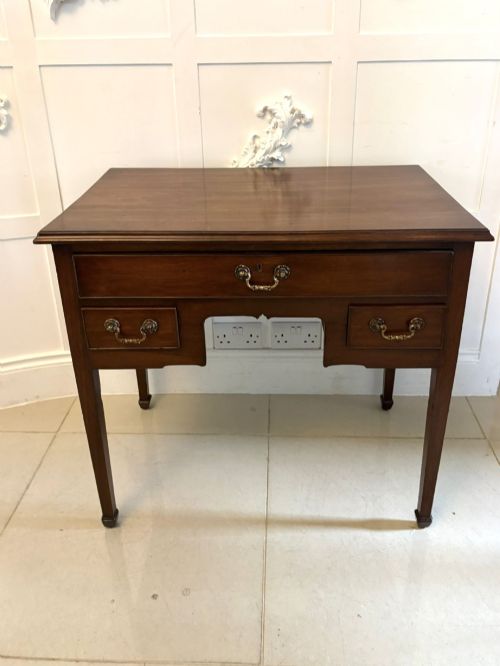
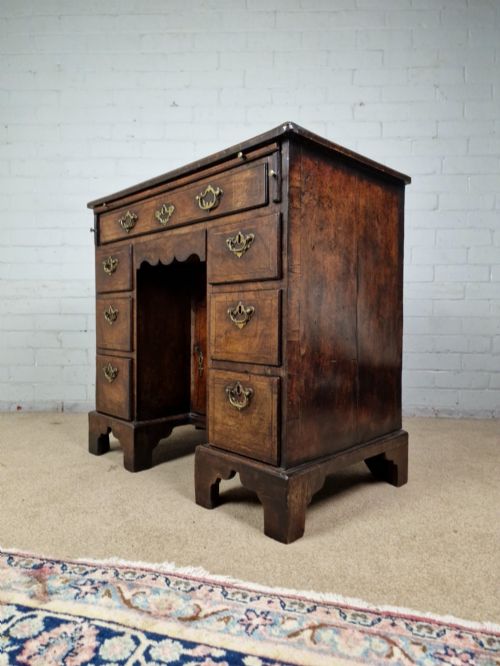
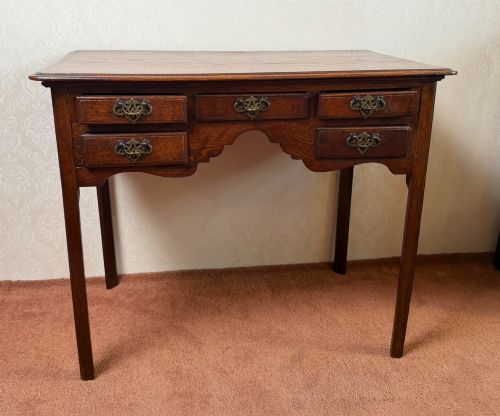
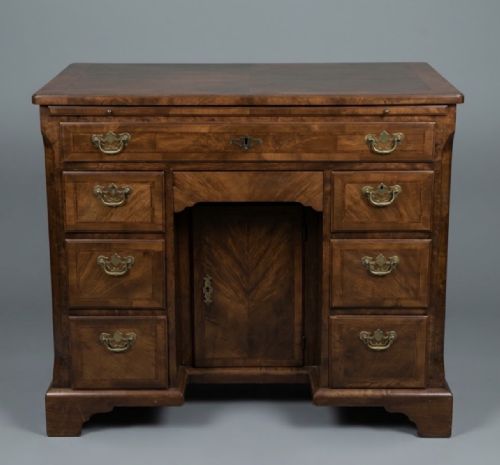
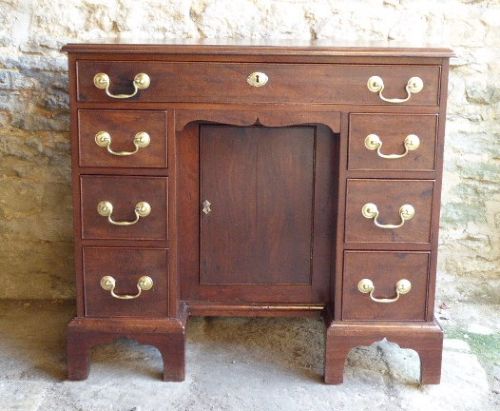
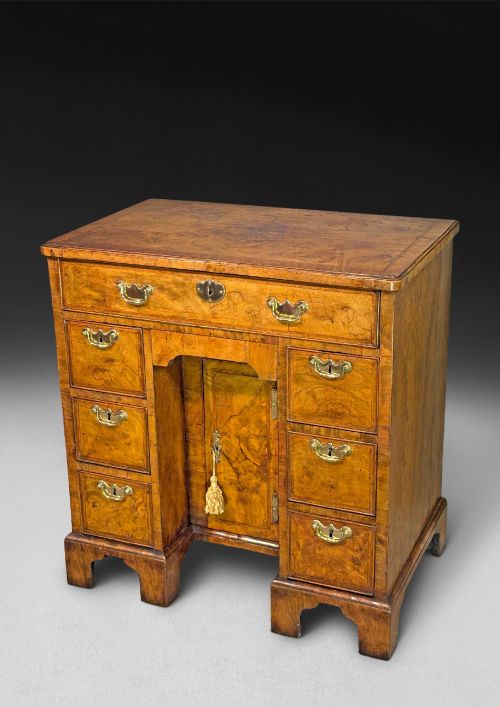
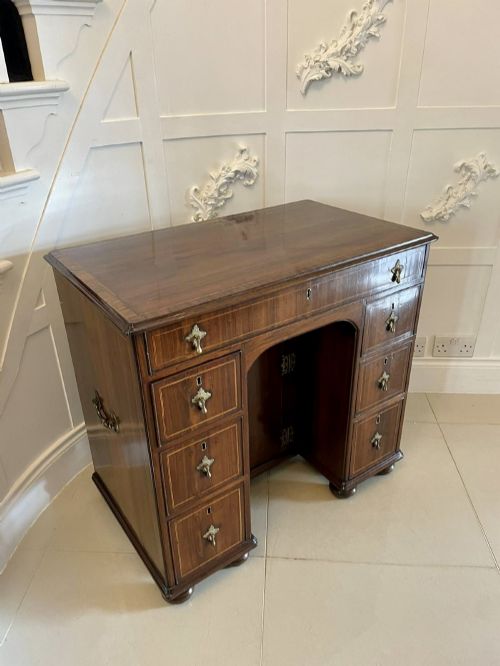
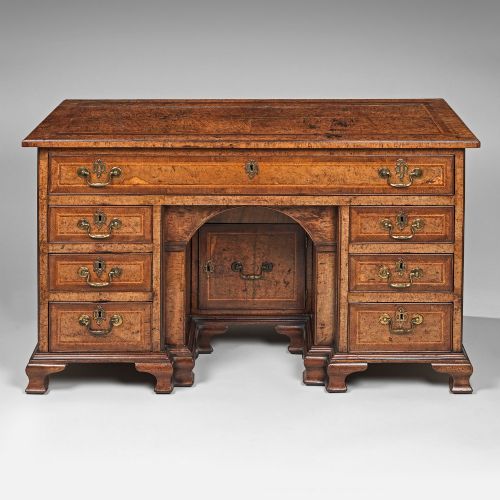
An 18th century kneehole desk offers compact compartmentalised writing space with pedestals of small drawers flanking a central recessed kneehole cupboard.

18th Century Kneehole Desk
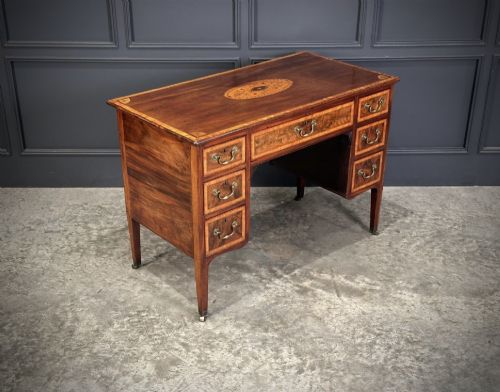
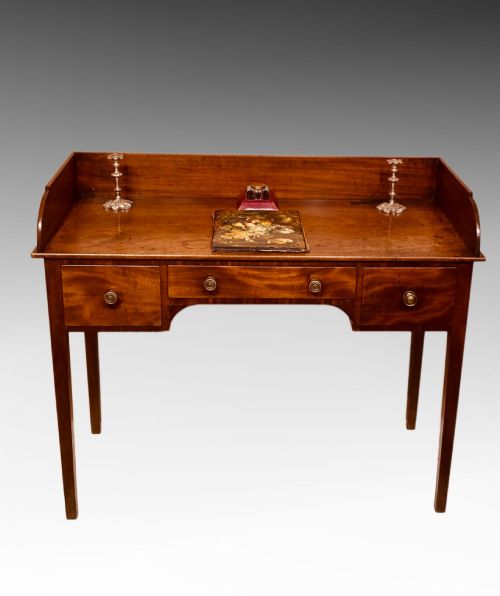
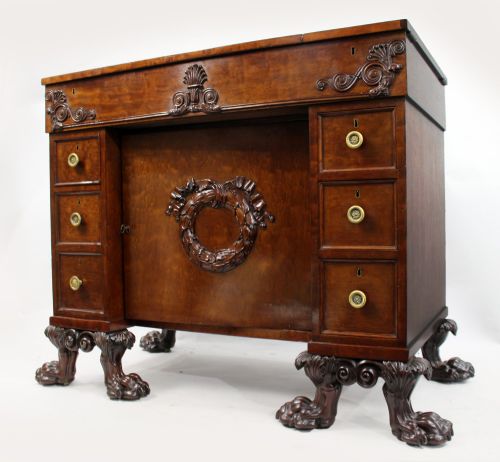
An 18th century kneehole desk is a timber writing or dressing piece built with flanking sets of small drawers beneath a top surface and a central cupboard door concealing a recess. The form bridges domestic writing furniture and bedroom dressing tables from the Georgian, Queen Anne and William and Mary eras.
The pieces appearing here span mahogany, walnut, oak, yew wood, burr walnut and elm, with variations including serpentine fronts, sliding boards, and fitted secretaire drawers. Survivors include both dedicated writing tables and dressing chests utilised for correspondence or personal grooming.
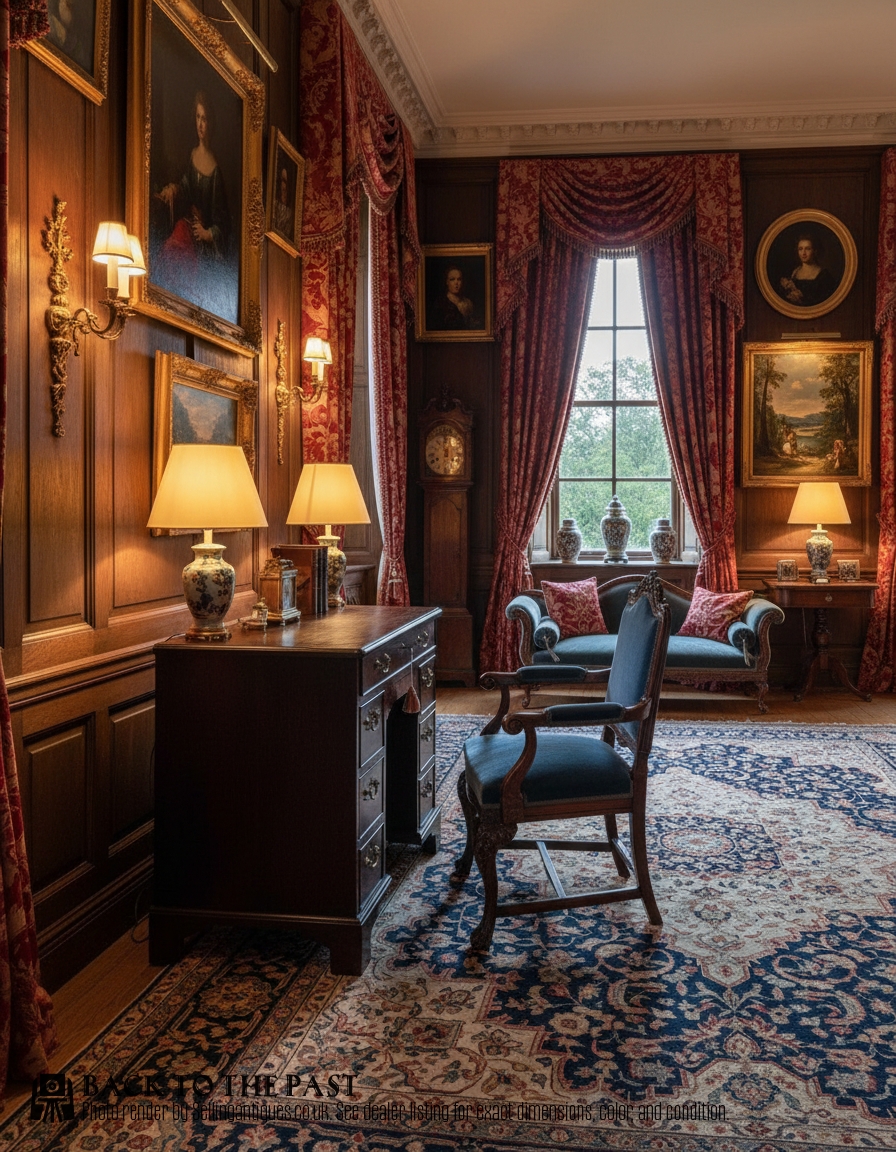
How they were made
Cabinetmakers constructed these desks using dense cabinet timbers like mahogany and walnut, frequently selecting figured veneers, burr walnut, burr mulberry, and fiddleback grain patterns for the primary surfaces. Secondary structural elements often incorporate oak or cedarwood within the drawer linings and internal dividers.
Hardware such as drop handles and escutcheons are cast from brass, with many examples retaining original mounts alongside sliding writing trays and inset leather writing surfaces. Joinery relied on precise dovetailing for the drawer boxes and pegged mortise and tenon frames for the main carcase.
18th Century Kneehole Desk Retail Price Guide 2026
Typical asking prices for 18th century kneehole desk among the pieces listed under this phrase on Sellingantiques today, from the lower quarter to the upper quarter. They describe what is for sale here now, not the wider market.
Hidden drawers tucked behind cupboard doors kept secret love letters safe from prying eyes.
What varies in quality
The selection of timber grain largely dictates the character of the piece, moving from plain native hardwoods to richly figured burr walnut, fiddleback walnut, and exotic veneers matched symmetrically across the drawer fronts and top. Timber choice directly reflects the ambition of the original workshop commission.
Survival of original surface finishes, brass hardware, and internal fitments such as secret compartments or fitted central cupboards distinguishes retained integrity from pieces subjected to later alterations or replacement mounts.
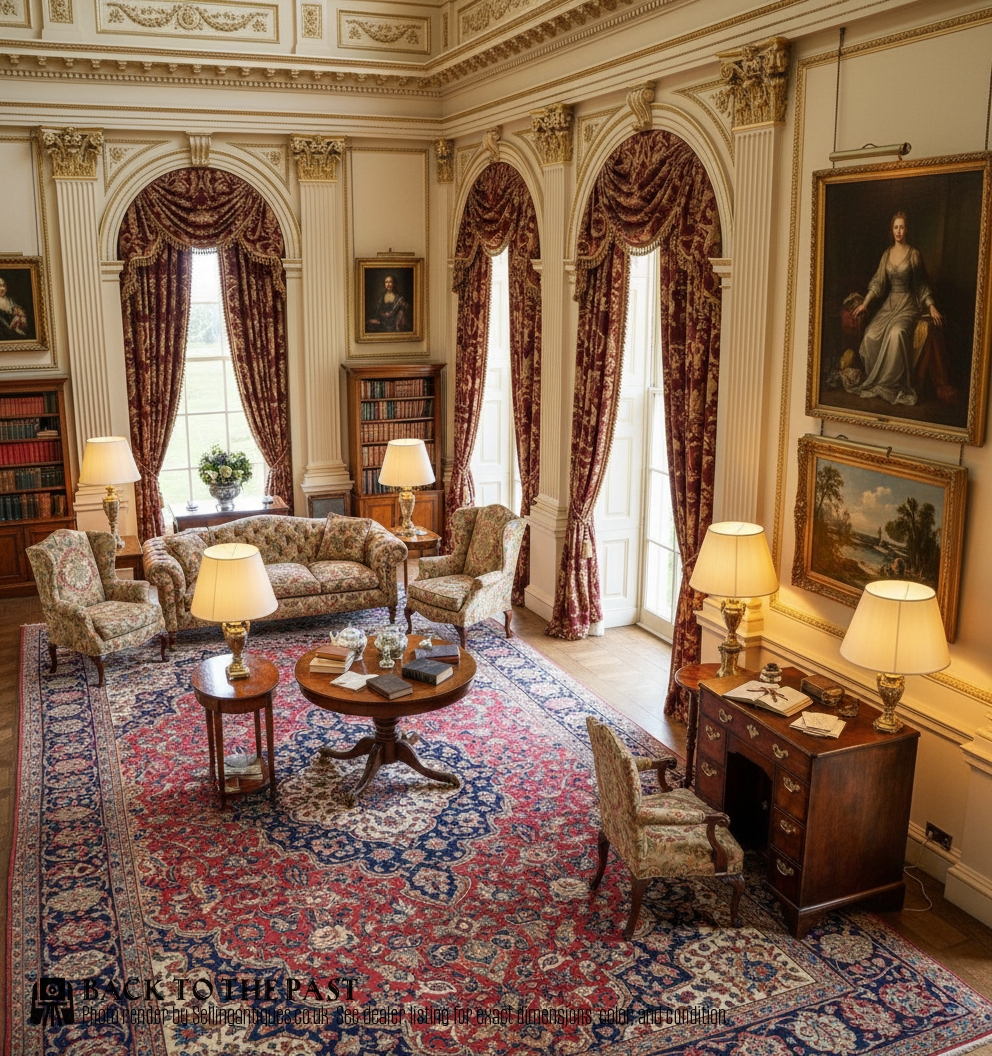
The 18th Century Kneehole Desk Glossary
- Kneehole
- A recessed space beneath the central writing surface of a desk or dressing table, typically framed by pedestals of small drawers.
- Lowboy
- A small low dressing or side table featuring one or more rows of drawers supported on four legs.
- Secretaire
- A desk or chest featuring a fitted pull-out writing drawer enclosing pigeonholes and small compartments.
- Burr
- A mottled wood grain pattern formed by irregular growths on trees, prized for decorative veneer work.
- Fiddleback
- A figured timber grain displaying rippled patterns resembling the maple used for violin backs.
18th Century Kneehole Desk: Frequently Asked Questions
What is a kneehole desk used for?
These pieces served historical households as private writing desks, correspondence tables, or bedroom dressing furniture for storing letters and personal items.
Today they function effectively as compact home office writing tables or decorative console pieces in smaller rooms.
How do I identify walnut from mahogany?
Walnut displays a rich brown tone with darker grain figuring, swirling patterns, and occasional burr clusters typical of earlier 18th-century pieces.
Mahogany exhibits a straight reddish-brown grain that deepens in colour over time, becoming more common in mid to late 18th-century cabinetmaking.
Did these desks have original brasses?
Makers fitted cast brass drop handles, backplates, and keyhole escutcheons that matched the exact period style of the furniture carcase.
Surviving examples often retain their original brass mounts, though replacement hardware matching historical patterns is common on antique pieces.
Where does the central cupboard lead?
The recessed door located directly beneath the top writing surface opens to reveal a small concealed cupboard space or shelf.
This central recess historically provided leg room when seated at the desk, separating the left and right stacks of drawers.