
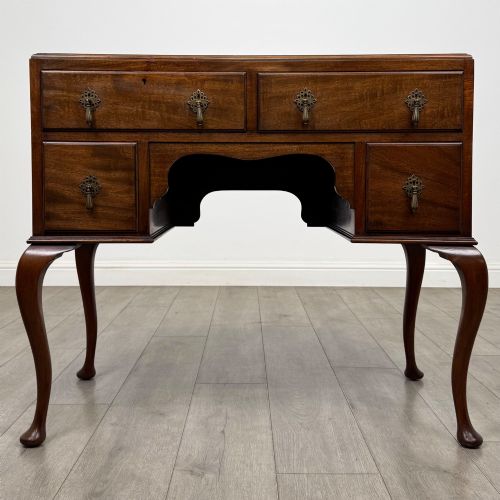
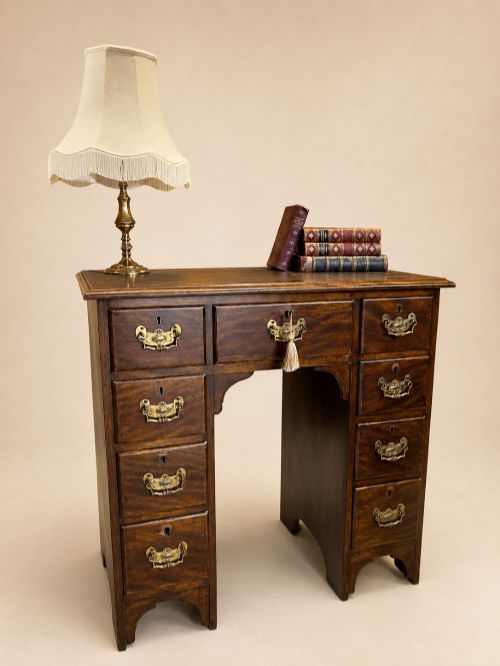
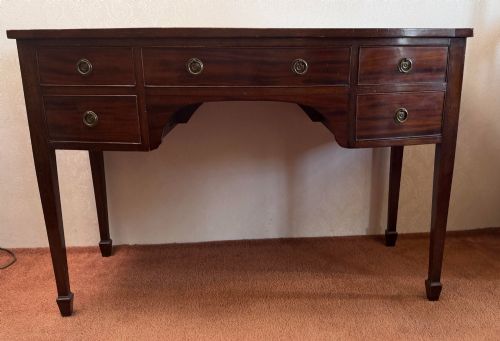
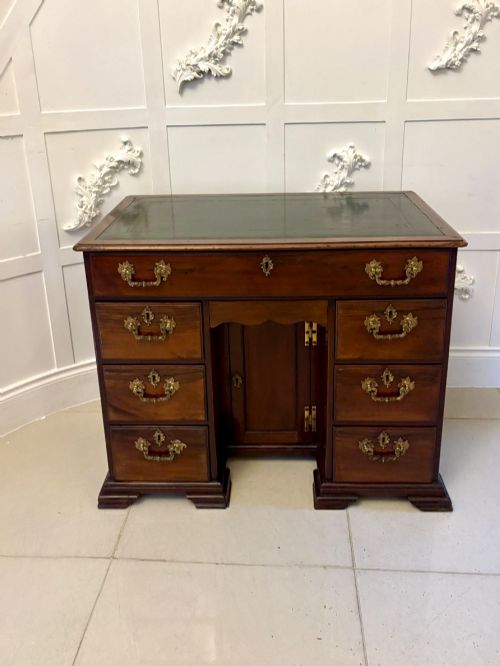
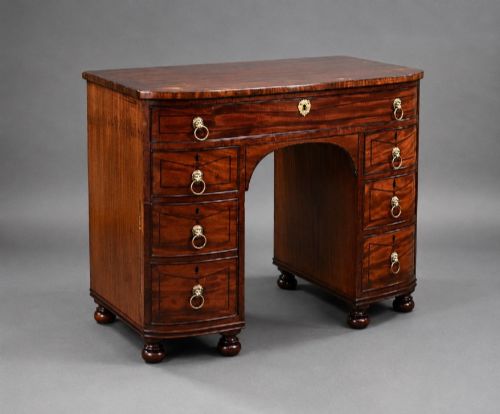
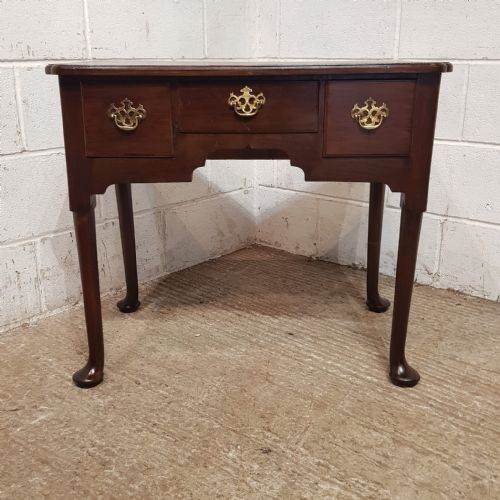

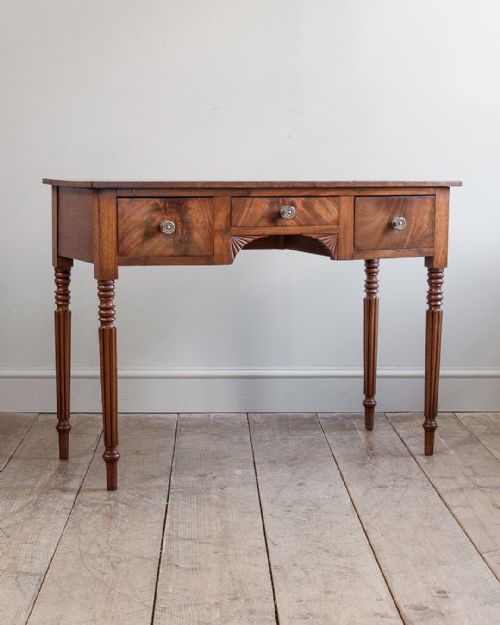
Mahogany Kneehole Dressing Table
A mahogany kneehole dressing table combines compartmentalised drawer storage with a central recessed recess for seating, offering a versatile writing and grooming surface.
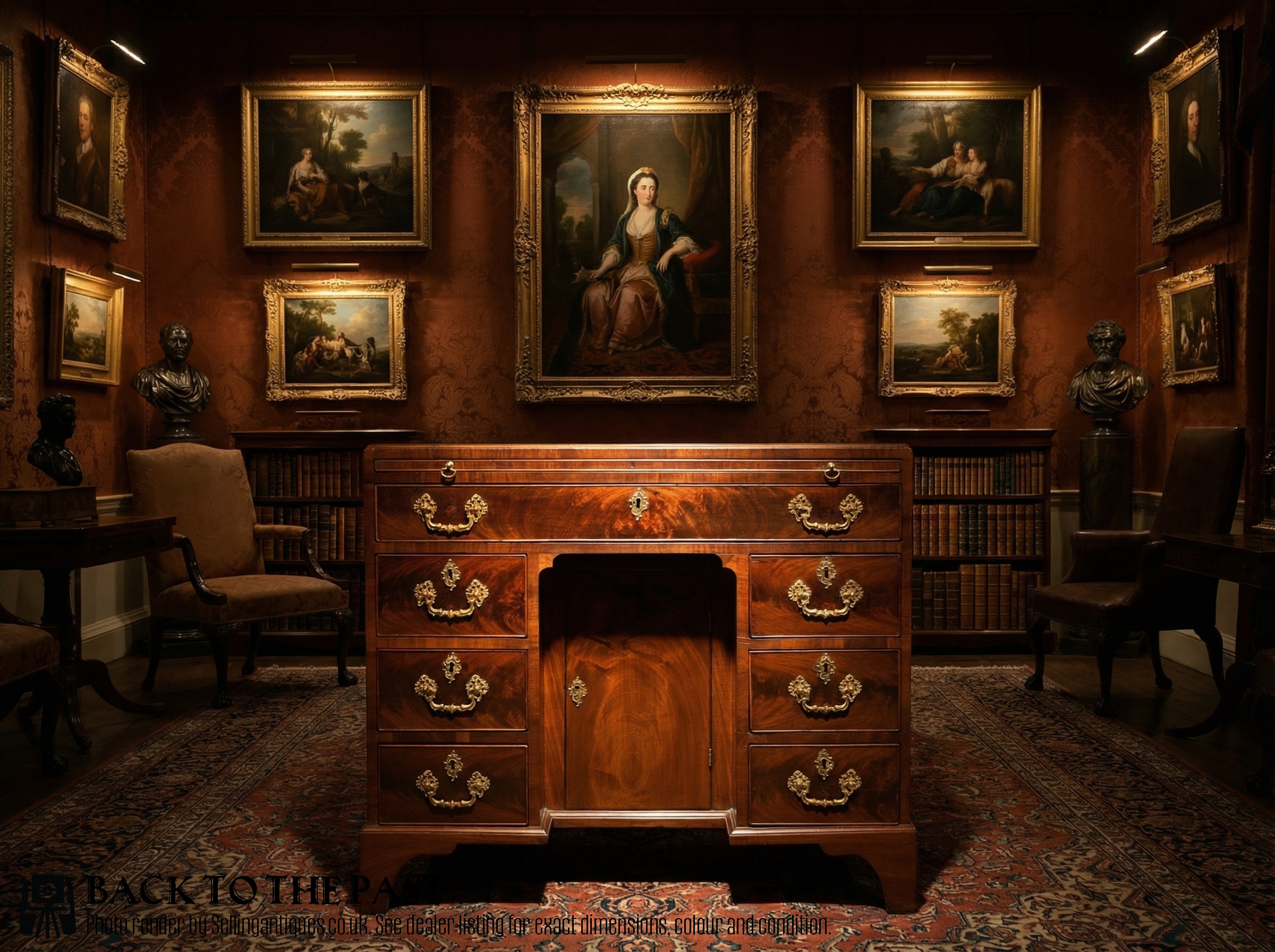
Mahogany Kneehole Dressing Table
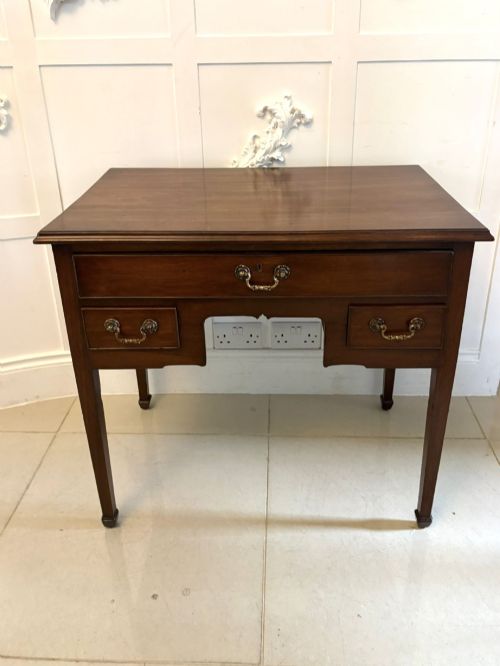
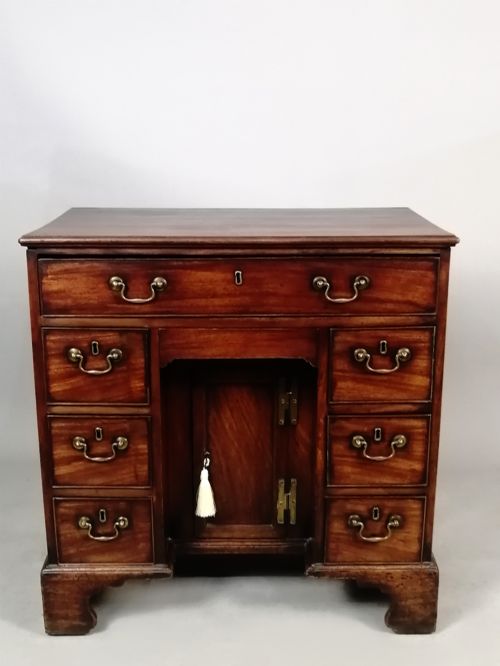
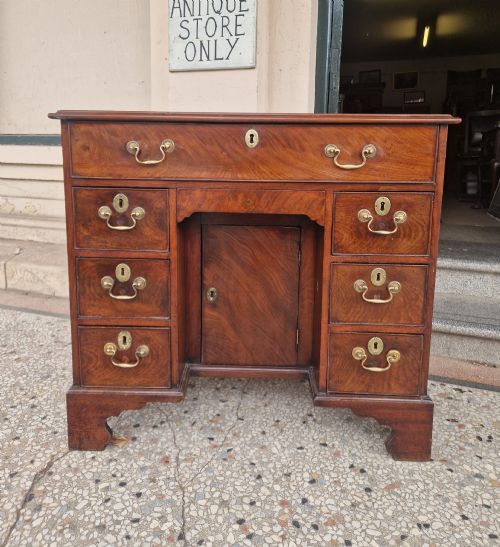
A mahogany kneehole dressing table provides a compact writing and grooming surface structured around a central recessed aperture flanked by pedestals of smaller drawers. This specific configuration appears across multiple centuries, serving as a dual-purpose piece for the bedroom or study.
The pieces on this page span the Georgian, Regency, Victorian and Edwardian periods, with earlier 18th-century examples alongside later revivals. Buyers encounter everything from traditional George III multi-drawer setups to Edwardian variations featuring inlaid satinwood and boxwood details.
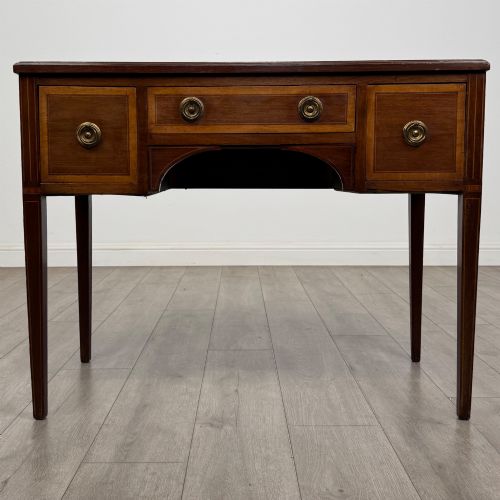
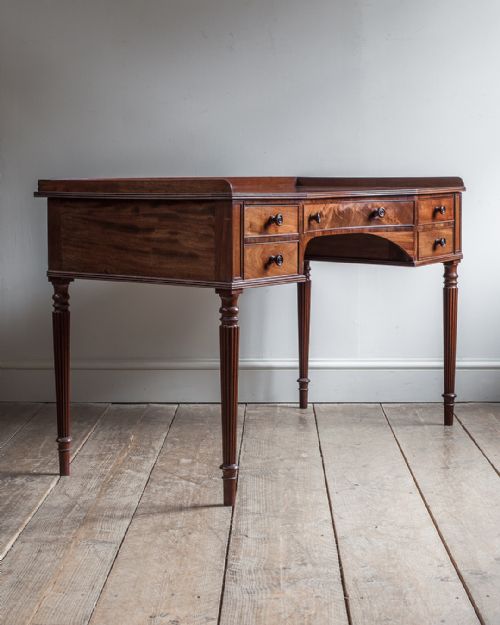
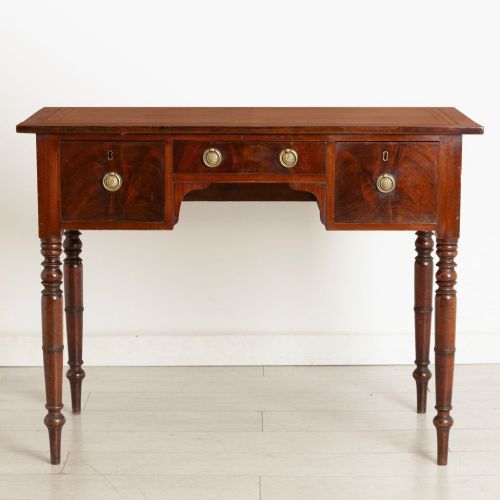
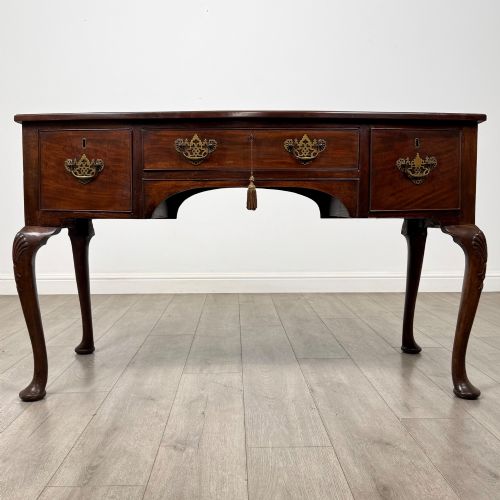
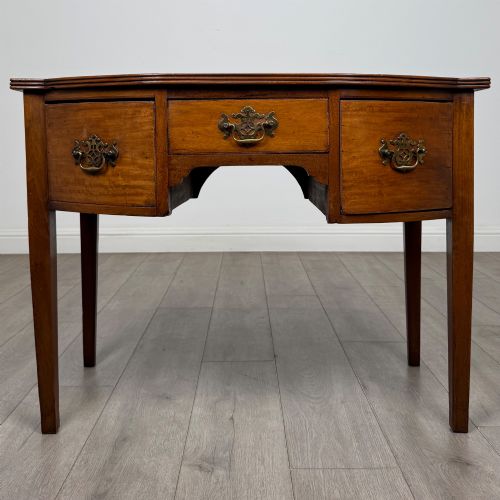
Variations in form include straight fronts, bow-fronts, and serpentine shapes alongside pieces featuring pull-out writing slides. These tables frequently bridge the category lines between desks, writing tables and lowboys due to their multi-functional heritage.
Materials and Construction
Cabinet makers built these pieces primarily using solid mahogany and flame mahogany veneers, often incorporating oak for internal drawer linings and secondary framing timbers. Decorative detailing frequently includes contrasting stringing and banding in boxwood, satinwood, and purpleheart.
Hardware such as brass handles and escutcheons punctuate the drawer fronts, while specific examples incorporate leather writing inserts or glass protection tops. Construction techniques rely on precise dovetailing for the drawer boxes and stable timber carcases to prevent warping in dense hardwoods.
Listings feature mahogany, satinwood, boxwood, oak, and brass, spanning the Georgian, Regency, Victorian, and Edwardian periods.
The Measure of Quality
Quality reveals itself in the selection of timber, particularly the grain matching across drawer fronts and the depth of figure in flame mahogany veneers. Superior pieces demonstrate crispness in inlaid stringing and integrity in the structural framing of the kneehole recess.
The proportion of the piece and the retention of original brass handles or interior configurations dictate the standing of an individual table. Finer examples maintain secondary timbers appropriate to their stated period and show uncompromised drawer construction without replacement timber patches.
The Mahogany Kneehole Dressing Table Glossary
- Kneehole
- A recessed space set between two pedestals of drawers beneath a desk or dressing table top. This design allows the user to sit closely to the furniture.
- Lowboy
- A small side table with drawers, typically standing on four tall legs. These pieces share stylistic roots with early kneehole forms.
- Stringing
- Thin lines of contrasting wood inlay used to decorate furniture surfaces. Cabinet makers often set light boxwood into dark mahogany.
- Slide
- A pull-out wooden board integrated above the drawers to provide extra surface area. Users extend this shelf for writing or placing items without opening the main drawers.
Mahogany Kneehole Dressing Table: Frequently Asked Questions
How do I use a kneehole dressing table today?
These tables function effectively as compact dressing desks in bedrooms or as writing surfaces in smaller studies. The central kneehole accommodates a stool or small chair while the surrounding drawers organise modern writing or grooming accessories.
Their restrained proportions allow them to fit into hallways or living rooms where standard desks overwhelm the floor space. Many owners utilise the top surface for display while keeping day-to-day items tucked inside the pedestal drawers.
How can I tell a Georgian piece from an Edwardian revival?
Georgian pieces from the 18th century display construction methods such as hand-cut dovetails in oak drawer linings and patinated solid mahogany timbers. The cabinet work relies on simpler structural joinery and natural timber ageing rather than applied decorative veneers.
Edwardian revivals, dating to the early 20th century, often incorporate machine-cut elements alongside elaborate satinwood crossbanding and marquetry inlay. The internal secondary woods and finishes reflect later manufacturing standards despite copying earlier 18th-century forms.
What is the difference between a desk and a dressing table?
Historically, dressing tables featured internal compartments, mirrors or configurations specifically intended for personal grooming and cosmetic storage. Desks prioritised flat writing surfaces, deep kneehole clearances and document storage.
Over time, many pieces served both functions interchangeably, leading makers to describe identical forms as either writing desks or dressing tables depending on the primary use of the initial owner.
Are these tables suitable for small rooms?
The compact footprint and pedestal storage make these tables practical choices for limited spaces. The recessed kneehole keeps the chair tucked neatly underneath when not in use, reducing the overall room projection.
Narrower bow-front and straight-front variations provide functional surface area without dominating the surrounding furniture arrangement.