


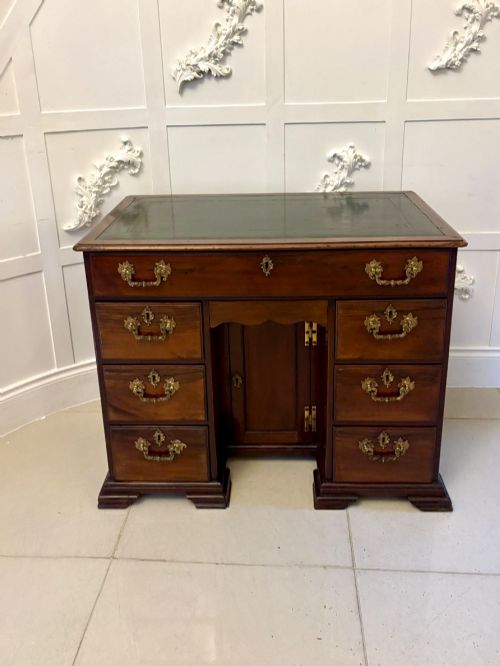
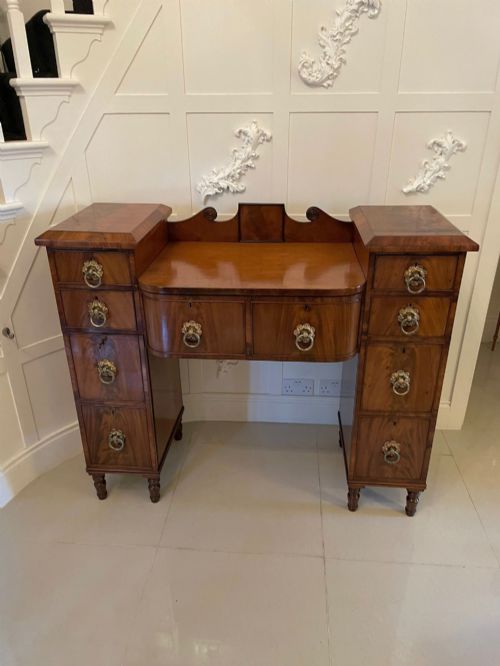
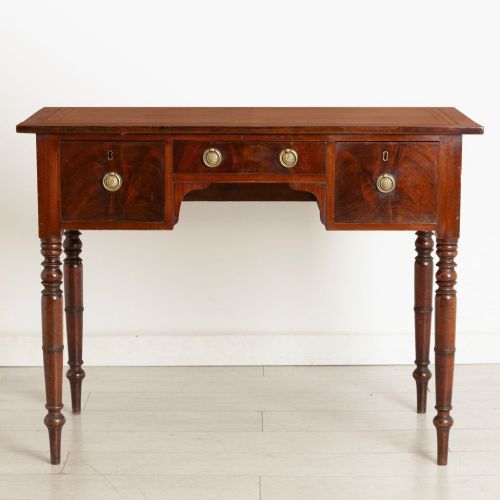
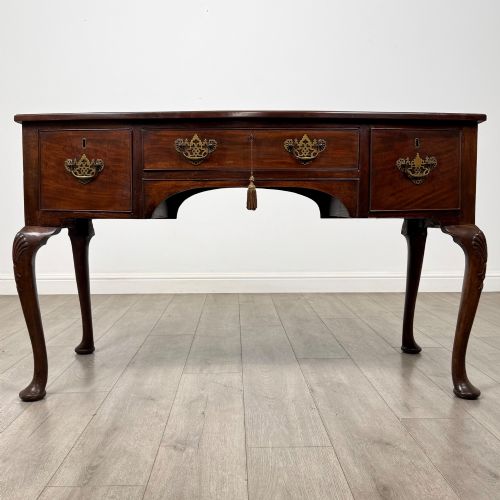
Antique Mahogany Kneehole Desk
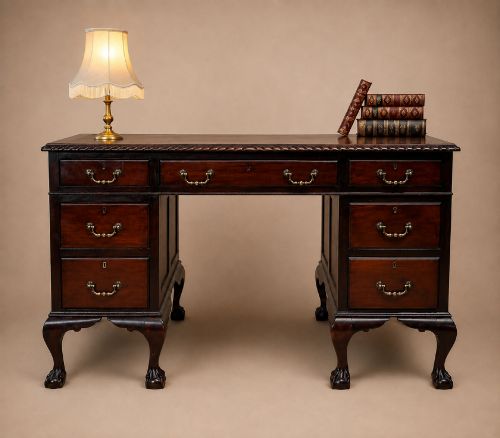
An antique mahogany kneehole desk offers compact workspace with disciplined pedestal storage, shaped for period libraries and studies.
Forms and Origins
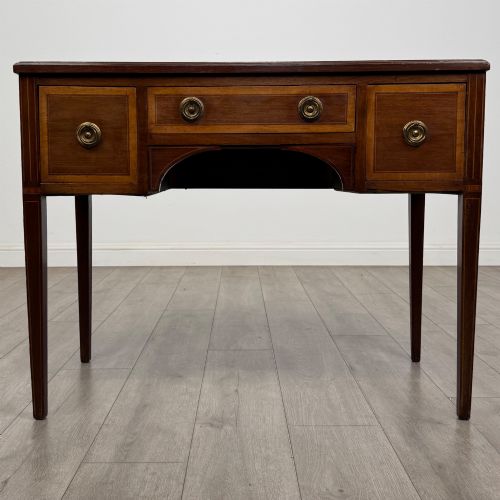
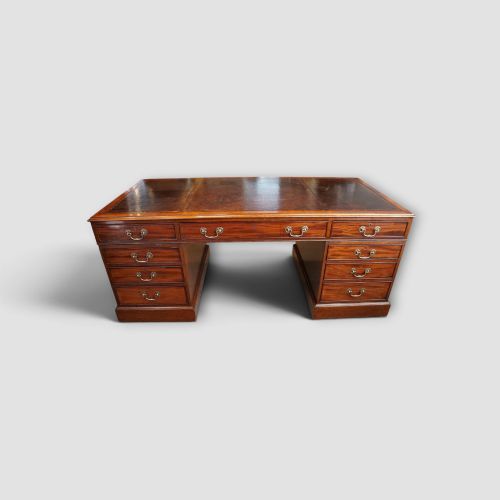
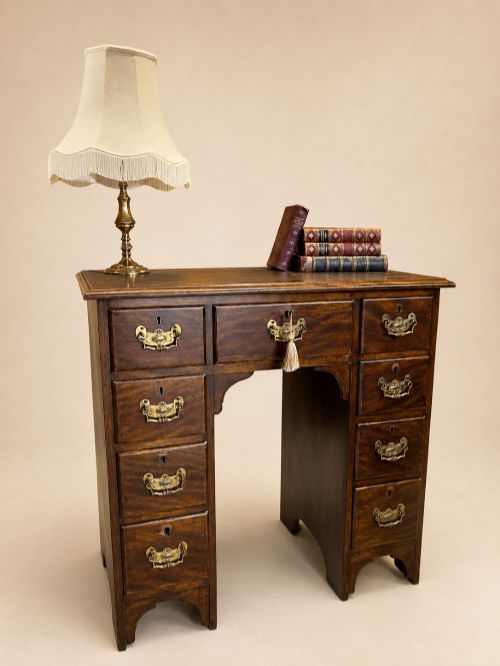
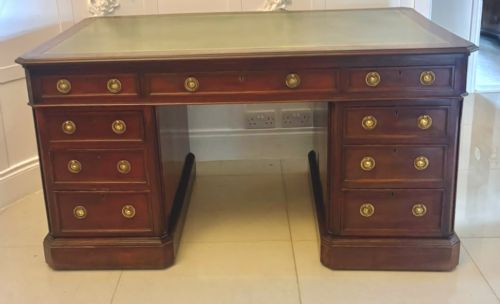
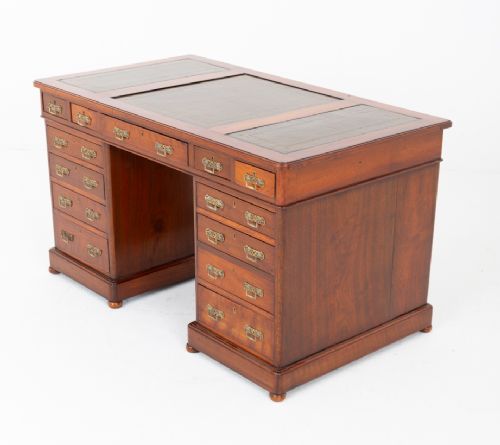
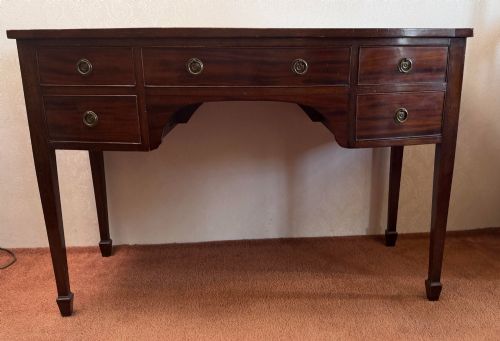
An antique mahogany kneehole desk brings together formal pedestals and central recessed spaces, often incorporating small drawers and writing surfaces. The examples seen across Georgian, Victorian, and later periods demonstrate consistent formatting in timber and proportion.
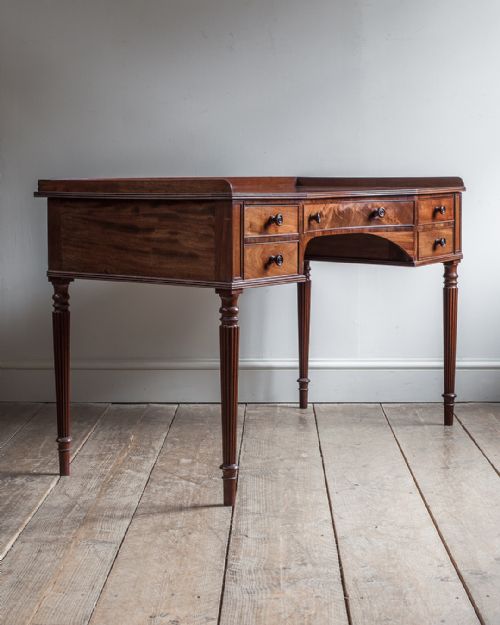
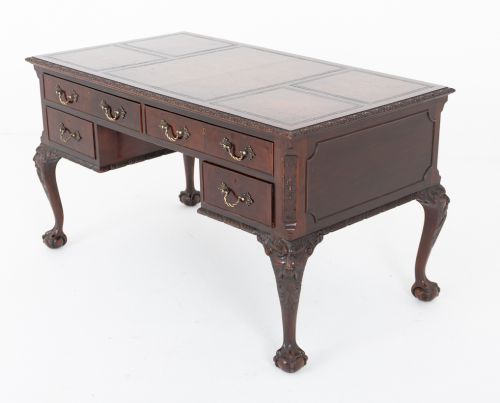
The versions most frequently met combine solid mahogany or flame mahogany veneer with brass hardware, alongside occasional variations featuring leather inserts or oak secondary woods. Desks span standard writing formats, dressing table hybrids, and architectural variations.
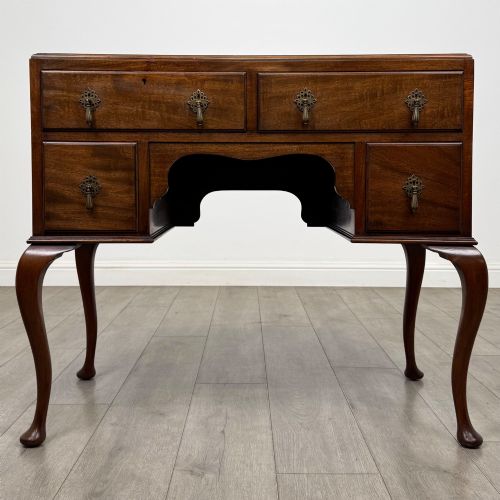
Origins stretch from eighteenth-century workshops through nineteenth-century Victorian production to early twentieth-century revivals like the Chippendale style. Pieces emerge from standard pedestal layouts to breakfront and serpentine configurations.

Materials and Technique
Construction relies on mahogany timber, occasionally selected for flame or figured grain patterns, paired with oak used for drawer linings and internal framing. Brass fittings secure handles and escutcheons across pedestals.
Surfaces frequently incorporate inset leather writing panels alongside traditional polished finishes applied to the timber structure.
Retail Price Guide 2026
Typical UK retail prices for mahogany kneehole desk, calculated from the Sellingantiques database of over a million retail prices indexed since 2003. This retail price guide relies exclusively on Sellingantiques data; no external sources or auction records are used, so the figures do not describe the wider market.
Some nineteenth-century makers concealed extra compartments inside pedestals for sensitive paperwork.
Quality Distinctions
The upper tier of pieces displays superior timber selection, such as figured flame mahogany veneer, matched against precise joinery and substantial secondary woods like oak. Cabinetwork complexity, including serpentine or breakfront profiles and inlaid details, separates standard production from finer examples.
Proportion and structural integrity define the distinction between straightforward utility items and pieces exhibiting deliberate architectural intent, such as dedicated architects' desks.
Edwards and Roberts
The Antique Mahogany Kneehole Desk Glossary
- Flame mahogany
- A veneer cut from the fork of the mahogany tree to produce a rippled, flame-like grain pattern. This decorative treatment appears frequently on finer drawer fronts.
- Kneehole desk
- A writing table featuring a central recessed space beneath the desktop, flanked by pedestals containing multiple drawers. This layout allows seated work while concealing storage.
- Serpentine front
- A furniture front curved with a convex centre flanked by concave sides. This profile demands advanced woodworking skill.
- Breakfront
- A cabinet or desk facade where the central section projects forward from the flanking pedestals. It adds architectural depth to the piece.
- Pedestal
- A vertical stack of drawers supporting one side of the desktop. Two pedestals typically frame the recessed kneehole.
Frequently Asked Questions
How do I date a kneehole desk?
Dating relies on observing construction methods, timber choice, and hardware styles across the piece. Georgian examples typically display hand-dovetailed oak drawer linings, whereas later Victorian versions incorporate different secondary woods and machine-cut elements.
Changes in proportion, veneer selection, and decorative inlays also distinguish eighteenth-century pieces from nineteenth-century revivals.
Were these desks used for writing?
These desks served multiple functions in period interiors, including private correspondence and record keeping. Some variants doubled as dressing tables or specialised architects' furniture.
The inclusion of leather inserts provided a durable surface for writing with ink.
How do I care for mahogany?
Maintaining mahogany involves keeping pieces away from direct heat sources and sudden humidity shifts to protect the timber and veneer. Regular dusting with a soft cloth preserves the polish without chemical buildup.
Leather tops require occasional conditioning to prevent drying and cracking.
What is the difference between Georgian and Victorian desks?
Georgian desks generally exhibit restrained lines, solid proportions, and hand-cut joinery typical of eighteenth-century cabinetmaking. Victorian interpretations often introduce heavier proportions, applied inlays, or varied pedestal configurations.
Revival pieces from later decades frequently emulate earlier eighteenth-century Chippendale styles while utilising nineteenth or twentieth-century construction traits.