
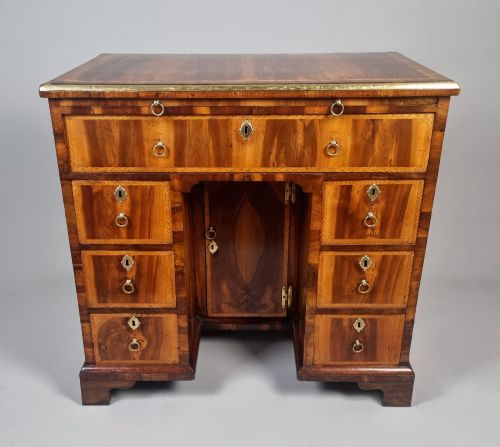
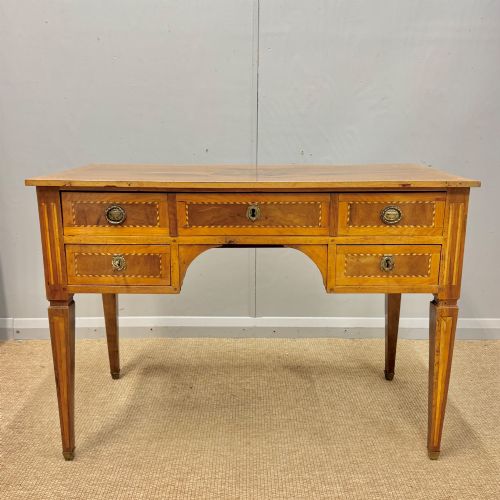
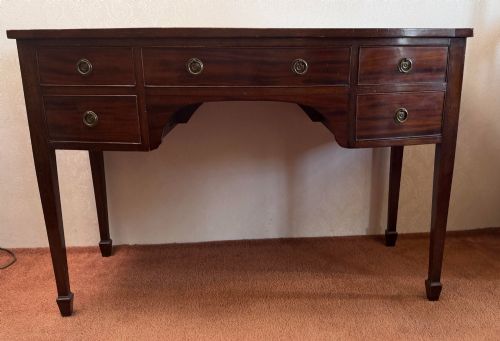
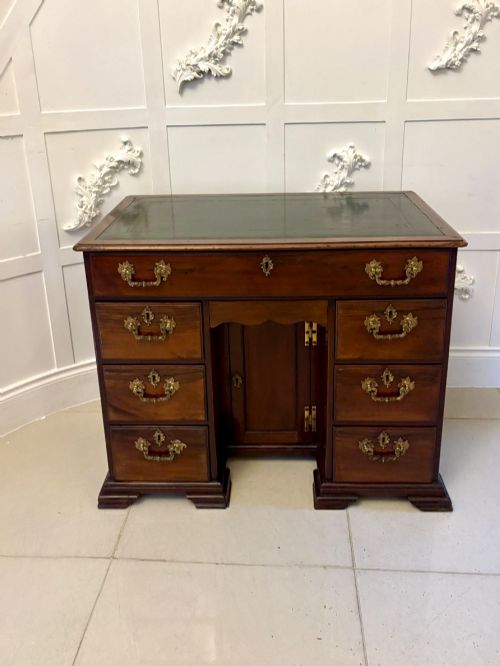
Georgian Kneehole Dressing Table
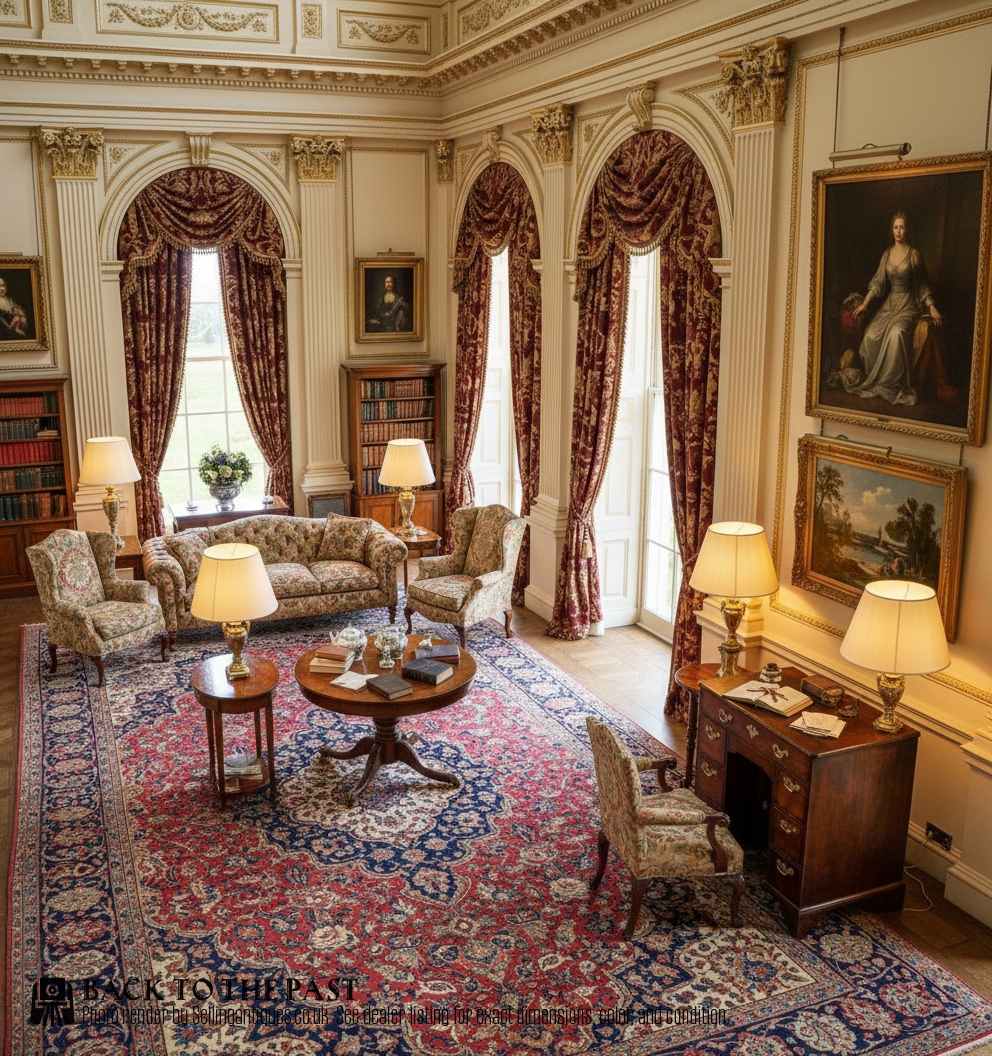
A georgian kneehole dressing table combines intimate scale with multiple drawers and a central recess, offering a functional workspace and a commanding aesthetic.
Georgian Kneehole Dressing Table
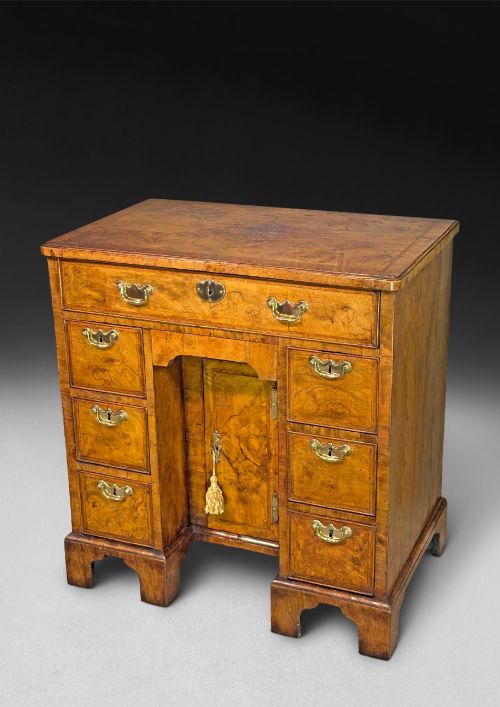
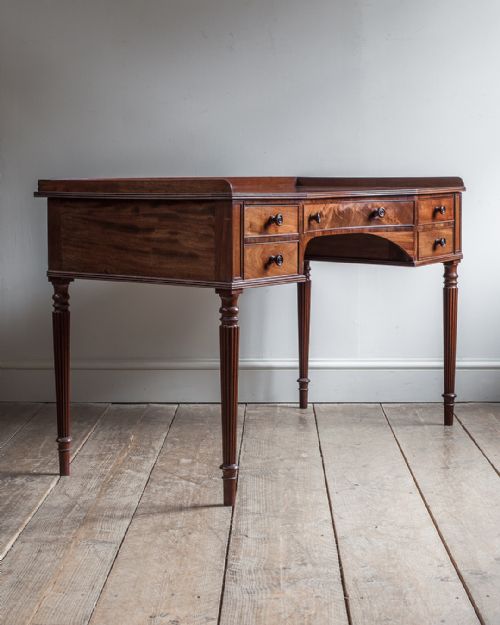
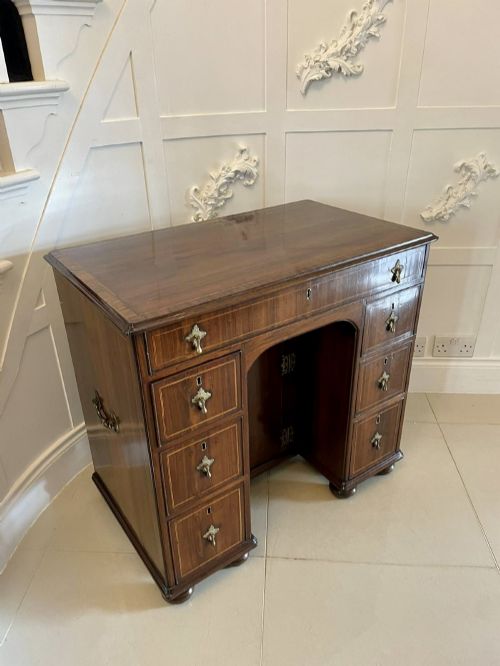
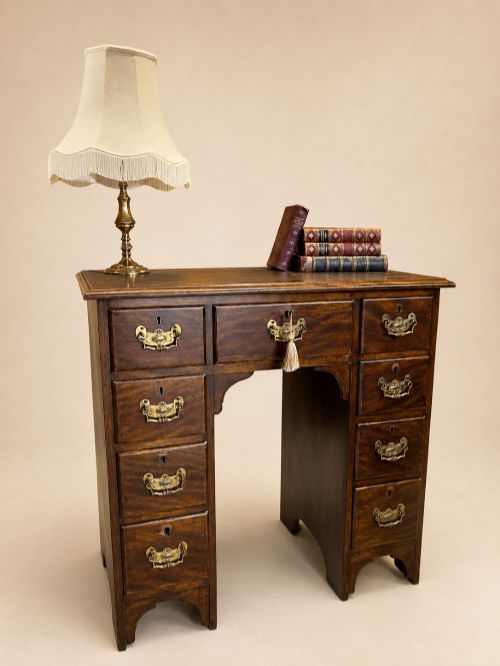
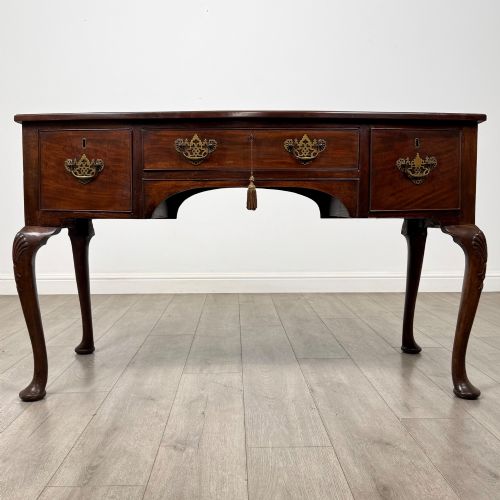
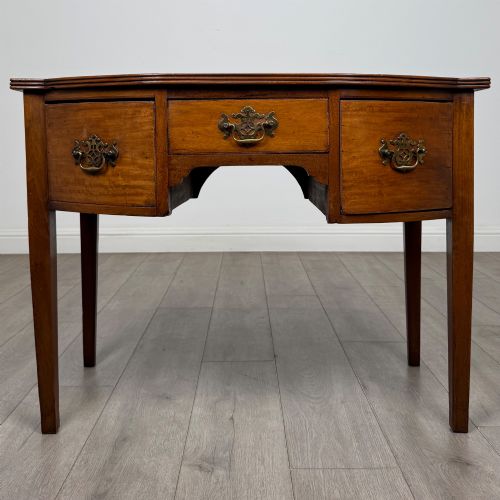
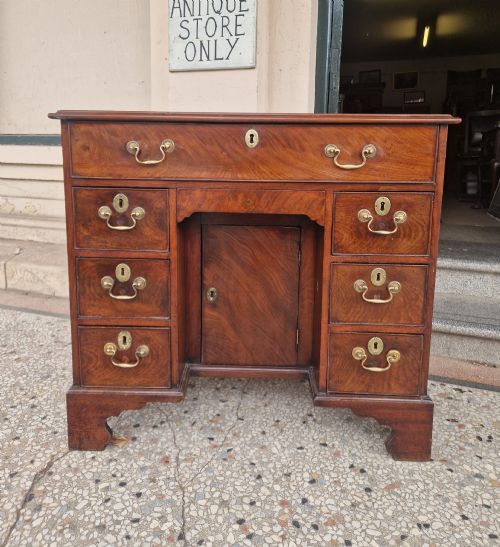
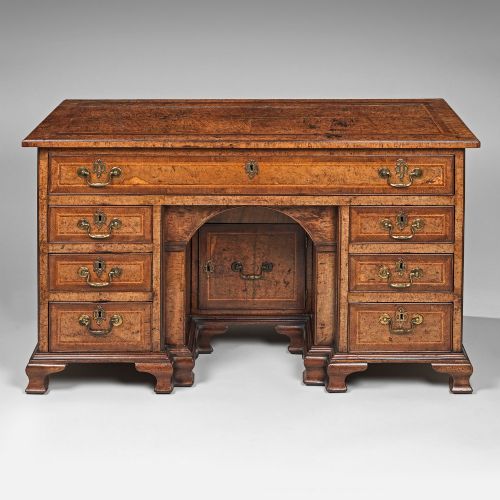
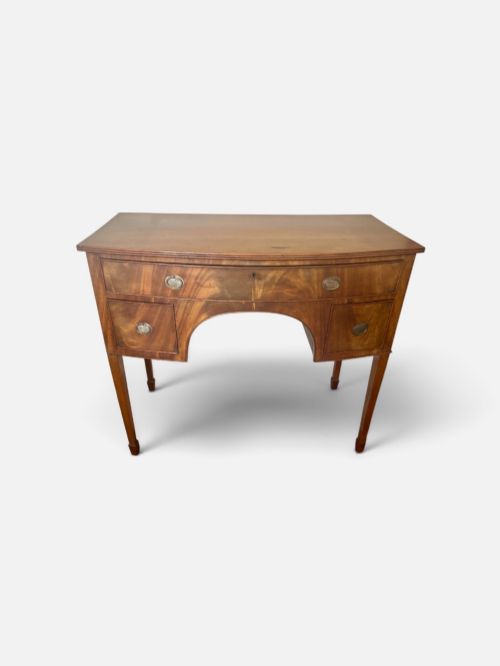
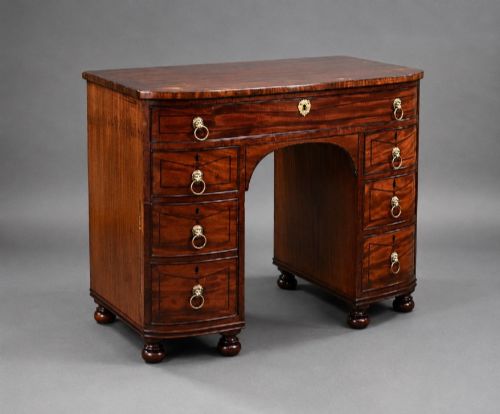
A georgian kneehole dressing table is a compact form designed for personal grooming or private correspondence, featuring a central recessed cupboard flanked by banks of small drawers. The pieces seen here span the eighteenth and nineteenth centuries, alongside later revivals, and frequently appear in richly figured hardwoods.
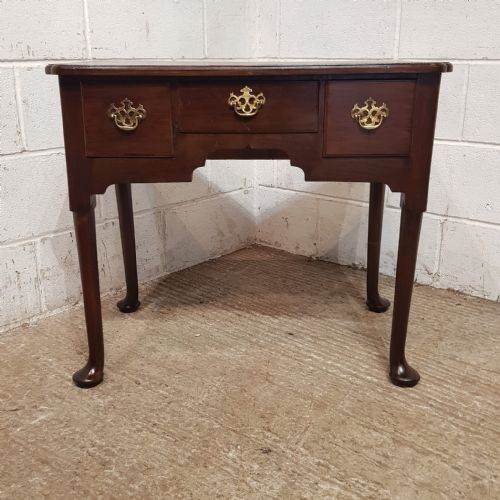
While many examples adhere to the classic double-pedestal configuration with a pull-out writing slide, related forms such as lowboys and low pedestal desks also emerge under this heading. The walnut and mahogany versions from the Georgian period represent the core of what collectors encounter.
How they were made
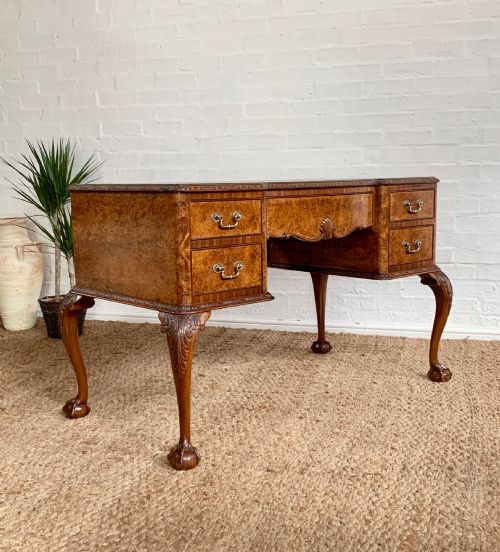
Cabinetmakers utilised solid timbers and sophisticated veneers, applying figured walnut, burr walnut, and flame mahogany over secondary woods to create dramatic surface patterns. Crossbanding in contrasting timbers and purpleheart banding often define the borders of drawers and tops.
Drawer construction relied on hand-cut dovetails, while brass hardware - ranging from batwing plates to drop handles - was fitted to original backplates. Leather inserts, sometimes green and tooled, provide writing surfaces on specific desk variations.
Secret central compartments hidden inside the kneehole recess allowed owners to conceal valuables from prying eyes.
What varies in quality
Quality rests heavily on the choice of timber and the preservation of original surfaces, where richly figured grain elevates an example far above plain stock. The subtlety of proportions, particularly in smaller widths, dictates the visual balance of the piece.
The survival of original brasses and undisturbed drawer linings marks the distinction between untouched historic examples and heavily restored pieces. Refinement in the execution of cock-beading around drawers further separates standard workshop production from finer cabinet work.
maples of london
The Georgian Kneehole Dressing Table Glossary
- Kneehole
- A compact desk or dressing table featuring a central recessed space flanked by pedestals of small drawers. This arrangement provides comfortable legroom for a seated user.
- Lowboy
- A small side table with one or more rows of drawers, standing on four legs. These function as precursors or companions to larger dressing furniture.
- Burr walnut
- Timber taken from the wart-like growths on walnut trees, yielding highly swirled and mottled grain patterns. Cabinetmakers prized this material for high-status drawer fronts and tops.
- Cock-beading
- A narrow semi-circular moulding projecting around the edges of drawer fronts. This detail protects the drawer edges from chipping and frames the facade.
Georgian Kneehole Dressing Table: Frequently Asked Questions
What is a kneehole dressing table?
A kneehole dressing table is a low, multi-drawer case piece with a central recess intended for a chair. It combines storage with a surface for grooming or writing.
Historically used in private chambers, these tables keep everyday items close at hand within numerous small drawers while maintaining a neat, architectural silhouette.
How do I date a Georgian desk?
Dating relies on timber choice, construction methods, and hardware styles. Earlier pieces often feature walnut or figured woods, whereas later eighteenth-century examples lean towards mahogany with banded details.
Examining drawer dovetails and the profile of mouldings helps separate mid-eighteenth-century work from later nineteenth-century revivals.
Were these used for writing or dressing?
They served dual purposes, functioning as dressing tables with mirrors or as intimate writing desks depending on the owner's needs and the presence of a slide.
The addition of a pull-out brushing slide above the kneehole provided a temporary surface for ink and paper without disturbing the main top.
Where should I place one at home?
Their modest proportions and finished backs allow these tables to sit effectively in studies, bedrooms, or even floated away from walls in larger reception rooms.
Because they offer compact storage and a finished presentation from multiple angles, they adapt well to tight spaces needing a focal point.