
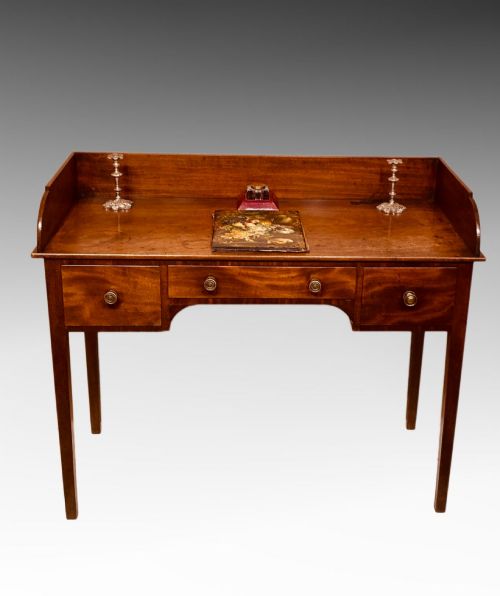
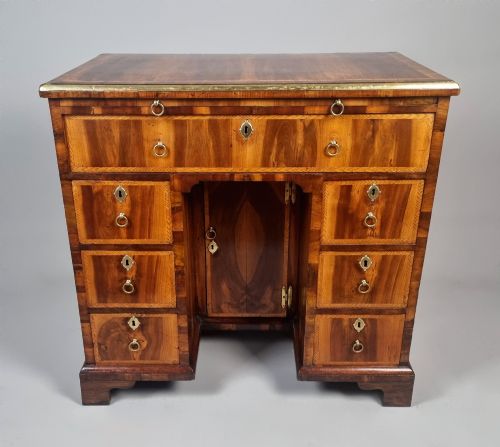
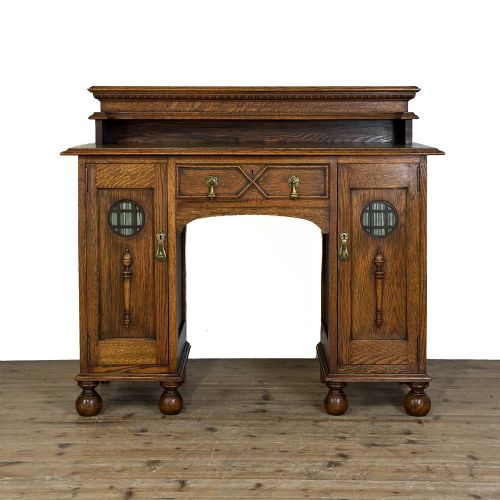
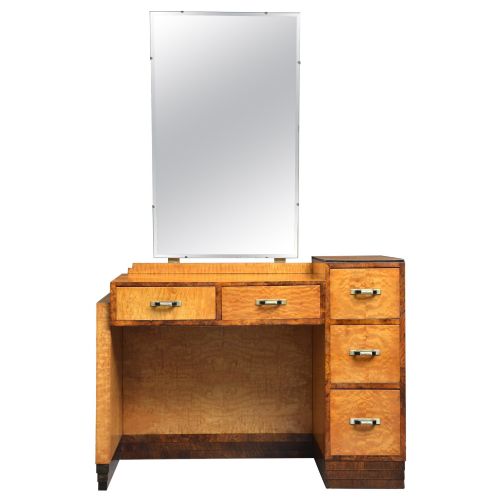
Kneehole Vanity Desk
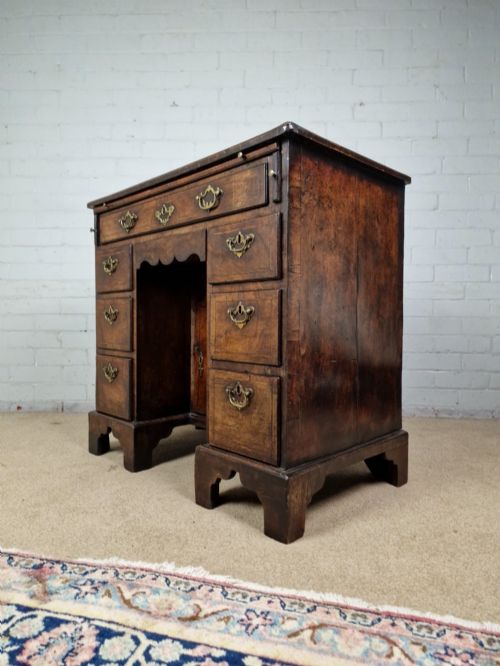
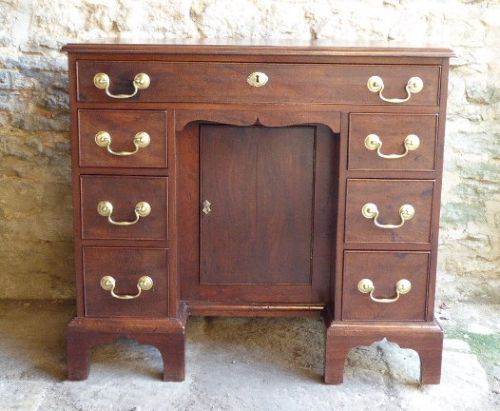
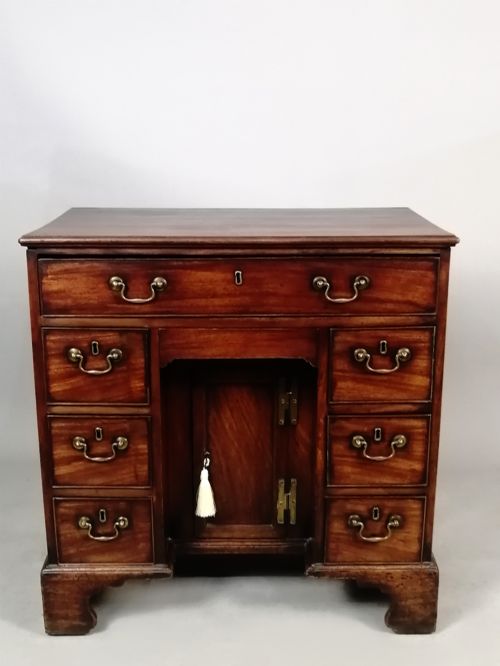
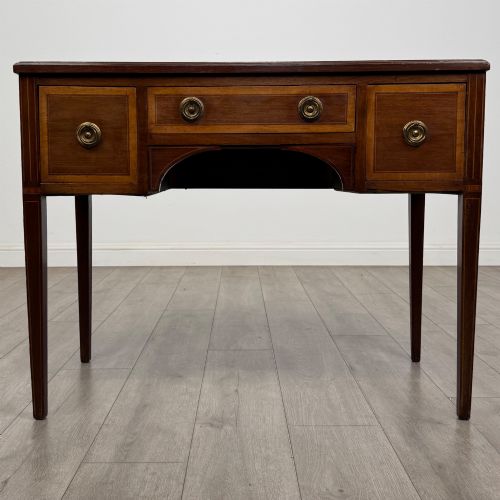
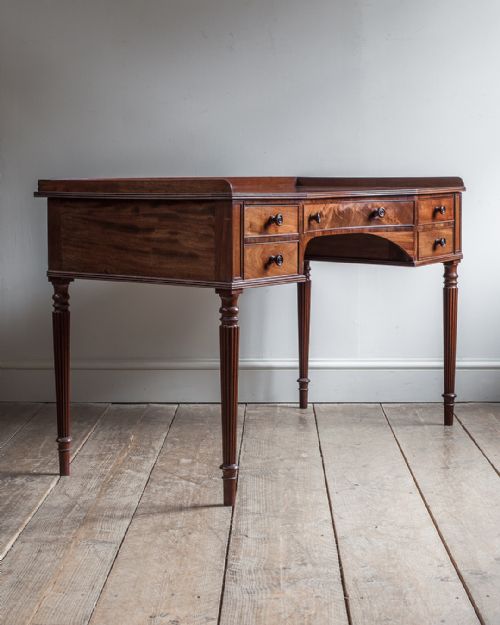
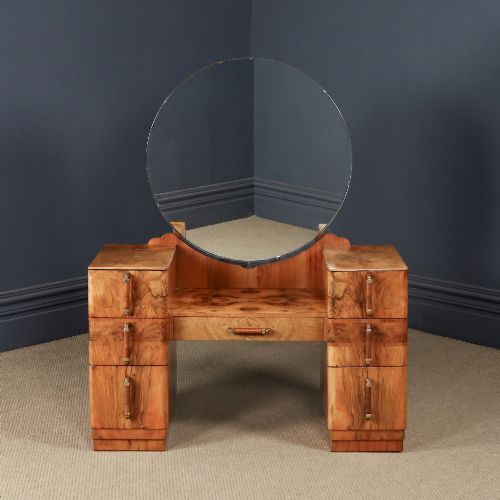
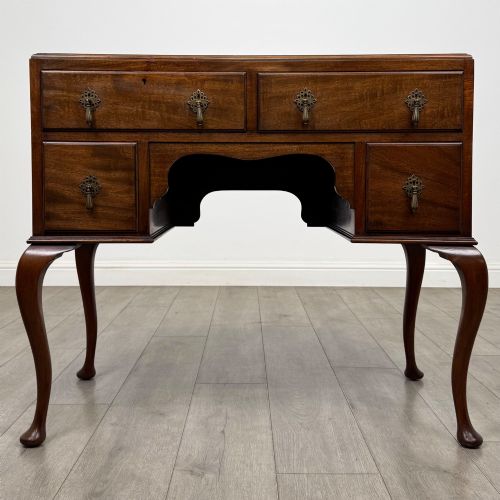
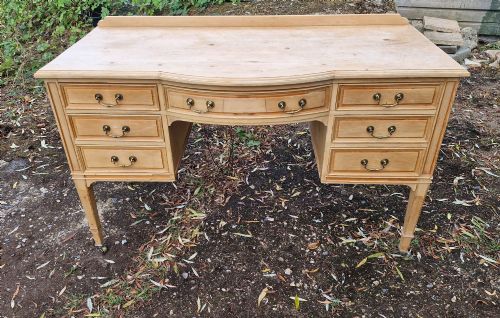
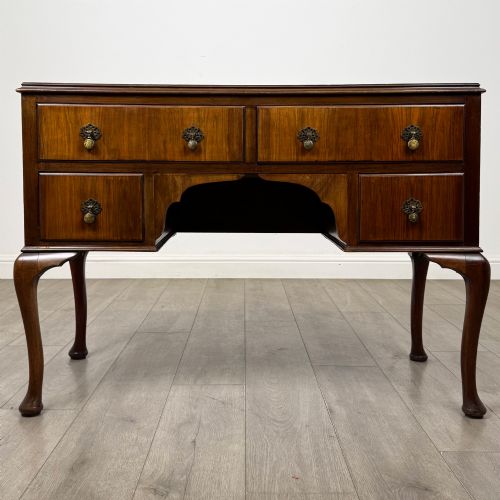
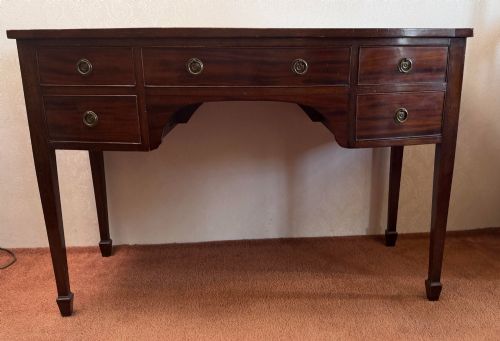
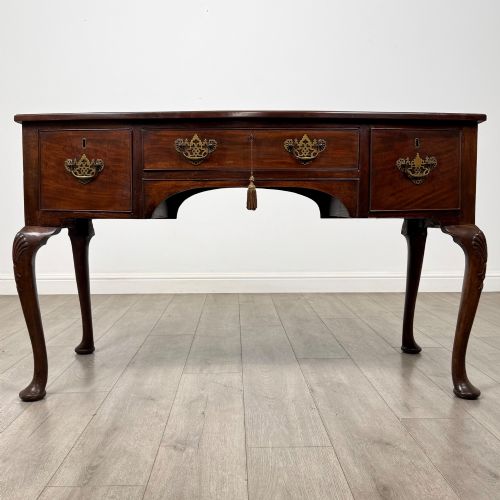
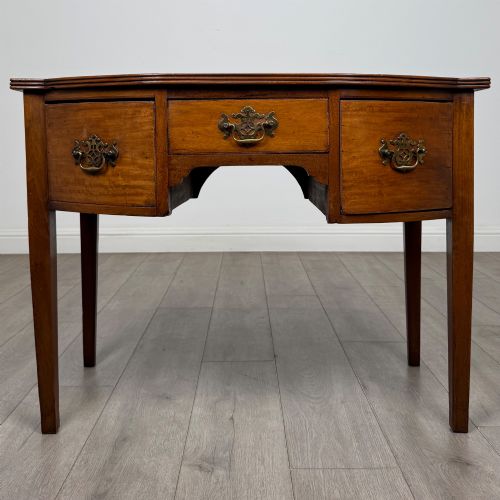
A kneehole vanity desk offers compact proportions and a recessed central cupboard flanked by pedestals of drawers, combining the functions of a dressing table and a writing desk.
Kneehole Vanity Desk
Originating in the Georgian period and revived through the Victorian, Edwardian, and 1930s eras, the kneehole vanity desk appears in both rectilinear and serpentine forms. Makers utilised rich timber veneers and crossbanding to enhance the visual depth of the writing surface and drawer fronts.
How they were made
Cabinetmakers constructed these pieces using solid hardwoods such as mahogany, oak, and yew, frequently applying figured veneers like burr walnut, flame mahogany, and birdseye maple to primary surfaces. Drawer linings typically utilised secondary timbers such as oak or pine, joined with hand-cut dovetails that indicate traditional workshop assembly.
Surface ornamentation relied heavily on timber selection, natural grain patterns, and decorative elements such as crossbanding, stringing, and brass drop handles or backplates. Later examples incorporated specialised inserts like green tooled leather writing surfaces and integrated pivoting mirrors to serve their dual function as dressing tables.
Materials appearing across these desks include brass, glass, metal, oak, satinwood, walnut, burr walnut, and mahogany.
What varies in quality
The distinction between ordinary and superior pieces rests on the choice of timber and the precision of the veneer work, particularly on curved serpentine fronts and top panels. Master cabinetmakers selected timbers with intense grain movement, matching veneer sheets symmetrically across the central kneehole and drawer banks to create a cohesive visual field.
Structural integrity and the retention of original elements also dictate quality, distinguishing pieces with matching period brass hardware and untouched drawer construction from those altered over time. The finesse of the dovetail joinery, the thickness of the timber framing, and the subtlety of edge mouldings separate standard production from exceptional craftsmanship.
Wylie & Lochhead Glasgow·Heal & Sons Heals·maples of London
The Kneehole Vanity Desk Glossary
- Kneehole
- A recessed architectural space positioned centrally beneath the top surface of a desk or dressing table to accommodate the user's legs. This layout allows for banks of small drawers on either side.
- Burr walnut
- A decorative wood veneer harvested from the gnarled growths of walnut trees, prized for its swirling, organic patterns. It was frequently employed on prominent surfaces during the Georgian and Art Deco periods.
- Serpentine
- A front contour characterised by a gentle, undulating convex curve flanked by two concave curves. This shaping requires advanced woodworking skill to execute cleanly on solid timber and drawer fronts.
- Crossbanding
- A narrow strip of veneer laid around the border of a table top or drawer front with the grain running perpendicular to the central panel. This technique creates a neat framing effect.
- Secretaire
- A desk or chest containing a fitted drop-down writing drawer that conceals smaller compartments and pigeonholes. It merges storage capacity with a dedicated writing surface.
Kneehole Vanity Desk: Frequently Asked Questions
What is a kneehole vanity desk?
A kneehole vanity desk is a compact item of furniture featuring a central recessed opening beneath the top surface, flanked by vertical stacks of drawers. It combines the storage and surface area of a writing table with the specific provisions for grooming found in a dressing chest.
These pieces were constructed in various timber types including mahogany, walnut, and oak across multiple design periods from the eighteenth century onwards. Their balanced proportions make them suitable for placement in smaller studies or bedrooms.
How were kneehole desks used historically?
Historically, these desks served private chambers and dressing rooms as multi-purpose furniture for personal correspondence and morning toilet routines. The central kneehole provided comfortable seating while the surrounding drawers stored writing implements, documents, or cosmetics.
Over successive design eras, from the Georgian period to the 1930s, the form evolved to incorporate fitted mirrors and tooled leather inserts. This versatility allowed owners to transition smoothly between writing letters and attending to personal grooming.
How do I identify a Georgian kneehole desk?
Georgian kneehole desks are typically distinguished by solid timber construction, hand-cut dovetail joints, and restrained classical proportions dating from the eighteenth century. They frequently employ dense mahogany or yew wood, accompanied by original brass drop handles and backplates.
Later revivals in the Edwardian and Art Deco styles often emulate these earlier forms but utilise different veneering techniques and internal secondary woods. Examining the drawer construction and timber ageing provides clear clues to a piece's true period.
How do I style a vintage kneehole desk?
A vintage kneehole desk functions effectively as a standalone writing table or a feature dressing chest in a modern interior. Pairing the piece with a simple, understated chair preserves the clean symmetry of the pedestal arrangement without overwhelming the recessed kneehole space.
Allowing the natural grain of the timber, whether burr walnut or flame mahogany, to remain the visual focus prevents clutter. The flat top surface accommodates lighting or decorative items while retaining its primary utility as a working workspace.