




Pine Kneehole Desk
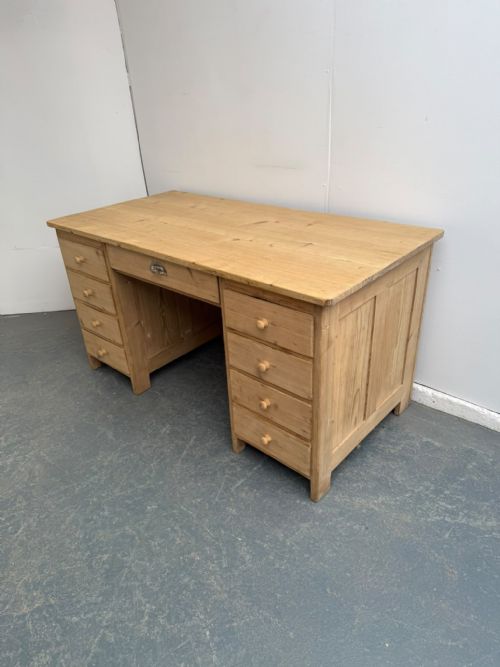
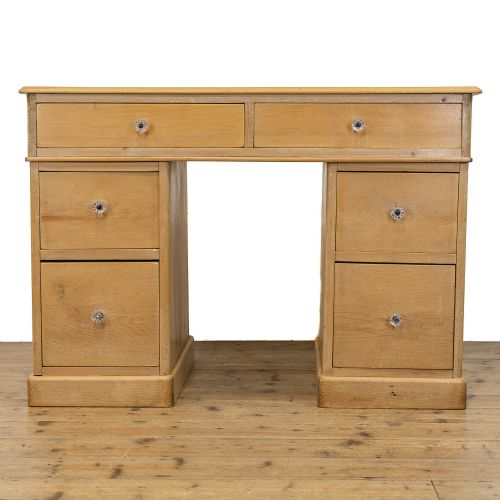
A pine kneehole desk is a sturdy writing table with a central recess, offering practical workspace and hidden drawer storage for the home.
What a pine kneehole desk is
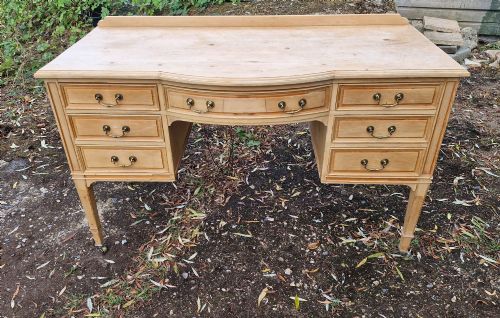
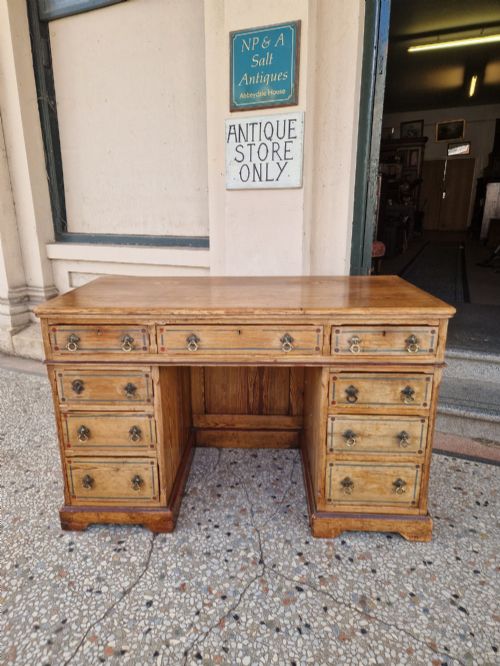
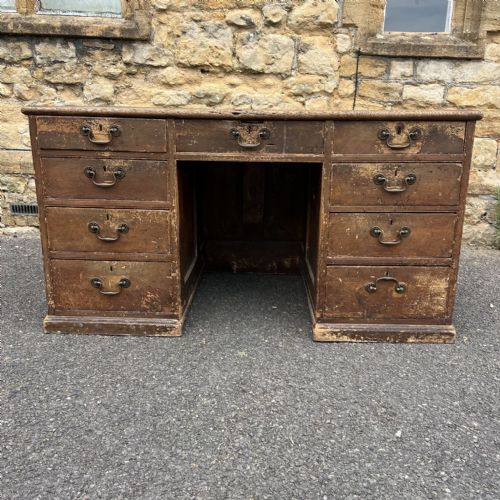
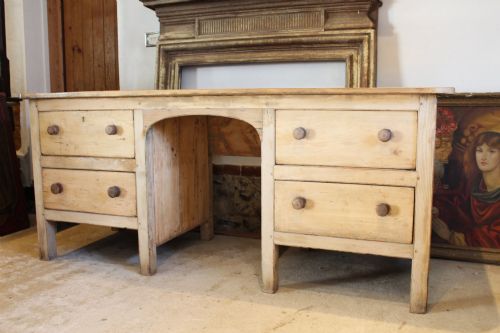
When you search for a pine kneehole desk, you encounter robust writing furniture designed for domestic studies and bedrooms. These pieces provide a dedicated writing surface flanked by banks of drawers, with an open recess in the centre.
The versions you are most likely to meet on this page hail from the Victorian period, though examples span from the Georgian era through to Edwardian times. They appear in standard pine or denser pitch pine, sometimes with original paint finishes.
Forms vary from single pedestal variants to larger pedestal writing desks fitted with multiple drawers and cupboards. English country styles and simpler Victorian country aesthetics dominate the selection.
How they were made
These items are constructed from solid timber, utilising pine and pitch pine for the main carcasses, drawer fronts, and panels. Woodworkers built them to withstand daily use, incorporating fitted drawers to organise stationery and documents.
Surface treatments recorded in the evidence include painted finishes and simulated graining, alongside plain wood surfaces. Metal brass hardware and glass details appear as structural and decorative components on specific variations.
Retail Price Guide 2026
Typical UK retail prices for pine kneehole desk, calculated from the Sellingantiques database of over a million retail prices indexed since 2003. This retail price guide relies exclusively on Sellingantiques data; no external sources or auction records are used, so the figures do not describe the wider market.
Listings feature items from the Georgian, Victorian, and Edwardian periods, constructed in pine, pitch pine, and paint.
What varies in quality
The distinction between standard examples and finer pieces rests upon the choice of timber and the complexity of the internal arrangement. Dense pitch pine and well-executed painted surfaces elevate the visual presence of a desk.
Proportion and form dictate the upper tier of the range, particularly where desks feature fitted drawers, cupboards, or arched kneeholes. Simpler country iterations offer functional utility with less decorative elaboration.
The Pine Kneehole Desk Glossary
- Kneehole desk
- A writing table featuring a central recess beneath the work surface, flanked by pedestals containing drawers.
- Pitch pine
- A heavy, durable resinous softwood utilised for robust nineteenth-century furniture construction.
- Pedestal desk
- A large freestanding desk comprising two supporting columns of drawers with a central writing surface.
- Dog kennel dresser
- A regional furniture form incorporating a central low cupboard or recess flanked by banks of drawers.
- Simulated pine
- A decorative paint technique applied to imitate the grain and appearance of pine timber.
Frequently Asked Questions
What is a kneehole desk?
A kneehole desk is a traditional writing table featuring a central open space for the legs, positioned underneath the desktop. This central void is flanked on both sides by vertical stacks of drawers.
Such furniture provided a compact writing station for domestic correspondence and accounts in nineteenth-century homes.
How do I date a pine desk?
Dating relies on observing construction methods, timber choices, and stylistic markers recorded across Victorian and Georgian examples. Details such as panelled construction and brass hardware help place pieces within specific nineteenth-century decades.
Later Victorian and Edwardian items often utilise denser pitch pine and simpler structural joins.
Where were these desks used?
These desks served primarily as domestic writing furniture in studies, bedrooms, and parlours. Their compact footprint made them suitable for private quarters where larger library tables proved impractical.
They provided dedicated storage for stationery alongside a stable surface for writing letters.
What is pitch pine?
Pitch pine is a heavy softwood species known for its high resin content and durability. Furniture makers utilised this dense timber during the Victorian era for pieces requiring extra strength.
Its distinct grain pattern gives these desks a robust and striking appearance.