
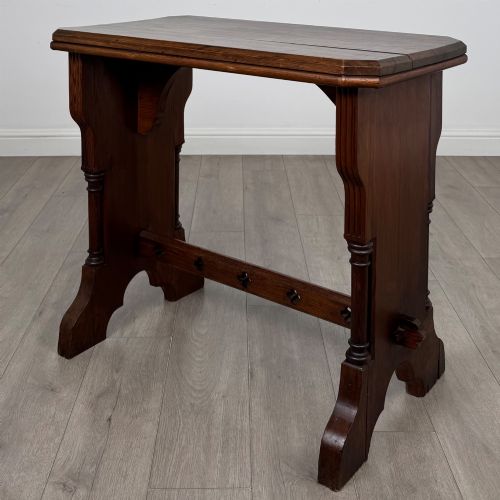
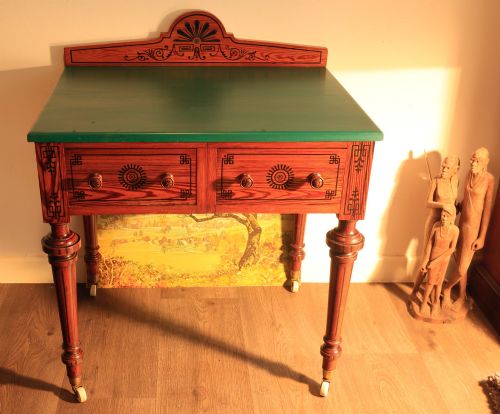


Pitch Pine Desk
Pitch pine desks bring a dense grain and heavy construction to domestic and institutional workspaces, mostly emerging from Victorian and Edwardian workshops.
Pitch Pine Desk
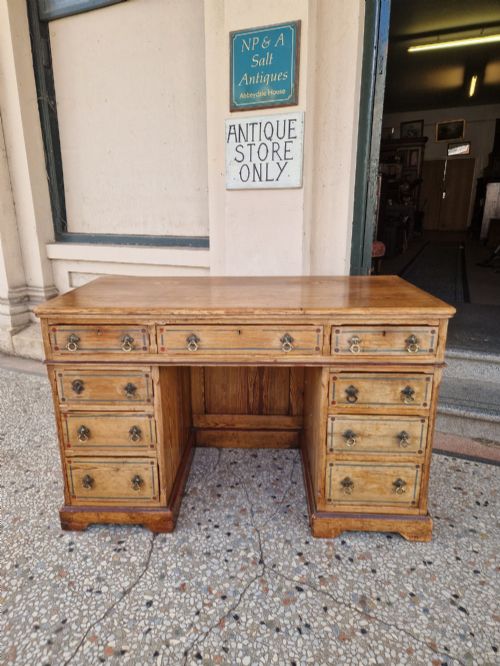
A pitch pine desk typically appears as a heavy pedestal, kneehole, or writing table originating in the nineteenth or early twentieth century. These pieces reflect the robust utility demanded by Victorian offices, schools, and ecclesiastical spaces.
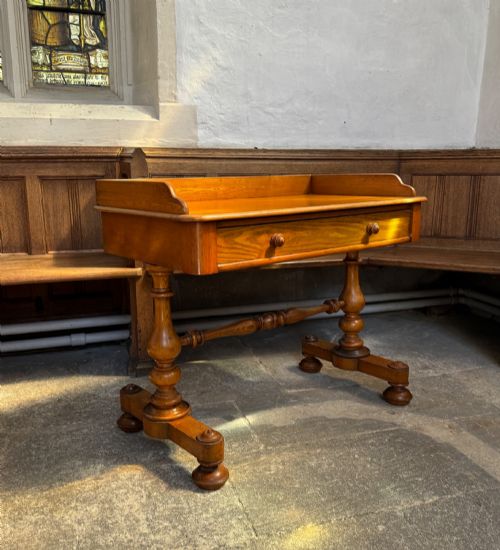
The version most commonly met on this page is the Victorian writing table or pedestal desk, though clerks desks and partners desks also surface regularly. Examples often display influences from the Gothic Revival and Arts and Crafts movements.
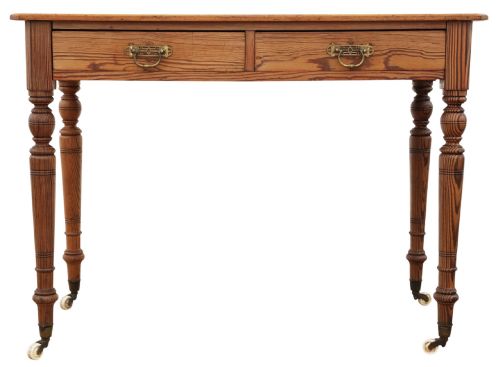
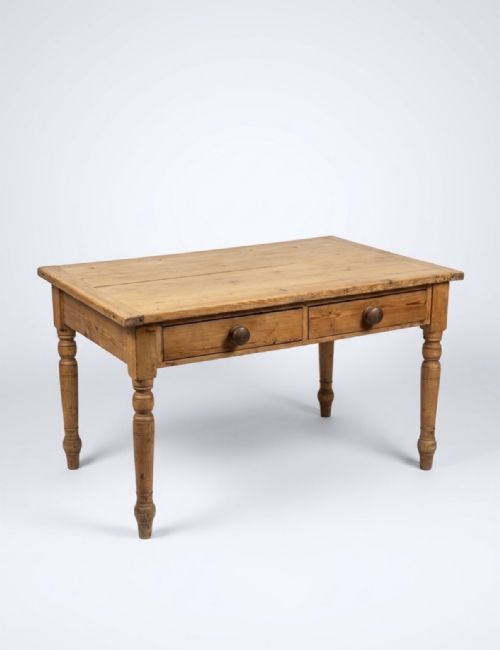
Makers utilised the strong resinous timber for school teacher desks and large library tables as well as domestic writing furniture. The form ranges from simple two-drawer writing desks to substantial twin pedestal pieces with fitted drawers.
Quality and Proportion
The standard of a pitch pine desk rests upon the selection of the timber and the prominence of the grain. Superior pieces display tightly packed, straight resin lines across large, uninterrupted panels.
Construction methods and detailing separate utilitarian school furniture from high-status library or partners desks. Panel thickness, drawer dovetailing, and the retention of original brass or iron hardware determine the standing of each piece.
Pitch Pine Desk Retail Price Guide 2026
Typical asking prices for pitch pine desk among the pieces listed under this phrase on Sellingantiques today, from the lower quarter to the upper quarter. They describe what is for sale here now, not the wider market.
School teacher desks occasionally retain ink stains inside the drawers, recording generations of unruly pupils.
Geo M Hammer & Co Ltd London·Heals
The Pitch Pine Desk Glossary
- Pitch Pine
- A durable North American pine species characterised by a high resin content and striking, dark growth rings. It was widely imported into Britain during the nineteenth century for heavy furniture and architectural joinery.
- Pedestal Desk
- A freestanding desk comprising a top surface supported by two independent banks of drawers. They often feature panelled sides and substantial proportions.
- Partners Desk
- A large double-sided desk designed for two people to work opposite one another. These typically include drawers and cupboards duplicated on both faces.
- Gothic Revival
- An architectural and decorative style popular during the Victorian era. It draws inspiration from medieval forms, resulting in pointed arches, heavy mouldings, and ecclesiastical details.
- Kneehole Desk
- A compact desk featuring a central recess for the user's legs, flanked by one or two banks of drawers.
Pitch Pine Desk: Frequently Asked Questions
What is a pitch pine desk?
A pitch pine desk is a piece of nineteenth or early twentieth century workspace furniture built from resinous pine. These desks range from simple writing tables to heavy pedestal and partners desks.
They derive from an era when heavy timber was standard for institutional, school, and domestic offices. The wood provides a distinctive striped grain pattern.
How do I date a pitch pine desk?
Dating relies on construction methods, hardware, and stylistic clues such as Gothic Revival motifs or Arts and Crafts simplicity. Victorian examples often show heavier panel construction.
Later pieces from the Edwardian period or around 1910 tend toward simpler forms. Secondary woods and drawer dovetailing also provide chronological markers.
Where were these desks used?
Original locations included Victorian libraries, school classrooms, clerical offices, and vicarages. Heavy construction suited them to demanding institutional environments.
Many also served in domestic studies and Victorian homes. Their robust nature ensured survival in working spaces.
How do I care for pitch pine furniture?
Maintain the wood by avoiding direct sunlight and excessive heat fluctuations that dry out the natural resins. Simple dusting and occasional application of appropriate wax preserve the finish.
Protect tooled leather inserts, where present, with specialist leather balms. Avoid harsh chemical cleaners on the timber.