
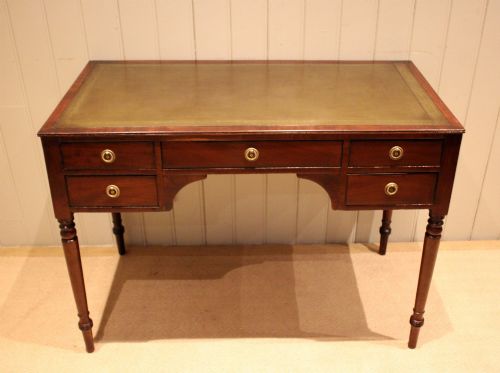
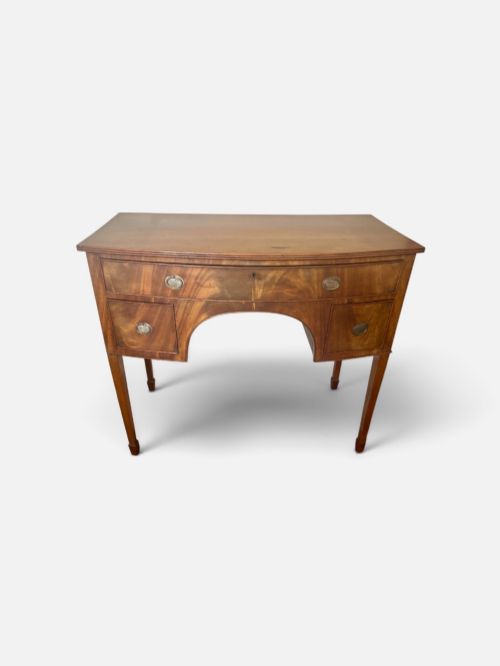
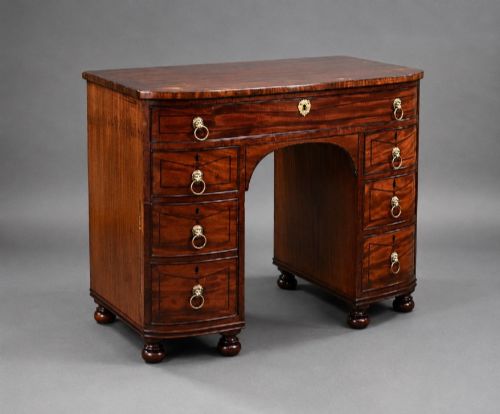
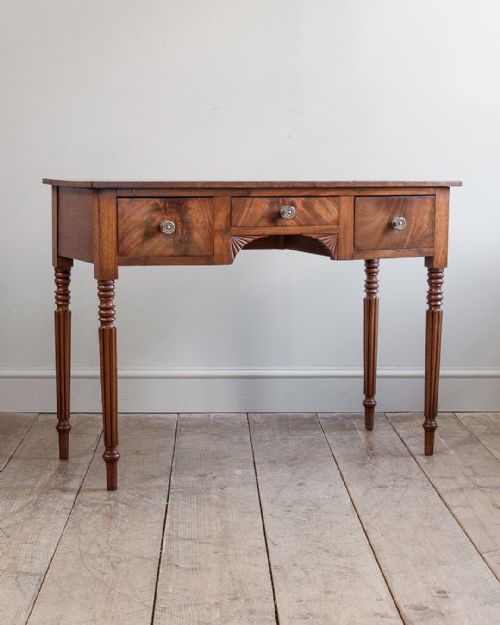
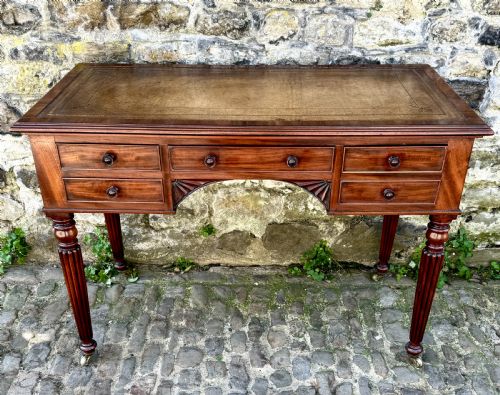
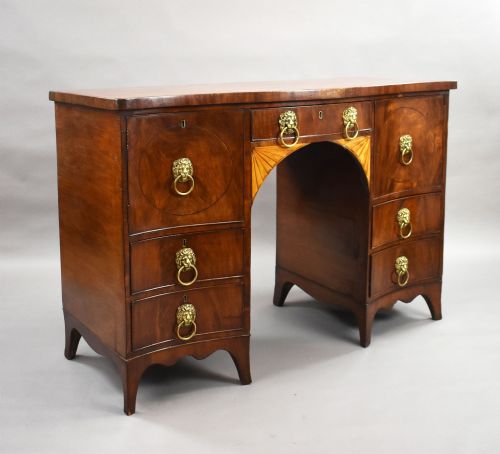


Regency Kneehole Desk
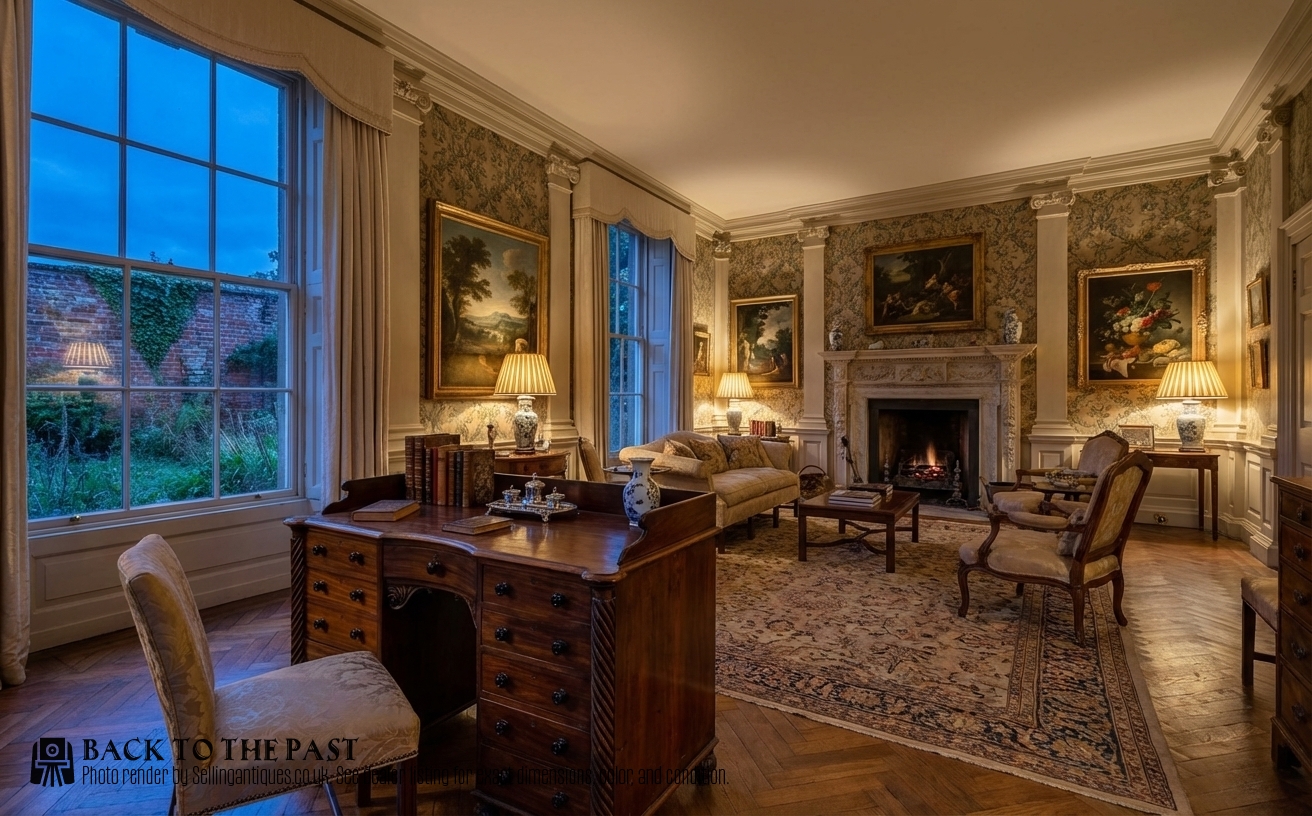
A regency kneehole desk offers compact proportions and fitted drawers, making it a practical writing surface for a study.
What they are
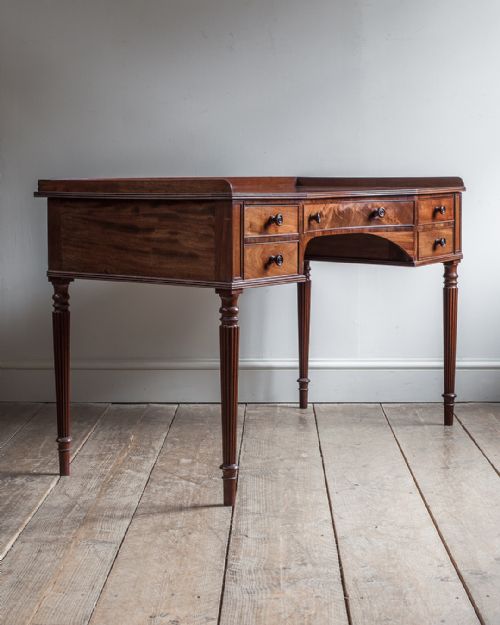
A regency kneehole desk is a form of writing furniture appearing across the Regency, George IV, and Victorian periods. These pieces combine drawers with a central recess, sometimes serving double duty as dressing tables or washstands.
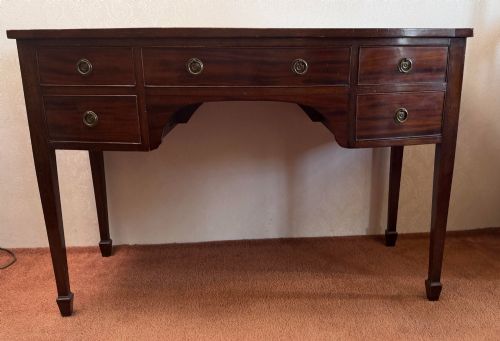
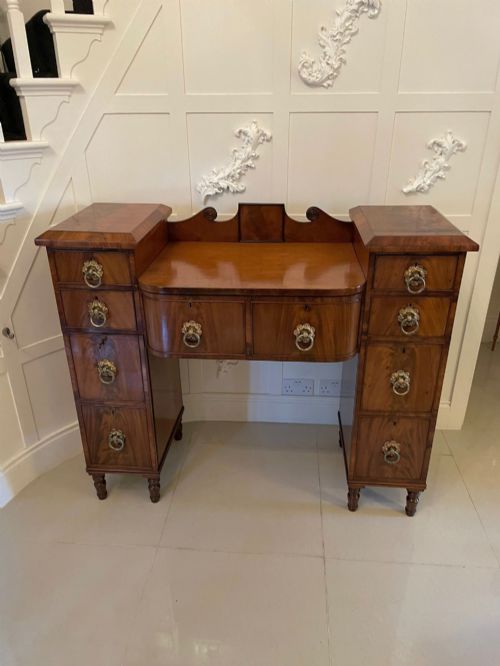
The versions met on this page span genuine Regency examples alongside later Regency Revival pieces from the Victorian and Edwardian eras. Forms range from bowfronted and concave-fronted desks to sideboards and side tables.
Makers and origins include English workshops, with specific pieces stamped by makers such as John Gregory London. Woods like mahogany and pine form the primary carcases, reflecting the domestic utility of these study and bedroom items.
How they were made
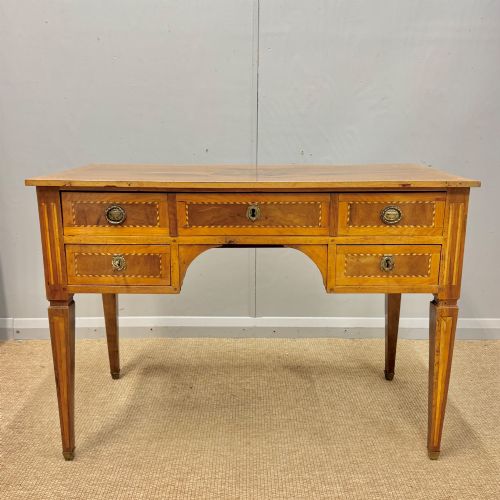
Makers built these desks primarily using solid and veneered mahogany, alongside painted or simulated pine carcases. Details often include boxwood and ebony stringing to outline drawer fronts and panels.
Hardware consists of brass fittings, such as drop handles and knobs, attached to multiple drawers. Construction techniques involve hand-cut dovetails for the drawer construction and turned or bracket supports.
Retail Price Guide 2026
Typical UK retail prices for regency kneehole desk, calculated from the Sellingantiques database of over a million retail prices indexed since 2003. This retail price guide relies exclusively on Sellingantiques data; no external sources or auction records are used, so the figures do not describe the wider market.
Listings feature mahogany, pine, brass, boxwood, and ebony across pieces from the Regency, George IV, and Victorian periods.
What varies in quality
The standard of a piece rests on the selection of timber figures and the precision of decorative inlays like boxwood and ebony. Better examples display harmonious grain patterns across the primary surfaces and drawer fronts.
Structural refinement shows in the execution of curved elements, such as bowfronts or concave kneeholes, and the retention of original brass hardware. Maker signatures, such as stamps on the wood, elevate the historical interest of certain desks.
John Gregory London
The Regency Kneehole Desk Glossary
- Bowfront
- A convex, outwardly curving front facade typical of certain desks and chests. This shape softens the profile of the furniture.
- Kneehole
- The central recessed space beneath a desk or dressing table designed to accommodate the user's legs. It is flanked by pedestals of drawers.
- Stringing
- Thin inlaid lines of contrasting timber, such as boxwood or ebony, used to edge panels and drawer fronts. It provides geometric definition to the surface.
- Dovetail
- An interlocking joint used in drawer construction for strength and durability. Hand-cut versions indicate traditional craftsmanship.
Frequently Asked Questions
What is a kneehole desk?
A kneehole desk is a piece of furniture featuring a central recess for the user, flanked by banks of small drawers. This layout allows for a seated workspace while maintaining storage beneath the top.
Such forms frequently double as dressing tables or writing surfaces depending on the period and the internal fittings provided.
How do I spot a reproduction?
Distinguishing period pieces from later revivals involves examining the secondary timbers, construction joints, and wear patterns. Later revival items often date to the Victorian or Edwardian eras rather than the early nineteenth century.
Checking for hand-cut dovetails and period-appropriate hardware helps clarify the actual age of the desk.
Where were they used?
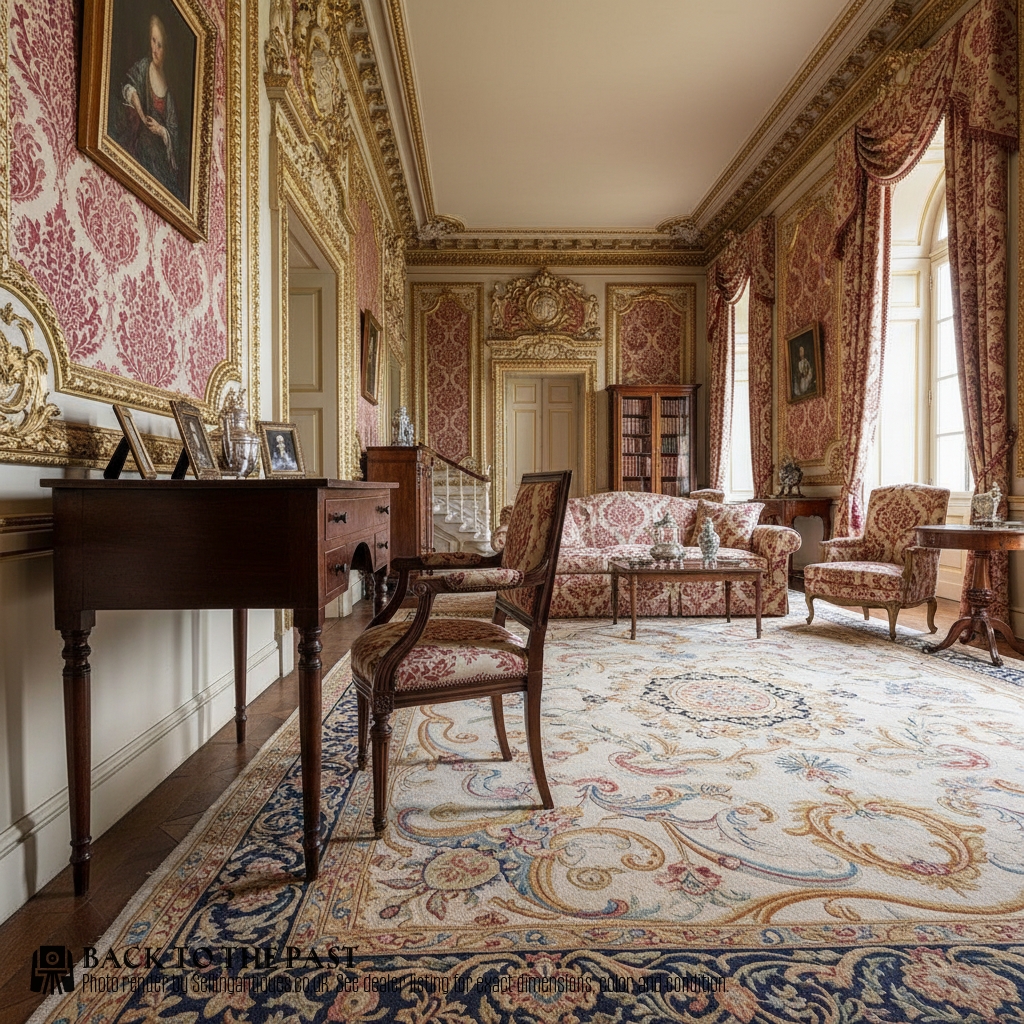
These desks served in private studies, home offices, and bedrooms as dual-purpose writing and dressing furniture. Their compact dimensions suited them to domestic spaces where large partner desks were impractical.
Examples were produced by English workshops for middle and upper-class homes.
What woods were used?
Mahogany serves as the dominant timber for these desks, complemented by secondary woods like pine. Craftsmen also incorporated boxwood and ebony for stringing and decorative inlay work.
Some pine examples feature painted finishes or simulated graining to mimic costlier hardwoods.