


Carved Mahogany Dressing Table
A carved mahogany dressing table brings deep timber grain, fitted mirrors and substantial 19th-century craft into the bedroom.

Carved Mahogany Dressing Table
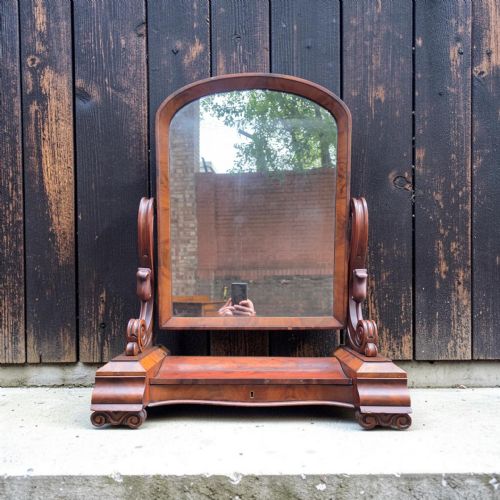
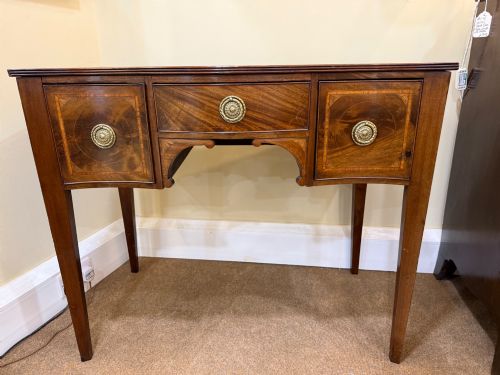
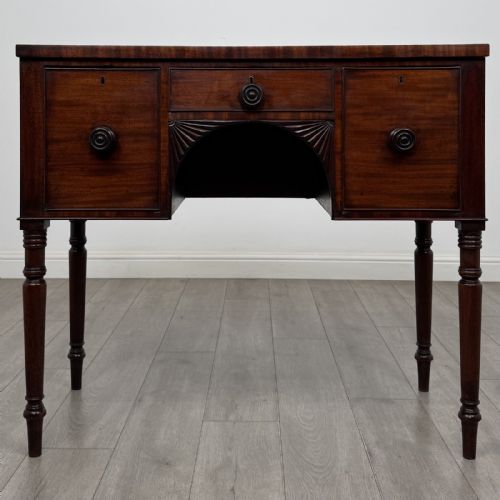
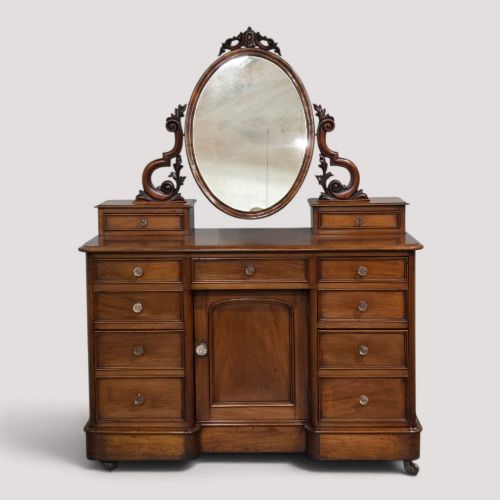
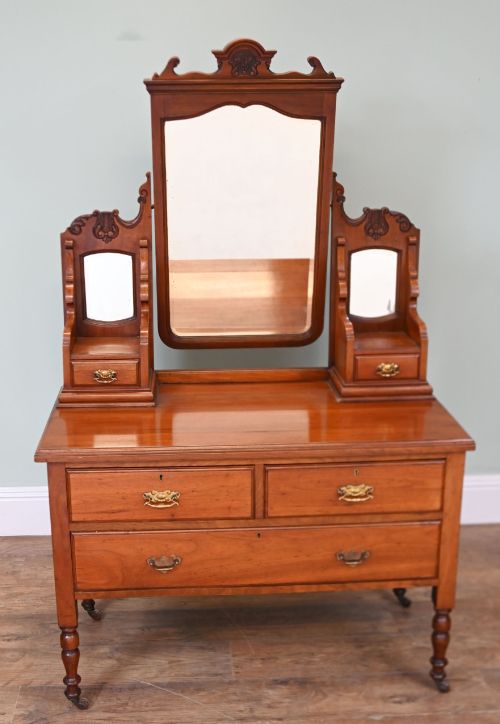
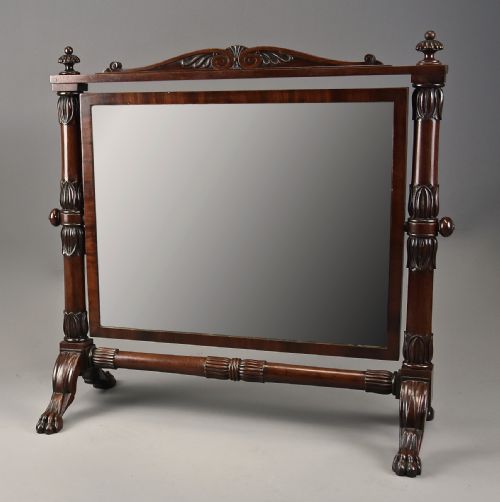
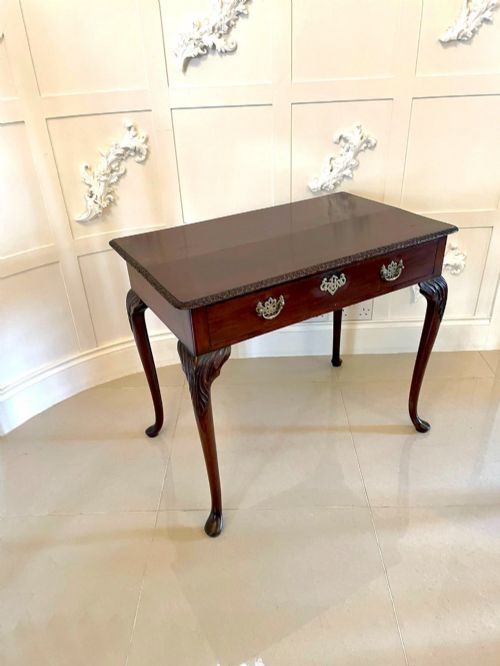
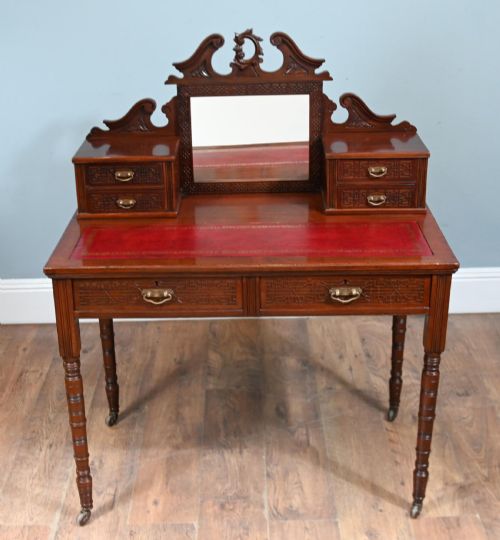
A carved mahogany dressing table is a substantial bedroom or dressing room piece designed for grooming, combining storage drawers with swing mirrors and solid timber construction. You will most frequently encounter Victorian and Edwardian examples on this page, alongside Georgian precursors and later revival styles.
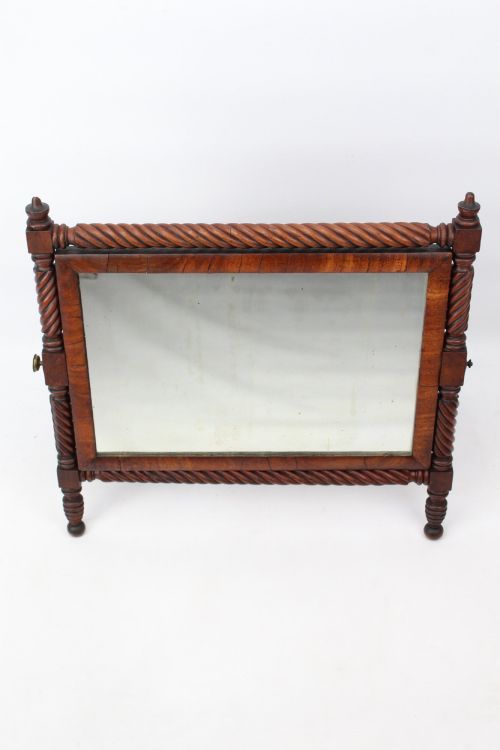
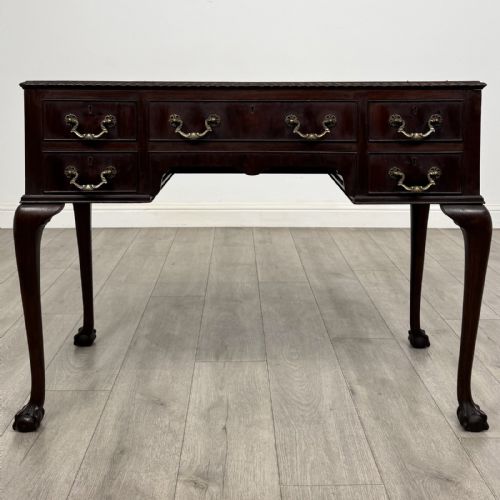
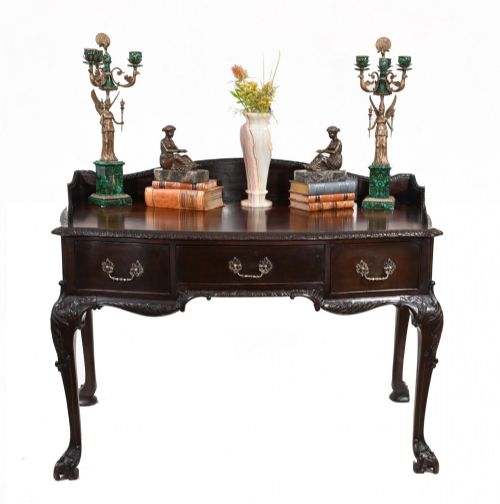
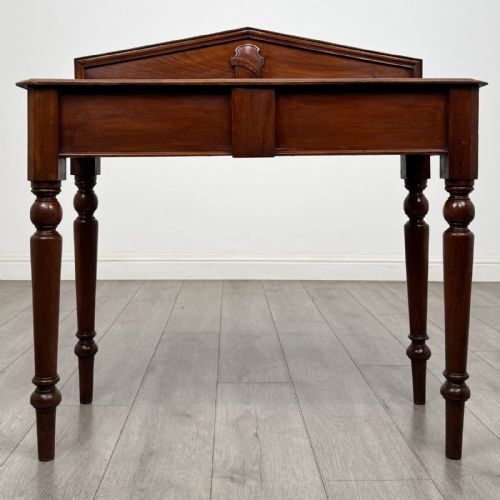
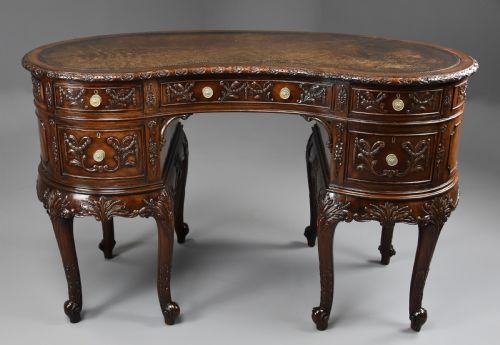
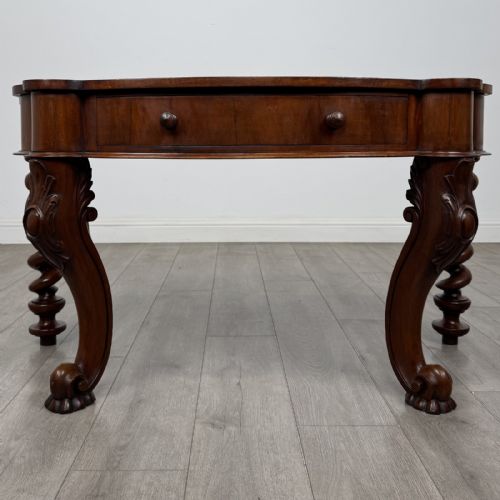
The selections span grand Duchess forms fitted with multiple drawers and pivoted mirrors down to compact kidney-shaped freestanding desks, often accompanied by matching upholstered stools with cabriole legs. Alongside full tables, the evidence includes smaller toilet mirrors and washstands sharing the same timber vocabulary.
How they were made
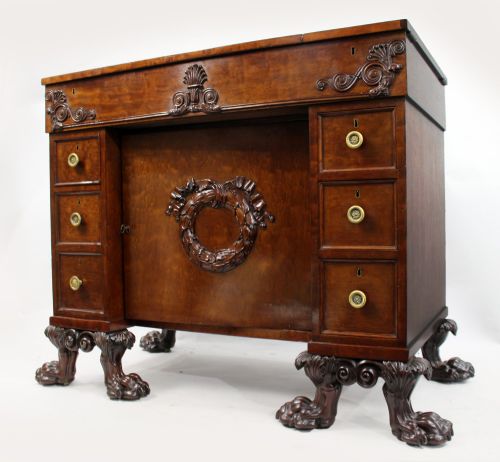
Makers utilised solid mahogany and figured flame veneers over secondary timbers, exploiting the rich grain patterns native to the wood. Brass hardware, leather inserts, glass mirror plates and marble surfaces appear as functional or decorative accents across the pieces.
Joinery techniques relied on dovetailed drawer construction and pegged joints, allowing carved scrolls, cabriole legs and serpentine fronts to be applied securely to the heavier structural frames.
Carved Mahogany Dressing Table Retail Price Guide 2026
Typical asking prices for carved mahogany dressing table among the pieces listed under this phrase on Sellingantiques today, from the lower quarter to the upper quarter. They describe what is for sale here now, not the wider market.
Listings feature pieces spanning the Georgian, Regency, Victorian, Edwardian and 1920s eras, predominantly worked in mahogany, brass and glass.
What varies in quality
Quality rests in the depth of the timber selection, such as the use of highly figured Cuban or flame mahogany veneers, paired with crispness in the hand-carved scrollwork and foliage. Finer examples display harmonious proportions between the mirror supports and the lower drawer chest.
Construction integrity separates standard utility pieces from masterworks, evident in the snug fit of dovetailed drawer linings and the retention of original brass fittings and heavy glass plates.
P & MA Nicholson
The Carved Mahogany Dressing Table Glossary
- Duchess dressing table
- A large Victorian dressing table featuring a grand central swing mirror supported by multiple small trinket drawers above a central drawer and pedestal base.
- Swing mirror
- A mirror plate held within a wooden frame that pivots on vertical screw pins or wooden pivots between two upright supports.
- Cuban mahogany
- A dense, dark variety of Swietenia mahogani prized for its rich grain and superior weight, frequently seen in pieces from the Georgian and Regency periods.
- Serpentine front
- A furniture front curved in a wave shape, presenting a convex centre flanked by concave wings.
- Lowboy
- A small side table with drawers, standing on relatively tall legs, often dating from the Georgian era.
Carved Mahogany Dressing Table: Frequently Asked Questions
What is a duchess dressing table?
A duchess dressing table is a large, ornate Victorian vanity featuring a prominent central swing mirror flanked by banks of small drawers.
These pieces often include a lower tier or shelf connecting twin pedestals, offering substantial surface area and storage.
How do I date a mahogany table?
Dating relies on observing structural characteristics, timber selection, and decorative motifs relative to known periods like Regency or Edwardian.
Drawer construction methods, such as hand-cut dovetails, also provide clear indicators of age.
Are dressing mirrors removable?
Most swing mirrors on these tables are detachable units held by screw bolts or wooden brackets attached to the rear of the main chest.
Removing the upper mirror assembly makes transport and placement easier within modern bedrooms.
What chairs match these tables?
Period dressing tables are typically paired with low stools, vanity chairs or nursing chairs featuring cabriole legs and upholstered seats.
Styles range from carved Victorian scrollwork backs to simple cross-stretcher stools designed to tuck beneath the table.