



Victorian Duchess Dressing Table
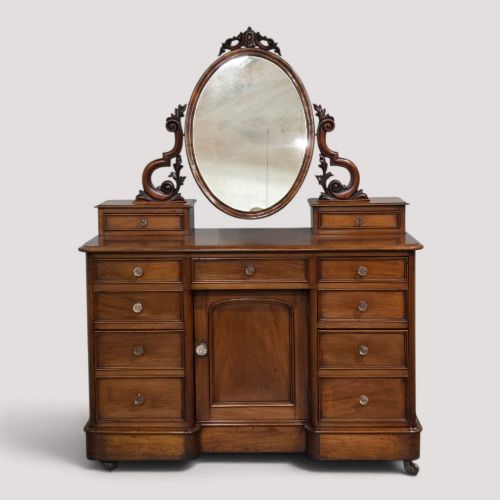
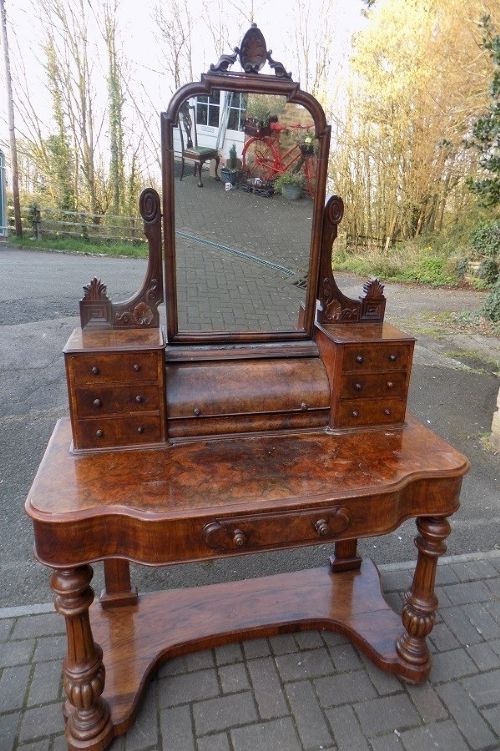
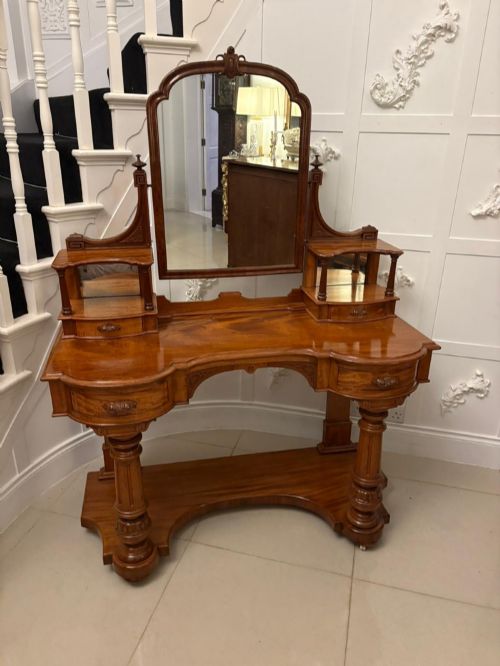
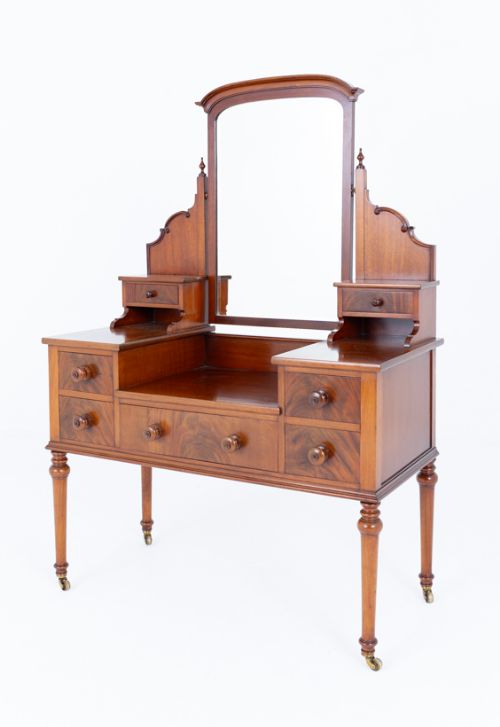
These mahogany and burr walnut pieces offer the grand tiered mirrors and carved tiers characteristic of a Victorian duchess dressing table.

Victorian Duchess Dressing Table
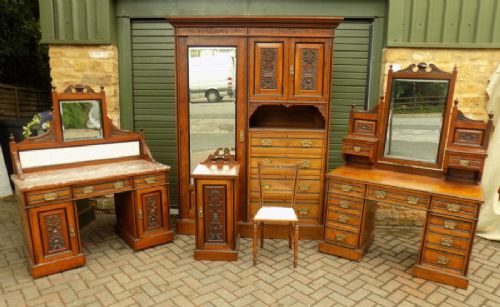
A victorian duchess dressing table is a substantial bedroom piece built during the nineteenth century, typically featuring a large swing mirror supported by scrolling arms above a tiered surface and drawer configuration. The pieces seen here span from eighteen sixty to eighteen eighty, encompassing both compact examples and grander bedroom suite components.
Most variations include multiple smaller drawers flanking a central well or tier, designed specifically for holding toiletries and jewellery. Mahogany and burr walnut predominate across the examples recorded on this page, occasionally paired with a marble top or ebonised details.
Materials and Construction
Cabinet makers utilised solid timbers alongside figured veneers, selecting rich mahogany and decorative burr walnut to face the drawer fronts and structural frames. Carved decorative elements, such as scrollwork on the mirror supports and cabriole or turned legs, required skilled hand woodworking.
Large mirror glass panels were securely fitted into pivoting frames of matching timber, while brass hardware appeared on drawer pulls and securing pivots.
Victorian Duchess Dressing Table Retail Price Guide 2026
Typical asking prices for victorian duchess dressing table among the pieces listed under this phrase on Sellingantiques today, from the lower quarter to the upper quarter. They describe what is for sale here now, not the wider market.
Standards of Execution
The distinction between standard examples and finer pieces lies in the choice of timber figure, such as highly figured burr walnut or flame mahogany, and the depth of the hand carving on the mirror supports and drawer surrounds. Superior pieces display crisp joinery in the multi-drawer tiers and heavier, more balanced proportions overall.
The Victorian Duchess Dressing Table Glossary
- Duchess dressing table
- A dressing table style featuring a large attached mirror, usually supported by scroll-shaped arms above a tiered surface with multiple small drawers.
- Burr walnut
- A highly decorative wood veneer taken from the wart-like growths on walnut trees, prized for its swirling grain patterns.
- Flame mahogany
- A veneer cut from the fork of a mahogany tree that produces a distinctive flame-like pattern across the timber surface.
- Cheval mirror
- A large, full-length mirror hung in a frame that allows it to tilt, occasionally incorporated into dressing table designs.
Victorian Duchess Dressing Table: Frequently Asked Questions
How do I date a duchess dressing table?
Examination of the timber, drawer construction methods, and the style of the mirror supports helps indicate whether a piece dates from the eighteen sixties or eighteen eighties.
Secondary woods inside the drawers and the type of mirror glass also provide clues to the exact Victorian period of manufacture.
Were these dressing tables part of larger sets?
Many examples originated as components of matching bedroom suites that included wardrobes and washstands in corresponding woods.
Surviving pieces often retain the distinct timber finishes and carving motifs of these broader chamber suites.
What woods were used for these dressing tables?
Makers relied heavily on mahogany and burr walnut, sometimes applying flame mahogany veneers to the larger drawer fronts.
White painted finishes and ebonised highlights also appear on specific Victorian pieces from the period.
How do I care for a walnut dressing table?
Maintaining the surface involves keeping the timber away from direct sunlight and excessive heat fluctuations to protect the delicate walnut veneers.
Regular dusting with a dry cloth preserves the polished finish without risking moisture damage to the antique wood.